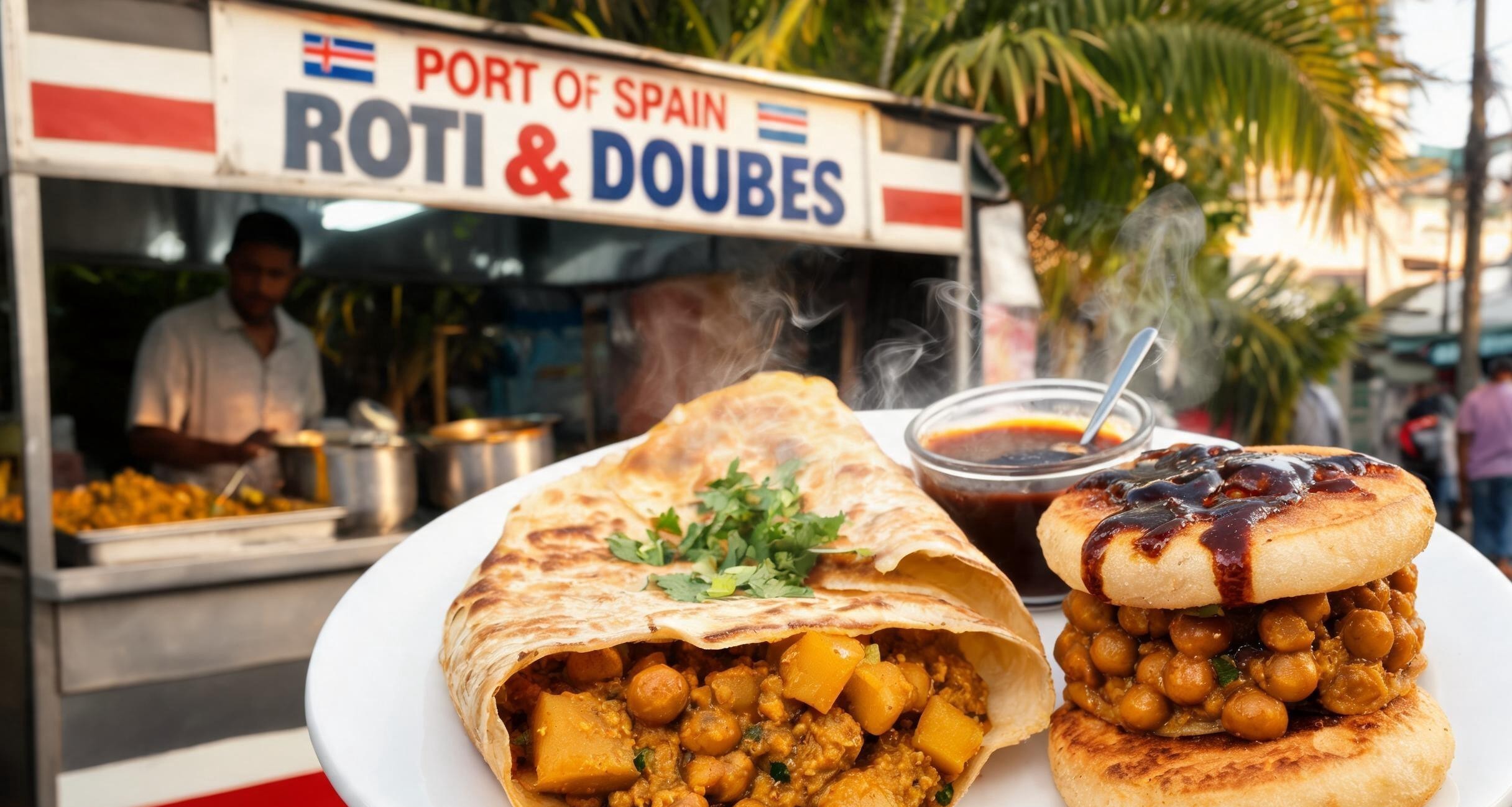
The roti shop on Frederick Street in Port of Spain opens at six in the morning, and by seven there is a line that extends past the doorway and onto the sidewalk. The line moves fast because most people are ordering the same thing: doubles, which is two pieces of fried flatbread called bara, each smeared with a spoonful of curried chickpeas, folded together, and handed to you wrapped in wax paper. It costs about two US dollars. You eat it standing on the sidewalk, and you eat it quickly, because the bara soaks through the wax paper in about five minutes and your hands will be covered in turmeric-stained oil. I had four my first morning in Trinidad, which the woman working the counter said was a moderate amount. Doubles are the breakfast of Trinidad, and they are consumed in quantities that would surprise anyone who has not been to Port of Spain.
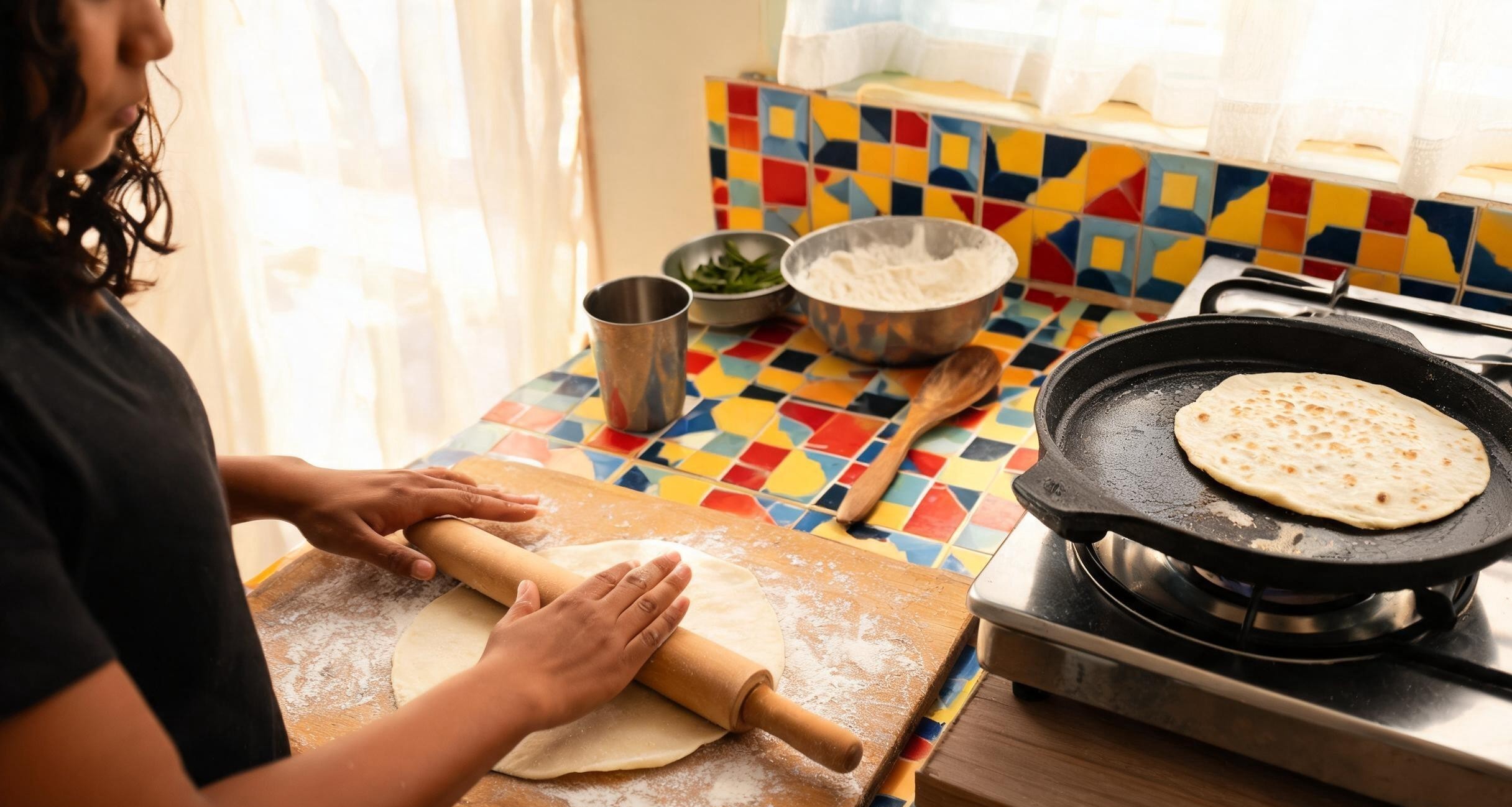
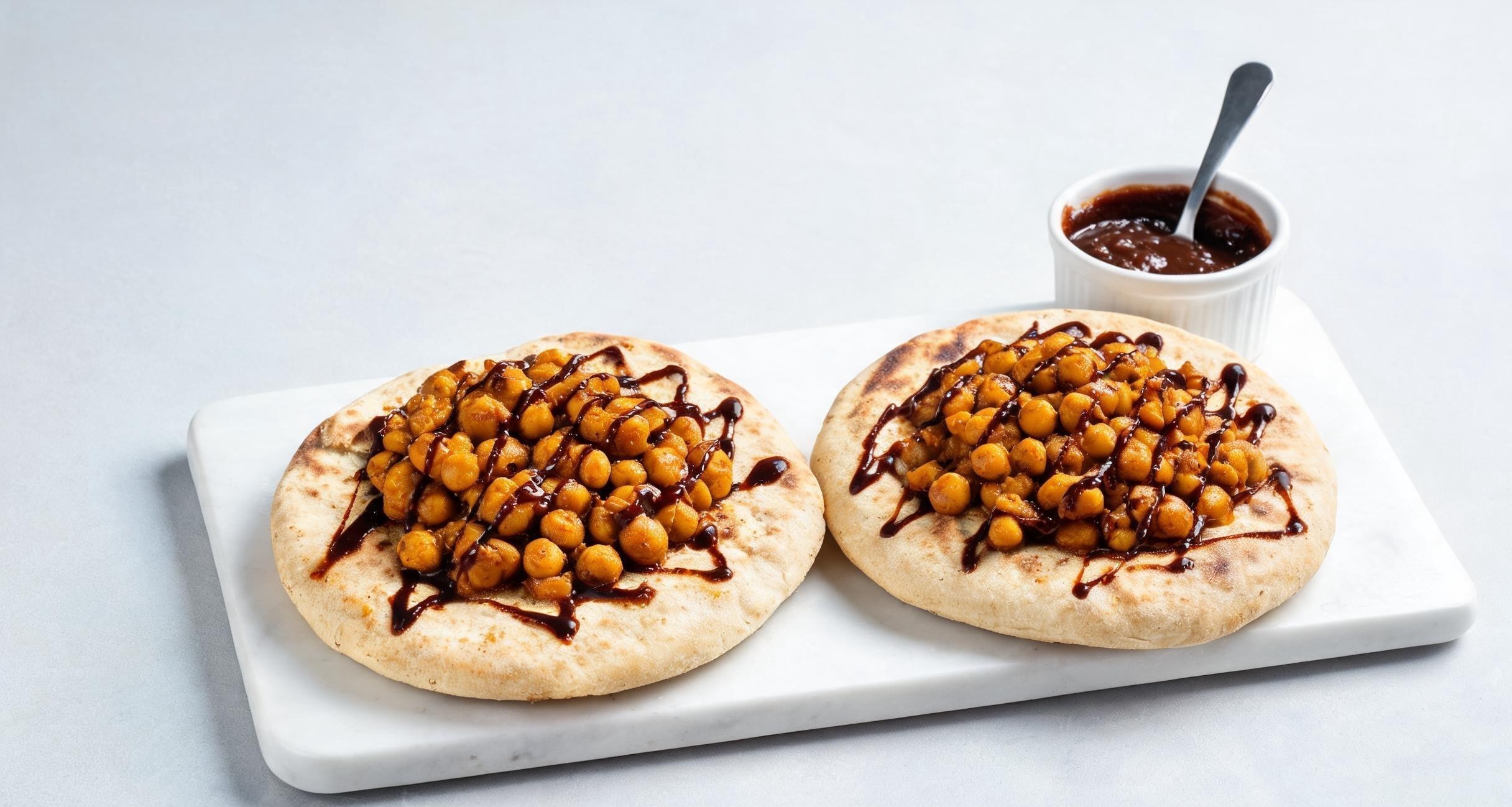
The bara is a soft, pliable flatbread made from flour, water, yeast, turmeric, and a pinch of salt. The turmeric gives it a pale yellow color and a faint earthy flavor. The dough is portioned into small balls, flattened into thin rounds, and fried in oil until puffed and golden on both sides. The texture is soft and slightly chewy, with crispy edges from the frying. The trick is to fry them at the right temperature, hot enough to puff the bread but not so hot that they become hard and crispy all the way through. A good bara should be pliable enough to fold around the filling without cracking. At the Frederick Street shop, the woman making the bara was working with a speed and precision that comes from making hundreds of these every morning. She flattened, fried, flipped, and drained each one in about forty-five seconds.
The chickpea curry, called channa, is what makes doubles more than just fried bread. The chickpeas are cooked in a mixture of onions, garlic, curry powder, cumin, and a sauce made from blending onions, garlic, and spices into a thick paste called a chutney. The curry powder in Trinidad is not the same as Indian curry powder. It is a local blend called green seasoning or chandon beni, which includes culantro, a herb similar to cilantro but with a more pungent flavor. The channa is thick, dark, and intensely spiced, with the chickpeas soft but not mushy. You get a generous spoonful on each bara, and the combination of soft bread and spiced chickpeas is one of those things that is greater than the sum of its parts. The turmeric from the bread, the curry from the chickpeas, and the heat from the pepper sauce create layers of flavor in a single bite.
Beyond doubles, Trinidad has a full range of roti styles, each with a different bread and filling. Paratha roti, also called buss up shut, is a flaky, layered bread that is pulled apart into pieces and used to scoop up curried meats and vegetables. The name buss up shut means 'busted-up shirt,' which is what the torn, flaky bread resembles. Dhalpouri roti is a thin, flatbread stuffed with ground split peas, then cooked on a griddle until spotted with brown. It is the most common roti for wrapping around curried chicken, goat, or shrimp. I had a dhalpouri roti stuffed with curried shrimp at a shop called Cactus on the outskirts of Port of Spain, and the combination of the slightly sweet, earthy dal-stuffed bread with the spicy shrimp curry was the best meal I ate in Trinidad.
The roti shops I visited in Port of Spain were not fancy. Most had a few plastic tables and chairs, a glass counter where you could see the curries, and a woman or a husband-and-wife team working behind the counter with the efficiency of people who have made the same food every day for years. The customers were a mix of office workers grabbing breakfast, laborers on break, and tourists who had been told to come here. Everyone ate the same food. There was no separate menu for locals and visitors, no premium version, no upselling. You ordered at the counter, paid cash, and ate wherever there was space. The food was cheap, filling, and made with a level of care that comes from doing one thing well for a long time. Roti in Trinidad is not a trend or a concept. It is how people eat, every day.
The roti shops in Port of Spain operate on a rhythm that is tied to the workday. They open early, around six in the morning, to catch the breakfast crowd looking for doubles. They stay busy through lunch, when office workers come in for a roti and a bottle of mauby, a local drink made from tree bark that is bitter and slightly sweet. By mid-afternoon, the crowd thins out. By evening, most of the popular shops have sold out of their curries and are closing down. The exception is the weekend, when the shops stay open later and the lines are longer. I visited Aunties on a Saturday afternoon and waited thirty minutes for a paratha roti. While I waited, I watched the staff work: two women making dough, one man cooking the roti on the griddle, another man stirring the massive pots of curry behind the counter. The kitchen was small, maybe ten feet by ten feet, and the output was remarkable. They were producing hundreds of rotis a day, each one made to order, and the quality was consistent. That kind of consistency, in a small kitchen with a small staff, is the result of practice and repetition. These are not trained chefs. They are home cooks who have been making the same food every day for years, and they have gotten very good at it.