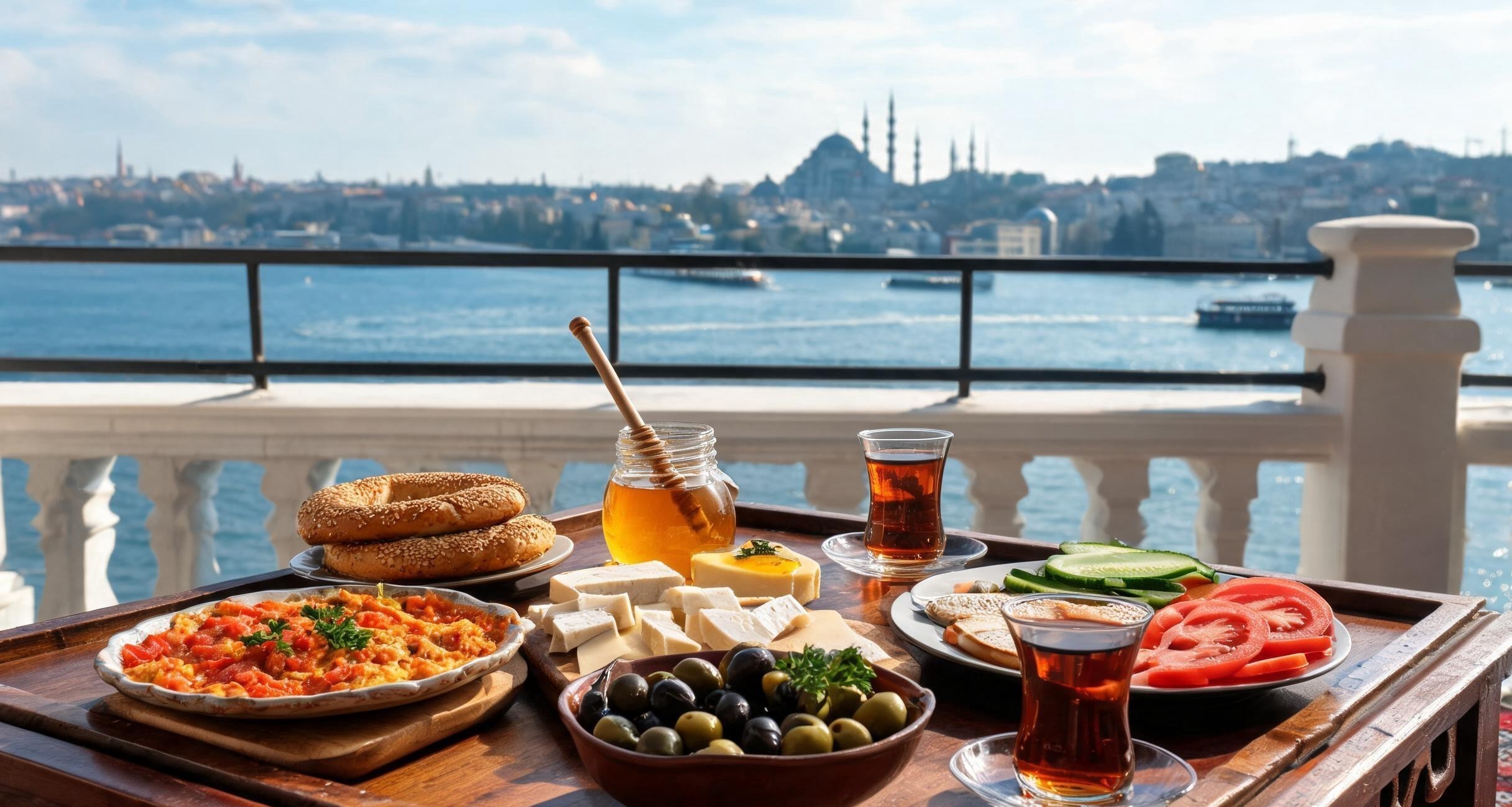
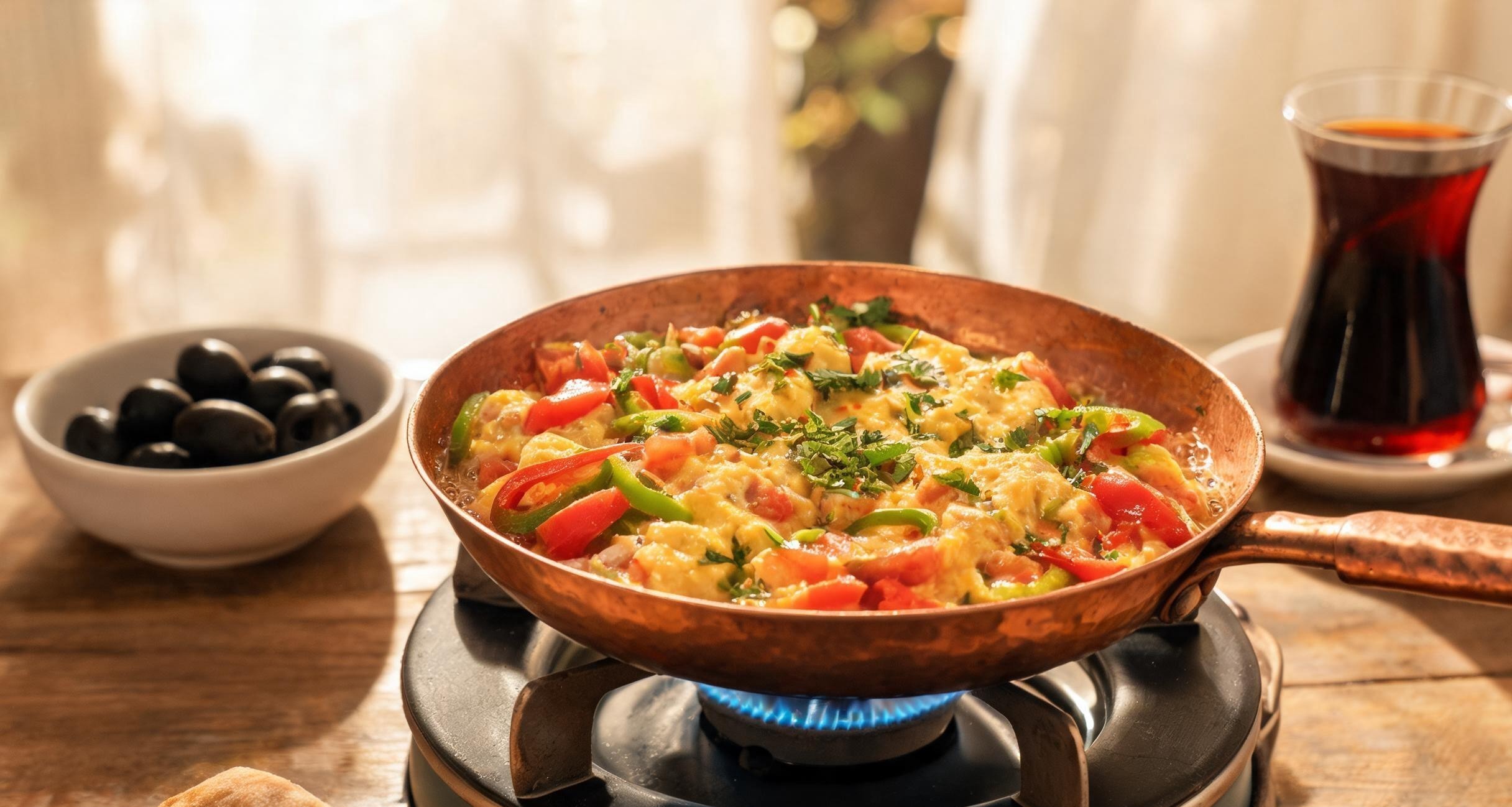
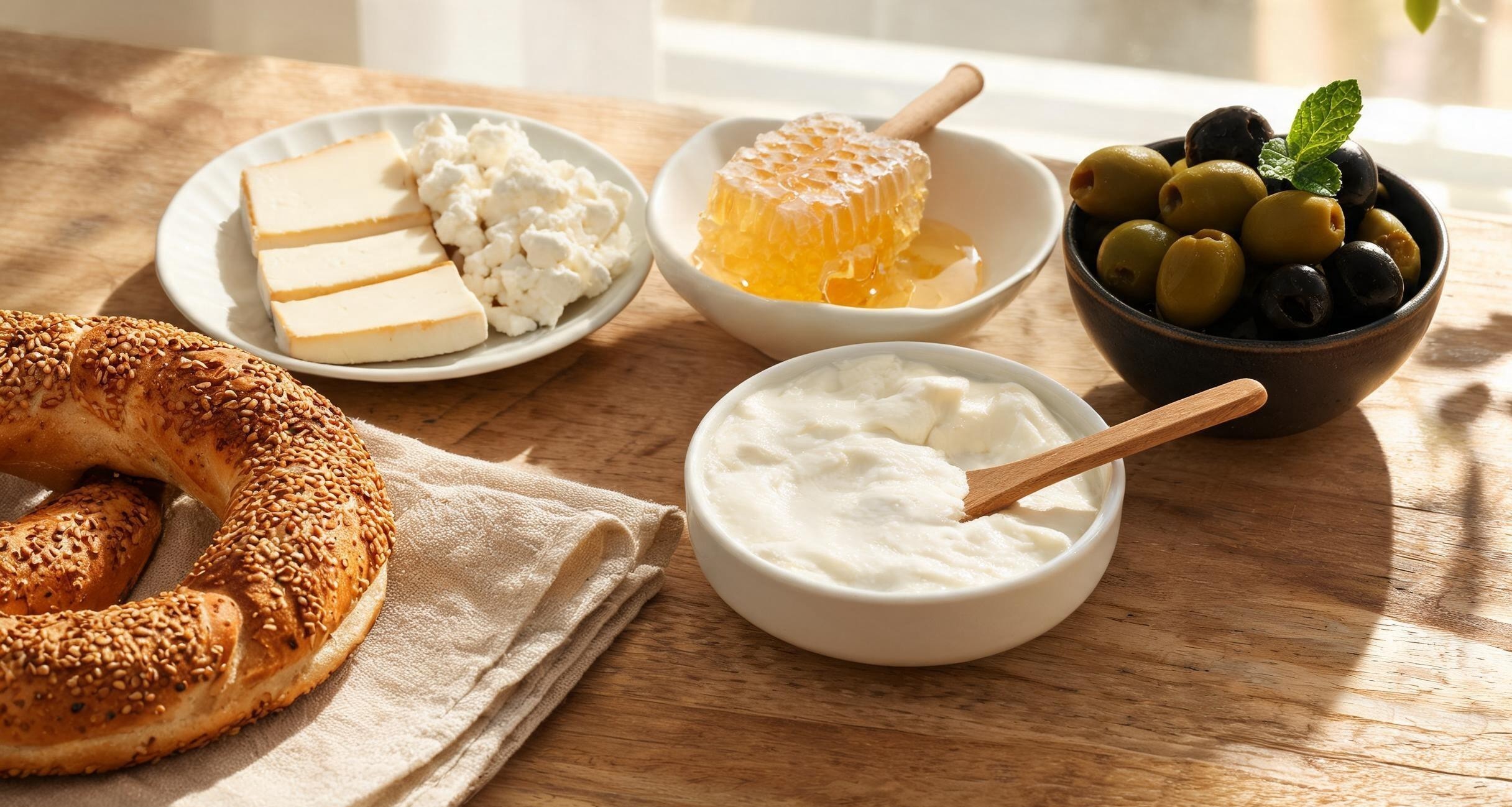
The first kahvalti I had in Istanbul was at Kale Cafe in Bebek, a neighborhood on the European side of the Bosphorus where the apartments cost more than most people earn in a decade. The terrace overlooked the water, and the table was covered in small plates. There was kaymak, a dense clotted cream, next to a jar of honey still in the comb. There were three kinds of cheese: a white beyaz peynir, a salty tulum stored in a goat-skin bag, and a mild kashar that had been slightly melted. There was a plate of sliced cucumber and tomato with olive oil. A small bowl of olives, both green and black. A boiled egg cut in half. Fresh butter in a dish. Honey with pistachios mixed in. A basket of warm simit, the circular bread encrusted with sesame seeds that Istanbul bakers sell from red carts on every corner. And menemen, eggs scrambled with tomatoes and green peppers in a small copper pan, still bubbling. I sat there for two hours. I ate slowly. I drank three cups of black tea, served in tulip-shaped glasses that are the standard in every Turkish household. The Bosphorus was grey that morning and the seagulls were loud, and I did not want to be anywhere else.
Kahvalti is not brunch. It is not a weekend indulgence or a social media opportunity. In Turkey, breakfast is a meal that happens every day, and the Turkish approach to it is generous in a way that other cultures have largely forgotten. The spread is not built around one central dish. It is built around variety: many small things, each one simple on its own, that together create a meal you can eat for an hour without getting tired of any single element. The olives provide salt and fat. The cheese provides protein and tang. The honey and kaymak provide sweetness. The tomatoes and cucumbers provide freshness. The bread, always fresh, ties it all together. There is no cooking technique on display, no sauce reductions, no molecular gastronomy. Just good ingredients, well-sourced, arranged on a table with care. It is the opposite of restaurant cooking, and that is what makes it feel like home.
Cincer Kahvalti Salonu in Kadikoy, on the Asian side, is a breakfast institution that locals treat with the reverence Americans reserve for barbecue joints. The queue on weekends starts before they open at eight, and it moves slowly because nobody rushes through a kahvalti. I waited forty-five minutes for a table and spent another fifteen minutes just looking at the spread when it arrived. What sets Cincer apart is the honey. They source it from a beekeeper in the Black Sea region who produces three distinct varieties: flower, chestnut, and pine. Each one tastes completely different from the others, and the server will explain the differences if you ask. The chestnut honey is dark and slightly bitter, almost like molasses. The pine honey is thick and amber, with a resinous quality that coats your mouth. The flower honey is light and floral, the kind you would put on toast without thinking about it. I bought a jar of the chestnut honey to take home and it lasted three days.
My favorite stop was a small place in Balat called Fes Cafe, on a quiet street near the Pierre Loti hill. There was no terrace, no Bosphorus view. Just four tables inside a room with yellow walls and mismatched chairs, and a cat sleeping on the radiator. The kahvalti here was simple compared to the grand spreads at Kale or Cincer, but the quality was outstanding. The cheeses were sourced from a producer in Thrace, the olives came from the Aegean coast, and the bread was delivered that morning from a bakery two blocks away. The menemen was made to order, which in Turkey means cracking the eggs directly into the pan with diced tomatoes and green peppers and cooking them until just set, with a texture closer to a soft scramble than the rubbery egg dishes that pass for breakfast in many Western hotels. I ate two plates of menemen, four pieces of bread, and an embarrassing amount of cheese. The bill was less than what I would pay for a single entree at a mediocre brunch spot in New York.
The pace of a Turkish breakfast is the thing I miss most when I am back home. In Istanbul, nobody brings you a check before you ask for it. Nobody clears your plate while you are still chewing. The tea keeps coming, refilled without being requested, and the conversation at the next table is background noise that blends with the clink of spoons on small plates. Kahvalti is a meal designed to be stretched. It starts when you sit down and it ends when you decide it ends, which could be forty-five minutes or it could be two hours, and either is acceptable. I watched a table of four older men near me at Kale who arrived before I did and were still there when I left, working through a second pot of tea and a plate of fresh fruit that had arrived at some point without anyone noticing. They were not in a hurry. Nobody in that restaurant was in a hurry.
What stays with me about Turkish breakfast is the lack of performance. These are not trendy brunch spots designed for cameras. They are neighborhood restaurants where the same families return every weekend, where the owner knows what you want before you sit down, and where the food is good because the ingredients are good and the people making it care. There is no molecular gastronomy on the table, no foam, no tweezers. Just olives and cheese and honey and eggs and bread, the same ingredients that Turkish families have been eating for generations, served with warmth and without pretense. If that sounds simple, try finding it where you live. It is harder than you think.