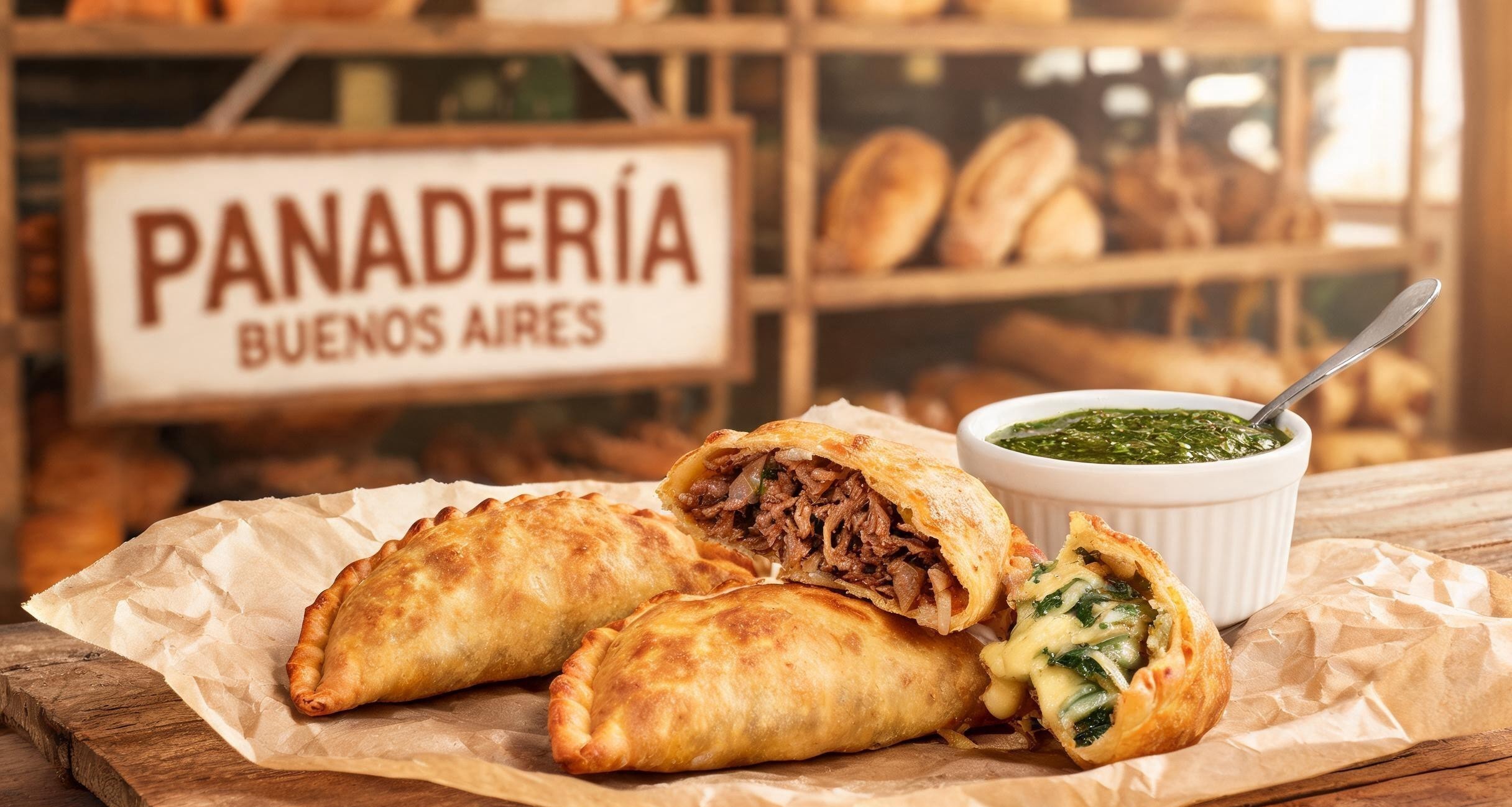
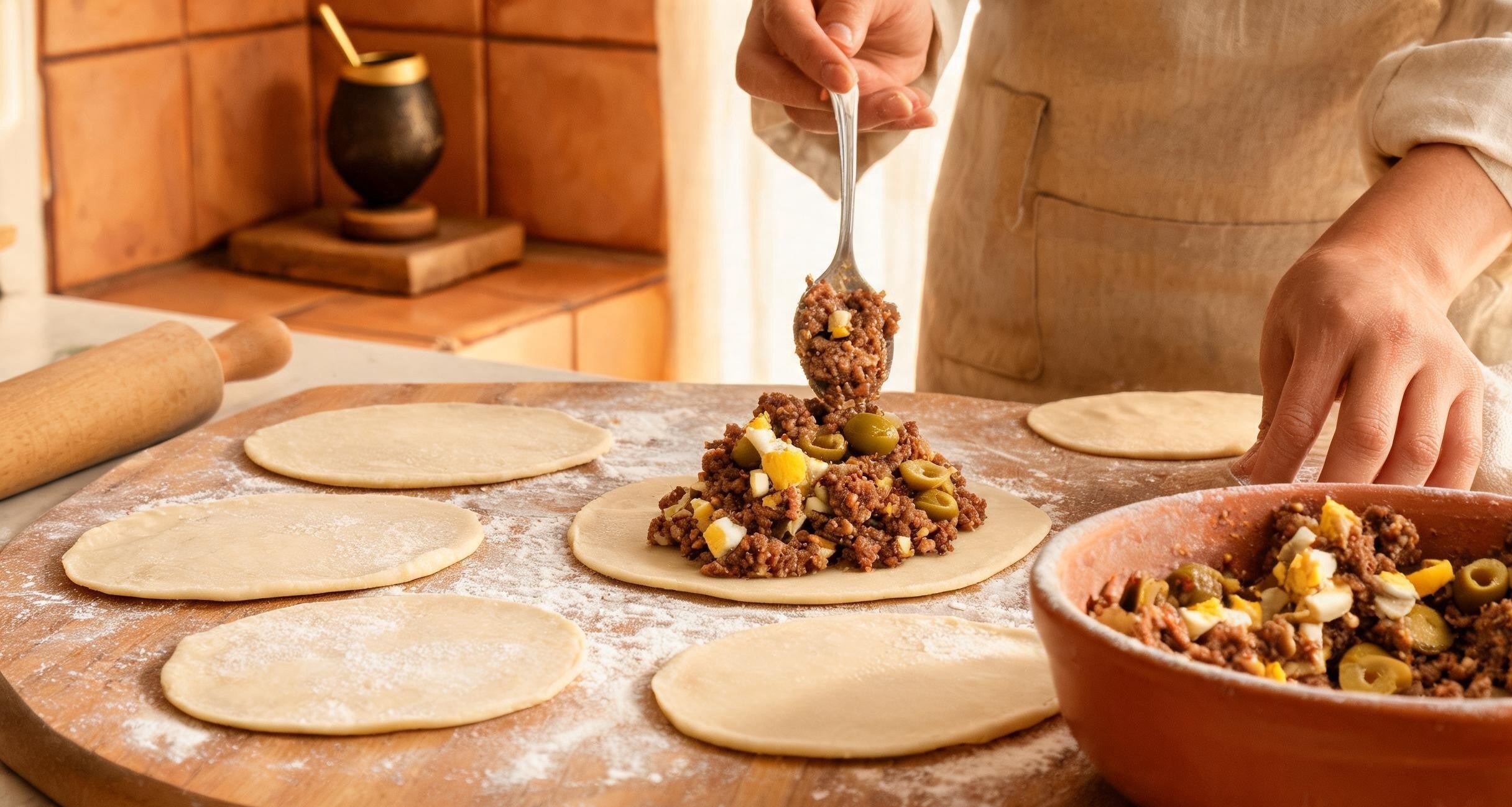
I ate eleven empanadas in three days in Buenos Aires and only one of them was the kind I expected. The classic beef empanada, seasoned with cumin and hard-boiled egg and olive, is everywhere in Argentina, sold from bakery windows and heated on griddles at corner shops. It is fine. It is perfectly fine. But the empanada that stopped me mid-bite on a Tuesday afternoon in San Telmo had a filling I had never considered: corn, sauteed with onion and a white sauce made from milk and flour, sweet and savory at the same time, with a soft grainy texture that made me order a second one immediately. The woman behind the counter at El Sanmartino, a bakery that has been open since 1932, shrugged when I told her it was the best thing I had eaten that week. She said they have been making the humita empanada the same way since her grandmother worked the counter.
El Sanmartino sits on the corner of Independencia and San Jose, a narrow storefront with a glass case that takes up most of the wall behind the register. The empanadas are arranged in rows, each variety marked with a small paper sign. Beef, chicken, ham and cheese, caprese, and the humita that I kept going back to. They are baked, not fried, which gives the dough a dry, flaky crust that shatters when you bite into it. The dough itself is made with beef tallow, which the owner confirmed when I asked, and that detail alone sets it apart from every other empanada I tried in the city. Tallow gives the crust a richness and a faint meaty savoriness that butter or oil cannot replicate. Each empanada costs about 350 pesos, which at the time was roughly one American dollar. I bought four and ate two on a park bench outside.
The second place that left an impression was a smaller shop called La Cocina in the Palermo neighborhood, where the empanadas are fried instead of baked. Frying changes the texture entirely. The crust becomes crisp and blistered, with small bubbles across the surface, and the filling stays hotter for longer. I ordered the carne picante, a spicy beef filling with red pepper flakes and a splash of vinegar that cuts through the richness of the fried dough. The heat level was moderate, enough to make my forehead sweat slightly but not enough to overwhelm the flavor of the seasoned ground beef. What I noticed here was the dough-to-filling ratio. These empanadas had more filling relative to dough than any others I tried, which made each bite feel substantial rather than bready. At 400 pesos each, they were slightly more expensive but worth it for the sheer amount of filling packed inside.
The third place was not really a bakery at all. A woman named Rosa sells empanadas from a folding table outside the Mercado de Belgrano on Saturday mornings. She makes two kinds: chicken with ají amarillo, and a sweet empanada filled with quince paste and goat cheese. The chicken was good, lightly spicy with a bright yellow color from the amarillo pepper. But the sweet one was something else entirely. The quince paste, called dulce de membrillo in Argentina, was thick and slightly tart, and the goat cheese provided a creamy, tangy contrast. It felt more like a dessert than a savory pastry, and I ate it standing next to the table while Rosa wrapped two more in paper for me to take back to my hotel. She does not have a sign, a website, or a social media presence. She has been showing up on Saturday mornings for eleven years, and the line forms by nine thirty.
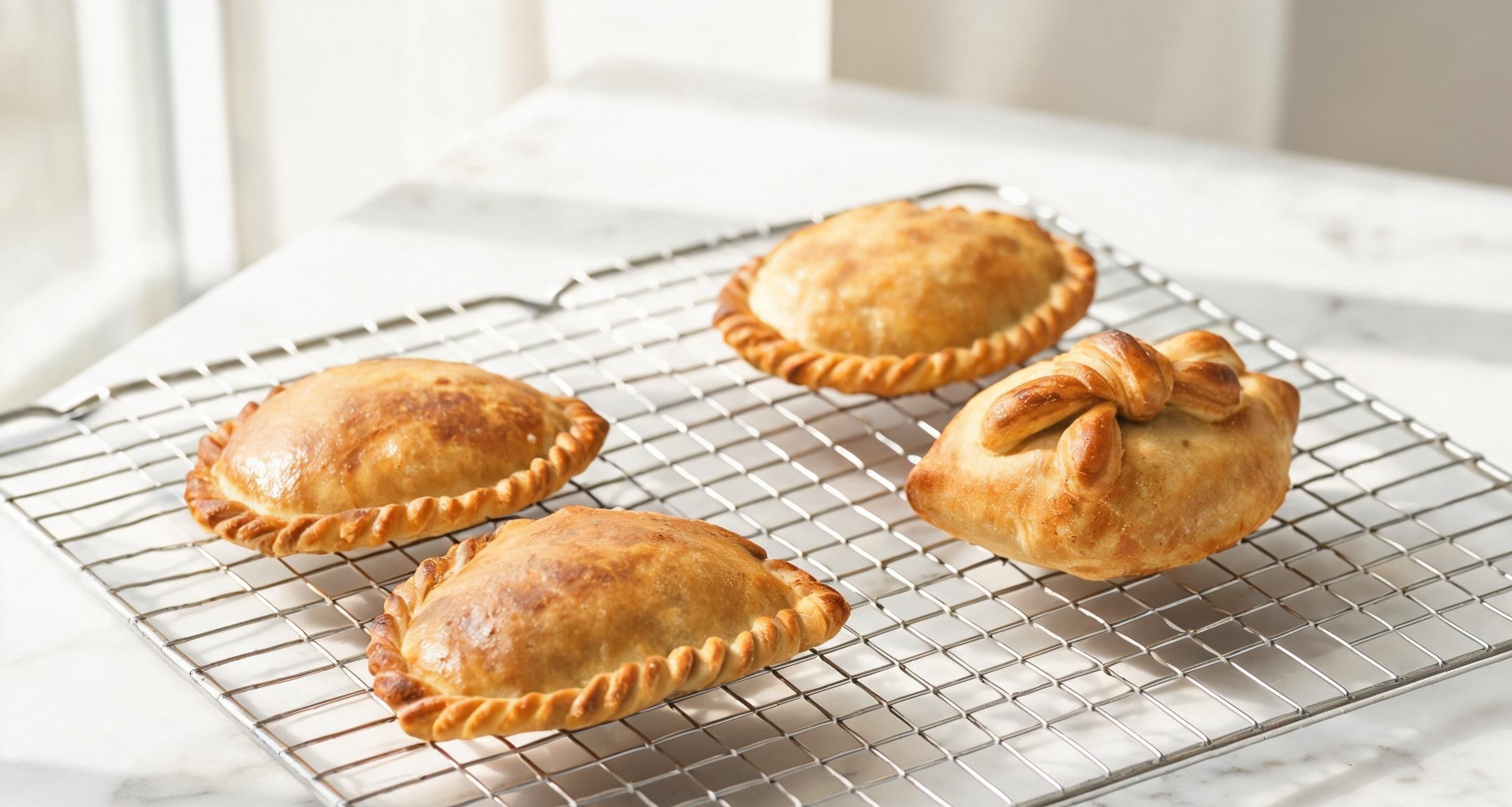
What I did not expect was how much the dough itself varied between shops. At El Sanmartino, the baked empanada dough was flaky and rich from the tallow, almost like a good pie crust. At La Cocina, the fried dough was different entirely, puffy and crisp with tiny bubbles across the surface, more like a savory beignet. Rosa, the woman at the market, used a dough that was somewhere in between, thinner than El Sanmartino but sturdier than La Cocina, with a slight chew that held up to the fillings without cracking. Three empanadas, three doughs, three textures. None of them were wrong. They were just different, adapted to the filling and the cooking method and the preferences of the person making them. The dough is the frame, and the filling is the picture, and every frame changes the way you see what is inside.
What struck me after those three days was how much variety exists within a single dish that most people outside Argentina think of as one thing. The dough can be baked or fried, made with tallow or butter or oil. The fillings range from the traditional ground beef with cumin to corn with white sauce to quince with goat cheese. Every region of Argentina has its own style, and every bakery has its own version of that regional style. The empanada is not a single recipe. It is a format, a way of enclosing something flavorful inside a portable package of dough, and the Argentines have been refining that format for longer than the country has had a name. I came to Buenos Aires expecting to eat beef empanadas. I left knowing that the beef one is just the starting point.