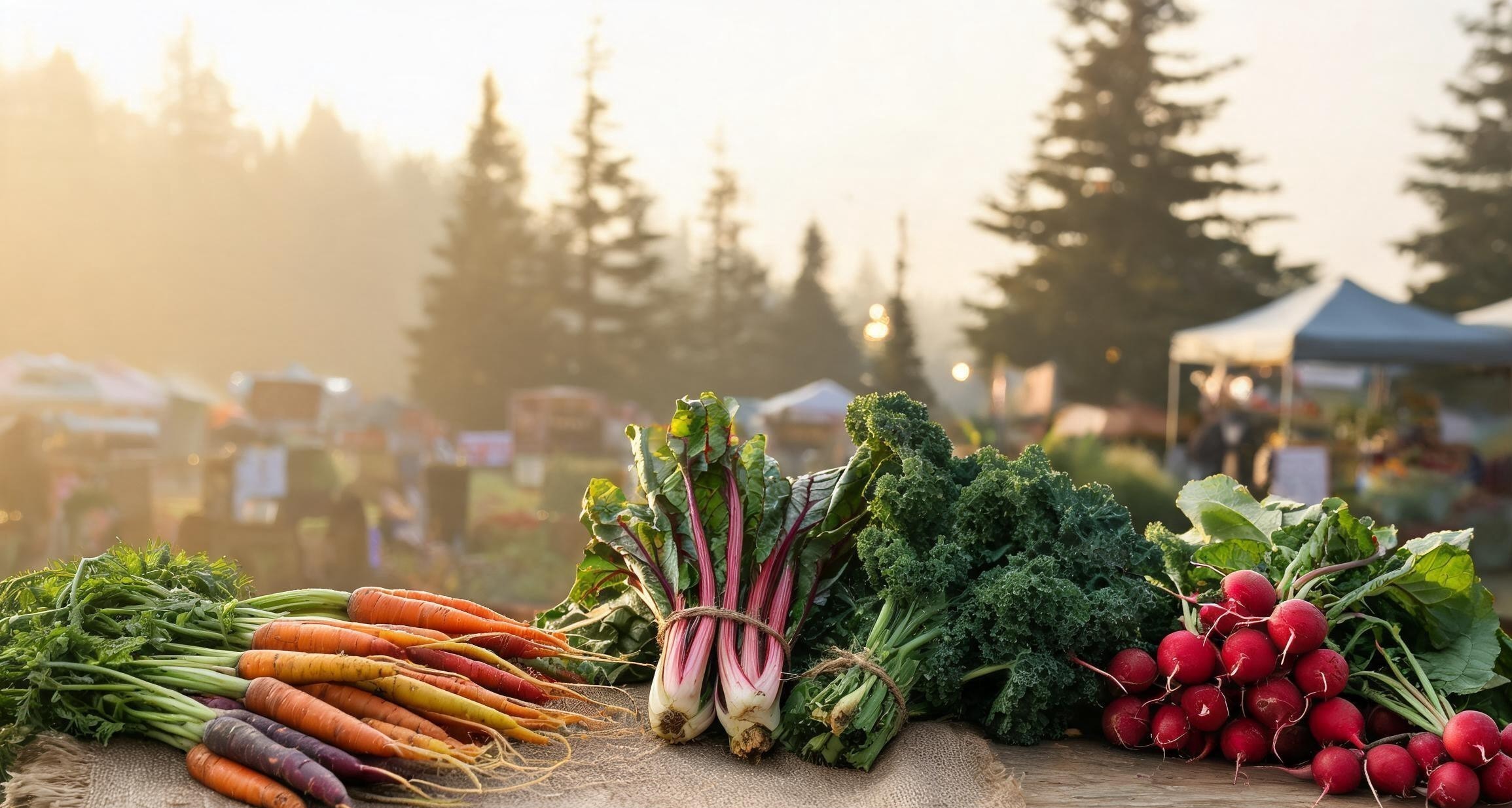
The Portland State University farmers market starts at 8:30 on Saturdays, and by 9:00, the serious buyers are already there. I arrived last October on a cool, gray morning and watched a woman in a white apron inspect a crate of watermelon radishes, holding each one up to the light before setting it aside. That was Nora Kim, chef and owner of Canopy, a 38-seat restaurant in the Pearl District. She buys directly from four farms within a 45-minute drive of the city, and she does not use a distributor. Ever.
The phrase "farm-to-table" has been slapped on so many menus and restaurant websites that it has lost almost all meaning. A place can call itself farm-to-table because it buys one type of lettuce from a local grower while sourcing everything else through Sysco. The word has become marketing wallpaper, something to put next to a photo of a chalkboard menu. But in Portland, a small number of restaurants have built their entire kitchens around the constraint of seasonal, local sourcing, and the results are something you can taste in every plate.
At Canopy, the menu shifts weekly. When I ate there in early October, the starter was a roasted delicata squash soup with toasted hazelnuts and a swirl of crème fraîche. By the first week of November, that soup was gone, replaced by a salad of shaved Brussels sprouts, dried cranberries, and aged Gouda from Willamette Valley Cheese. Nora told me the change was not creative restlessness. The squash had simply run out. She does not design a menu and then find ingredients to fill it. She waits to see what comes in, then figures out what to cook. Her relationship with Groundwork Organics in nearby Philomath is the longest of her supplier partnerships. She has been buying from them for nine years. "They know what I like," she said. "If they find a beautiful variety of turnip they have not grown before, they will save a crate for me."
The second restaurant I visited, Birch & Vine in Southeast Portland, takes a different approach. Chef Marco Delgado runs a small kitchen with no walk-in cooler. He does not store ingredients for more than two days. His produce comes from a handful of farms in the Clackamas River Valley, and he picks up the orders himself in a refrigerated van three mornings a week. The day I ate there, the special was pan-seared steelhead trout over a bed of sautéed collard greens with garlic confit, served with a side of roasted parsnips glazed in brown butter. The trout was from a fishery in Astoria, caught two days earlier. Marco told me that the lack of refrigeration is not a hardship. It is a discipline. "When you only have two days to use something, you learn to plan fast," he said. "And nothing goes to waste, because you cannot afford to throw anything away."
The third stop was Alder & Oak, which sits on a quiet stretch of Mississippi Avenue. Chef and owner Priya Shah has a background in nutrition science and approaches her menu with a specificity that borders on obsession. When I spoke with her, she pulled out a three-ring binder containing crop schedules from every farm she works with. She knows exactly when the first sunchokes will be ready at Dancing Roots Farm in Sandy, Oregon, and she plans her autumn menu around that date. Her spring menu, she explained, is built around the appearance of stinging nettles and fiddlehead ferns, both of which she sources from foragers she has worked with for five years. The dish I remember most was a simple plate: grilled lamb rib chops from Minto Island Growers in Salem, served with a mint-cilantro chutney made from herbs grown in the restaurant's own backyard planter boxes. The lamb was rich and clean-tasting, cooked over charcoal at 450 degrees for about four minutes per side, rested for five, then sliced off the bone.
What connects these three kitchens is not a label or a certification. It is the way they operate. Every one of them can tell you the name of the person who grew the carrots on your plate. They all visit farms regularly. They all accept that certain dishes will disappear from the menu without warning because a crop failed or the season turned early. At Birch & Vine, Marco once ran out of potatoes in the middle of service and had to substitute roasted celery root for the mash that accompanied his short rib special. He told the tables about the change. Nobody complained. In fact, he said, three people asked if the celery root version would become a regular item.
That is what farm-to-table actually means. It means the menu is a moving target. It means the chef is in a relationship with the land and the people who work it, not just a transaction with a vendor. It means eating seasonally because there is no other option, not because it sounds nice on a chalkboard. Portland has a short growing season compared to places farther south, and the restaurants that commit to local sourcing spend a large part of the winter working with root vegetables, preserved foods, and hardy greens. The payoff comes in late spring and summer, when the variety is staggering. At Canopy, Nora's July menu last year included twenty-four different produce items from local farms, from sungold tomatoes to Shiso leaves to purple beans.
The next time you see "farm-to-table" on a menu, ask a simple question: can the kitchen tell you which farm grew the vegetables? If the server pauses or offers a vague answer, the phrase is decoration. But if they name a place, a person, a distance, then you might be eating somewhere that takes the idea seriously. In Portland, you can find a few of those places. They are worth seeking out.