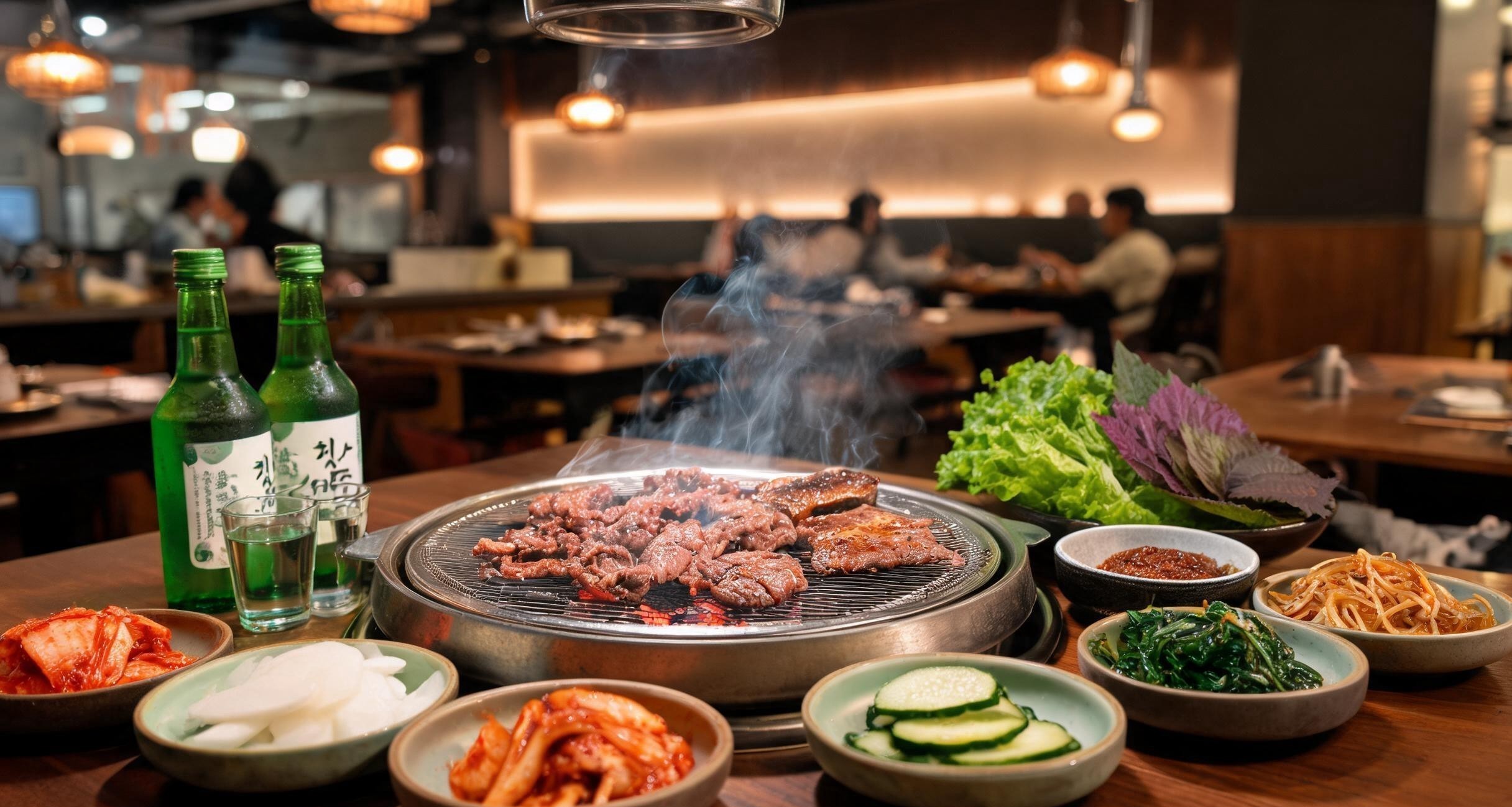
The table at Mapo Korean BBQ in Seoul's Gangnam district was set up before we even sat down. A gas grill embedded in the center, a stack of metal tongs, a pair of scissors, a small bowl of salt and sesame oil for dipping, and a row of banchan that stretched the entire length of the table: kimchi, pickled radish, seasoned spinach, bean sprouts with sesame, spicy cucumber, marinated squid, and at least six other small dishes I could not immediately identify. The waiter did not ask what we wanted. He started bringing meat. First came the samgyeopsal, thick strips of pork belly scored in a crosshatch pattern, laid onto the grill where the fat started popping and sizzling immediately. In Korea, ordering at a BBQ restaurant is more of a suggestion than a strict transaction. The kitchen knows what to bring.
The banchan refill system is something I wish every restaurant in the world would adopt. In Korea, when a small dish of kimchi or pickled vegetables runs low, you simply set it at the edge of the table and a server will replace it without you asking. There is no charge for refills. It is not a promotion or a special deal. It is just how Korean restaurants work. At Mapo, the banchan never ran out. Every time I looked down, a fresh bowl had appeared. The kimchi was properly fermented, sour and crunchy, not the sweet, limp version you get at most Korean restaurants outside the country. The pickled radish, called kkakdugi, was cold and crisp, exactly what you need between bites of hot, fatty pork.
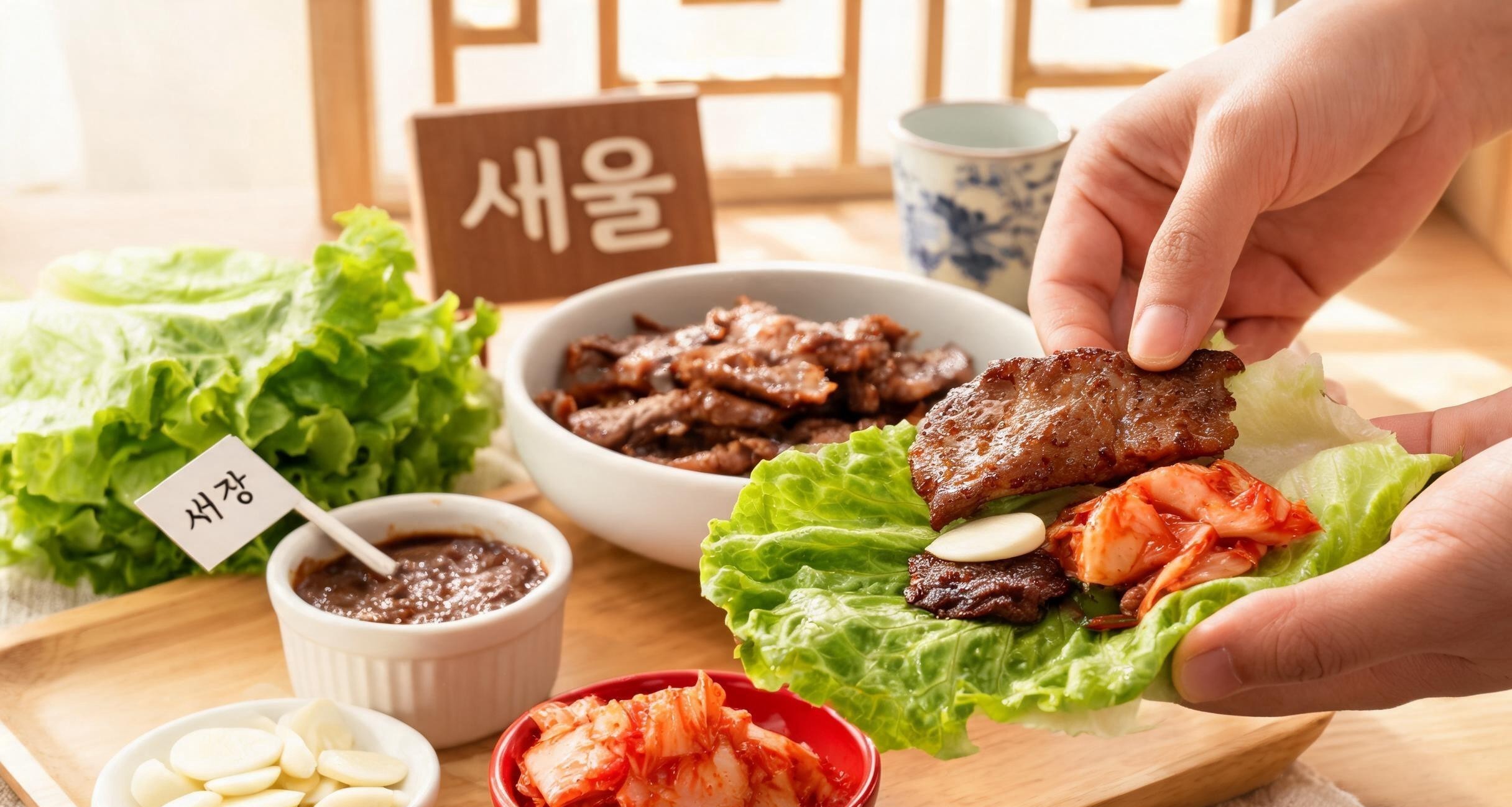
The meat arrived in waves. After the pork belly came LA galbi, beef short ribs cut thin across the bone in the style popularized in Los Angeles Korean restaurants, which then made its way back to Korea and became a standard cut. The marbling on the beef was obvious even before it hit the grill, and the server cooked it to a precise medium-rare before snipping it into bite-sized pieces with the scissors and pushing them toward us. We wrapped each piece in a lettuce leaf with a smear of ssamjang, a chunk of grilled garlic, and a slice of raw onion. The combination of smoky beef, salty-sweet bean paste, and the sharp bite of raw onion is the reason Korean BBQ works as well as it does.
Soju appeared without being ordered. A small green bottle, cold, poured into shot glasses by the server who then turned his head away as we drank, a Korean custom showing respect. The soju cut through the fat of the pork and the richness of the beef in a way that beer could not. We drank, we ate, the grill got cleaned with a piece of radish between courses, and more meat arrived. This cycle repeated for over two hours. At a Korean BBQ restaurant, there is no rush. You order another round, more banchan appears, the grill gets scraped, and the evening extends itself one plate at a time.
The bill came to about forty-five dollars per person, which covered more meat than any reasonable person should eat in one sitting, unlimited banchan, and the soju. In Seoul, this is a normal Tuesday night out. I have paid twice that much for worse BBQ in New York. The difference is not just the price. It is the rhythm of the meal, the constant small plates resetting your taste between bites, the grill as the center of the table like a campfire, and the fact that nobody is trying to rush you out. Korean BBQ in Seoul is not a special occasion. It is just dinner. But it is dinner done in a way that makes you appreciate how much better a meal can be when the restaurant trusts you to eat at your own pace.
I went back to Mapo two days later with a different group of friends, and the experience was almost identical but not quite. The banchan selection shifted slightly. The waiter recommended a different cut of pork, a fattier one, and it was better than what I had ordered the first time. The soju brand was different. The grill had a slightly different heat level. But the structure of the meal was the same, and that consistency is part of why Korean BBQ works so well. You know what to expect, and the restaurant knows what to deliver, and the small variations from visit to visit keep it interesting without being unpredictable. It is a format that rewards both the cook and the customer.
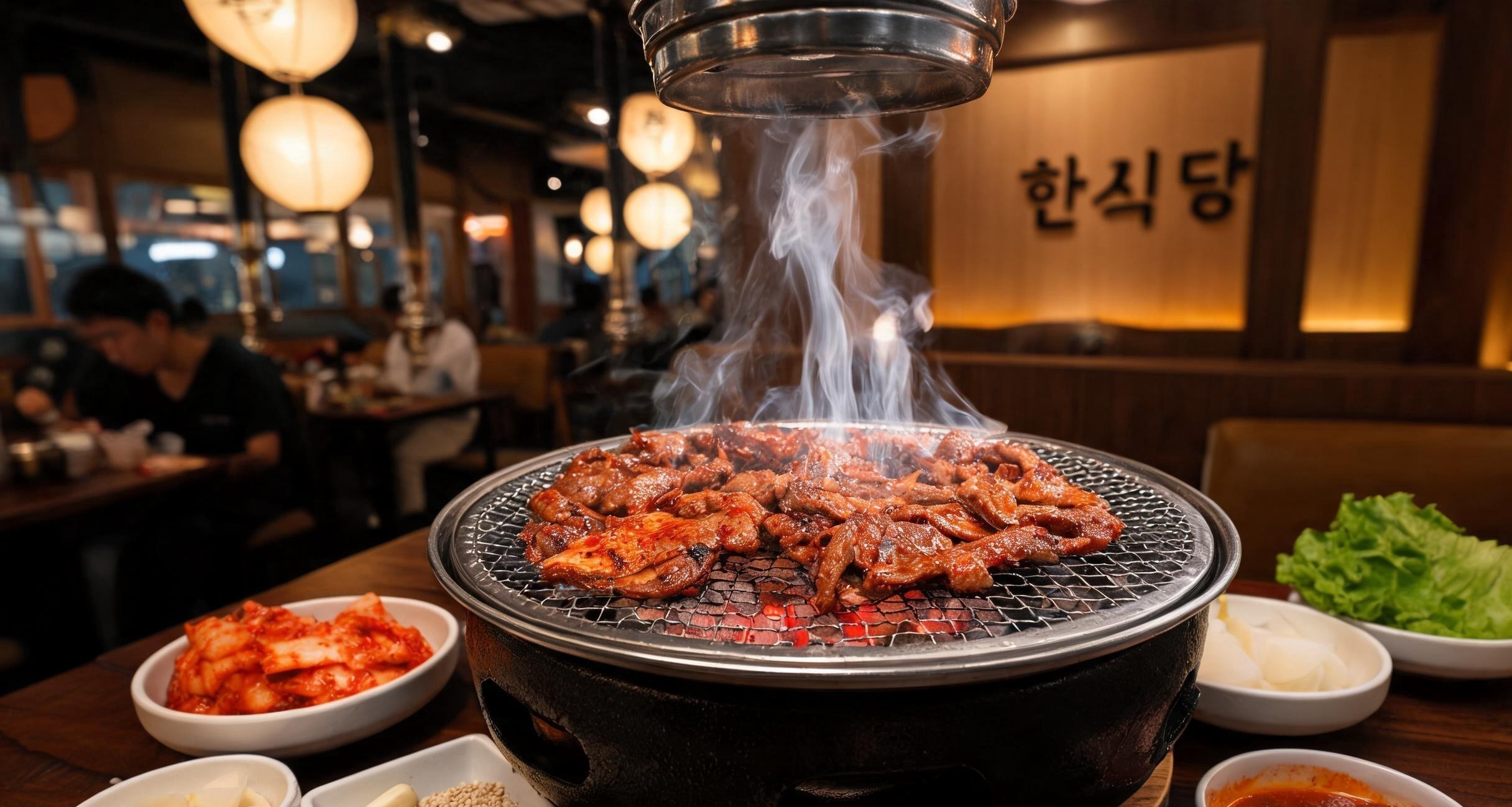
The next morning, still full from the previous night, I went to a different Korean BBQ place in Itaewon that a Korean-American friend recommended. It was smaller than Mapo, with only four tables and no banchan refill system, but the meat was outstanding. They specialized in galbi-sal, which is beef short ribs marinated in a soy-based sauce and grilled over real charcoal instead of gas. The charcoal made a noticeable difference in the flavor, adding a smokiness that the gas grill at Mapo could not replicate. The galbi-sal arrived sizzling on a small charcoal grill built into the table, the meat still attached to the bone, and the server cut it into pieces tableside with scissors. The marinade was sweeter and more pronounced than what I had at Mapo, with a strong soy and pear component that caramelized beautifully on the grill. It was a different experience, more focused on the quality of the meat itself rather than the banchan and the social rhythm of the meal.