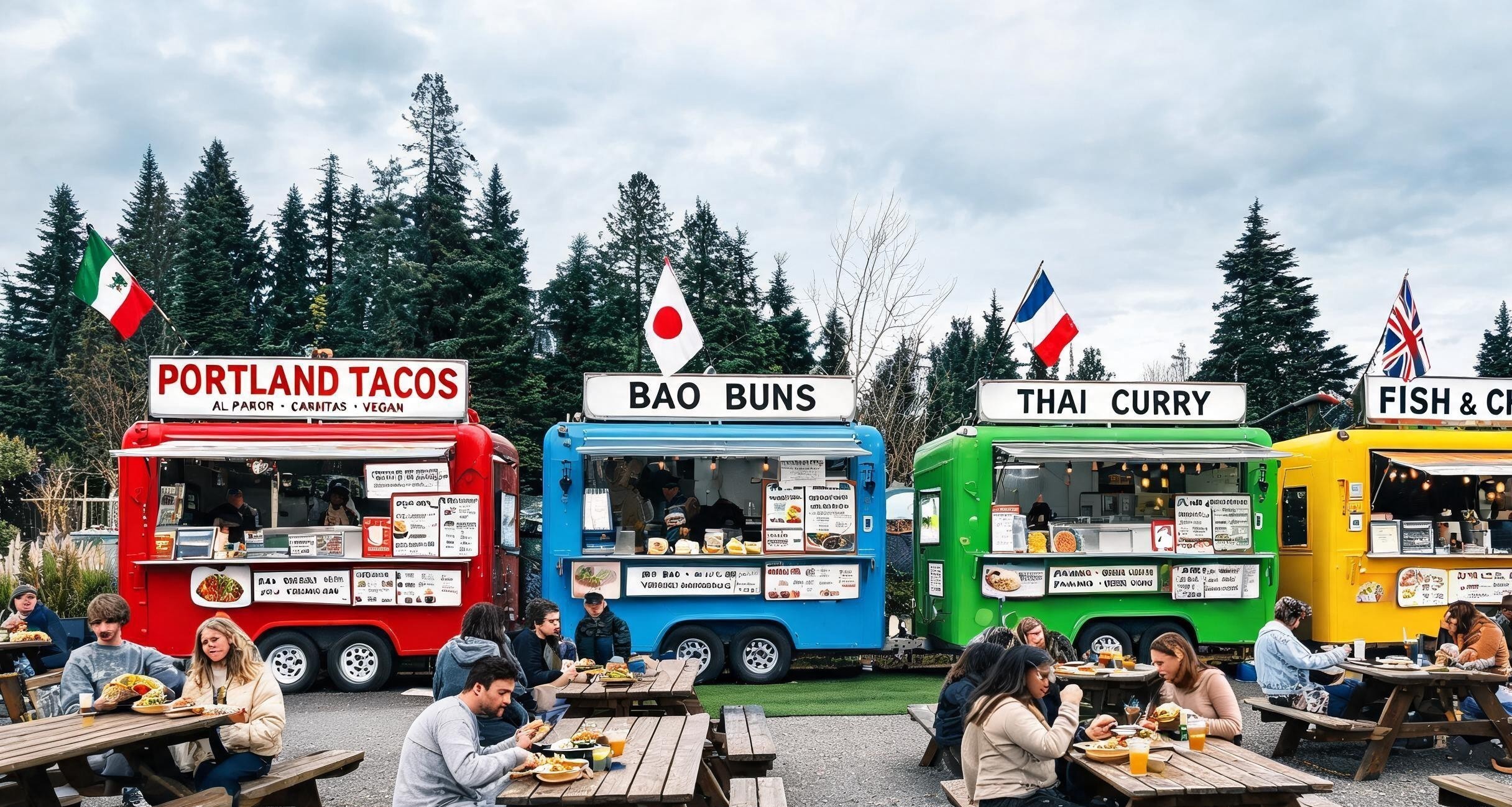
The food cart pod on SE Division Street in Portland does not look like much from the parking lot. A row of metal boxes, some painted bright colors, arranged around a shared seating area with wooden tables and string lights overhead. There is no sign marking the entrance, no host stand, no valet. You just walk in and look at the menus taped to the windows of each cart and decide what you want. I had been told to come here by a friend who lives in Portland, and she had in particular said to skip the restaurants and go straight to the carts. She said the best Thai food in the city was inside a converted shipping container, and she was not exaggerating. The food cart pod is not a food court in the traditional sense. There is no central management, no shared kitchen, no uniform branding. Each cart is its own business, its own kitchen, its own identity.
The Thai cart, called Nong's Khao Man Gai, serves exactly one dish: khao man gai, which is Thai chicken and rice. The chicken is poached in a broth flavored with garlic, ginger, and pandan leaves, then served over rice that has been cooked in the same broth. It comes with a small bowl of the broth on the side, a dipping sauce made from fermented soybeans, ginger, garlic, vinegar, and chili, and a few slices of fresh cucumber. That is the entire menu. No pad thai, no green curry, no spring rolls. Just this one dish, made over and over, hundreds of times a day. I ordered it, sat down at a picnic table, and took a bite. The rice was fragrant and slightly sticky, the chicken was impossibly tender, and the dipping sauce was sharp and funky in a way that made me want to eat every grain of rice. It was eleven dollars and it was the best plate of food I ate in Portland.
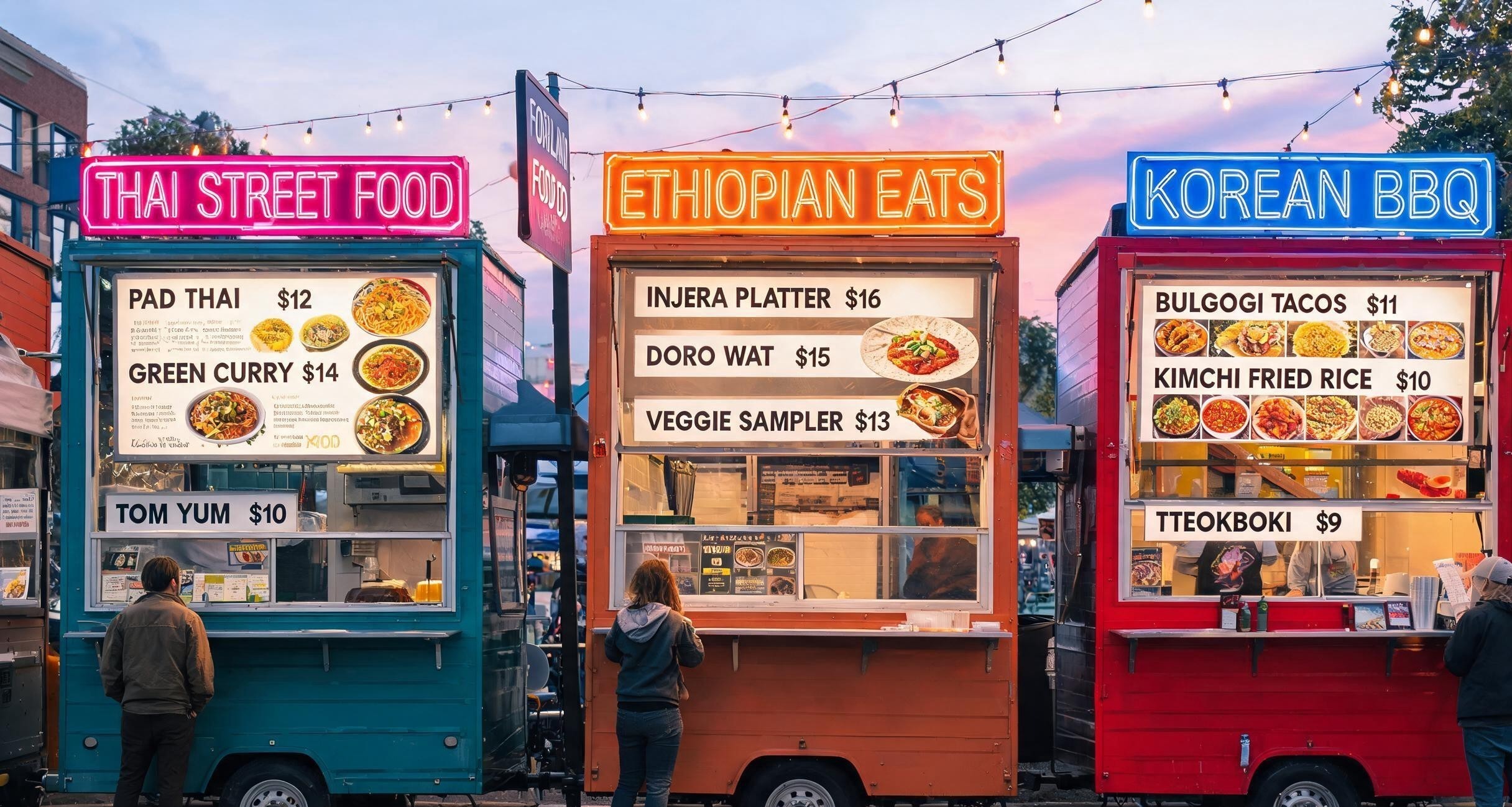
Two carts down, an Ethiopian operation called Enat Kitchen was serving a lunch special that changed daily. The day I went, it was doro wot, a chicken stew simmered in a berbere-spiced onion sauce, served on a large round of injera, the spongy fermented flatbread that doubles as both plate and utensil. You tear off pieces of injera and use them to scoop up the stew. The injera at Enat Kitchen was made fresh daily, with a pronounced tang from the fermentation and a texture that was slightly bubbly and resilient. The doro wot was rich and deeply spiced, with hard-boiled eggs cooked in the sauce until they took on a deep red color from the berbere. A lunch portion, enough for two people, was fourteen dollars. The woman running the cart was Ethiopian, from Addis Ababa, and she told me she opened the cart after moving to Portland and finding that there was nowhere to get the food she grew up eating.
The Korean cart at the same pod, run by a woman named Jina who opened it after closing her brick-and-mortar restaurant during the pandemic, serves a kimchi jjigae that would hold its own in any restaurant in Koreatown, Los Angeles. The stew arrives bubbling in a stone bowl, thick with well-fermented kimchi, pork belly, and soft tofu, served with a bowl of rice and three small banchan. Jina told me she makes the kimchi herself, using a recipe from her mother in Busan, and ferments it for at least three weeks before using it in the stew. The fermentation depth was obvious. This was not the sharp, bright kimchi you eat fresh. It was the deep, complex, almost funky version that only develops over time, and it gave the broth a richness that no amount of meat could replicate. A bowl of kimchi jjigae with rice and banchan cost thirteen dollars.
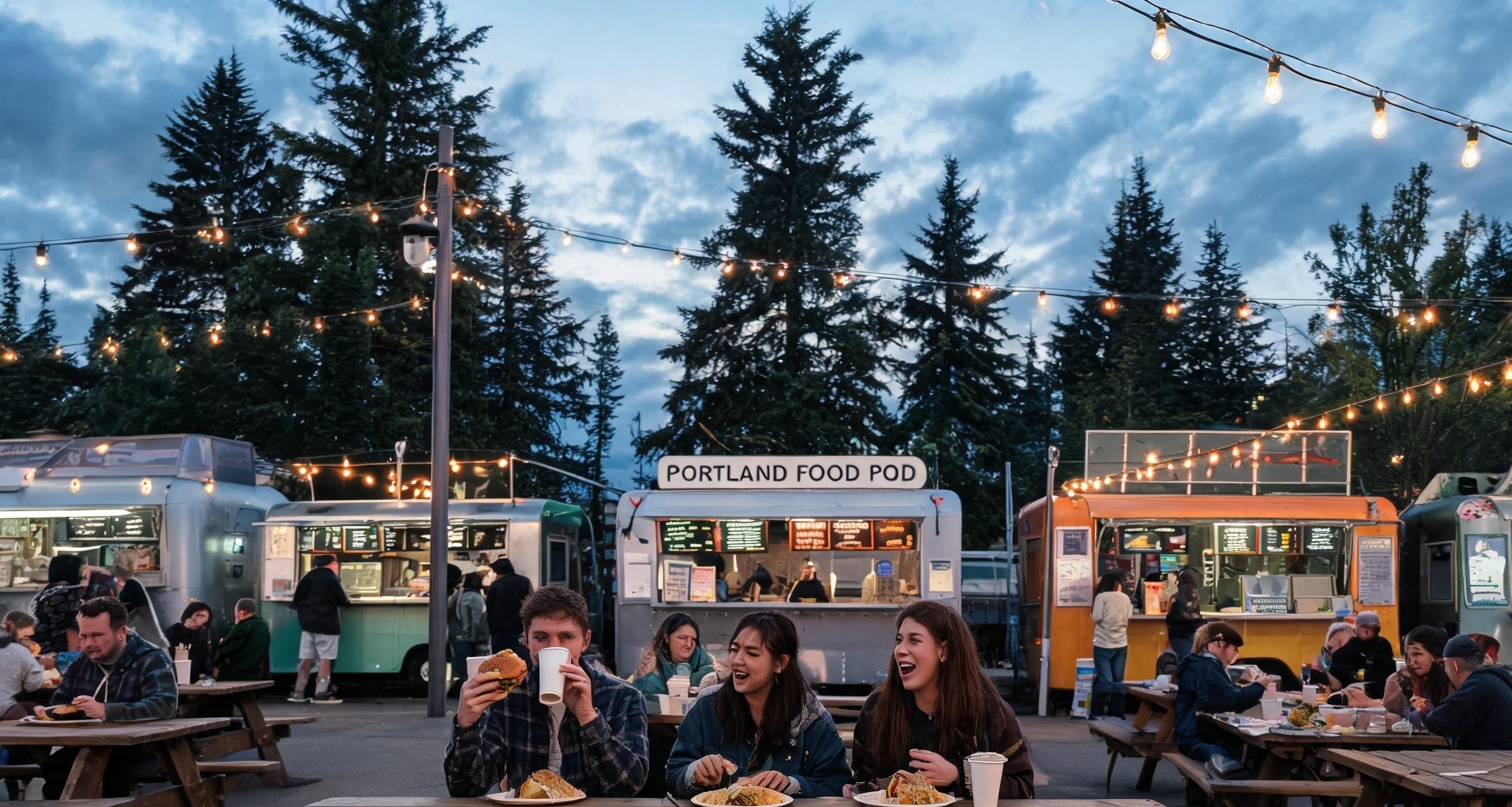
Portland's food cart culture has been written about extensively, and the reason is simple: the overhead is low enough that cooks can take risks they could not take in a restaurant. Renting a cart space costs a fraction of commercial rent, which means a cook can open a cart serving one dish, or the cuisine of their home country, without needing a full menu or a large staff. The result is that you find food in these pods that you simply cannot find anywhere else at the same price point. The cart pod on Division is not unique in Portland, but it is representative. Three cuisines, three countries, three completely different approaches to cooking, all within twenty feet of each other, all under fifteen dollars a plate. In any other city, you would pay three times that much in a restaurant and get food that is no better.
What struck me most about the food cart pod was the contrast between the quality of the food and the modesty of the setting. Nobody at these carts is trying to create an experience or a brand or an Instagram moment. They are just cooking, the same thing every day, for people who appreciate good food and do not want to pay restaurant prices for it. The seating is wooden benches. The tables are small and sometimes wobbly. There is no waiter service, no reservations, no dress code. You order at the window, take a number, and sit down. When your food is ready, you pick it up. It is the most straightforward dining experience possible, and the food is better than what you get at most sit-down restaurants that charge three or four times as much. Portland understood something about food that other cities are still figuring out: the overhead of a restaurant has almost nothing to do with the quality of the cooking.