The first time I made beef Wellington, I spent four hours on it and the result was a disaster. The beef was overcooked, gray and dry all the way through. The puff pastry was soggy on the bottom, the opposite of what it should have been. The mushroom duxelles, which I had not cooked long enough, released water during baking and turned the inside of the pastry into a damp, unappetizing paste. The whole thing looked like something from a cooking competition where the contestant ran out of time. My wife, who had been watching the process with increasing alarm, ate one slice and said nothing. I threw the rest away and ordered pizza. That was three years ago, and I have made beef Wellington four times since then, each time a little better, and the version I made last Christmas was good enough that my wife asked me to make it again for her birthday.
The problem with most beef Wellington recipes is that they make the process sound straightforward when it is actually full of small decisions that determine whether the dish works or fails. The beef should be a center-cut tenderloin, trimmed of silver skin and any obvious fat. You sear it in a very hot pan for about sixty seconds per side, just enough to develop a brown crust. Then you let it cool completely. If you wrap the beef in pastry while it is still warm, the heat will melt the butter in the puff pastry before it goes into the oven, and you will get a flat, greasy crust instead of a puffy, layered one. Cooling takes at least thirty minutes. I put the seared beef in the refrigerator while I prepare the other components.
The duxelles is where most people go wrong. Finely chopped mushrooms, usually a mix of button and cremini, cooked in butter with shallots, thyme, and a splash of white wine or brandy. The crucial step is cooking the mushrooms long enough. Most recipes say ten minutes. That is not enough. You need to cook the mushrooms for twenty to twenty-five minutes, stirring occasionally, until the moisture has completely evaporated and the mushrooms have darkened and concentrated into a thick paste. If there is any remaining liquid, the duxelles will leak during baking and ruin the pastry. I add a pinch of salt early in the cooking process to help draw out the moisture, and I keep the heat at medium so the mushrooms brown without burning. When the duxelles is done, it should look like a dark, glossy paste that holds its shape when you push it with a spoon.
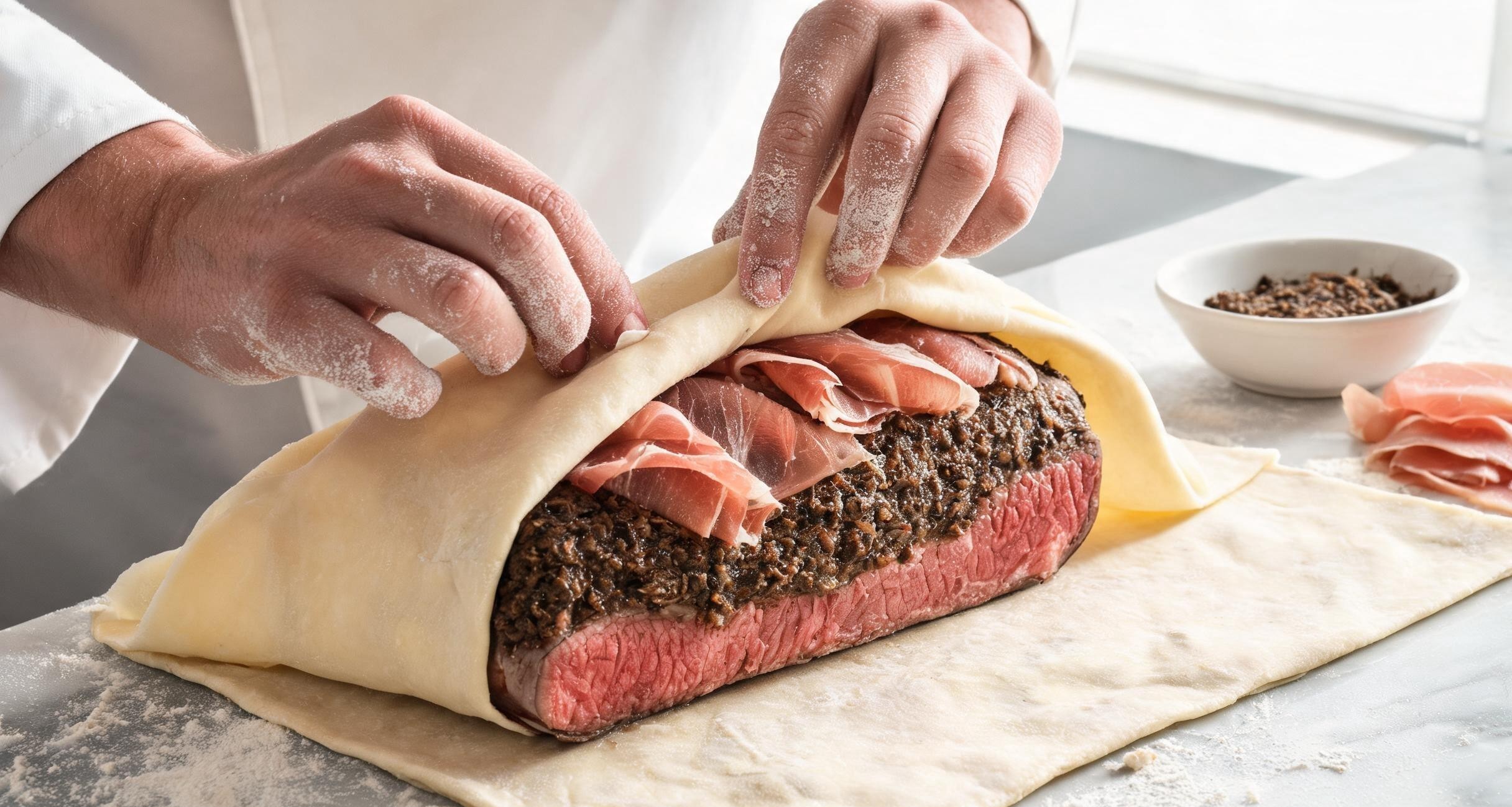
The assembly goes in layers. First, a sheet of plastic wrap on the counter. Then six to eight slices of prosciutto, slightly overlapping, laid out in a rectangle. Then the duxelles, spread evenly over the prosciutto. Then the cooled beef tenderloin, placed at one edge and rolled up tightly in the prosciutto and duxelles, using the plastic wrap to help shape it into a neat cylinder. The whole thing goes into the refrigerator for another thirty minutes to firm up. Then you remove the plastic wrap, roll the cylinder in puff pastry, seal the ends, brush with egg wash, and score the top with a knife. The scoring is not just decorative. It allows steam to escape during baking and prevents the pastry from blowing up unevenly.
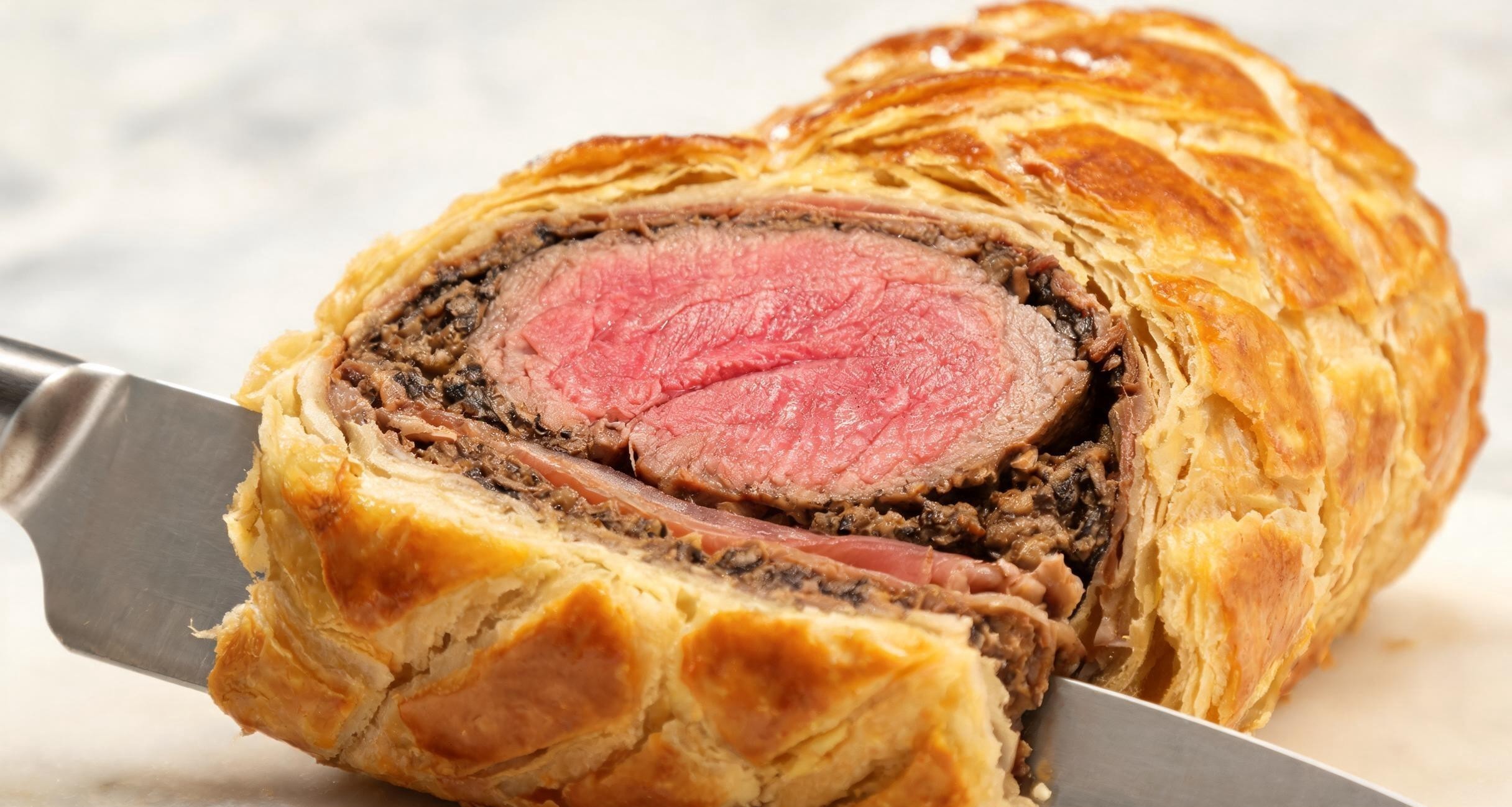
Baking temperature and time depend on how you like your beef. I cook the Wellington at 425 degrees Fahrenheit for twenty-five to thirty minutes, which produces a crust that is deeply golden and beef that is medium-rare in the center. The internal temperature should be about 120 to 125 degrees when you pull it from the oven, and it will rise another five to ten degrees during resting. If you prefer your beef more done, you can extend the baking time, but the Wellington is best when the beef is pink in the middle. The contrast between the crisp pastry, the savory duxelles, the salty prosciutto, and the tender, pink beef is the whole point of the dish. If the beef is gray all the way through, you have lost that contrast and the dish becomes monotonous.
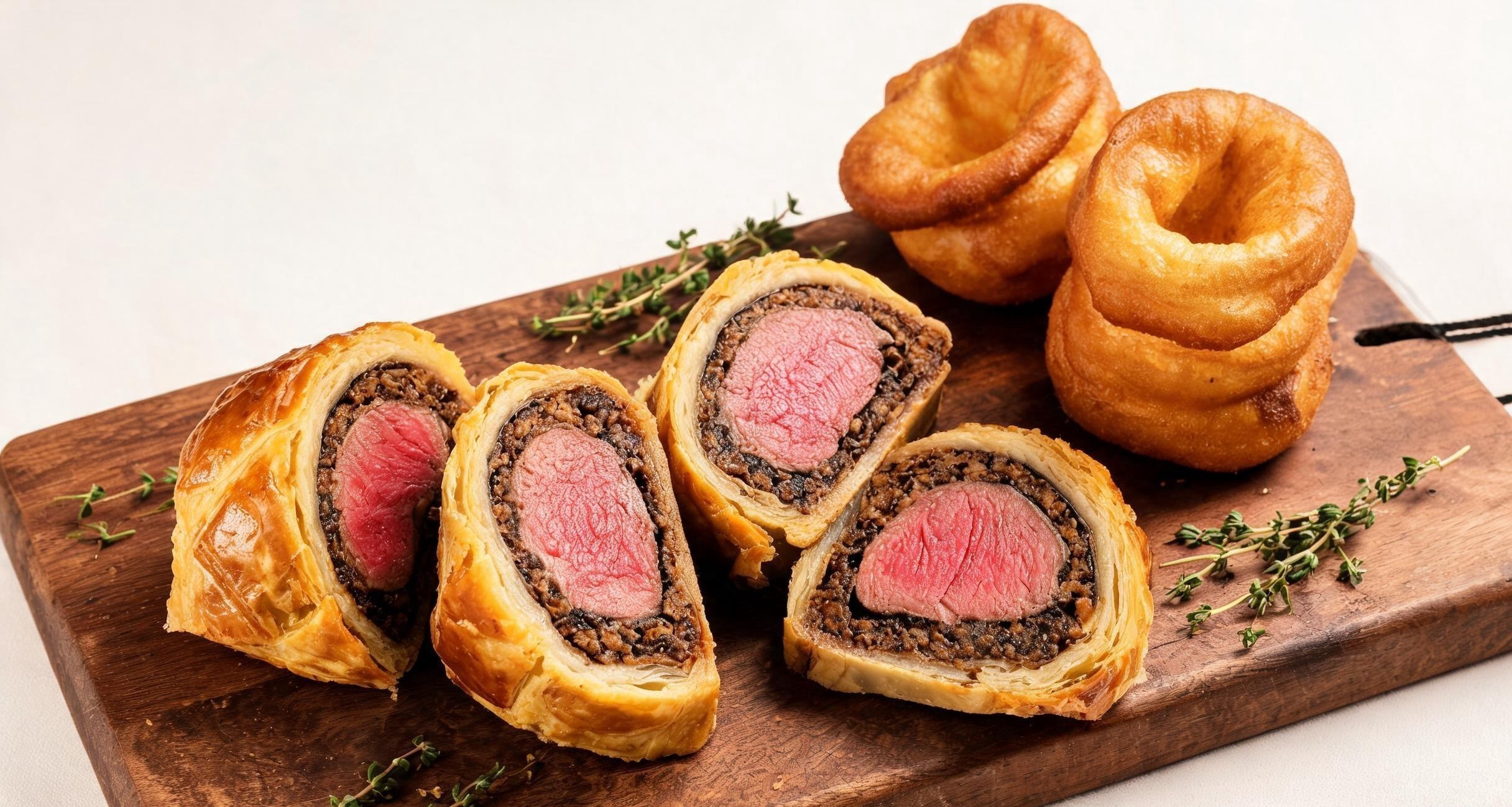
Let the Wellington rest for ten minutes before slicing. Use a serrated knife and cut in slices about an inch thick. You should see distinct layers in cross-section: golden pastry, a thin layer of prosciutto, the dark duxelles, and the pink beef in the center. If the layers are not visible, something went wrong in the assembly. The first time I got a clean cross-section with all layers visible, I took a photograph of it, which is something I almost never do with food. The dish is expensive, time-consuming, and slightly stressful to make, and it is not something you would cook on a random Tuesday night. But for a special occasion, when you want to put something on the table that looks impressive and tastes as good as it looks, beef Wellington is one of the few dishes that actually delivers on both counts.