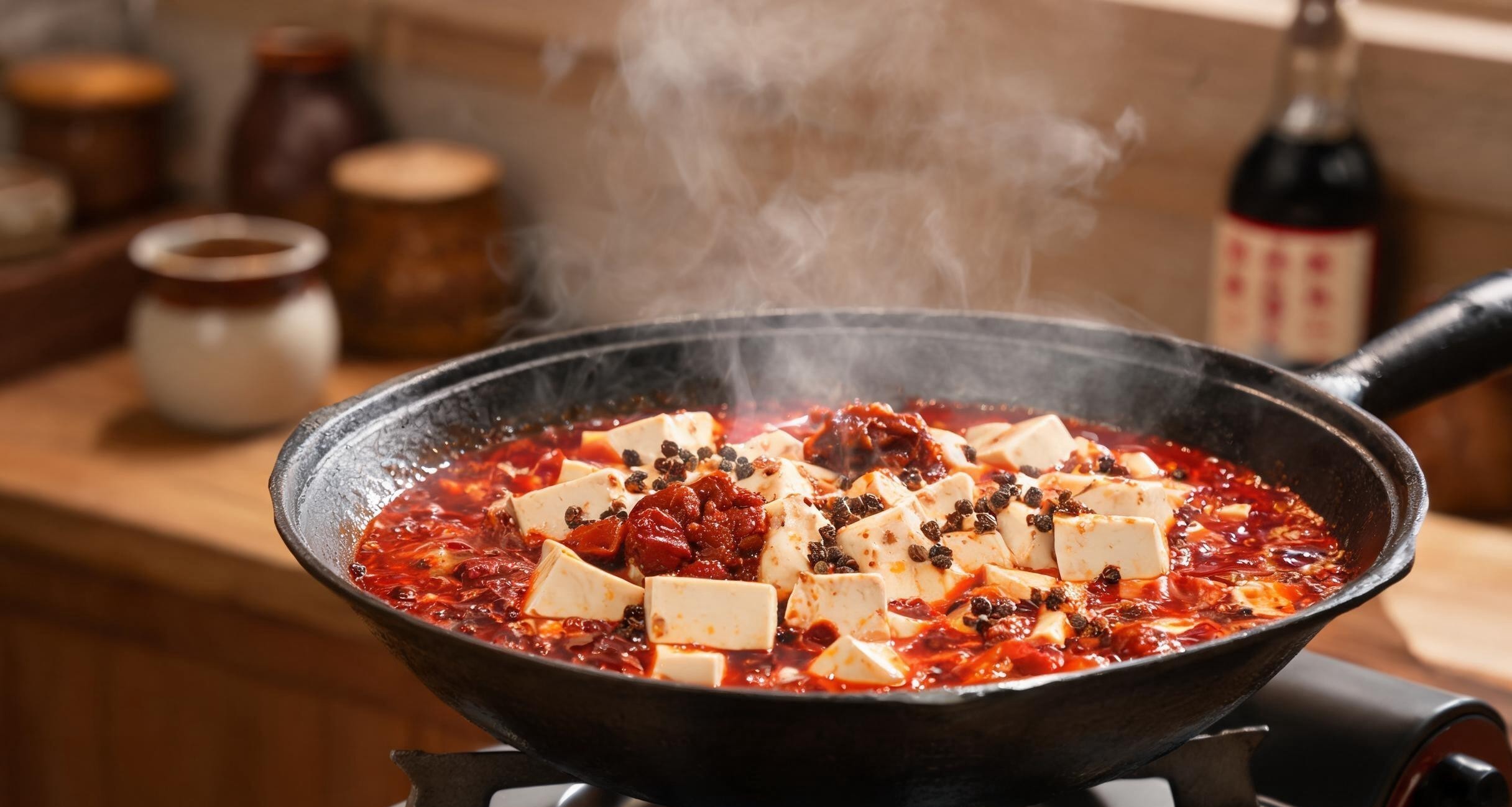
The mapo tofu I grew up eating at home in Seattle bore almost no resemblance to what I found on the menu at most American Chinese restaurants. Those versions were sweet, mild, and thickened with cornstarch to a gloppy consistency, with large cubes of firm tofu floating in a sauce that could have come from any stir-fry. The mapo tofu my mother made was different. It was red and oily, with a heat that numbed your lips and made your forehead sweat, and the tofu was so soft it broke apart when you looked at it. She used Pixian doubanjiang, the fermented broad bean paste from Sichuan, and she was possessive about the brand. When our local Asian grocery store ran out of her preferred label, she drove to a different city to buy it. I thought she was being dramatic. Now I drive to a different city for the same reason.
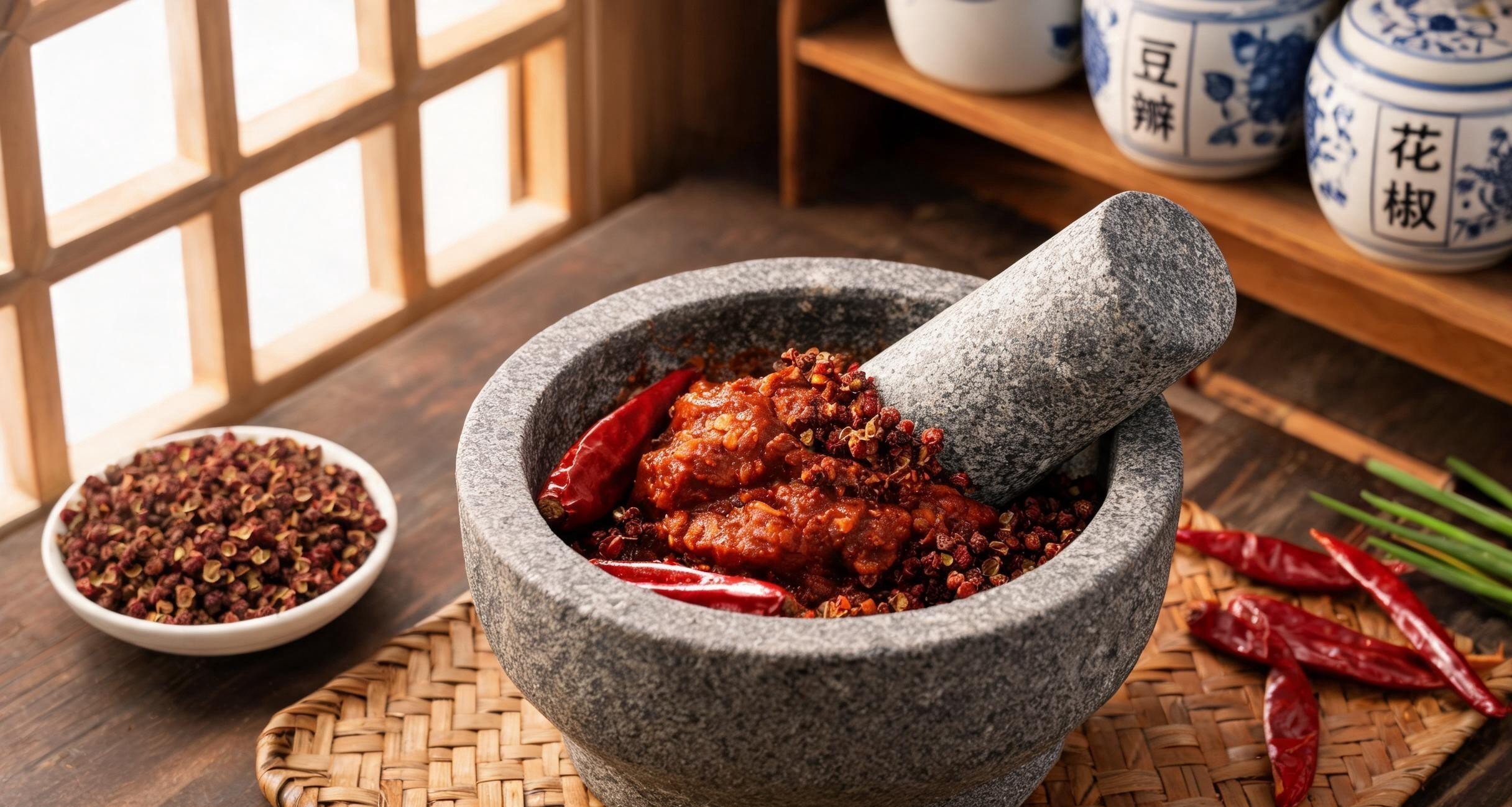
Pixian doubanjiang is not optional. It is the defining ingredient in mapo tofu, and there is no real substitute. This is a fermented chili and broad bean paste from Pixian county in Sichuan, aged for years, and it provides the deep, savory, chili-heat base of the dish. If you see a jar that says Sichuan chili bean paste or doubanjiang at an Asian grocery, check the label. You want one that lists broad beans and chilies as the primary ingredients, ideally with some indication of aging. The brand does not matter as much as the authenticity, but my mother used Zhaojiangchun and so do I. It is reddish-brown, salty, deeply umami, and packed with chili heat. Start with two tablespoons and adjust from there.
The other essential ingredient is Sichuan peppercorns, which provide the ma in ma-la, the numbing sensation that balances the chili heat. Toast a tablespoon of whole Sichuan peppercorns in a dry pan until fragrant, then grind them coarsely in a mortar and pestle or a spice grinder. Do not use pre-ground powder if you can avoid it. Freshly ground has a brighter, more floral character that makes a real difference. The numbing effect is subtle at first and builds as you eat, creating a tingling sensation on the lips and tongue that is unlike any other spice experience. You will also need ground pork, about a quarter pound, and soft or silken tofu, not firm. The tofu should be the kind that trembles when you shake the package. Cut it into one-inch cubes and set it aside.
Heat a couple of tablespoons of oil in a wok or deep skillet over medium heat. Add the ground pork and cook, breaking it up, until it is browned and beginning to crisp. Push the pork to the side and add the doubanjiang, along with a tablespoon of finely minced garlic and a teaspoon of minced ginger. Cook the paste for about a minute, stirring constantly, until it is fragrant and the oil has turned a deep red. Add a cup of chicken or vegetable stock and bring to a simmer. Gently lower the tofu cubes into the sauce. Do not stir vigorously. Use the back of a spoon to gently push the tofu through the sauce, letting it absorb the flavors without breaking apart.
Let everything simmer for about 5 minutes. The sauce should be loose and oily, not thickened with cornstarch. Traditional mapo tofu has a soupy consistency, not the gloppy version you often find in restaurants. Season with a splash of soy sauce and a pinch of sugar. In the last minute, drizzle in some chili oil if you want extra heat, and sprinkle the top with the ground Sichuan peppercorns and a generous handful of chopped scallions.
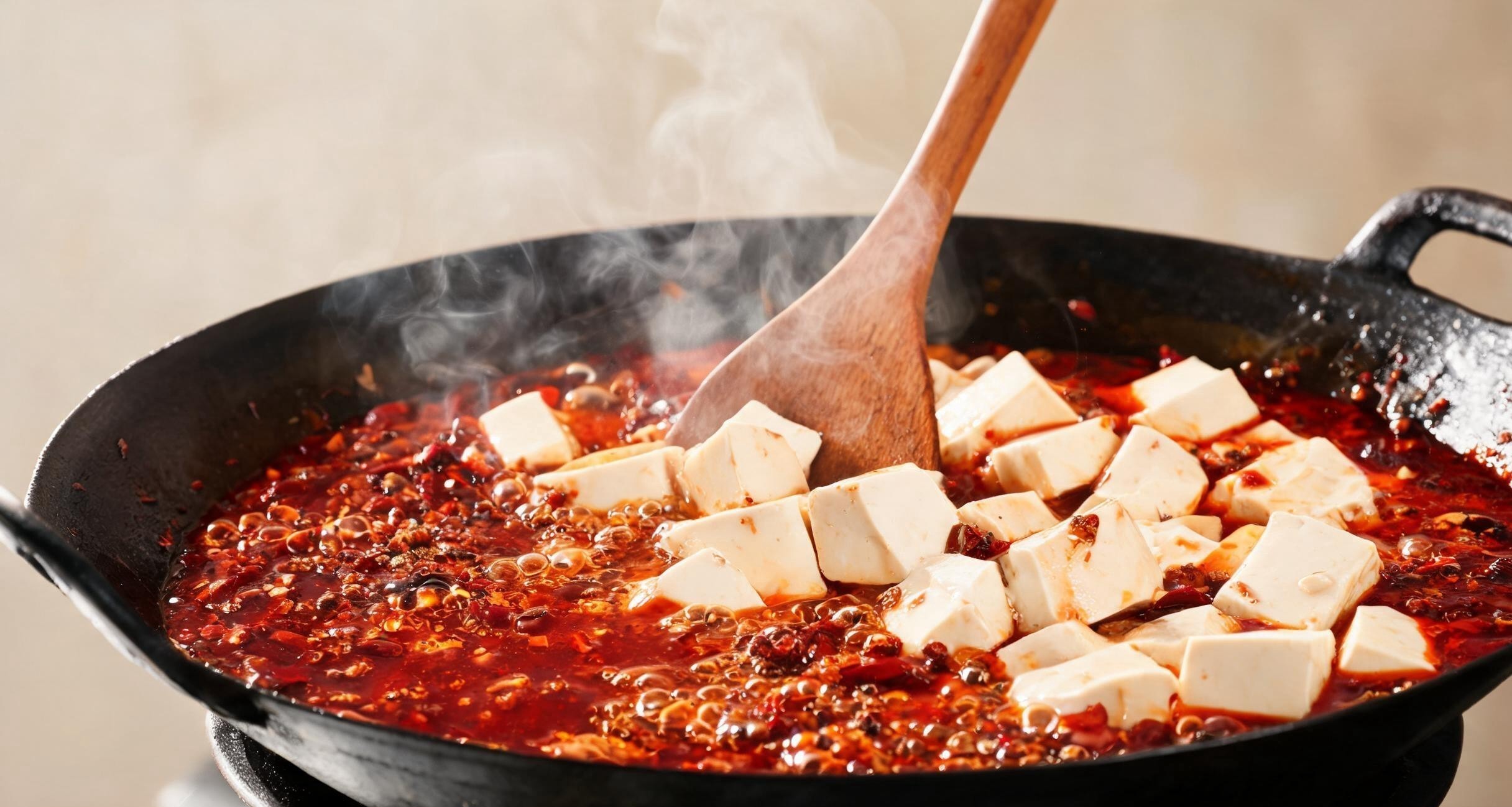
Serve mapo tofu over plain white rice, with the sauce pooling around the grains. The dish should be spicy enough to make you reach for water, but balanced enough that you keep eating. That balance between the numbing ma and the burning la is what defines Sichuan cuisine, and mapo tofu is one of the purest expressions of it. The tofu should be soft enough to eat without chewing, the pork should be crispy and savory, and the sauce should coat every grain of rice with its oily, spicy, umami-rich character. A bowl of mapo tofu and rice is one of those meals that takes twenty minutes to prepare and disappears in ten minutes of eating. My mother used to make it on weeknights when she needed something fast but satisfying, and it was the dish I requested most often when I came home from college. This is not a complicated dish, but the ingredients matter more than the technique. Get the right doubanjiang, use enough Sichuan peppercorns, and do not thicken the sauce. Everything else falls into place.
The Sichuan peppercorn is what makes mapo tofu different from any other tofu dish, and most restaurants outside of Sichuan use either too little or none at all. The peppercorn does not add heat. It adds a tingling, numbing sensation on the tongue that the Chinese call ma, which prepares the palate for the la, the heat from the chili. Together, ma la is the defining flavor profile of Sichuan cooking. For mapo tofu, the peppercorns are toasted dry in a pan until fragrant, then ground to a powder and sprinkled over the finished dish. The amount should be enough that you feel it on your lips with the first bite.