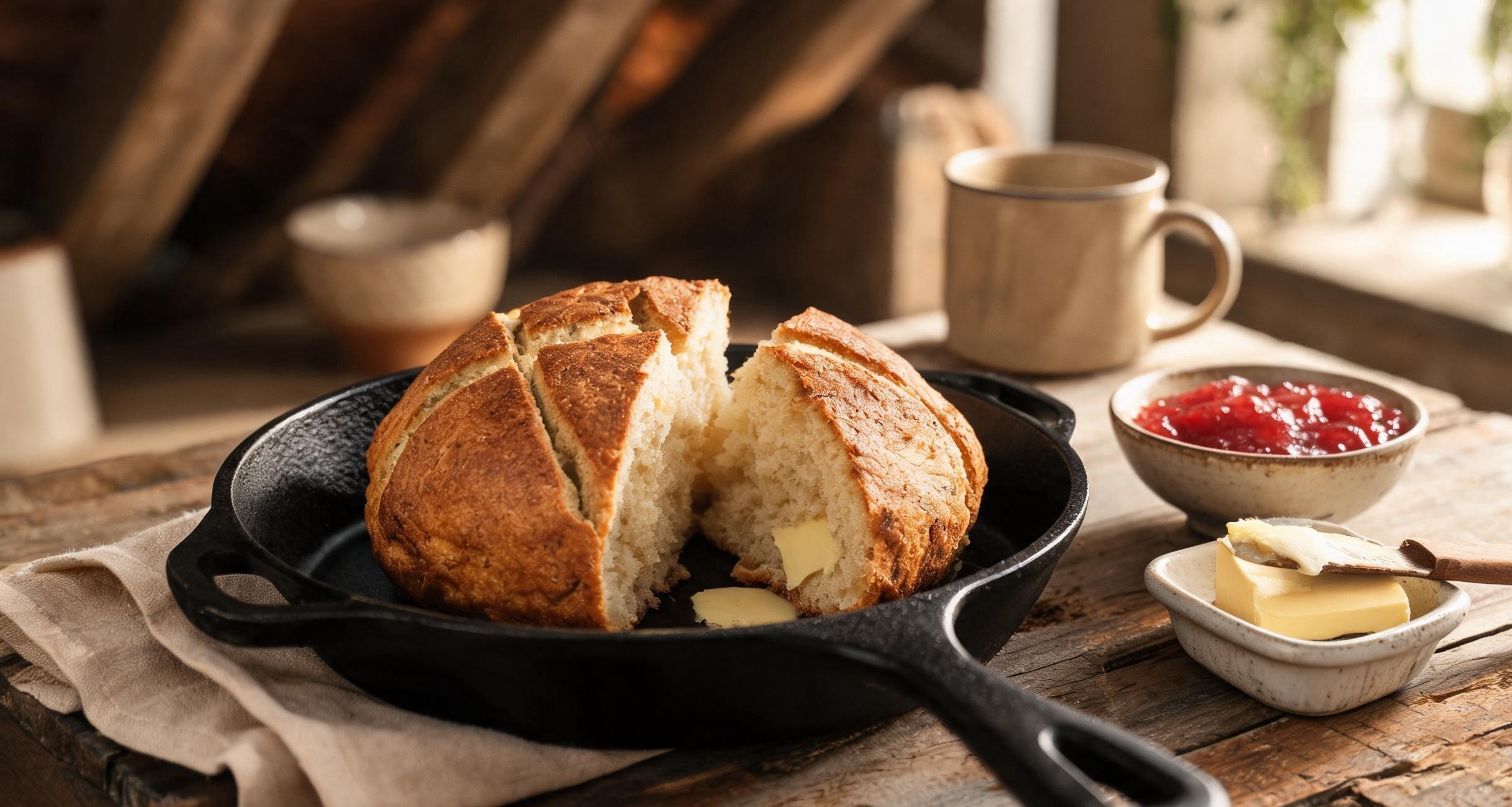
I started making Irish soda bread because I wanted bread for dinner and did not want to wait. It was a Tuesday, it was raining, and the idea of mixing a dough, waiting for it to rise, shaping it, waiting again, and then baking it felt like more than the evening could handle. Soda bread takes forty minutes from the moment you think about it to the moment you pull it out of the oven. There is no yeast. There is no kneading. There is no proof. You mix the dry ingredients, add buttermilk, form a round, cut a cross in the top, and bake it. The bread that comes out is crusty outside, slightly dense and tender inside, with a tang from the buttermilk that makes you wonder why you bother with yeast bread at all on a weeknight. I now make it at least twice a week.
The chemistry is simple. Baking soda is an alkali. Buttermilk is acidic. When they meet, they produce carbon dioxide, which creates the lift in the bread. No yeast needed. This reaction happens immediately, which is why you need to get the bread into the oven as quickly as possible after mixing. Do not let the dough sit around. The baking soda starts working the moment the buttermilk hits it, and if you wait, the bread will not rise as well. Work quickly and move the dough from the bowl to the oven in under five minutes.
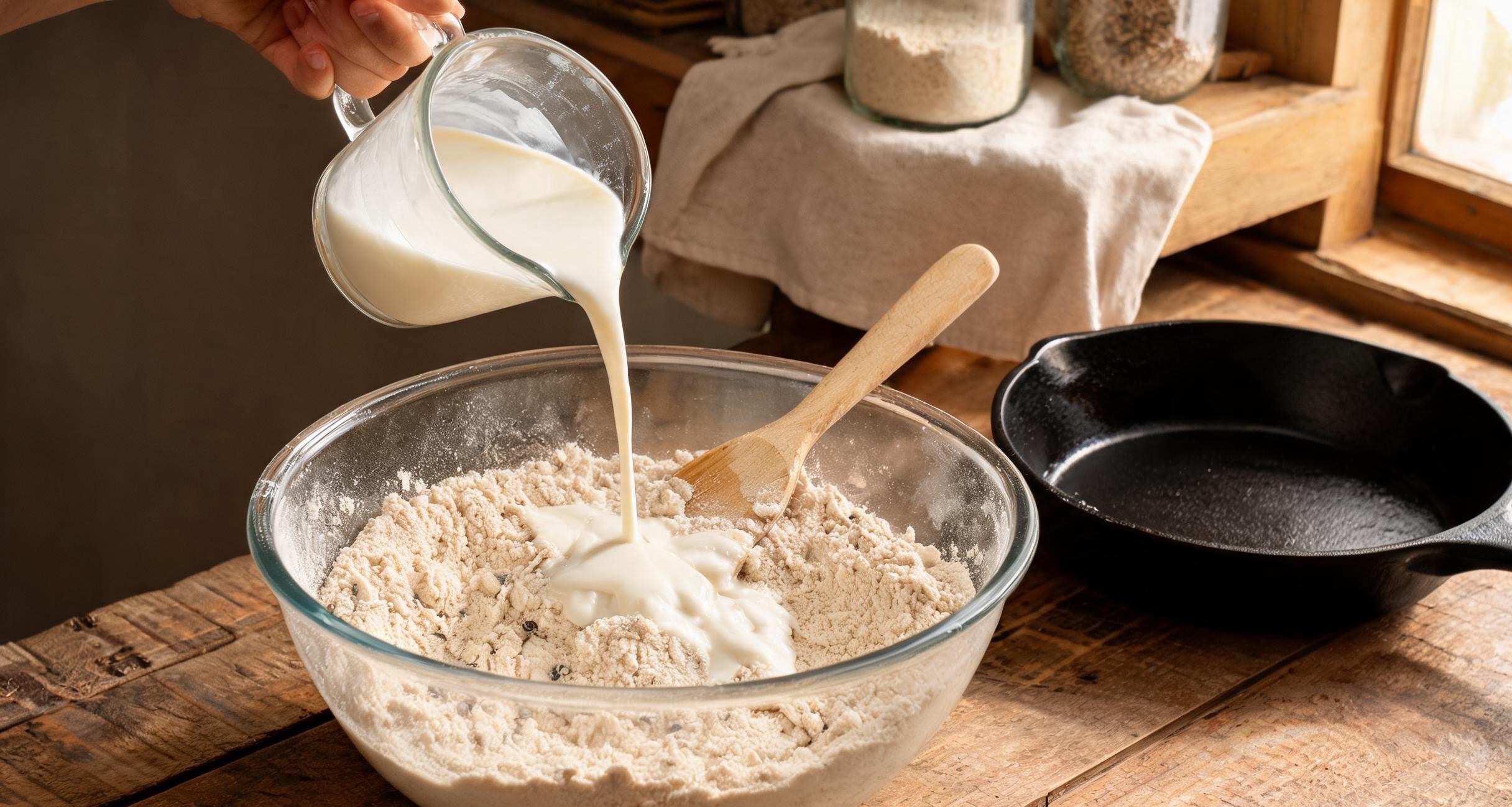
The ingredients are minimal. Four cups of all-purpose flour, one teaspoon of baking soda, one teaspoon of salt, and about one and three-quarter cups of buttermilk. That is the basic recipe. Some people add a tablespoon of butter cut into the flour, which makes the bread slightly richer and tenderer. Some add a tablespoon of sugar for a hint of sweetness. I add both when I am serving it with soup or stew, and keep it plain when I want a more neutral bread for sandwiches. Either way, the proportions are straightforward. Mix the dry ingredients together, make a well in the center, pour in the buttermilk, and stir with a wooden spoon until the mixture just comes together.
Turn the dough out onto a lightly floured surface and gather it into a round with your hands. Do not knead it. Press and fold it gently a few times until it holds together, but resist the urge to work it further. Overworking soda bread dough develops the gluten and makes the final loaf tough and chewy instead of tender. Transfer the round to a cast-iron skillet that has been lightly oiled. The skillet is not strictly necessary, but it produces a crust on the bottom and sides that a baking sheet cannot match. Cut a deep cross in the top of the loaf, about halfway through. This is a traditional practice, and it helps the bread bake evenly by allowing the heat to reach the center. Some say the cross is to let the fairies out. I say it is to let the heat in.
Bake at 400 degrees for about 35 to 40 minutes. The bread is done when it is golden brown and sounds hollow when you tap the bottom. Let it cool in the skillet for about 10 minutes, then transfer it to a wire rack. Do not cut into it while it is still hot, or the interior will be gummy. Let it cool for at least 20 minutes before slicing. Soda bread is best the day it is made, but it is perfectly fine the next day, toasted with butter. It does not keep well beyond that because there is no fat to keep it moist. I make it fresh every time.
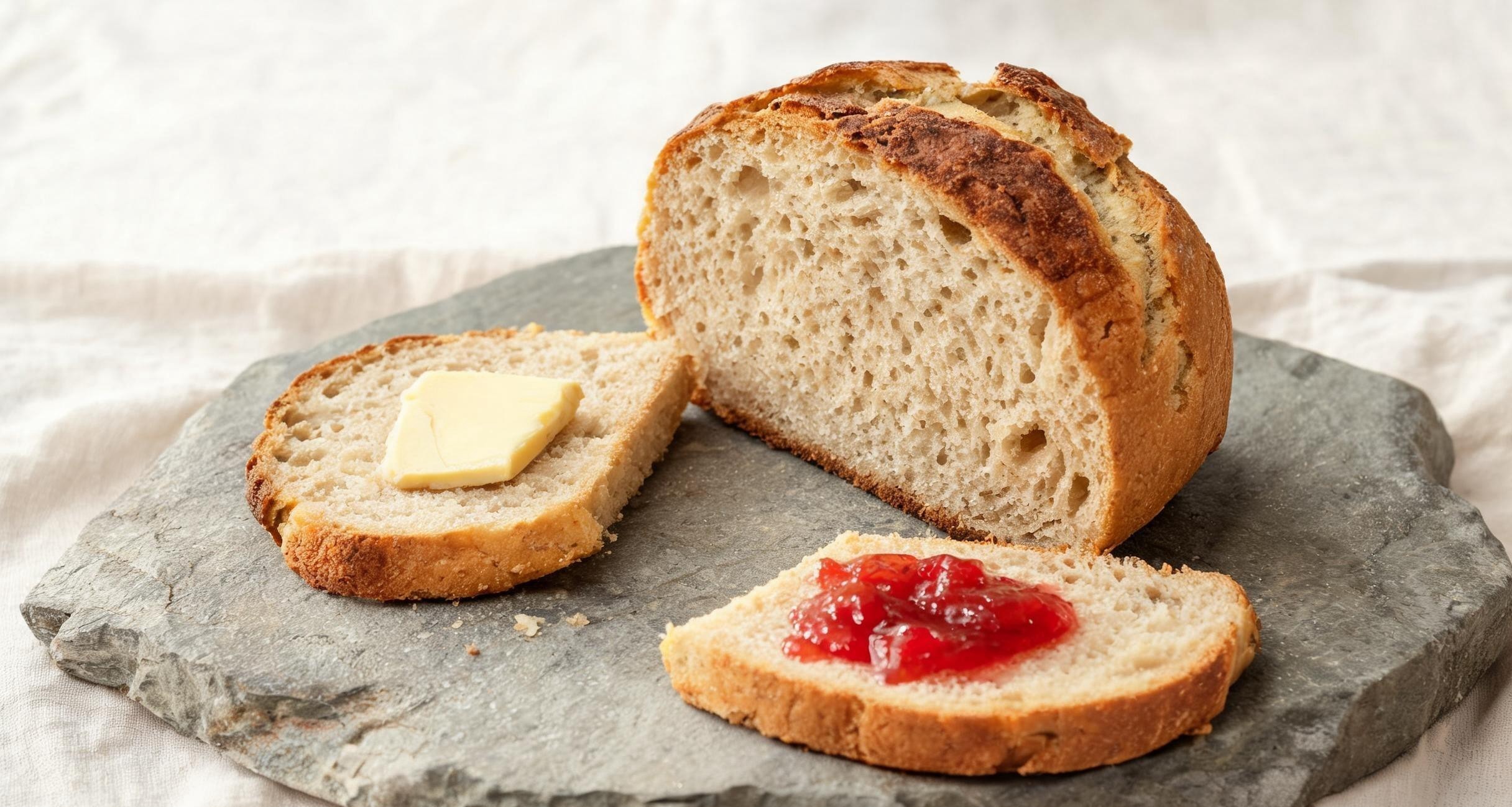
This is the kind of recipe that gives you confidence in the kitchen because it is nearly foolproof. If the dough is too wet, add a handful of flour. If it is too dry, add a splash of buttermilk. The measurements do not need to be precise. The bread will forgive you. I have made this recipe so many times that I no longer measure anything, and the bread comes out fine every time. The variations are endless. Add a cup of raisins and a tablespoon of caraway seeds for a more traditional Irish American version. Add cheddar cheese and chives for a savory version that works well with soup. Add a handful of oats to the dough for a nuttier texture and a slightly darker crust. The result is a warm, rustic loaf that costs pennies to make and tastes like something your grandmother would have pulled from her oven on a rainy afternoon. Which, in my case, is exactly the point. My grandmother was not Irish, but the impulse behind soda bread is universal: feed people something warm and real, and do it fast. Forty minutes is all it takes.