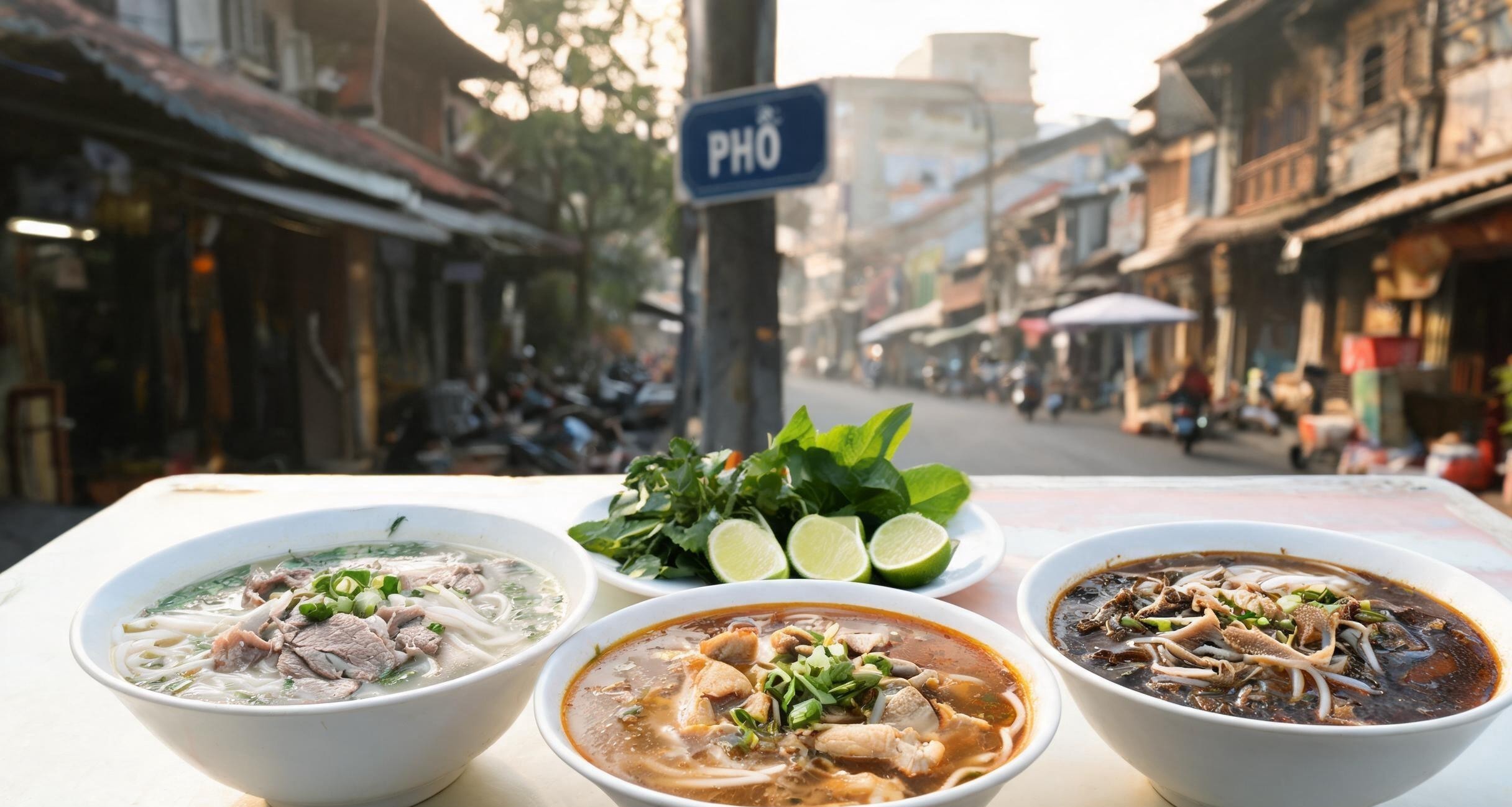
I started eating pho at 6am in Hanoi because that is when the good stalls open and the serious eaters show up. By noon, most of the famous places have sold out and the pots are empty. The pho culture in Hanoi is not a lunch or dinner thing. It is a morning ritual, and the earlier you arrive, the fresher the broth. I spent a week waking up before dawn, walking through the Old Quarter in the pre-dawn quiet, and sitting on tiny plastic stools while the city woke up around me. I ate pho at nine different stalls and narrowed my favorites down to three, each representing a different approach to the same dish.
The first was a stall on a street just west of Hoan Kiem Lake, run by a family that has been making pho for three generations. The broth was beef, not chicken, and it had the kind of clarity that comes from careful skimming and long, slow simmering. It was amber in color, slightly sweet from the bones, with a background note of star anise and charred ginger. The beef was served rare, sliced paper-thin and placed in the bowl raw, cooking instantly when the boiling broth was ladled over it. The noodles were flat rice noodles, tender but not mushy, and the garnishes were minimal: a few sprigs of Thai basil, some sliced chilies, and a squeeze of lime. No bean sprouts, no hoisin, no sriracha. The stall owner told me, through a friend who translated, that those additions were southern Vietnamese and had no place in a proper Hanoi bowl.
The second was a chicken pho stall in the French Quarter, a slightly more upscale operation with indoor seating and actual chairs. The broth was lighter than the beef version, with a pronounced chicken sweetness and a more subtle spice profile. The chicken was pulled from whole birds that had been simmering in the broth, giving the liquid a different body than the beef version. The skin was left on the chicken pieces, which added a richness that surprised me. This version came with a plate of fresh herbs and a small dish of fresh garlic chili vinegar on the side. The vinegar cut through the richness of the chicken skin and balanced the sweetness of the broth. It was a more delicate bowl than the beef version, and I found myself eating it more slowly.
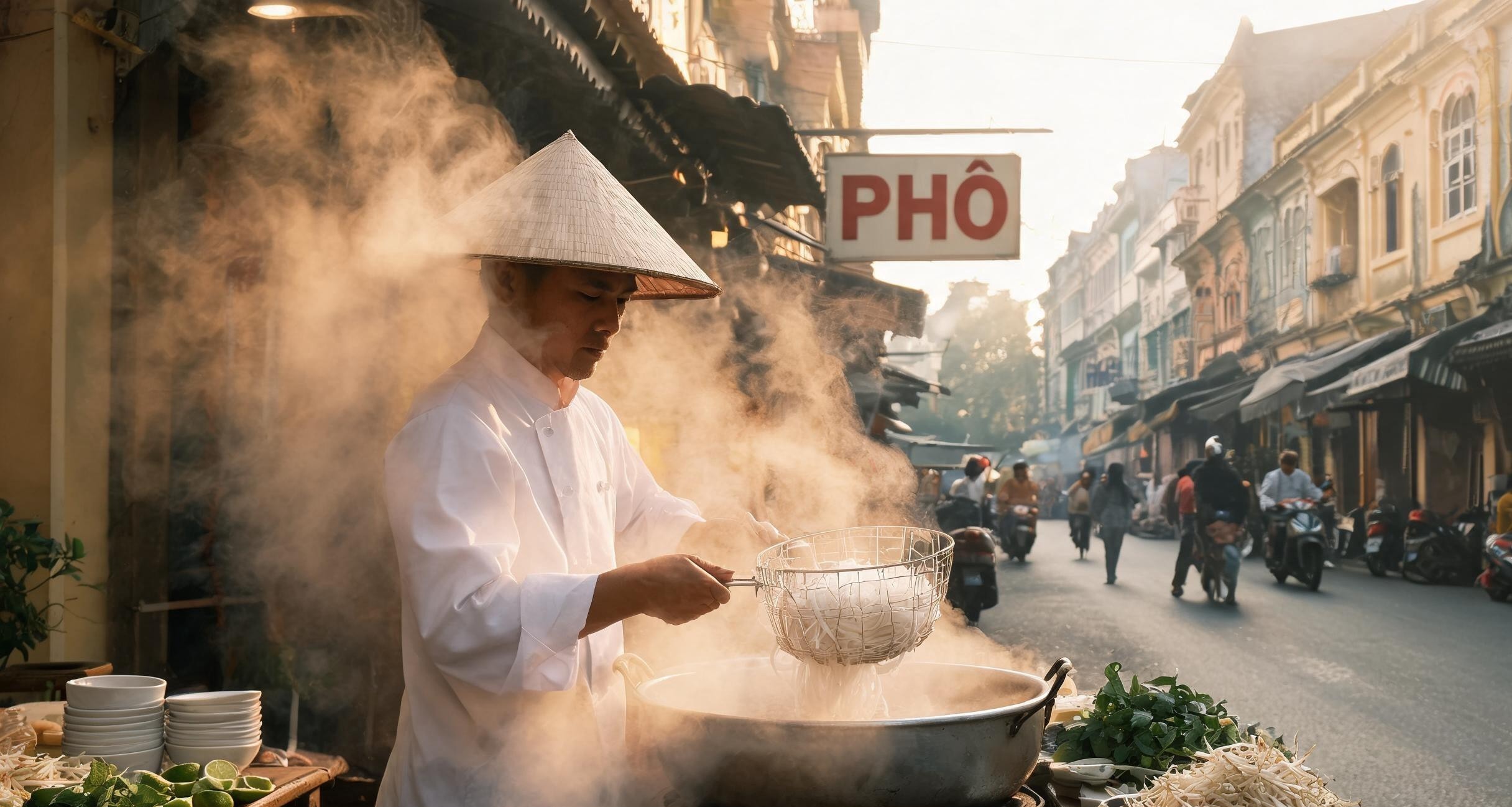
The third was a place I found by accident, down a narrow alley that I almost walked past. There was no sign, just a pot on a burner and a woman making noodles by hand in the corner. The broth was beef, but it was different from the first stall. It was darker, deeper, with a roasted quality that suggested the bones had been charred before simmering. The noodles were wider and chewier, clearly homemade, with an irregularity that machine-made noodles cannot replicate. She pulled them from a press by hand, cutting them with a knife into uneven lengths, and the texture was exactly right: substantial enough to hold up in the broth but not so thick that they overwhelmed it. The beef was a mix of rare slices and brisket that had been braised in the broth until it was fork-tender. This bowl was the most complex of the three, with layers of flavor that revealed themselves as the broth cooled slightly.
Comparing these three bowls is like comparing three different approaches to the same idea. The first was pure and traditional, the essence of Hanoi pho with nothing extra. The second was refined and delicate, a more elegant version with a lighter touch. The third was rustic and bold, the kind of bowl that comes from a cook who trusts her instincts and does not follow a recipe. All three were better than any pho I have eaten outside of Vietnam, which says something about the importance of local ingredients, local water, and the accumulated knowledge that comes from making the same dish every day for decades.
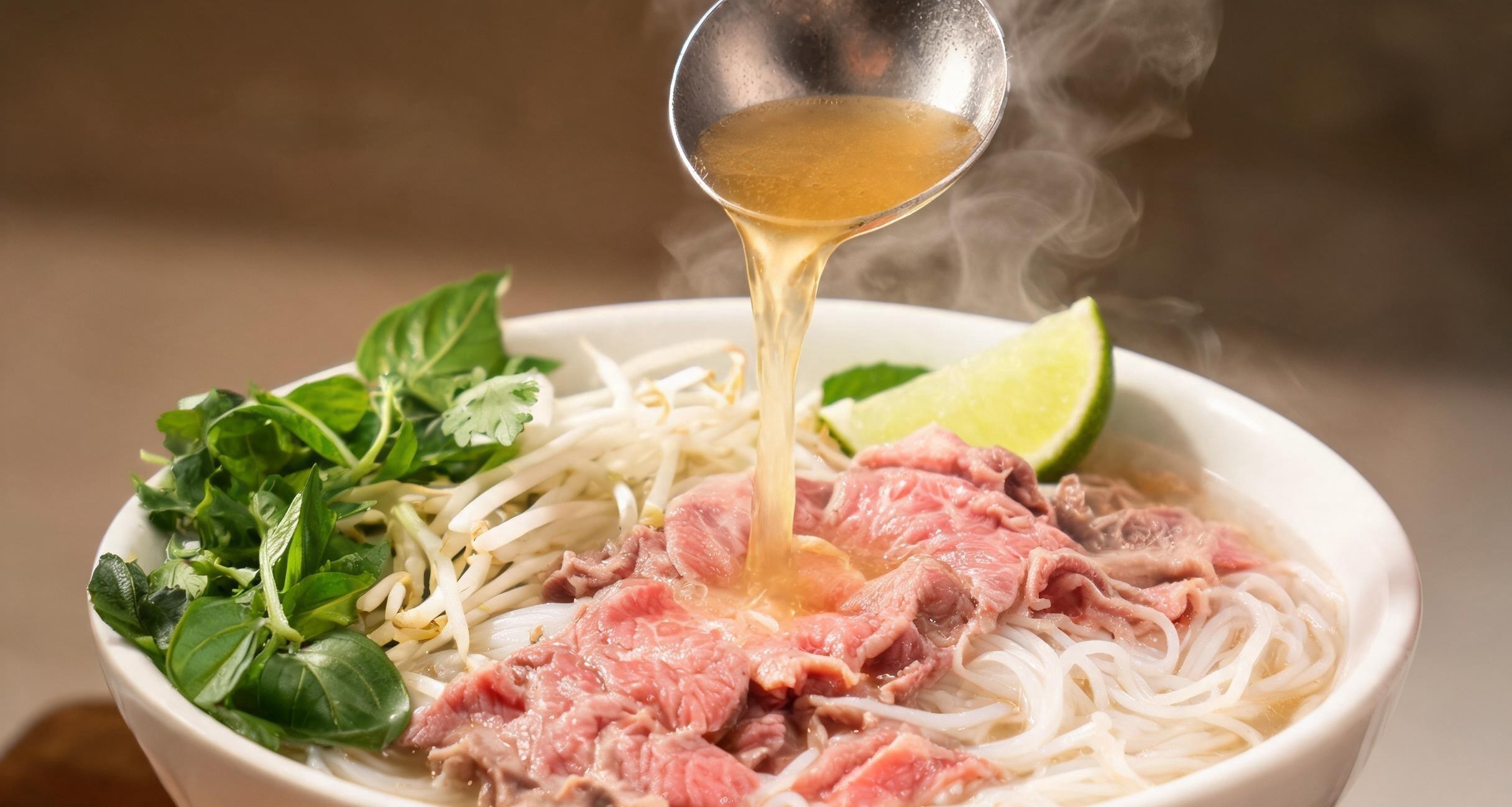
If you go to Hanoi, do not rely on guidebooks or Google reviews alone. Walk the streets early in the morning, look for the stalls with queues of locals, and sit down wherever the broth smells right. Pho in Hanoi is not a tourist attraction. It is daily sustenance, and the people making it are not performing for an audience. They are feeding their neighborhood. That is the key ingredient in every great bowl of pho in this city, and it cannot be replicated by any recipe or technique. It is the simple act of caring about the same pot of broth every single morning, year after year, because the people waiting on those tiny stools deserve nothing less.
The broth is the entire dish, and in Hanoi, the pho stalls that have been around for decades have a secret that is not really a secret. They start their broth before dawn, sometimes with bones that have been parboiled and scrubbed clean the night before. The charred ginger and onion, blackened over an open flame, give the broth its characteristic smoky undertone. Star anise, cloves, and cinnamon go in a spice bag that is removed after an hour, so the spices perfume the broth without overpowering it. The noodles, fresh banh pho, are cooked separately and added to the bowl, never cooked in the broth itself.