I found the place on a Tuesday night in early January, walking down Atlantic Avenue toward the waterfront with nowhere particular to go. The temperature had dropped into the low twenties that afternoon and most people on the street were moving fast, shoulders up, hands buried in pockets. I almost walked past it. The window was small, the sign understated, just the name in brass letters against frosted glass. Through the window I could see a wooden bar, maybe a dozen seats, and a warmth that stopped me mid-stride. I pulled the door open and stepped inside.
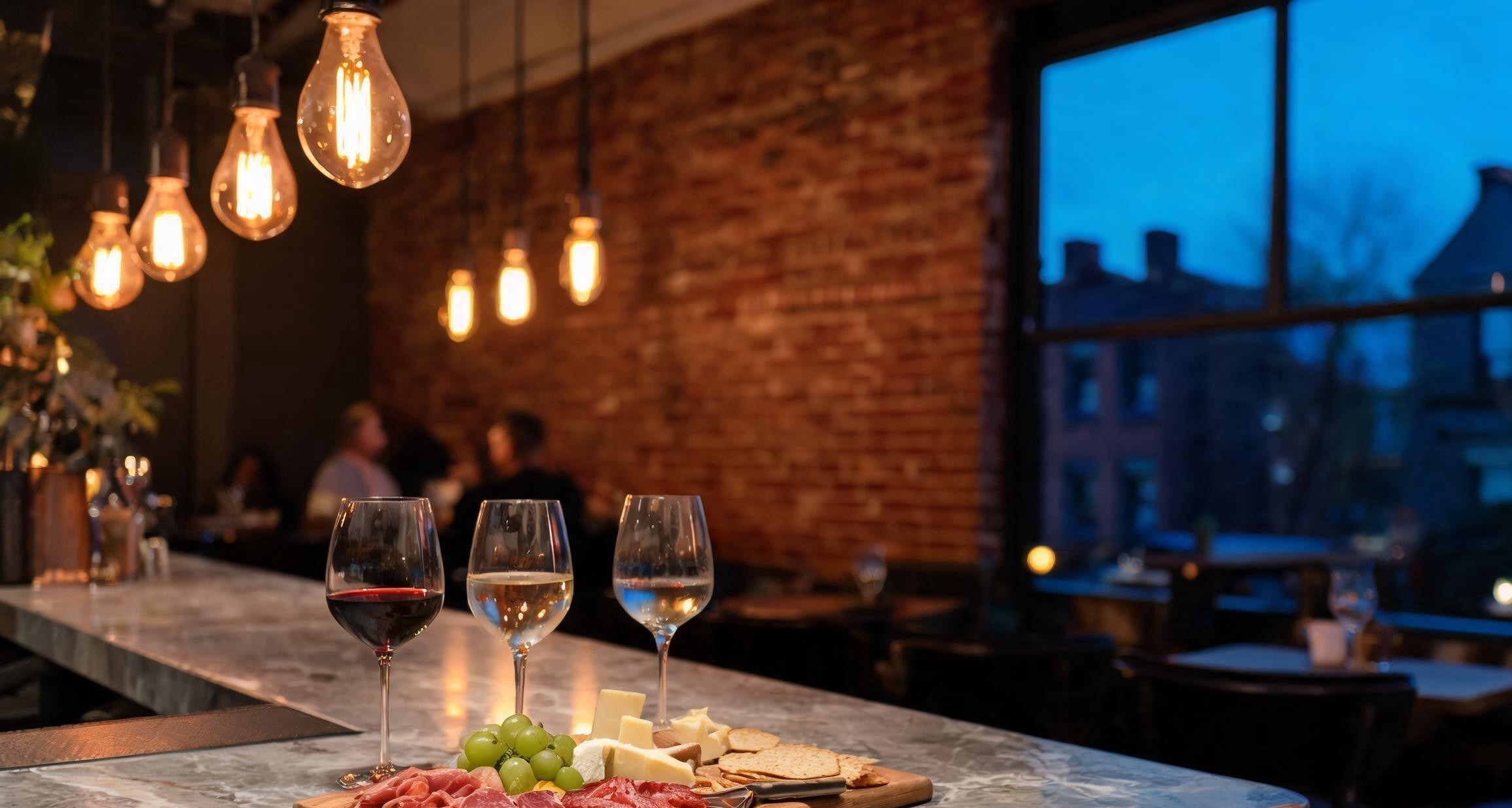
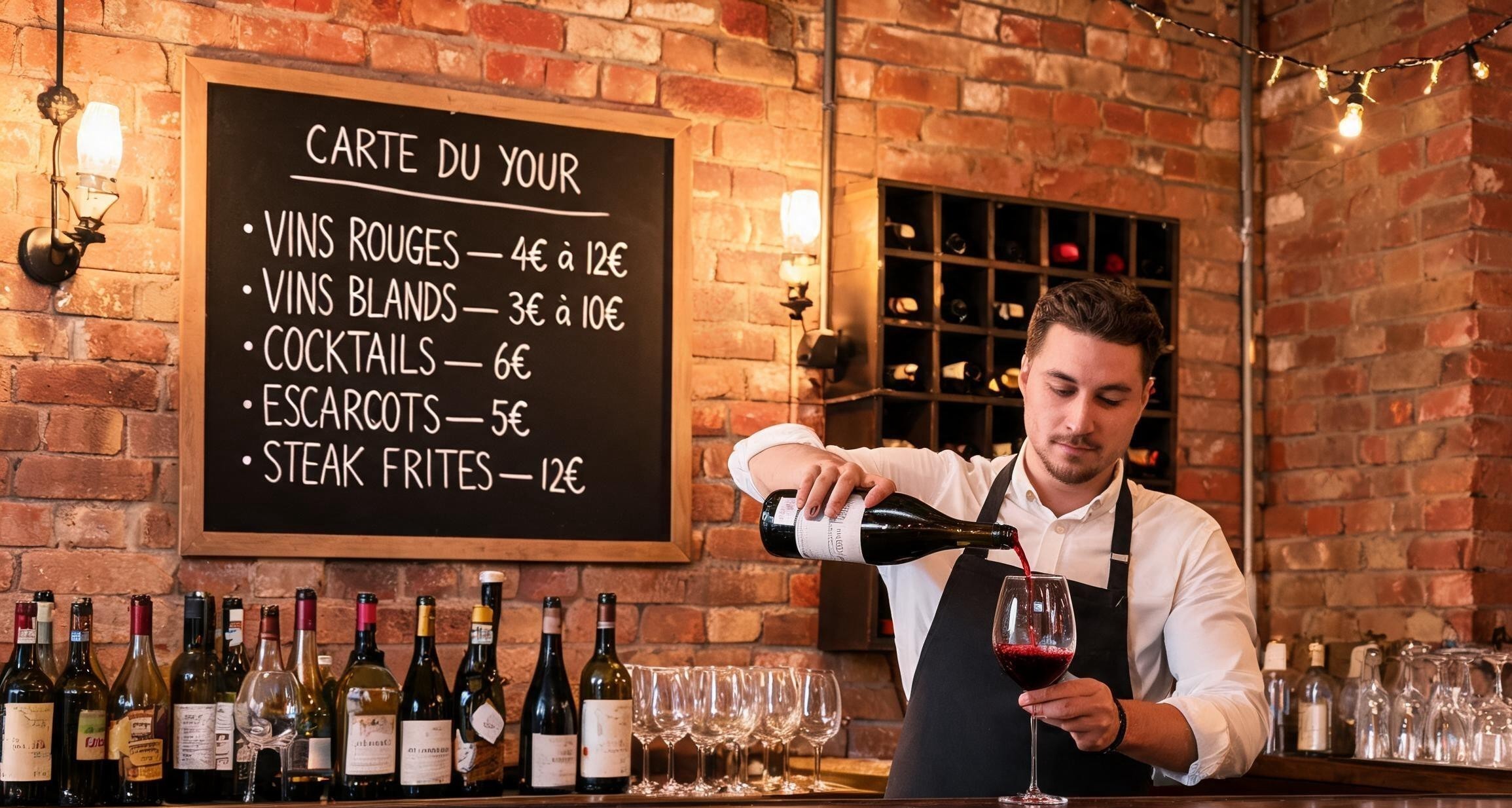
The room feels like someone's idea of a Lyon bistro transplanted carefully into Brooklyn Heights. Dark wood wainscoting runs along the lower half of the walls. The upper half is painted a muted olive green. There are small framed prints of French market scenes, the kind you've seen a hundred times, but they don't try too hard. The lighting is low and warm. A chalkboard near the kitchen lists the day's plats du jour in careful handwriting. At six-thirty on a Tuesday, about half the tables were occupied by people who looked like they had been there before and planned to come back.
The server handed me a menu and a glass of water without ceremony. No long recitation of specials, no scripted greeting. She told me the onion soup was good tonight, and that the duck confit had just come out of the kitchen and was worth ordering while it was hot. I appreciated both pieces of information and followed her advice on both counts. The wine list, a single laminated page, leaned heavily toward natural French producers. Glasses started at twelve dollars and topped out around eighteen. I ordered a glass of Trousseau from the Jura for fourteen dollars and it was exactly the kind of wine that makes you stop talking and pay attention to what's in your glass. Light, slightly oxidative, with a red-fruit edge that paired cleanly with the richness I knew was coming.
The onion soup arrived first, in a shallow bowl rather than a deep crock, and I was glad for that. So often French onion soup is a heavy, cheese-drenched exercise in excess. This version kept things restrained. The broth was dark and deeply caramelized, sweet from long-cooked onions but balanced by a light hand with the sherry. The crouton on top was thin and toasted, supporting a reasonable layer of melted gruyere rather than the thick cheese blanket that turns most restaurant versions into a molten hazard. It was the kind of soup that makes you feel taken care of on a cold night without putting you to sleep.
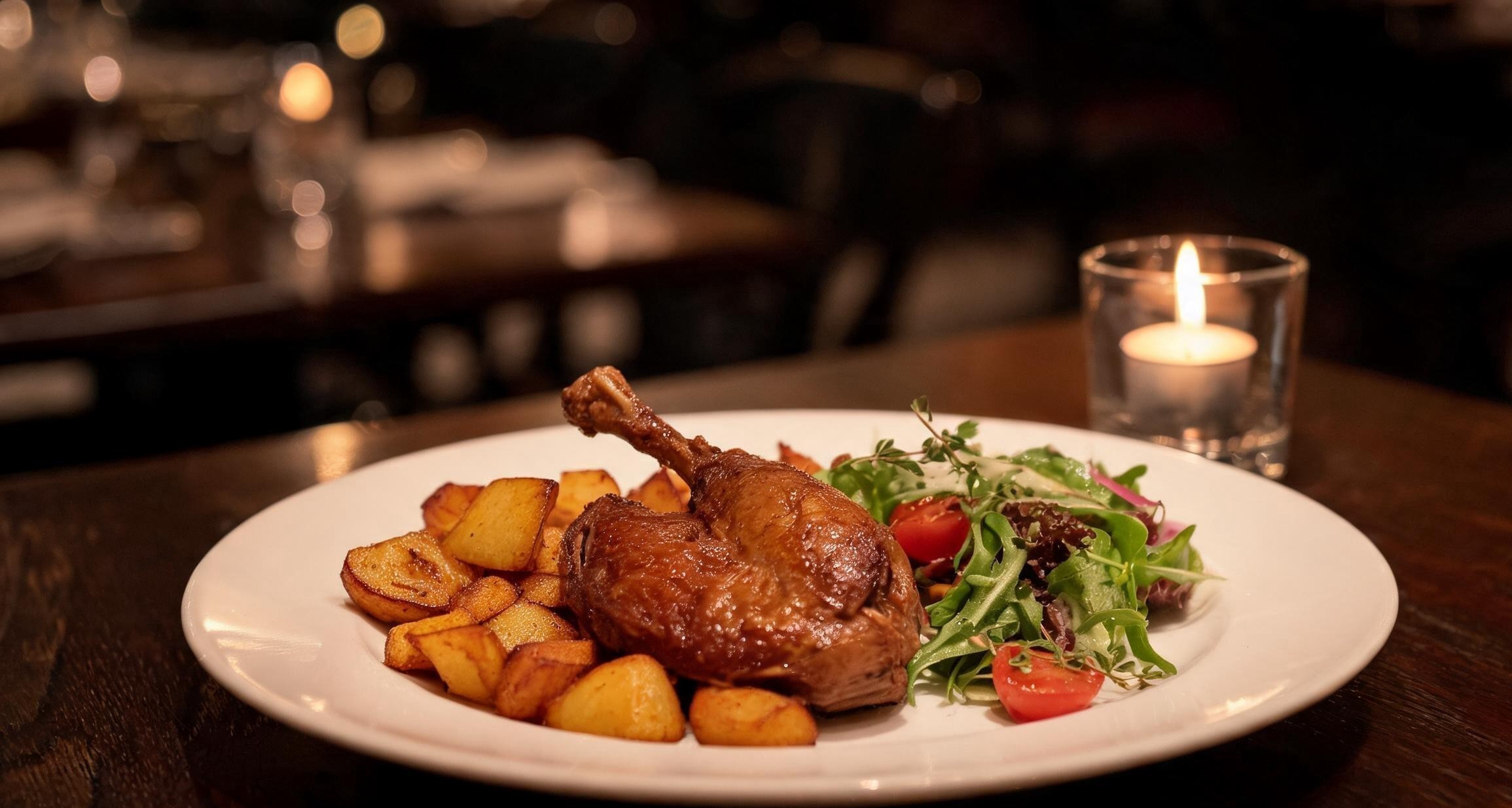
The duck confit arrived on an oval plate with a small mound of potatoes roasted in duck fat, a few frisée leaves, and a drizzle of something that tasted like reduced balsamic and mustard. The skin was deeply golden and audibly crisp when I cut into it, the kind of crackling that you don't get unless the duck has been cooked slowly, then finished under high heat. The meat underneath was rich and pull-apart tender, seasoned with what tasted like just salt, pepper, and thyme. The potatoes were small, waxy, and roasted until their edges had caramelized in the rendered fat. Just a plate of food that tasted like someone in the kitchen knew what they were doing and trusted the ingredients enough to leave them alone.
Entrees here sit in the twenty-eight to thirty-eight dollar range, which is not cheap, but the pricing feels honest for what you receive. The duck confit was thirty-two dollars. The steak frites, which I watched the table next to me order, was thirty-six and looked substantial. For a neighborhood bistro in Brooklyn Heights in 2026, these numbers are not aggressive. You could eat here with a glass of wine and an appetizer for under fifty dollars, or do a full three-course meal for closer to eighty. The wine list keeps the overall bill reasonable because you don't feel pressured into spending sixty dollars on a bottle when there are interesting options by the glass.
For dessert I ordered the crème brûlée, mostly because it's the dish I use to judge whether a French kitchen actually knows what it's doing. The custard needs to be silky but set, not scrambled from too much heat, not loose and running. The sugar on top should crack cleanly under your spoon. This one worked. The vanilla flavor was real, not extract, and the custard had that slight wobble in the center that tells you it was baked gently and cooled slowly. The sugar crust was thin and even, crackling in one clean break.
The details that separate a good bistro from a forgettable one are small. The bread comes from a bakery two blocks away. The butter is French, Isigny Sainte-Mère, with a tang you notice immediately. The coffee comes from a roaster in DUMBO, served in a small ceramic pot. None of these decisions are remarkable on their own, but together they signal a kitchen that cares about where things come from without needing to print the provenance on the menu.
What I appreciated most was the lack of performance. The cooking is the point. The room is comfortable. The service is knowledgeable without being overbearing. It's the kind of restaurant that Brooklyn needs more of, not because it's doing something brand new, but because it's doing something old well, without apology and without filler. I walked out into the January cold feeling the way you want to feel after a good meal: full but not sluggish, satisfied but not overwhelmed, already thinking about when I might come back.