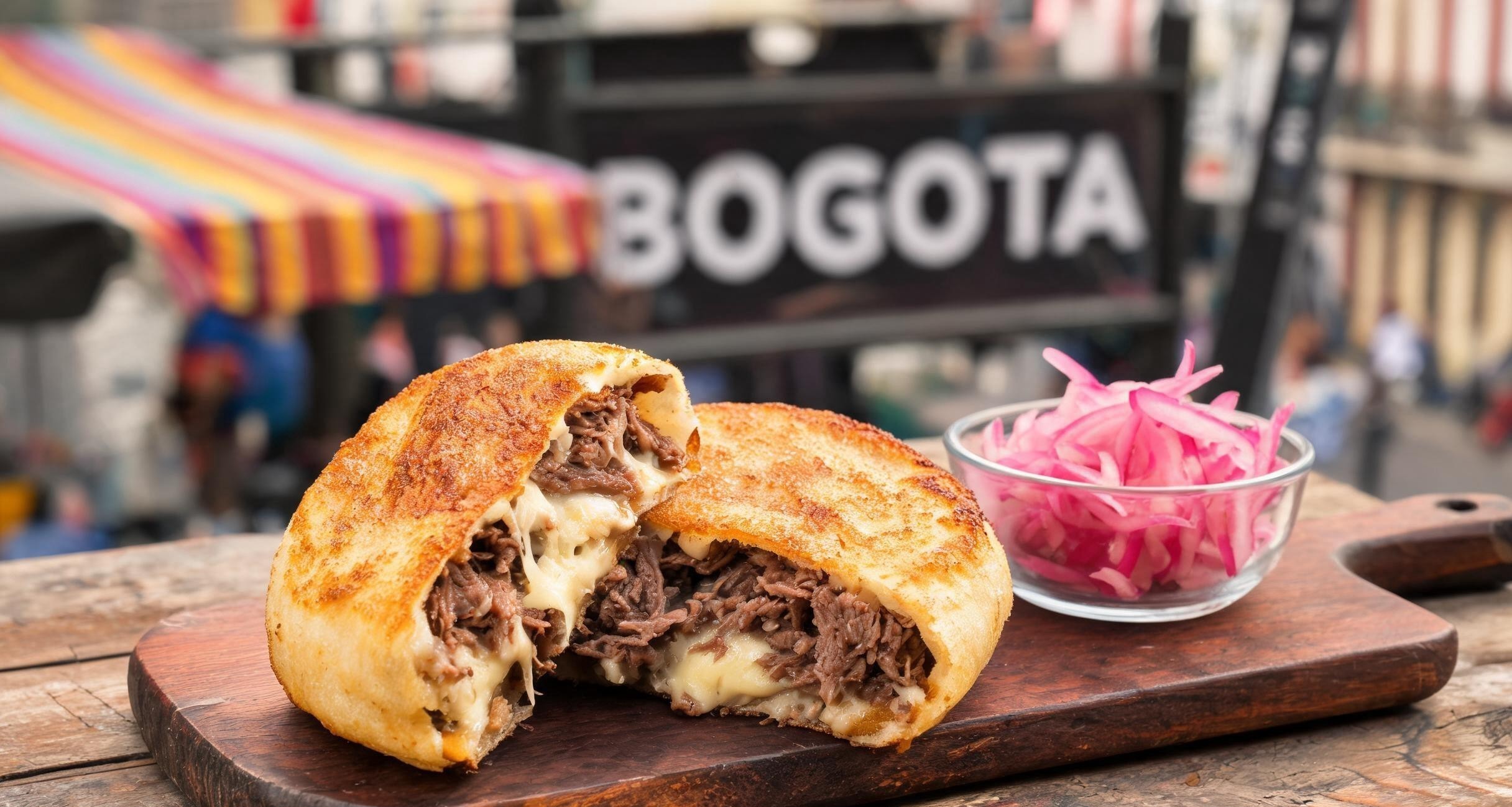
Bogota runs on arepas. Not as a novelty or a weekend brunch item, but as daily fuel. They appear at breakfast, at lunch, at late-night gatherings, and at every moment in between. I spent a week in the city and ate at least one arepa every single day, sometimes two. What I found was not a single dish but a range of styles that changed depending on the neighborhood, the time of day, and the cook behind the griddle. Some are thick and fluffy, stuffed with cheese or meat. Others are thin and crispy, eaten plain with a cup of coffee. After trying arepas at a dozen places, three stood out enough that I went back for seconds.
The first was a small stand in the Paloquemao market, a vast indoor space where vendors sell everything from tropical fruits to whole fish on ice. The arepa stand was run by an older woman who made only one type: arepa de choclo, made with sweet corn and cheese. She poured a ladle of thick, bright yellow corn batter onto a griddle and let it cook until both sides were golden and speckled with brown spots. She folded it in half around a generous slab of fresh cheese that melted slightly from the residual heat. The outside was crispy, almost like a pancake, and the inside was soft and sweet from the corn, with a salty hit from the cheese. I sat on a stool next to a construction worker who was eating his third one, and we both ate in silence because there was nothing to say.
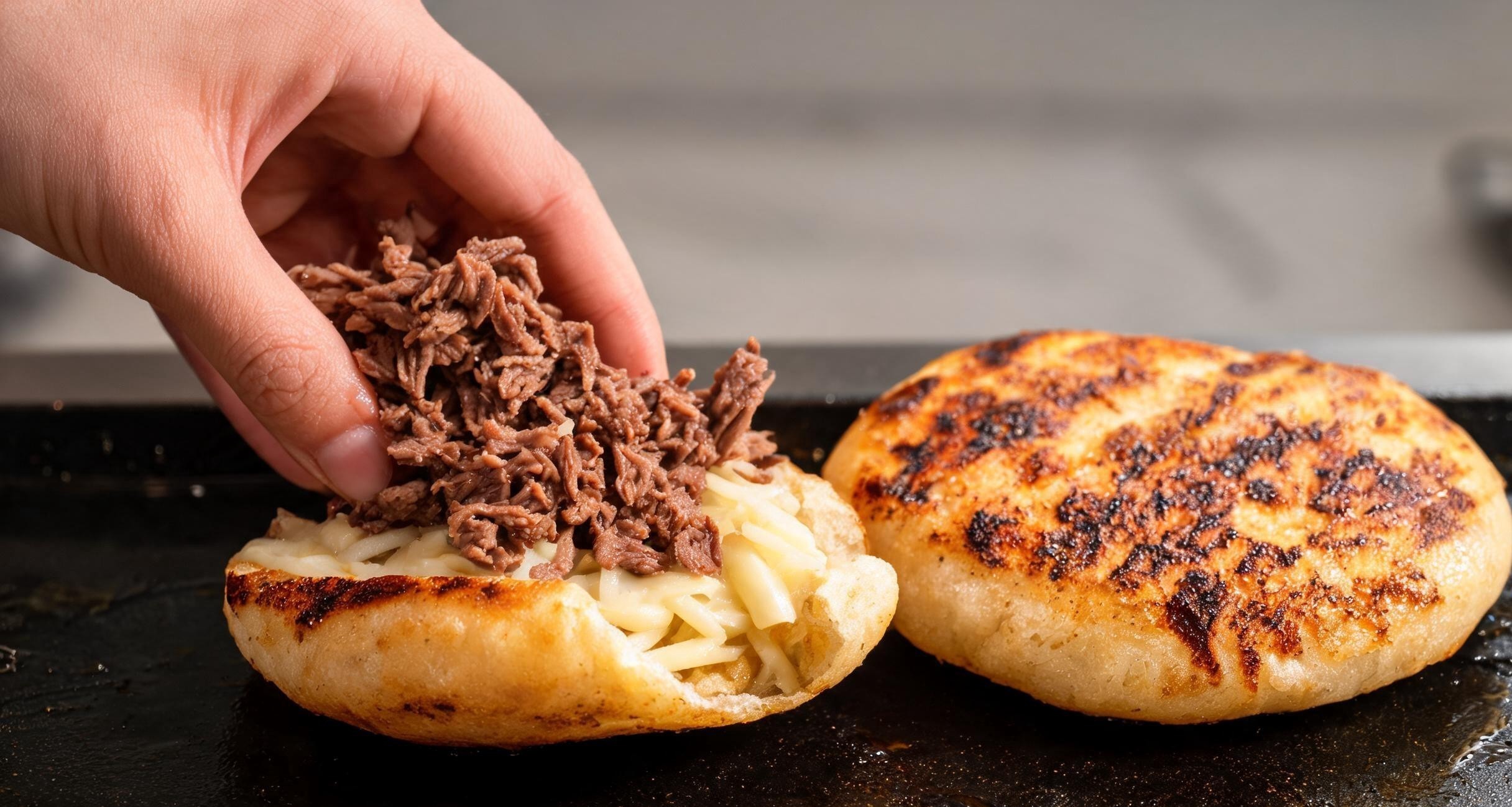
The second was a sit-down restaurant in the Chapinero neighborhood called, predictably, a place whose name I wrote down and then lost. What I remember is the arepa boyacense, a thick, round arepa made with white corn flour and a generous amount of butter and salt. This style comes from the Boyaca region north of Bogota, and it is the opposite of the thin market arepa. It is dense and buttery, split open and stuffed with your choice of filling. I ordered mine with shredded beef that had been cooked slowly in a tomato and cumin sauce. The arepa itself was almost like a bread, with a satisfying crust and a dense, cakey interior that held up to the wet filling without falling apart.
The third was a modern arepa bar in the Zona G, a restaurant-dense neighborhood where the prices are higher and the presentations are more deliberate. This place offered a menu of arepas with creative fillings: avocado and shrimp, pulled chicken with chimichurri, roasted vegetables with goat cheese. I ordered one with braised short rib and a chimichurri-like salsa verde. The arepa itself was grilled on a comal until the outside was crackly, and the short rib was tender and well-seasoned. It was good, in the way that a well-made sandwich at a nice restaurant is good. It was also the most expensive arepa I ate in Bogota, at about eight dollars. The market version had cost less than two and was, if I am honest, just as satisfying.
What struck me across all three places was how central the corn is to the experience. An arepa is not a vessel. It is the dish. The fillings matter, and they range from a simple slab of cheese to complex braised meats, but the quality of the corn cake itself is what separates a good arepa from a forgettable one. The griddle technique, the right amount of moisture in the dough, the ratio of corn to fat, these are the details that the best cooks get right every time. A bad arepa is dry and crumbly. A good one has a thin, crisp shell and a soft, slightly chewy interior that holds together when you bite into it. The contrast between the sweet corn cake at the market and the savory stuffed version at the sit-down restaurant showed me that the arepa is a more versatile food than I had assumed. It can be breakfast, lunch, dinner, or a snack at any hour. The corn adapts, the fillings change, and the griddle stays the same.
If you go to Bogota, eat arepas at the markets first, where the versions are simple, cheap, and honest. Then try a sit-down spot for the stuffed, regional styles. Skip the over-designed versions at trendy bars. The arepa is a humble food that does not need improvement, only respect for the ingredients and the technique. The best one I ate was at the market, sitting on a wobbly stool, watching the vendor pour batter onto a griddle with a practiced hand and a look of complete indifference to anything except getting it right.
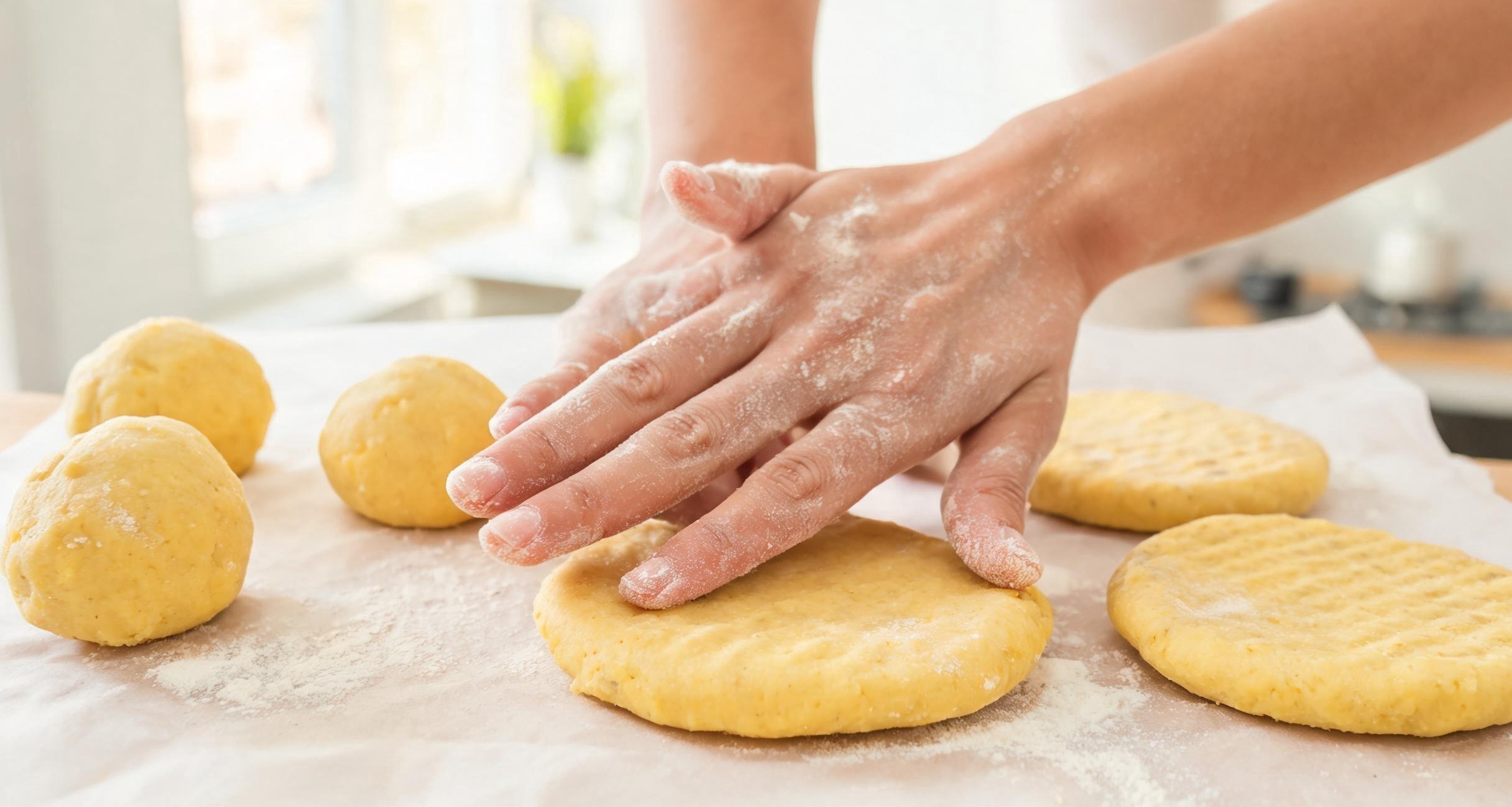
The corn used in Colombian arepas is different from the cornmeal you find in most American grocery stores. It is pre-cooked white corn flour, usually the P.A.N. brand, which has been treated through a nixtamalization process that makes the niacin available and the dough pliable. Mixed with warm water and a pinch of salt, it forms a dough that is then shaped into patties and grilled. The result is a slightly chewy, lightly toasted disc that serves as both plate and utensil. In Bogota, the arepas at the best bars are made fresh to order, never reheated, and the difference is immediately apparent in the texture.