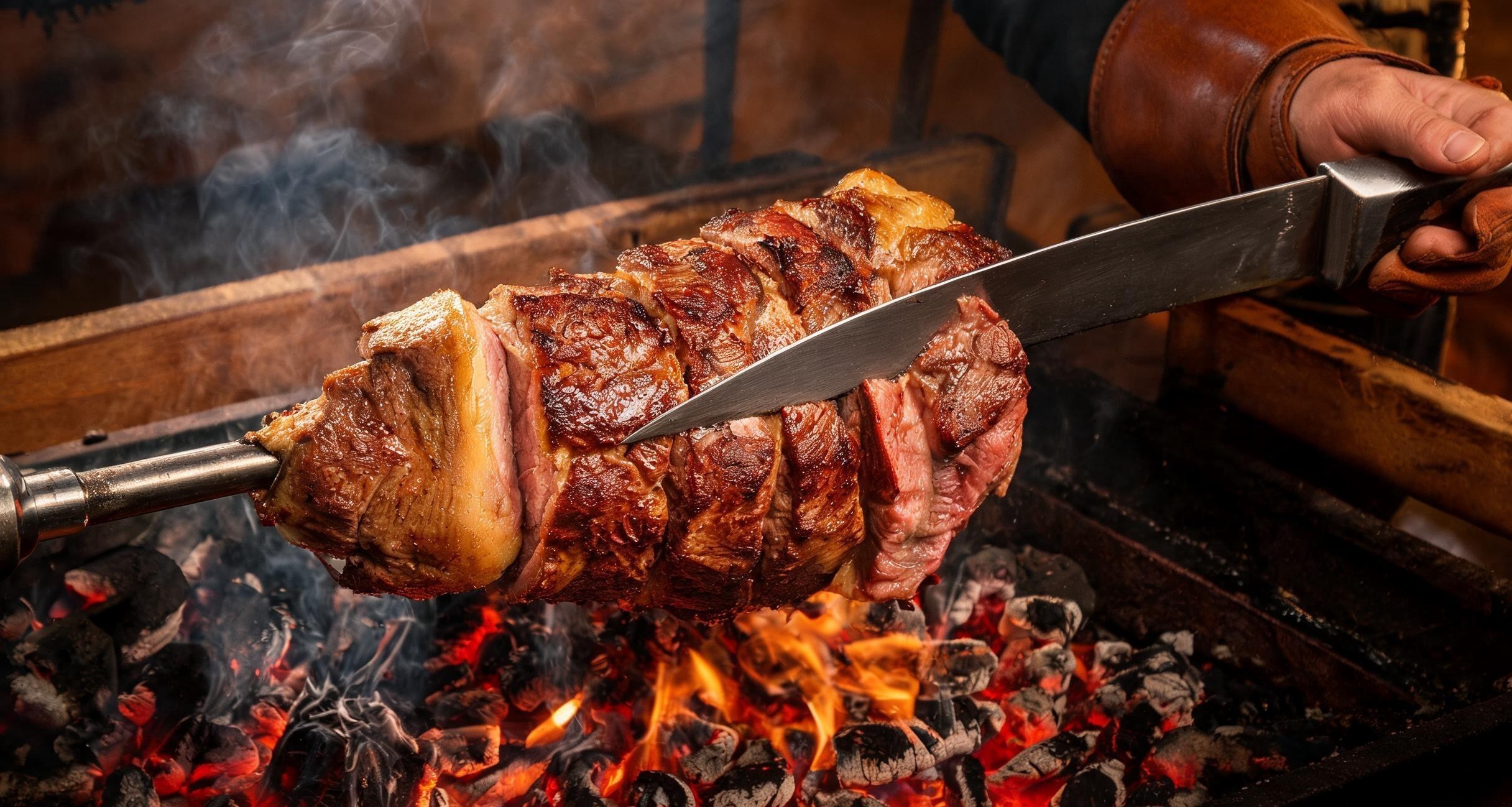
My first churrasco in Sao Paulo was not at one of the famous rodizio palaces with crystal chandeliers and unlimited salad bars. It was at a place called Churrascaria Vento Haragano in the Vila Mariana neighborhood, a plain-looking restaurant with checked tablecloths and a charcoal grill visible from the dining room through a glass window. I went with a Brazilian colleague who told me this was where locals eat when they want meat without the spectacle. No gauchos walking around with sword-like skewers. No bell to ring when you want more. You order your meat from a list, it comes on a wooden board, and you eat it with rice, farofa, and a cold draft beer. The picanha, the flagship cut of Brazilian churrasco, arrived sliced into thick rounds, the fat cap still attached and glistening. It was seared over charcoal and seasoned with nothing but coarse salt. That is all picanha needs.
Picanha is the top sirloin cap, a cut that is hard to find in American butchers because it is usually broken down and sold as part of larger sirloin cuts. In Brazil, it is the star of the churrasco, prized for the thick layer of fat that runs along one edge. When grilled over high heat, that fat renders and bastes the meat from the outside, keeping it juicy while developing a charred, salty crust. At Vento Haragano, the picanha was cooked to a perfect medium-rare, the interior a deep rose color with a narrow band of brown at the edges. I ate it with a squeeze of lime, which cuts through the richness of the fat, and a forkful of farofa, the toasted cassava flour mixture that Brazilians eat with almost everything. The whole meal, including the beer, cost about sixty reais, which was roughly twelve dollars at the time. I have paid more for a single steak in the States that was half as good.
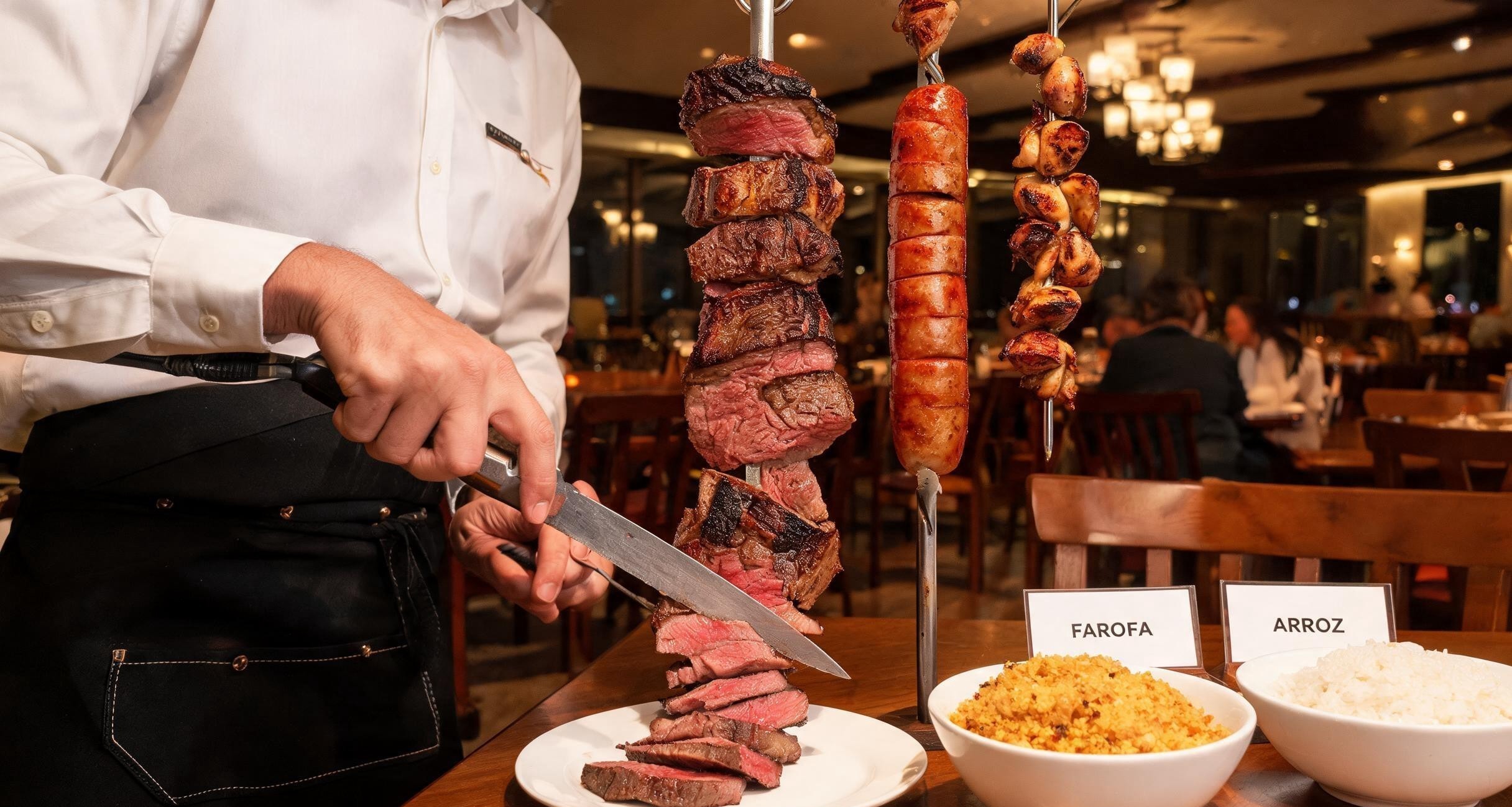
The second churrascaria, Fogo de Chao in the Jardins district, is the opposite experience. It is part of a chain that has expanded internationally, and it operates on the traditional rodizio system. You pay a fixed price and the meat keeps coming, brought to your table by men in white shirts who carve slices directly from the skewer onto your plate. There is a large salad bar with cold cuts, cheeses, and vegetables, which regulars will tell you to skip entirely because it fills you up before the good stuff arrives. The meat selection is vast: picanha, fraldinha (flank steak), alcatra (top sirloin), costela (beef ribs), cordeiro (lamb), frango (chicken hearts wrapped in bacon). The quality is good, though I found the picanha slightly less impressive than what I had at Vento Haragano, possibly because the volume of meat being served means each cut spends less time on the grill. The rodizio format is fun once. The second time, it feels like an eating contest you did not sign up for. The price was about 220 reais per person, roughly forty-five dollars.
The third place was a middle ground between the neighborhood spot and the high-end chain. Churrascaria Palace in the Moema neighborhood has been open since 1997 and it occupies a comfortable middle: better meat than Fogo de Chao, more variety than Vento Haragano, and a rodizio system that moves at a more relaxed pace. The picanha here was the best of the three, seared so that the fat cap was crackly and caramelized while the meat underneath was blushing pink. They also serve linguiça, a Brazilian pork sausage that is coarser and more garlicky than anything you find in the American supermarket, grilled until the skin splits and the fat drips into the charcoal. I ate four pieces of it alongside the picanha and a plate of vinagrete, a fresh salsa of tomatoes, onions, and bell peppers in vinegar and oil. The vinagrete is essential. It provides acid and crunch that balance the heavy, fatty meat. The total was about 150 reais, roughly thirty dollars, and I left feeling satisfied rather than stuffed, which is the right way to end a churrasco.
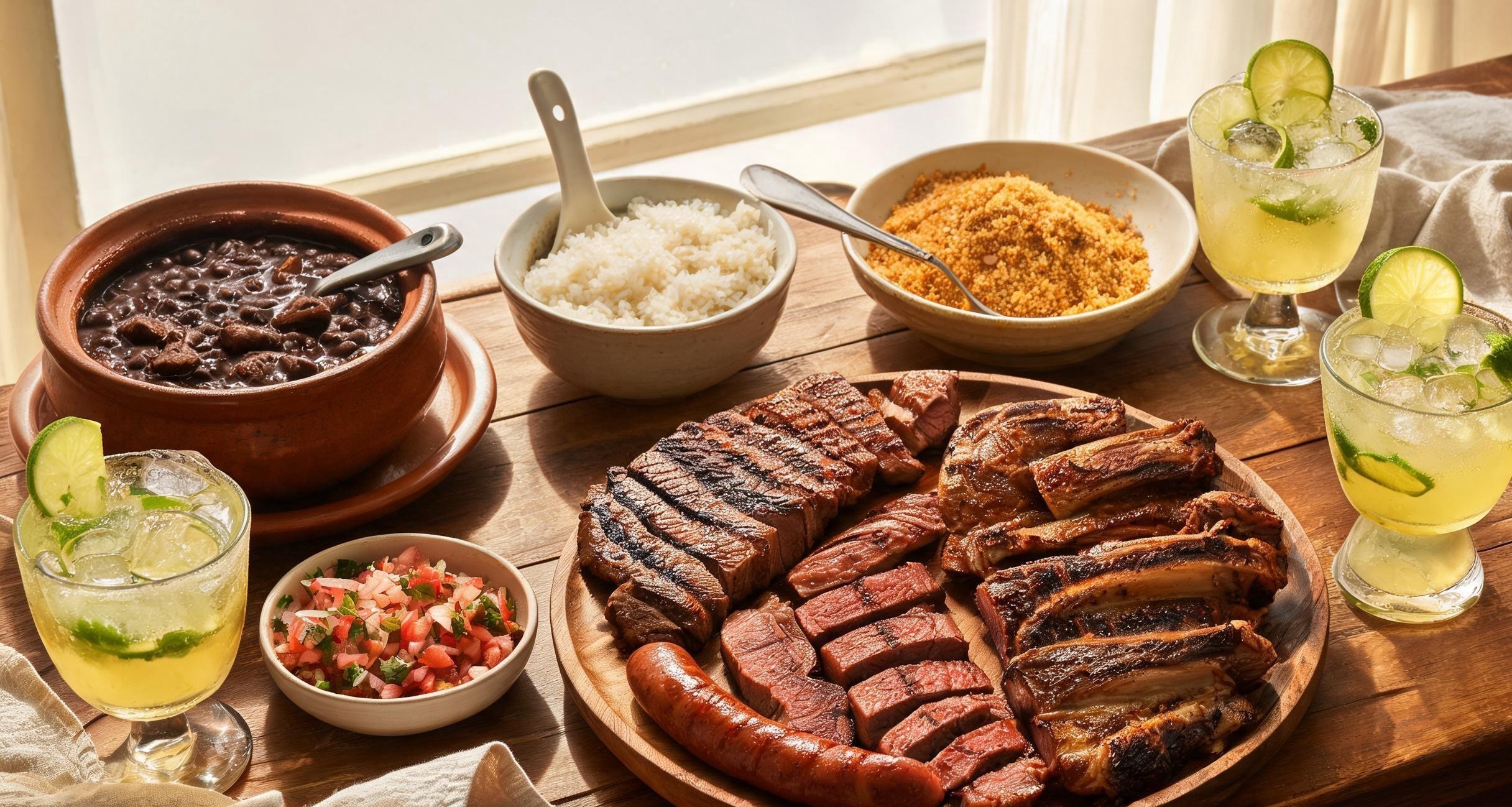
The thing I took away from these three meals is that churrasco in Brazil is not one thing. It ranges from a simple grilled picanha at a neighborhood restaurant to an all-you-can-eat spectacle at a polished rodizio. The common thread is the quality of the meat and the simplicity of the preparation. Salt, charcoal, and a cut of beef with good marbling. That is the foundation, and everything else is a variation on it. The Brazilian approach to grilling beef is confident in a way that American steakhouse culture, with its dry aging and compound butters and steak sauces, is not. They trust the meat and the fire. After a week of eating churrasco in Sao Paulo, I understood why. When the picanha is that good, there is nothing to add.