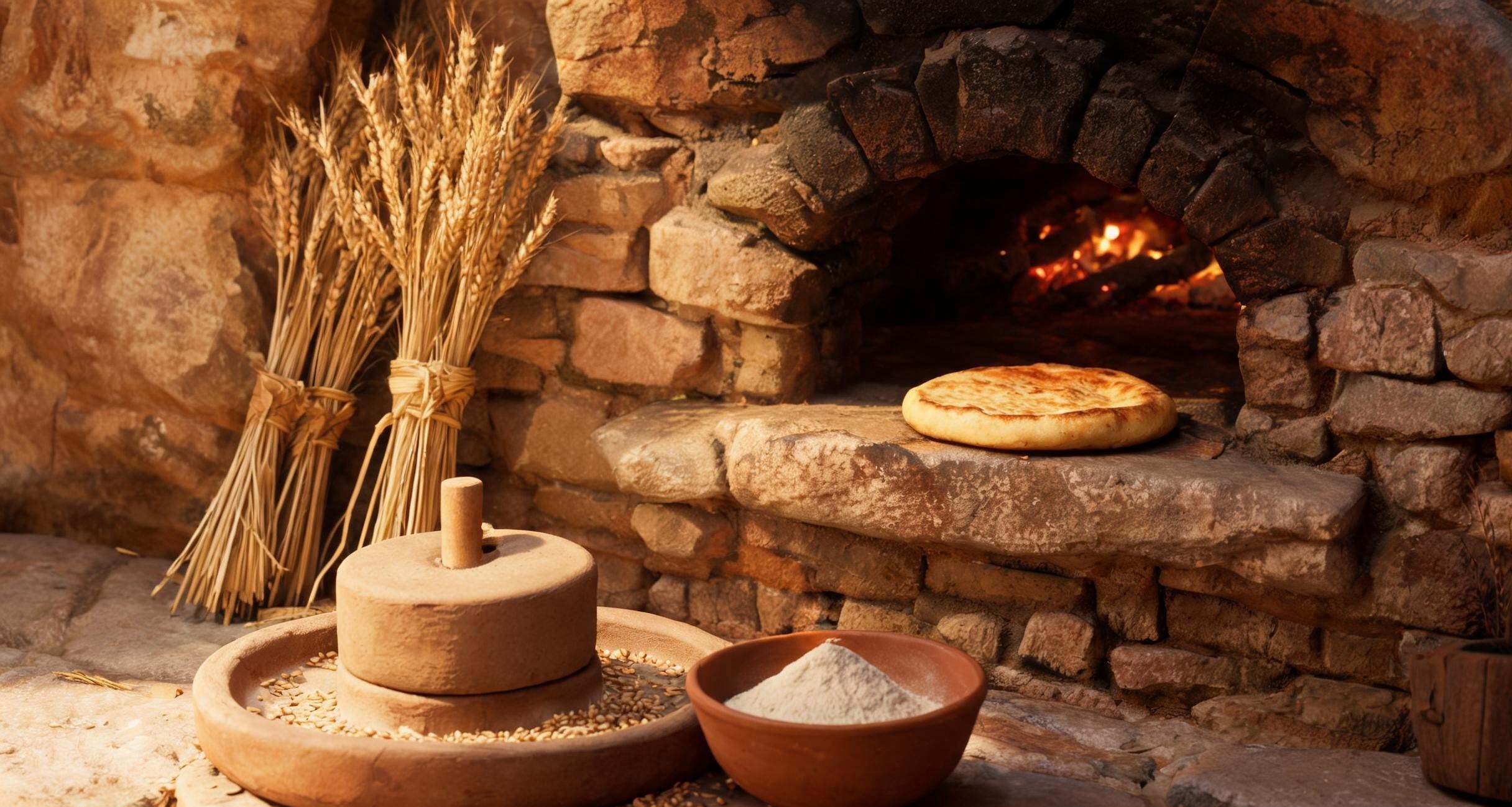
The oldest known recipe in the world is not for anything complicated. It is for bread. in particular, it is a set of instructions found on a tablet in ancient Sumer, dating to around 1700 BCE, that describes how to make a flatbread from barley flour. The tablet does not give precise measurements or temperatures, because those concepts did not exist yet. It says, roughly: take barley, grind it, add water, make a dough, bake it on a hot stone. That is it. Four thousand years later, we are still doing essentially the same thing, just with ovens instead of hot stones and wheat instead of barley. The basic transaction between ground grain, water, and heat has not changed since someone in the Fertile Crescent figured out that wet flour, left in a warm place, would puff up and taste better than the unleavened version.
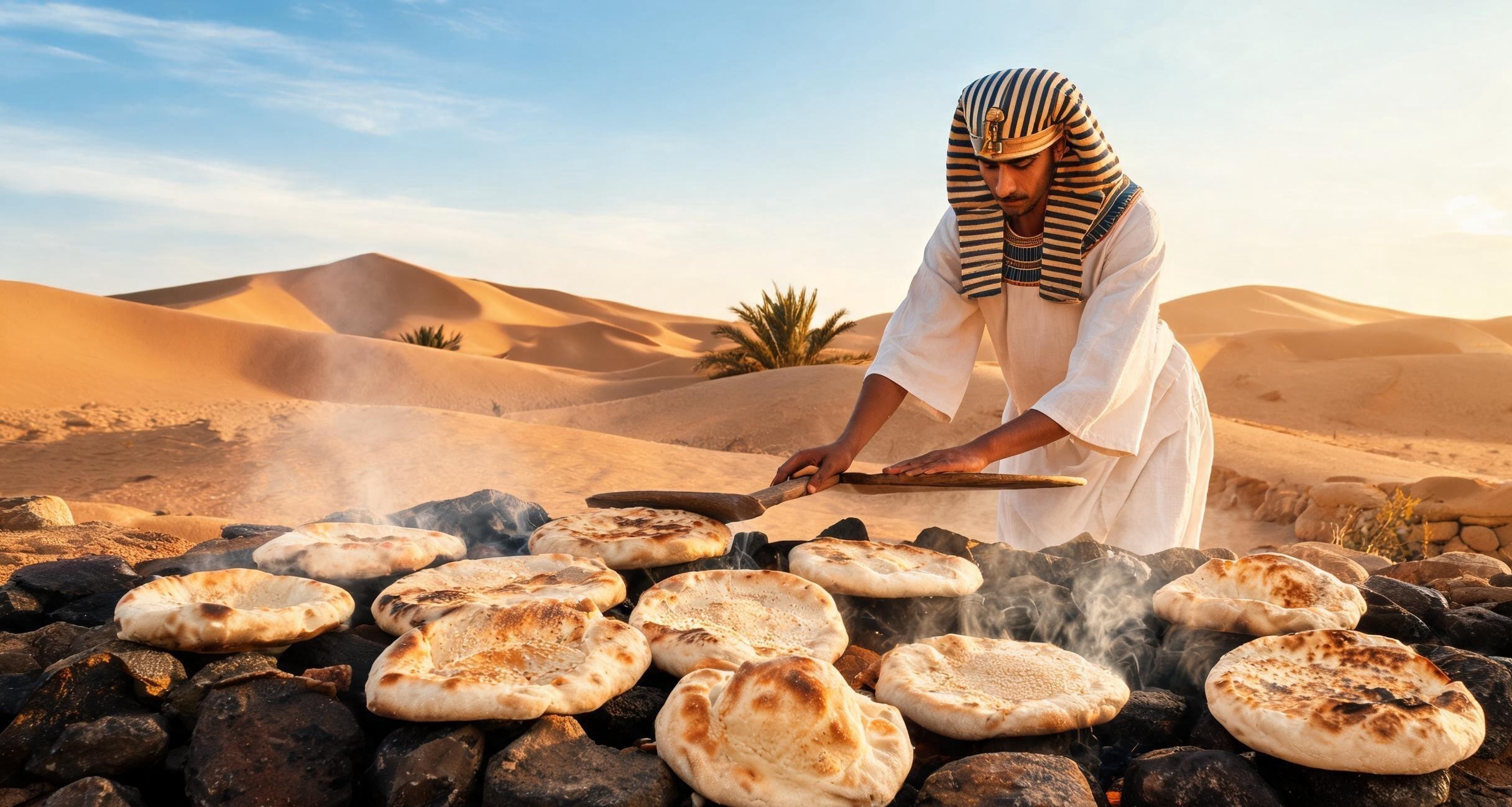
Ancient Egypt is where bread became something more than survival food. The Egyptians were the first to use sourdough fermentation deliberately, and they were the first to build large-scale bakeries. Tomb paintings from the Old Kingdom show bakers kneeling before clay ovens, shaping loaves with their hands, and stacking them on wooden trays. The bread they made was heavy, dense, and often contained grit from the grinding stones, which wore down Egyptian teeth over a lifetime. But it was bread, and it was produced in quantities large enough to feed a civilization. The workers who built the pyramids at Giza were paid in bread and beer, which were essentially the same ingredients in different forms. You cannot separate the history of bread from the history of cities, because cities cannot exist without a reliable source of calories, and bread, for most of human history, was that source.
The Romans took bread production to an industrial scale. By the first century CE, Rome had over two hundred commercial bakeries, and the technology had advanced to the point where watermills and animal-powered grinding stones replaced hand grinding. The Roman bread was lighter and finer than Egyptian bread, thanks to better milling techniques that removed more of the bran and germ. The baker's guild in Rome, called the Collegium Pistorum, was powerful and well-organized, and good bread was considered a right of Roman citizenship. When the bread supply was disrupted, riots followed. That pattern, bread as a political issue, has repeated itself throughout history, from the French Revolution to the Arab Spring. When the bread fails, everything else follows.
The invention of the roller mill in the late nineteenth century changed bread more dramatically than anything since fermentation. Roller milling could produce flour that was uniformly white, with virtually all of the bran and germ removed. This was presented as progress, and in some ways it was: white flour kept longer, baked more consistently, and produced a loaf that was lighter and softer than anything made with whole grain. But it also removed most of the nutrition and flavor from the flour, which is why modern commercial bread has to be fortified with vitamins and minerals that were there naturally in the whole grain. The soft, pillowy white bread that dominated American supermarkets for most of the twentieth century is a direct result of roller milling and the industrial baking processes that followed. It was cheap, uniform, and widely available, which is why it succeeded commercially.
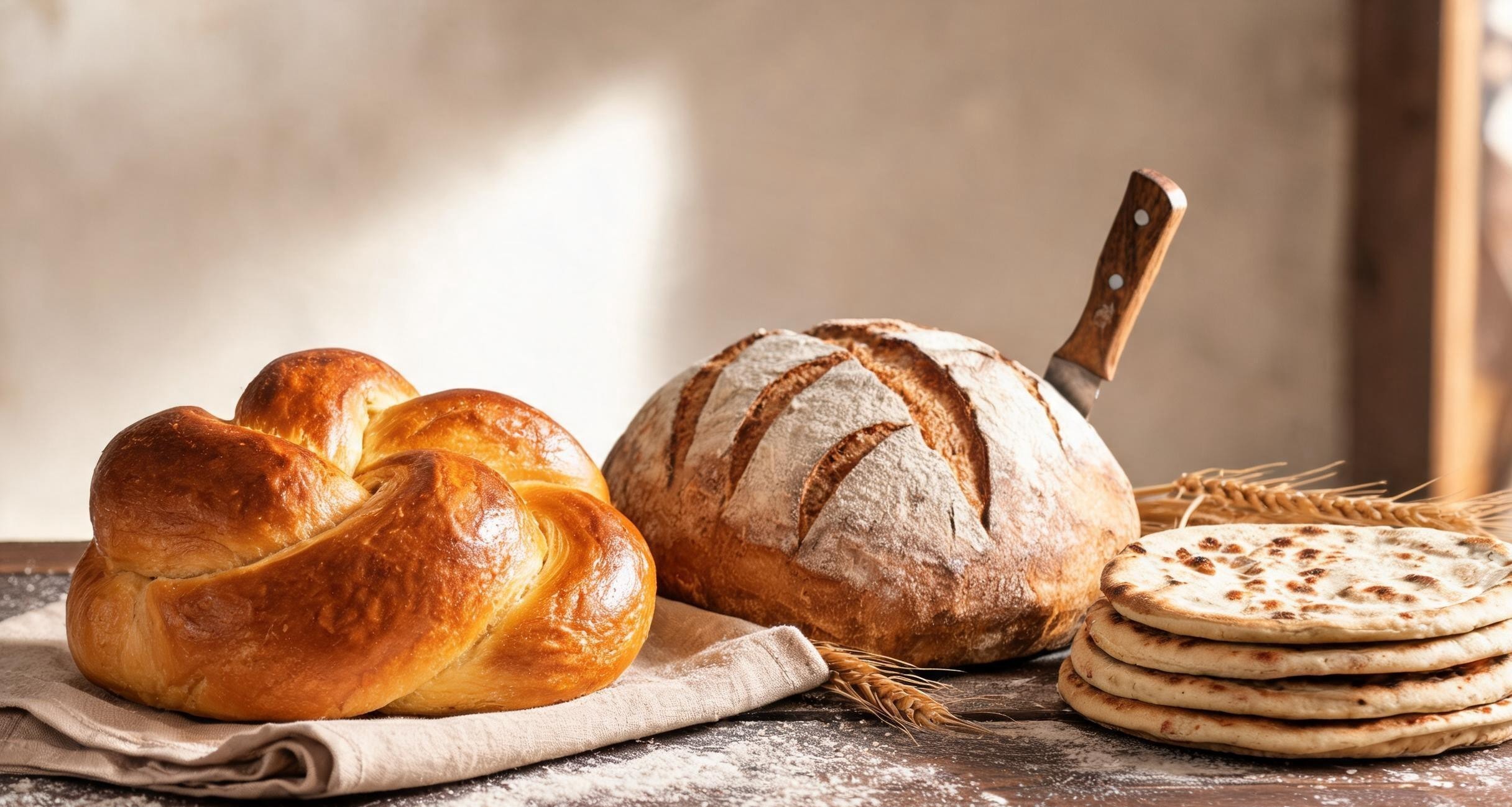
The sourdough revival of the past fifteen years is, in many ways, a return to the way bread was made for thousands of years before industrial milling and commercial yeast. A starter, flour, water, salt, time. The same ingredients the Egyptians used, the same ingredients the Romans used, the same ingredients a farmer's wife in nineteenth-century Nebraska used. The tools are better now, the ovens are more precise, and we understand the science of fermentation in a way that previous generations did not. But the process is the same. You mix grain and water, you wait, you bake it, and you eat it. The fact that we are still doing this, four thousand years after someone wrote it down on a clay tablet, suggests that bread is not just food. It is one of the few constants in human life, one of the few things that has been with us since the beginning of civilization.
What I find most remarkable about bread is not its history but its persistence. Every culture on earth has a bread tradition, and none of them developed in isolation. Wheat spread from the Fertile Crescent to Europe, to India, to China, to the Americas. Rice became the foundation of bread in East and Southeast Asia. Corn was ground into bread by the Aztecs and the Maya. Millet, sorghum, teff, cassava, plantain, yam, and dozens of other grains and starches have been turned into breads by people who had never heard of each other but arrived at the same basic idea: grind something starchy, add water, apply heat, eat the result. Bread is not a single food. It is a category of food, one of the broadest and most flexible categories that exists, and it has been feeding people continuously for at least ten thousand years. That is a track record that no other food can match.