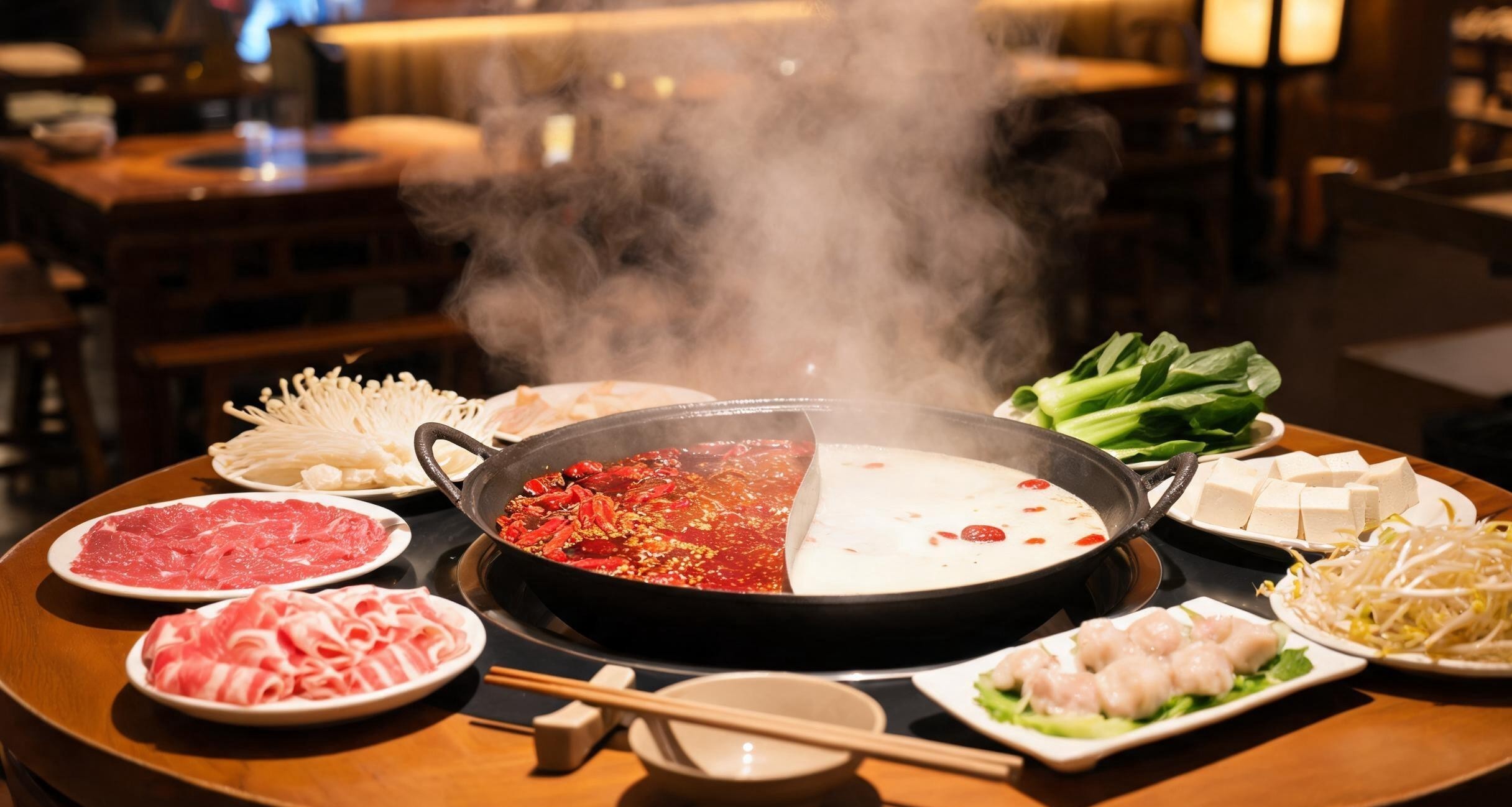
The hot pot restaurant in Chengdu did not have an English menu. The waiter, a young guy in a black T-shirt, handed me a paper order form with columns of ingredients listed in Chinese and small photographs next to each item. I pointed at things that looked recognizable: thin-sliced beef, tofu skin, enoki mushrooms, lotus root, sweet potato noodles, and a handful of leafy greens I could not identify. He took the form, came back with a pot divided in half by a metal divider, and set it on the induction burner embedded in the center of the table. One side was filled with a red, oily broth studded with dried chilies and Sichuan peppercorns. The other side was a clear, mild bone broth. The dual pot is standard in Chengdu, because the spicy side is genuinely spicy and not everyone at the table can handle it for two hours straight.
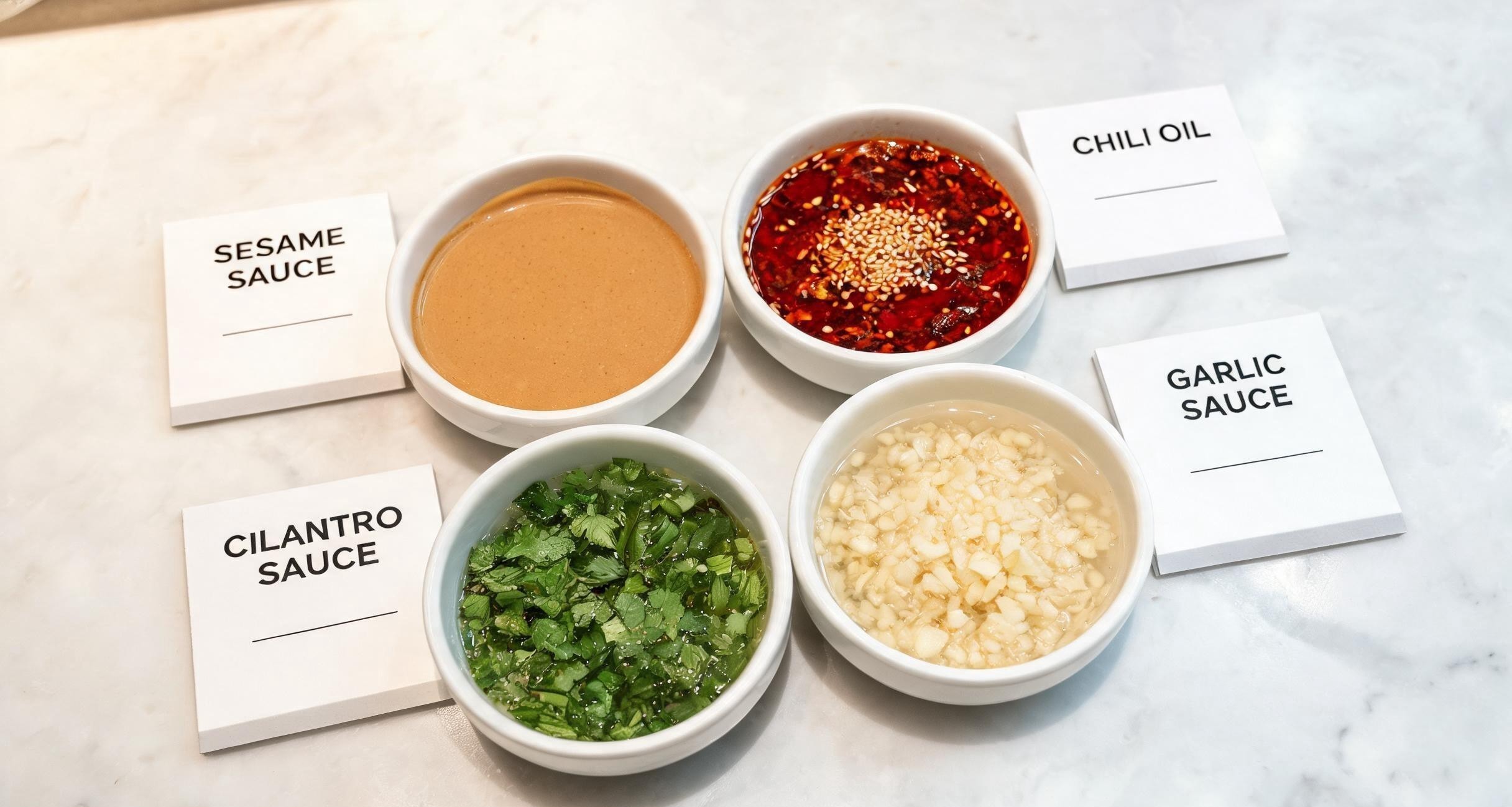
Hot pot is not a dish. It is a format. The restaurant provides the broth, the raw ingredients, and the equipment. You do the cooking yourself, at the table, dropping ingredients into the simmering broth and fishing them out with chopsticks or a wire basket when they are done. The thin beef slices cook in about fifteen seconds. The tofu skin needs about thirty seconds. The lotus root takes two to three minutes. There is no timer, no schedule, no courses. You eat at your own pace, cooking and eating in a continuous loop, dipping each piece into a small bowl of sesame oil, garlic, and cilantro that you mix yourself at the table. The meal lasts as long as the ingredients hold out, which in Chengdu usually means at least two hours.
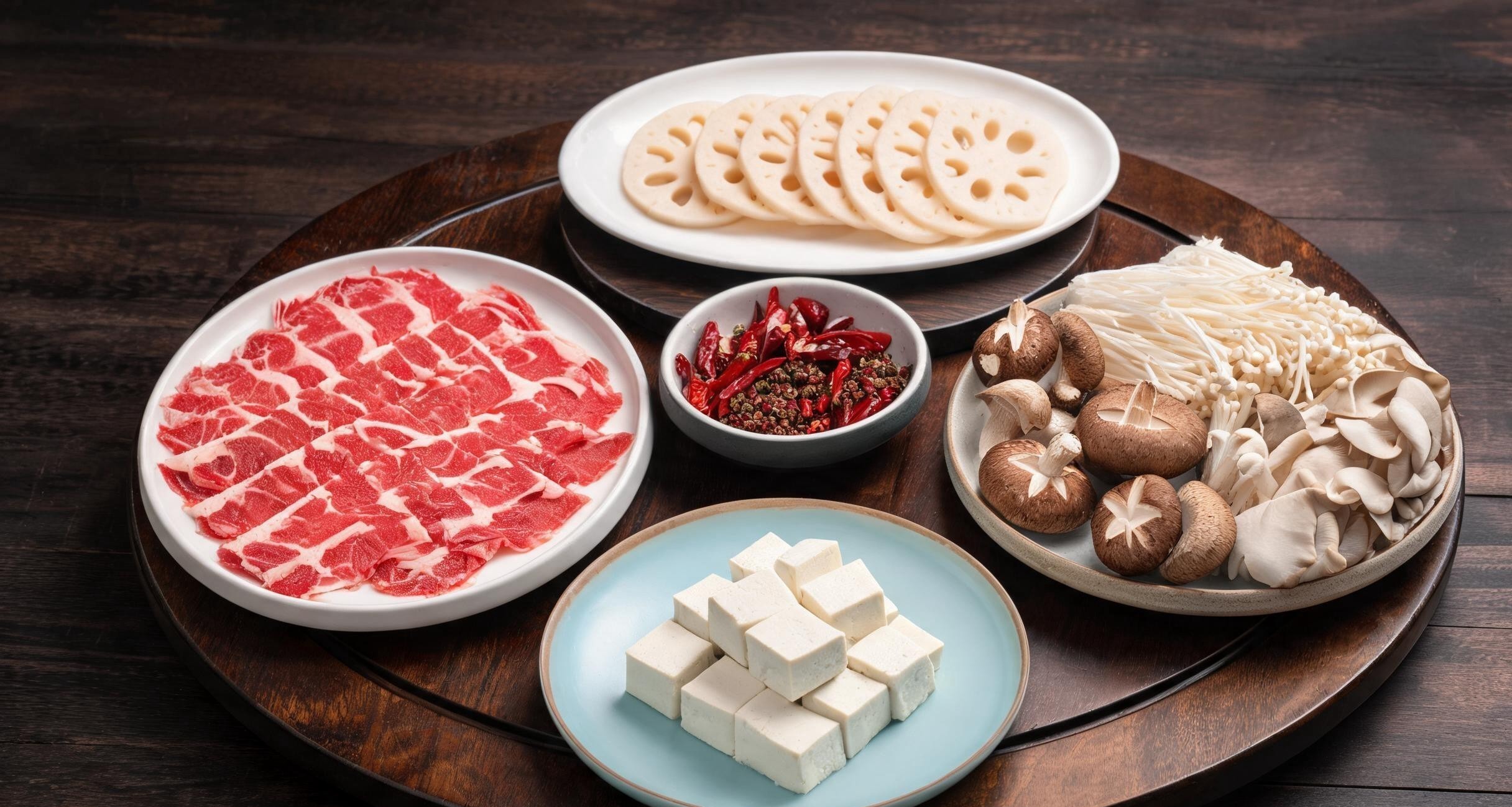
The spicy broth in Chengdu hot pot is not just hot. It is ma-la, which means numbing-and-spicy, and the numbing comes from Sichuan peppercorns. These are not related to black pepper. They are the dried husks of a plant in the citrus family, and they contain a compound that produces a tingling, slightly anesthetic sensation on the tongue and lips. The first time I experienced it, I thought something was wrong with my mouth. The feeling is distinctive: a buzzing, electric numbness that makes it difficult to focus on anything except the sensation itself. Combined with the heat from the dried chilies, the effect is intense and addictive. You take a bite of beef from the spicy side, your lips start tingling, you grab a piece of tofu from the mild side to cool down, and within thirty seconds you are back in the red broth for more.
The social aspect of hot pot is the part that does not translate to a restaurant review. In Chengdu, hot pot is how groups of friends spend an evening together. It is not a special occasion food. It is a Tuesday night food. You sit around a boiling pot, cook things, talk, eat slowly, and the pot becomes the center of the conversation the same way a campfire does. There is no plate presentation, no timing from the kitchen, no courses to coordinate. Everyone reaches into the same pot with their own chopsticks, which in any other context would be considered rude but in hot pot is simply how it works. The shared pot creates a kind of casual intimacy that is hard to replicate in a restaurant where each person gets their own plate and the meal is served in courses.
I went to three different hot pot restaurants in Chengdu, and each one had a slightly different broth and a slightly different ingredient list, but the format was the same. The best one, a place called Shu Jiuxiang in a basement near the Jin River, had a broth so rich with chilies and peppercorns that the surface was a deep, ominous red. The waiter warned me, in broken English, that the spicy side was very ma-la. I told him I could handle it. Thirty minutes in, my lips were completely numb, I was sweating through my shirt, and I had eaten more beef than I normally eat in a week. I could not stop. The combination of the numbing spice, the rich broth, the tender meat, and the constant motion of cooking and eating creates a feedback loop that makes two hours feel like thirty minutes. Hot pot in Chengdu is not a meal. It is an event.
The bill for two people at a hot pot restaurant in Chengdu usually comes to between eighty and one hundred twenty yuan, which is twelve to eighteen dollars. That includes the broth, the dipping sauce bar, and all the ingredients you cooked. Drinks are extra, usually a cold beer or a bottle of soy milk. It is an inexpensive meal by any standard, and the quantity of food is enormous. You will leave full, possibly uncomfortably so, which is part of the experience. Hot pot is not a meal where you stop when you are satisfied. You stop when the pot is empty or when you physically cannot eat anymore, whichever comes first. The restaurants know this, and they design the experience around abundance. Refills on broth are free. The sauce bar is unlimited. The only limit is what you ordered, and most people order more than they need because the ingredients shrink when they cook. Raw leafy greens take up half the plate but reduce to almost nothing in the boiling broth. Thin slices of beef curl up and become bite-sized. The hot pot looks like a lot of food when it arrives raw, and it looks like even more food after it has all been cooked, because everything shrinks except your appetite.