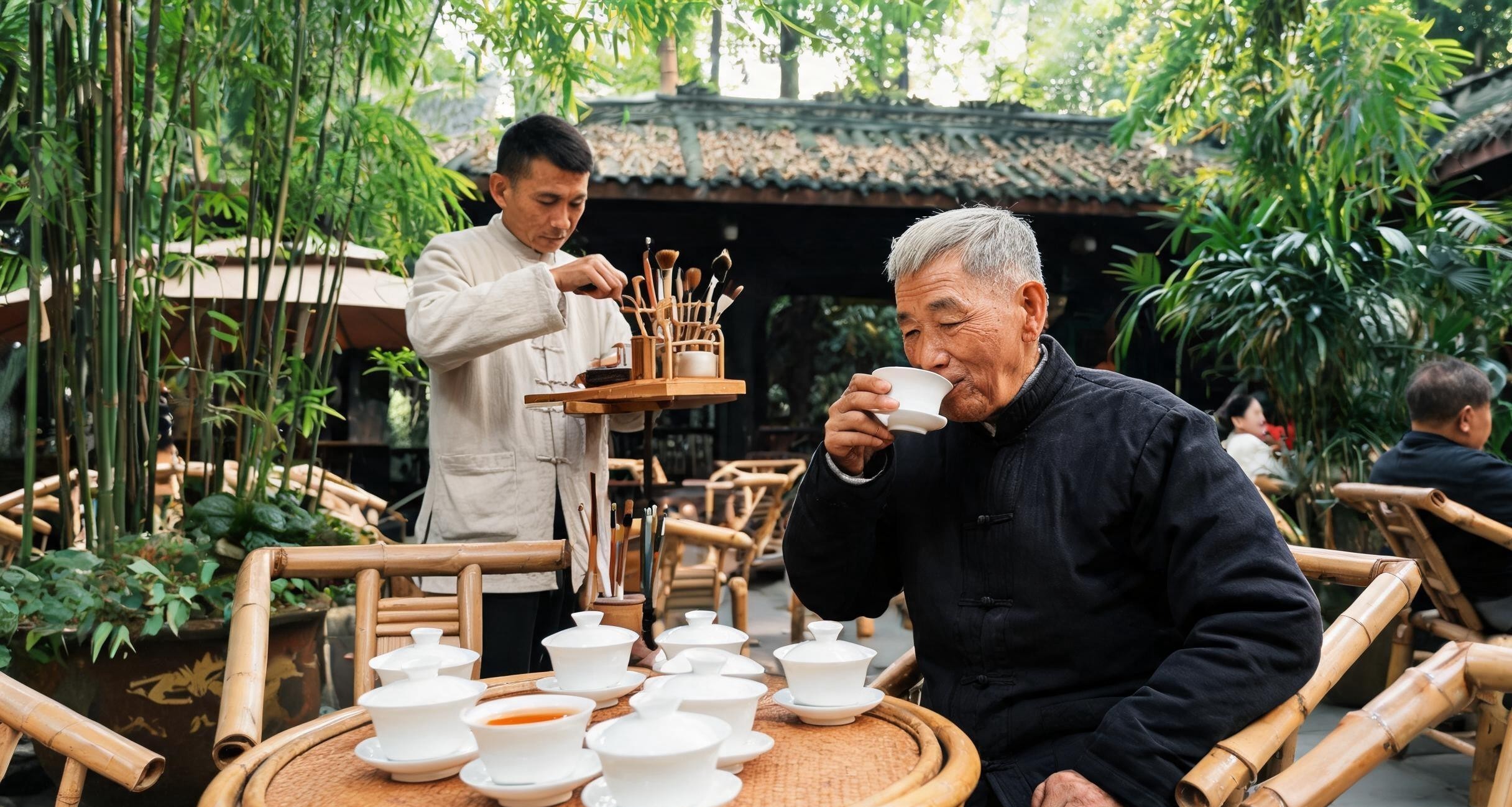
The tea house in Chengdu's People's Park did not look like any cafe I had been to before. There were no tables, just low bamboo armchairs arranged in loose clusters under a canopy of trees. The floor was concrete, worn smooth by decades of footsteps. An old man in a white undershirt sat in the corner reading a newspaper. Two women played cards at a row of plastic chairs near the entrance. A vendor walked through with a copper kettle on a long pole, pouring hot water into the clay teapots of anyone who held up a hand. The whole place operated at a pace that felt almost stationary, as if time had agreed to slow down inside the park walls. I sat down, ordered jasmine tea from a woman who brought it in a gaiwan, the traditional lidded cup with a saucer, and spent the next two hours doing absolutely nothing except drinking tea and watching other people drink tea.
Chengdu has hundreds of tea houses, and the culture around them is different from anything you find in other Chinese cities. In Beijing, tea is served in formal tea rooms where the host performs an elaborate gongfu cha ceremony, washing the leaves, pouring from a fairness pitcher, explaining the terroir. In Chengdu, tea is casual. You sit in a bamboo chair, someone brings you a gaiwan with leaves already in it, you add hot water yourself from a thermos on the table, and you refill as many times as the flavor holds up. There is no ceremony, no lecture, no tasting notes. The tea costs between ten and thirty yuan, roughly one to four dollars, and you can stay as long as you want. I met a retired teacher named Mr. Zhang who told me he comes to the same tea house in People's Park every single morning, sits in the same chair, and drinks the same green tea. He has been doing this for eleven years.
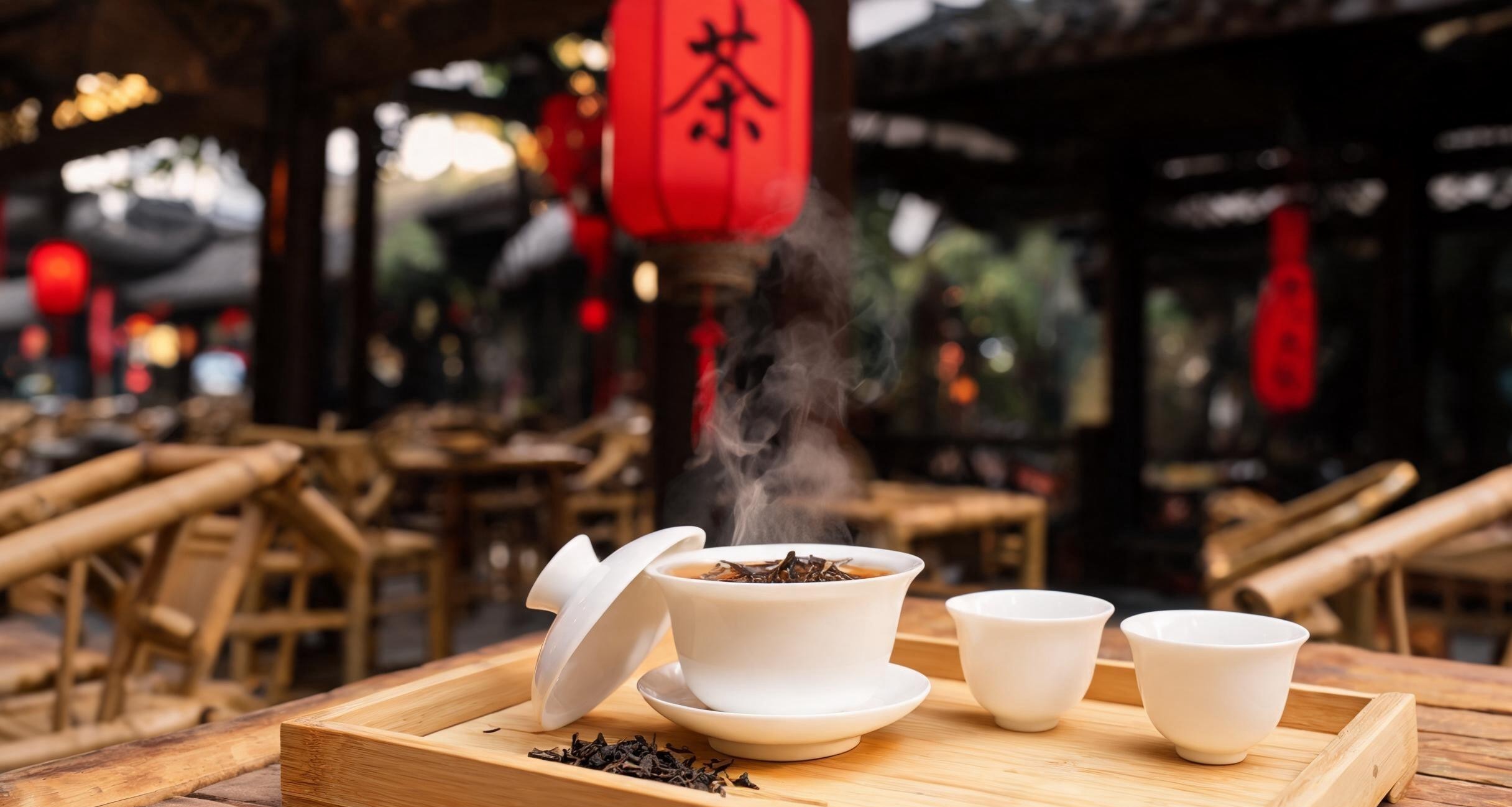
The gaiwan is the standard vessel, and using it properly takes about five minutes to learn. You hold the saucer with one hand, use the lid to push the leaves aside while you drink from the edge, and put the lid back on to let the tea steep. The lid controls the steeping time: leave it on for stronger tea, take it off for lighter. In Chengdu, nobody measures the leaves or times the steep. They just pour, drink, and refill, adjusting by taste. The tea itself is usually local. Mengding ganlu, a green tea from the mountains near Ya'an, is popular. So is zhuyeqing, a bamboo-leaf green from Emeishan. The jasmine tea I had was made by layering fresh jasmine flowers over dried green tea leaves until the scent transferred, a process that is repeated up to seven times for the best grades.
One of the stranger services offered at Chengdu tea houses is ear cleaning. A man with a set of metal tools, including a thin curved pick and a small feather brush, will clean your ears while you sit in your chair drinking tea. I tried it once, and it was an experience I am not sure I would repeat. The sensation of metal inside your ear canal while a stranger works with quiet concentration is somewhere between relaxing and unsettling. The feather brush at the end, when they sweep it lightly inside your ear, produces a tickling sensation that is hard to describe. The whole thing costs about fifteen yuan and takes ten minutes. Some people in Chengdu get their ears cleaned every week. It is considered part of the tea house routine, as normal as ordering another pot of tea.
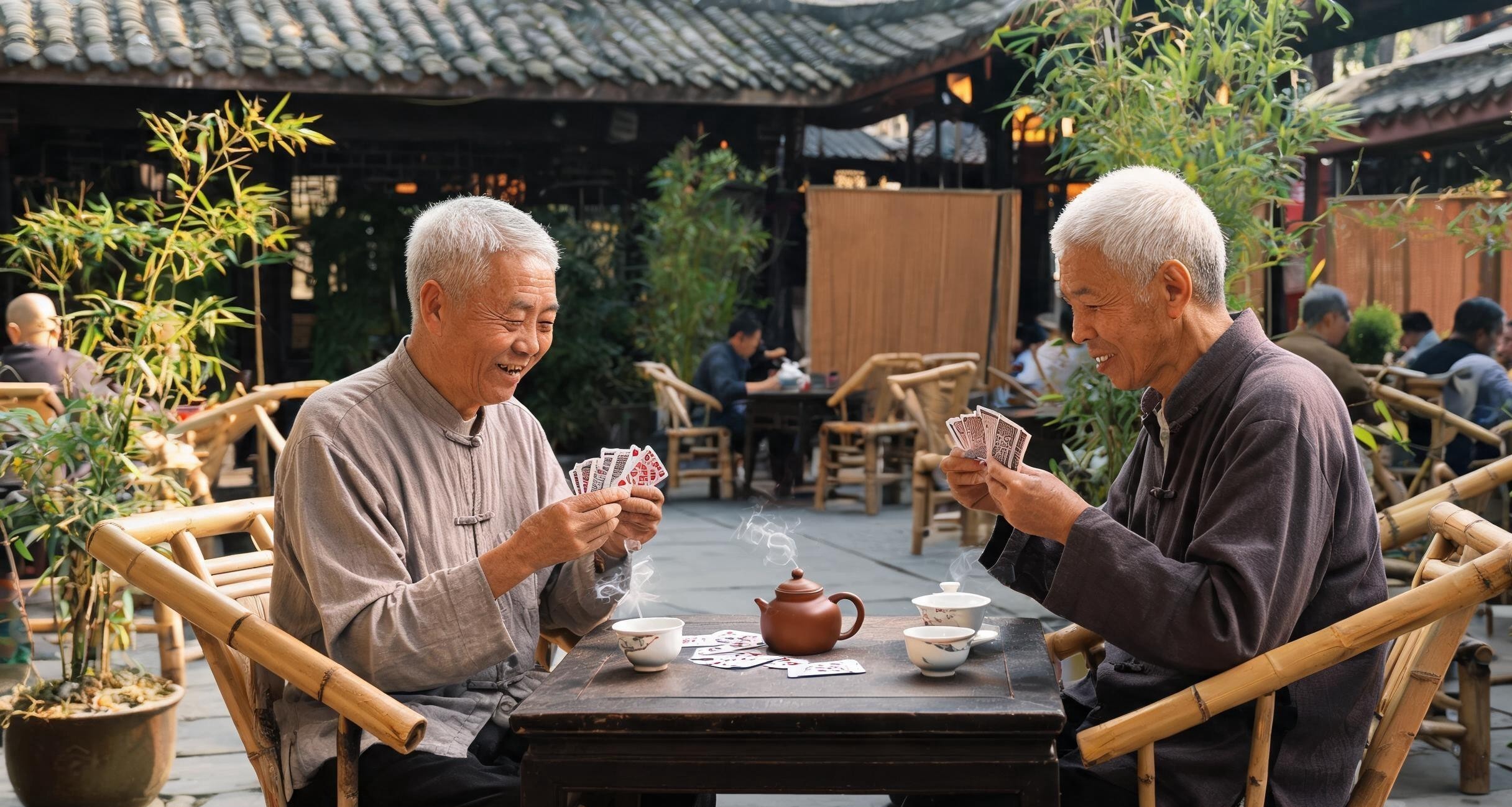
The social function of the tea house is what makes it different from a cafe or a coffee shop. In the West, you go to a cafe to meet someone specific, or to work on your laptop, or to grab a quick drink. In Chengdu, you go to the tea house to be around people without necessarily interacting with them. The old men playing chess, the women chatting, the couples sitting in silence, the solitary readers, the groups of friends arguing about politics, all of it happens simultaneously in the same space. The tea house is a public living room, and the tea is the excuse to sit there. Mr. Zhang told me that the tea house is where he gets his news, his gossip, and his sense of community. He does not use a smartphone. He does not need to. Everything he wants to know, he hears at the tea house.
The government has been trying to preserve the tea house culture as part of Chengdu's heritage, and some of the older tea houses have been renovated with government funding. But the renovations can feel strange. A tea house I visited near Wenshu Monastery had been freshly painted and stocked with packaged tea bags alongside the loose-leaf tea. The bamboo chairs were still there, but the floor was new tile instead of old concrete, and the atmosphere had shifted from lived-in to curated. The best tea houses are the ones that have not been touched, where the paint is peeling, the chairs are wobbly, and the same vendor has been walking through with a copper kettle for thirty years. Those are the ones where you understand why Chengdu is famous for its tea culture. It is not about the tea itself. It is about the fact that people have been sitting in those same chairs, drinking that same tea, for generations.