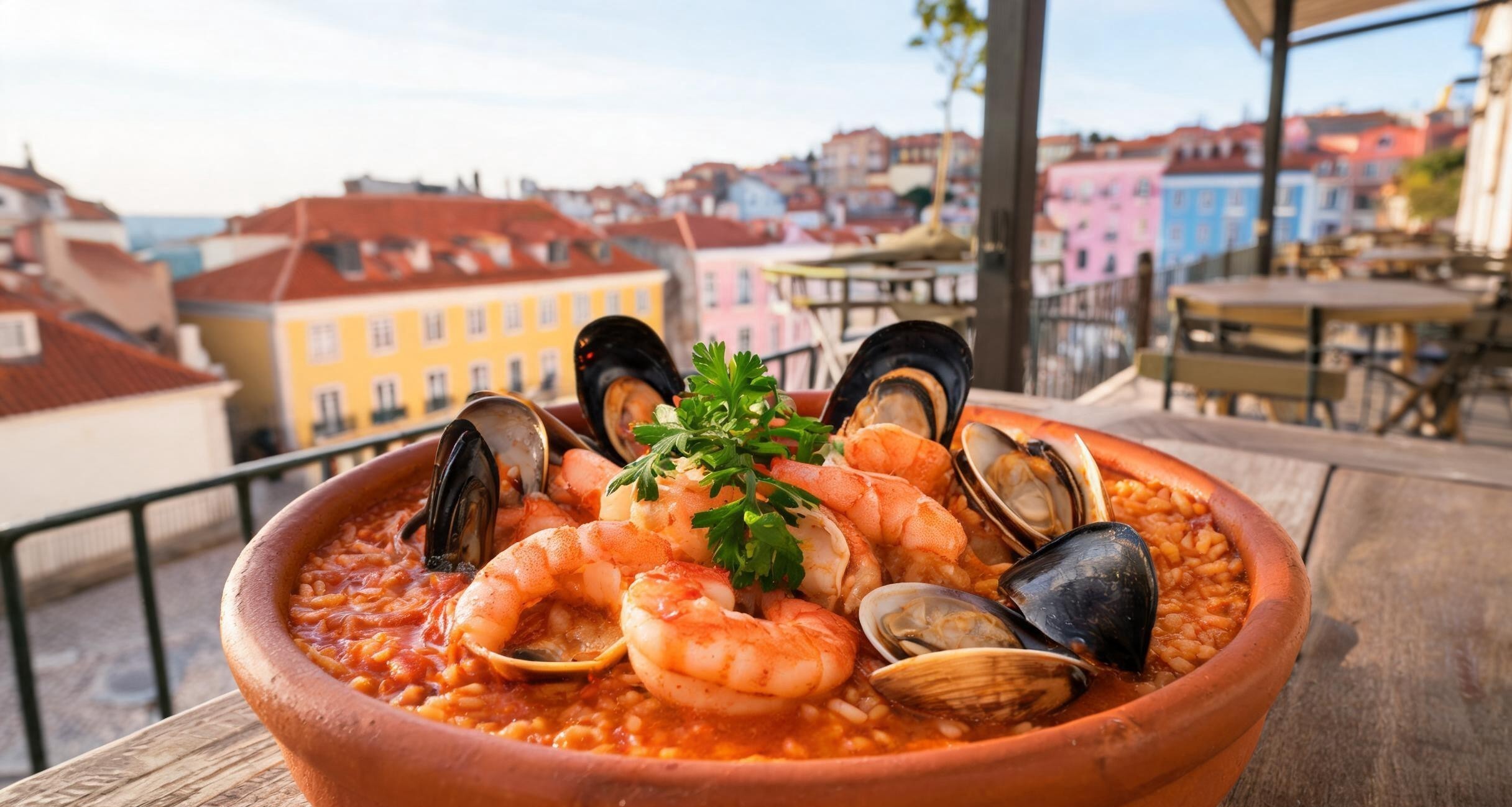
I went to Lisbon expecting to eat pasteis de nata and grilled sardines, and I did eat plenty of both. But the dish that I think about now, months later, is a pot of rice cooked with shellfish that arrived at my table at a restaurant called Cervejaria Ramiro steaming and red and smelling of the Atlantic. Arroz de marisco is what the Portuguese call it, and it looks like a distant cousin of paella at first glance, but the comparison falls apart the moment you taste it. Where paella is dry and the rice grains are separate, arroz de marisco is soupy, almost risotto-like, cooked in a broth made from the shells and heads of the same shrimp and crab that end up piled on top. It is wet and rich and deeply savory in a way that paella, for all its virtues, is not.
Cervejaria Ramiro is the most famous seafood restaurant in Lisbon, and it has been since 1956. The line forms before they open at noon, and by twelve thirty every seat is taken. I waited forty minutes on a Thursday, which the man standing next to me in line said was nothing. On weekends the wait can be two hours. When I finally sat down at a marble-topped table near the back, I ordered the arroz de marisco without hesitation, along with a plate of raw percebes, the strange goose barnacles that look like dinosaur claws and taste like pure concentrated ocean. The arroz arrived in a shallow clay pot, still bubbling. The rice was tinted orange-red from the tomato and paprika in the broth, and it was loaded with whole prawns, mussels, and chunks of crab. The rice at the bottom of the pot had started to form a slight crust, similar to the socarrat in paella, and I scraped at it with my spoon while the couple at the next table did the same thing with theirs.
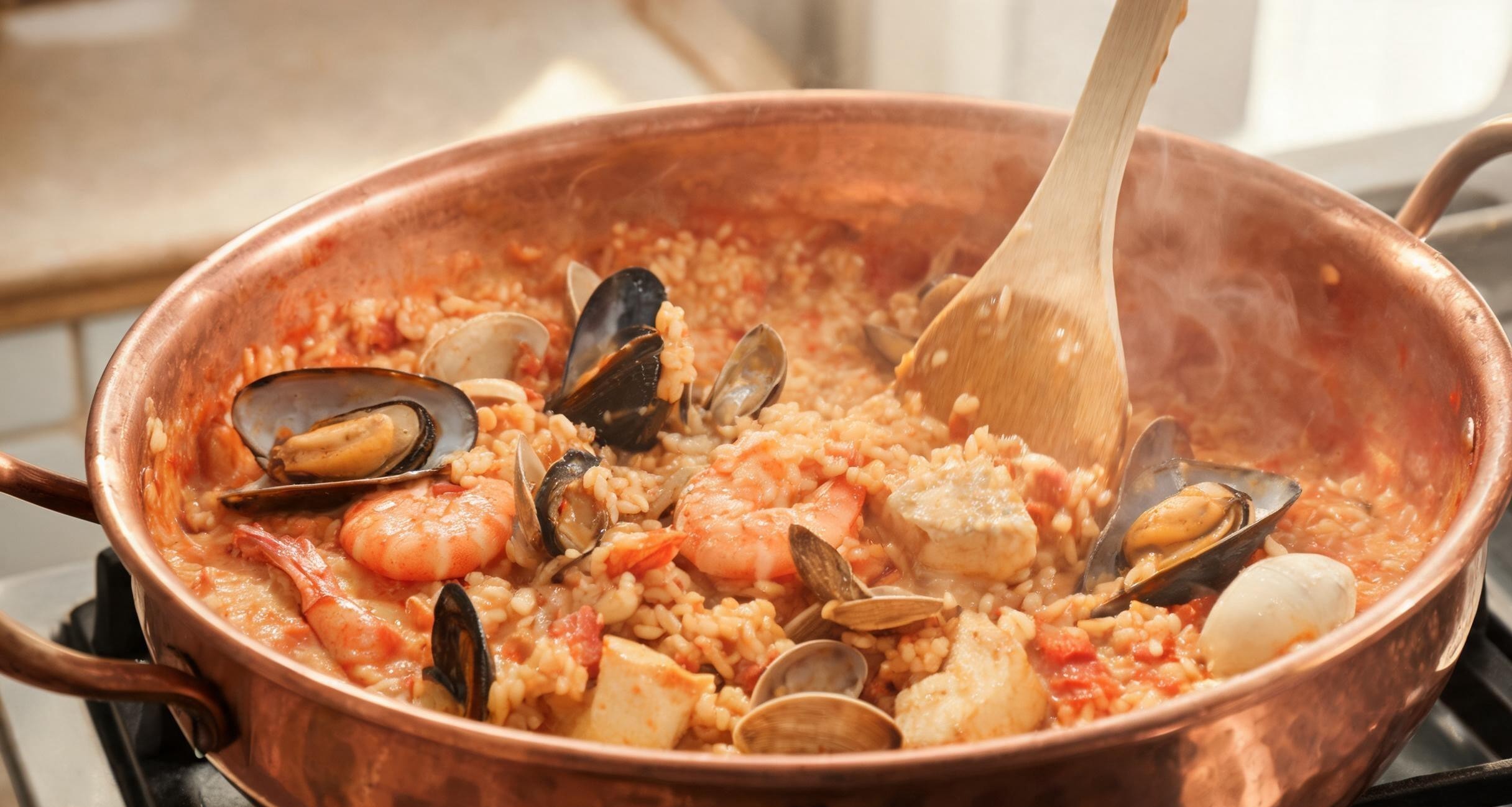
The second restaurant, a smaller place called Marisco na Brasa in the Alvalade neighborhood, takes a different approach. Their version of arroz de marisco is thicker, closer to a stew than a soup, and it includes lobster, which drives the price up considerably. A pot for two costs around forty-five euros, compared to roughly thirty at Ramiro. But the lobster adds a sweetness to the broth that makes it worth the extra cost if you are willing to pay it. The rice they use is a short-grain Portuguese variety called Carolino, which absorbs more liquid than the bomba rice used in Spanish paella. That is part of the reason the dish is so saucy. Carolino rice releases starch as it cooks, thickening the broth into something that coats the spoon. The waiter at Marisco na Brasa told me they cook the rice in the shellfish broth for about twelve minutes, then add the seafood in the last three minutes so it does not overcook. The prawns were some of the sweetest I have ever tasted.
The third place was a recommendation from a friend who lives in Lisbon, a tiny spot called O Pescador in the Cascais suburb. It is not in any guidebook, or at least it was not when I visited. Their arroz de marisco was the most modest of the three, made with smaller shrimp and fewer shellfish, but the broth was the most complex. The cook, an older woman named Maria, told me she starts by making a refogado of onion, garlic, and tomato, cooking it slowly until the tomato breaks down completely. Then she adds the rice, fish stock, white wine, and a handful of fresh cilantro stems. The cilantro stems are the detail that sets her version apart. Most recipes use cilantro leaves as a garnish, but Maria adds the stems to the broth for their aromatic, slightly peppery flavor, then finishes the dish with leaves on top. The result is a broth that tastes brighter and more layered than what I had at the other two restaurants, even with fewer and less expensive ingredients.
I left Lisbon with a firm opinion: arroz de marisco deserves the same international recognition as paella or risotto. It is every bit as technical, every bit as dependent on good stock and proper rice and timing. But it is less known outside Portugal, partly because the Portuguese are less aggressive about exporting their food culture than the Spanish or the Italians. That is fine with me in some ways. It means the restaurants in Lisbon are still full of locals eating a dish they have grown up with, not tourists checking something off a list. But I would like more people to know about it, because a pot of that soupy, shellfish-heavy rice is one of the best things I have eaten in any country, and I do not say that lightly.