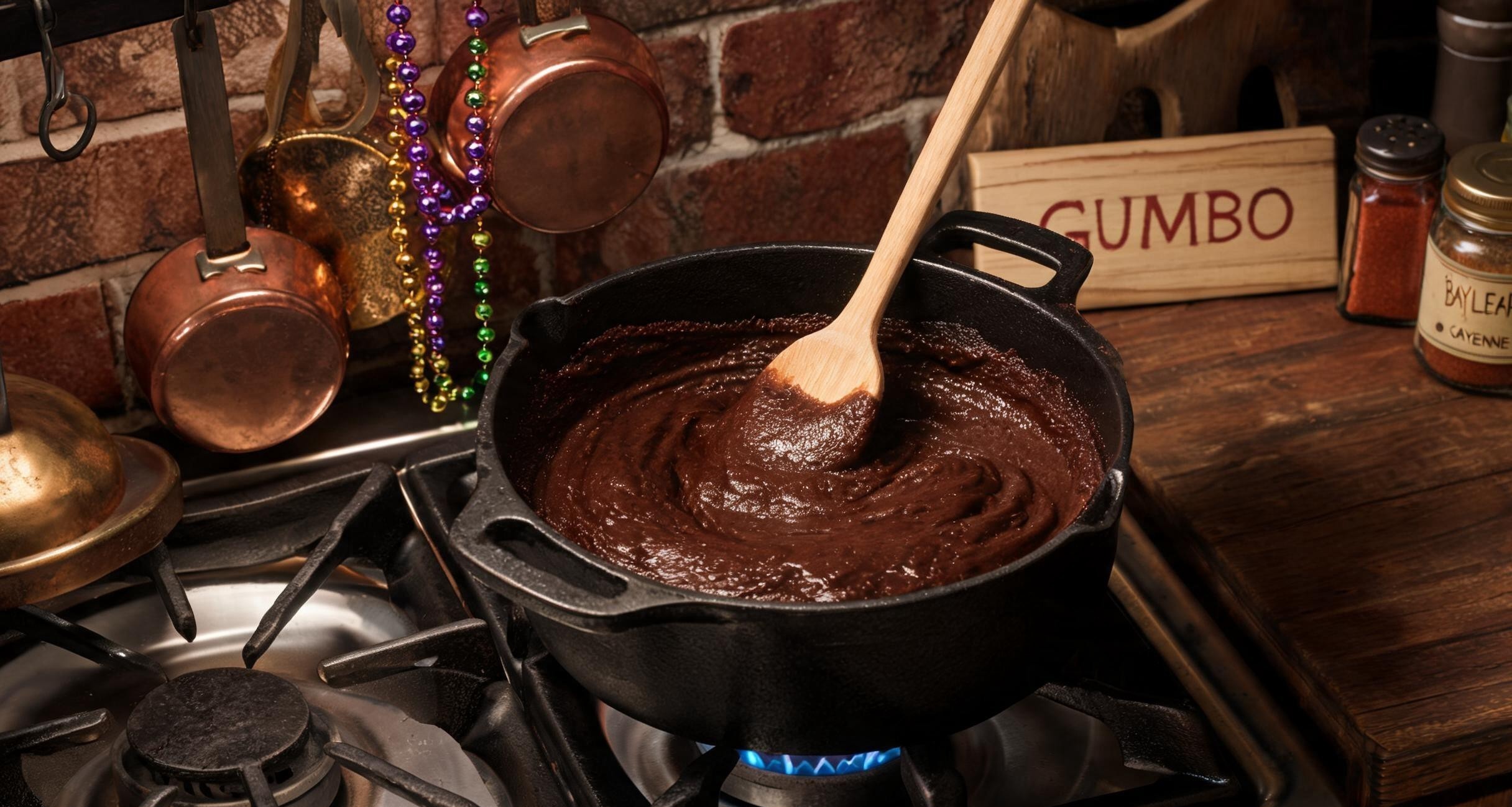
My grandmother in Baton Rouge made gumbo the way she made everything else: without measuring, without explaining, and without compromise. She started the roux on a Tuesday afternoon and did not finish the gumbo until Wednesday evening, and the roux alone took an hour and a half of constant stirring with a wooden spoon. I stood next to her once when I was twelve and asked why she could not just add flour and butter and be done with it. She looked at me the way adults look at children who say foolish things and said, because that would be gravy, not gumbo. She was right. A gumbo roux is not a thickening agent. It is the foundation of the entire dish, and the color of the roux determines the flavor of the gumbo. She cooked hers to a dark mahogany, almost black, and she stirred it the entire time, adjusting the heat to keep it from burning. One moment of inattention and the roux goes from dark and complex to bitter and ruined. There is no recovery. You start over.
The roux in a Cajun gumbo is made with oil or butter and flour, in roughly equal parts by volume, cooked over medium-low heat and stirred without stopping. The flour browns in stages, passing through white, blond, peanut butter, copper, and finally the dark chocolate color that my grandmother insisted on. Each stage takes roughly the same amount of time, and each stage adds a layer of flavor. A light roux, blonde or peanut butter, provides thickening with minimal flavor impact. A dark roux, copper or chocolate, provides both thickening and a deep, nutty, roasted flavor that is the backbone of the gumbo. The darker the roux, the thinner it gets, which is counterintuitive: the more you cook it, the less thickening power it retains. My grandmother compensated for this by making her roux with a higher proportion of oil to flour, which gave her the dark color she wanted while maintaining enough thickening to give the gumbo its characteristic body.
The okra-versus-file powder debate in gumbo is the kind of argument that families in New Orleans have been having for generations and will continue having for generations more. Okra is the traditional thickener, added early in the cooking process so it has time to break down and release its natural mucilage, which gives the gumbo a silky texture. File powder, made from dried sassafras leaves, is added at the very end, just before serving, and it provides a slightly different thickening and a distinctive flavor that is earthy and slightly sweet. Some people use both. Some people refuse to use either. Some people use roux alone and consider both okra and file unnecessary. My grandmother used okra, and she would not put file powder in her gumbo under any circumstances. I asked her once why, and she said that file was a Creole thing, not a Cajun thing, and that she had her own way of doing things. I have since learned that this distinction between Cajun and Creole gumbo is more fluid than she acknowledged, but her position on file was non-negotiable.
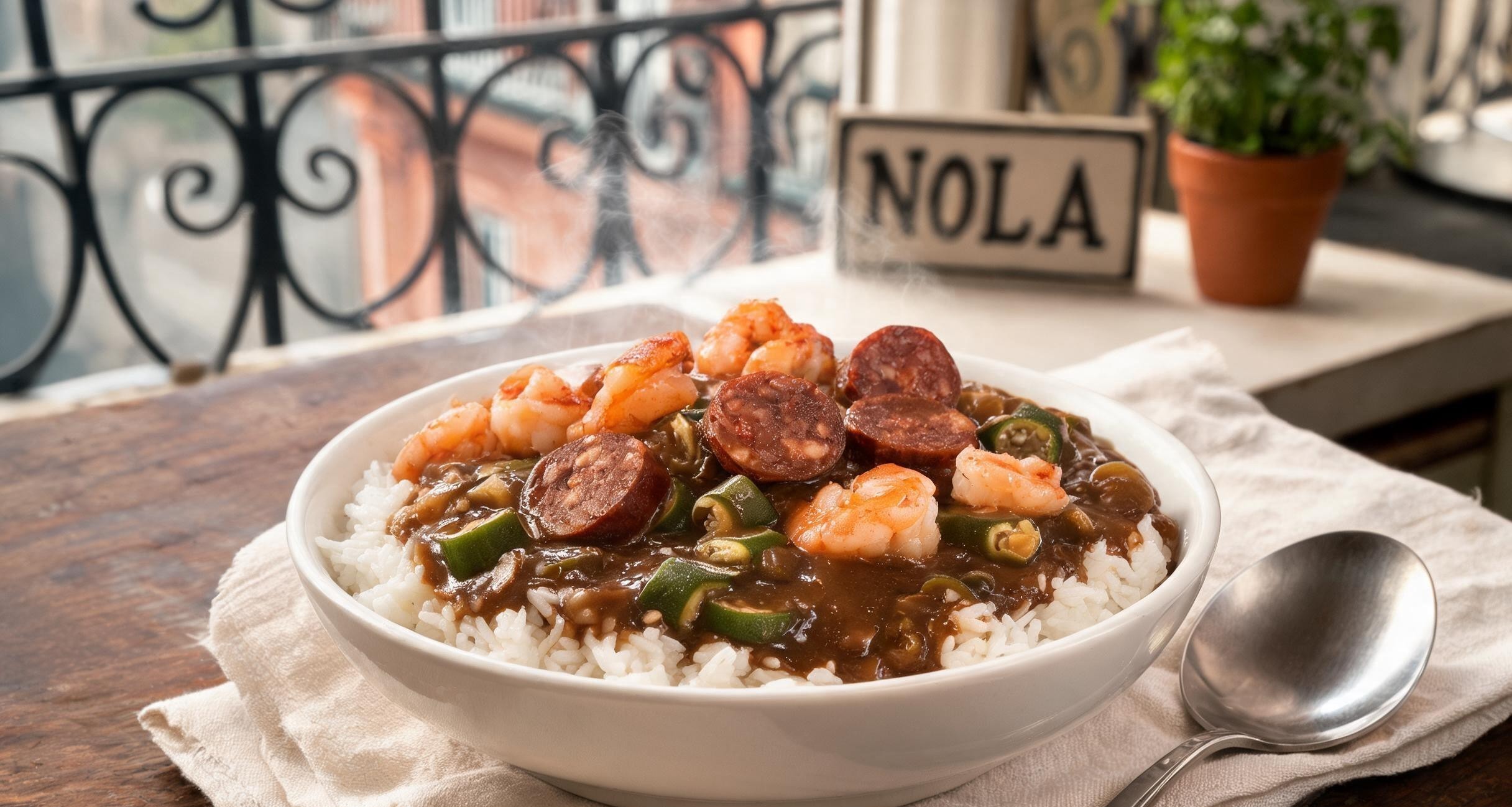
The protein in a Cajun gumbo varies by season and by what is available. My grandmother used chicken and andouille sausage most of the time, and she added shrimp during the summer when the Gulf shrimp were running. The chicken was always a whole bird, cut into pieces and browned in the same pot the roux was made in, which meant the fond, the browned bits stuck to the bottom, got scraped into the gumbo and added another layer of flavor. The andouille was the smoked sausage from a specific shop in Opelousas that she drove forty-five minutes to visit twice a month. She would not buy andouille from the supermarket, and she would not accept substitutes. The shop made their sausage with pork shoulder, garlic, thyme, cayenne, and smoked paprika, stuffed into natural casings and smoked over pecan wood for six hours. The difference between that sausage and the mass-produced stuff was obvious in every bite of gumbo. The real andouille had a snap to the casing, a smokiness that permeated the entire dish, and a spiciness that was present but not aggressive.
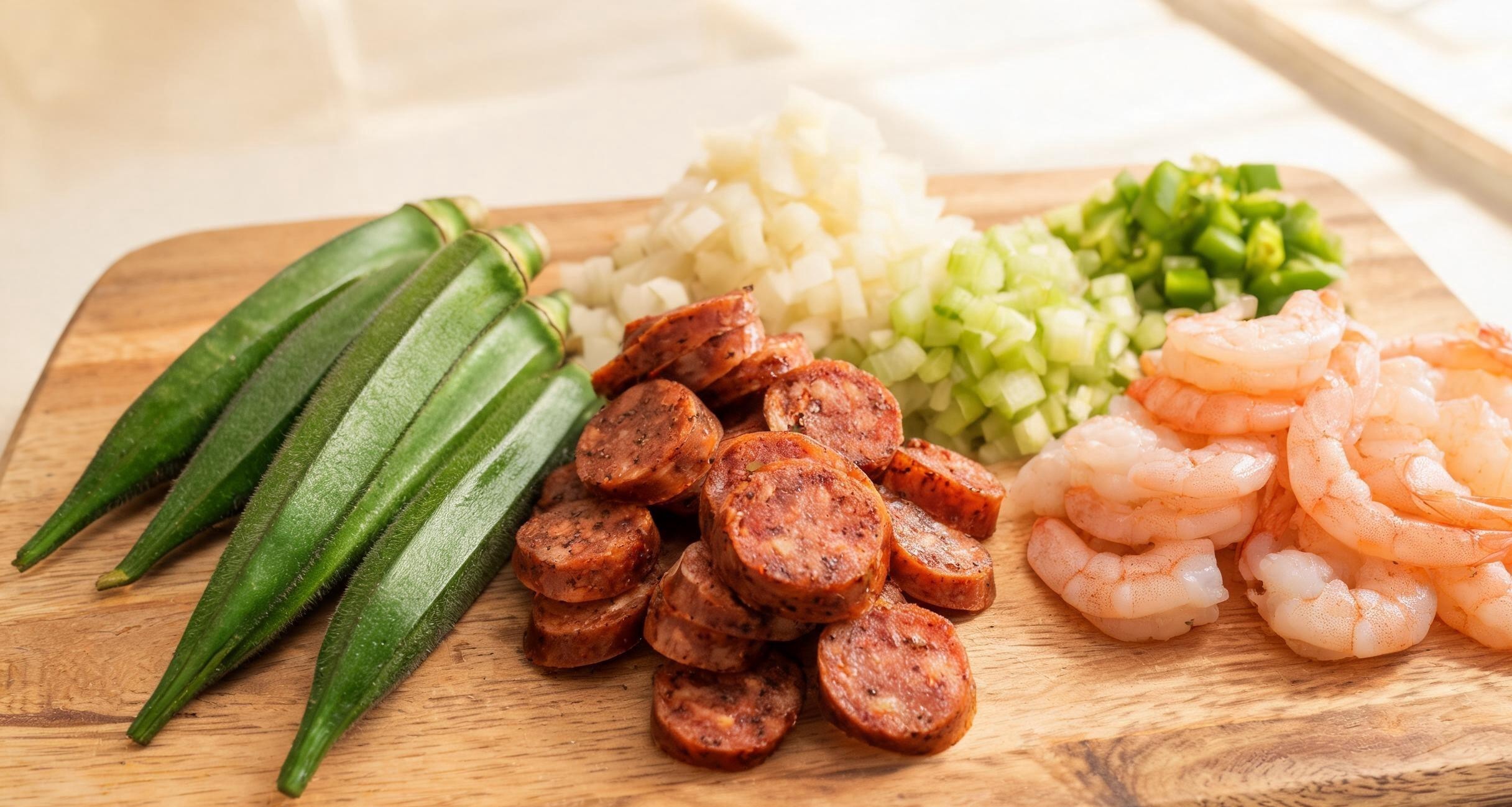
The vegetables in a gumbo are simple: onion, celery, and green bell pepper, known as the holy trinity of Cajun cooking. They go into the pot after the roux is finished, when the roux is still hot, and they cook in the roux for several minutes before the stock and the proteins are added. This step, cooking the vegetables in the roux, is important because the moisture from the vegetables stops the roux from cooking any further and prevents it from burning. I have seen people add the vegetables before the roux is dark enough, which stops the browning process prematurely and results in a lighter, less flavorful gumbo. My grandmother always waited until the roux was the color she wanted before adding anything else. She would hold the chopped vegetables in a bowl next to the stove and add them all at once, stirring vigorously to combine them with the roux. The sizzle was loud and dramatic, and the smell that filled the kitchen was deep, nutty, and slightly caramelized. That smell is what gumbo smells like, and once you have smelled it, you never forget it.
The gumbo is served over rice, always, with a sprinkle of green onion on top, and it is eaten with a spoon, not a fork. The texture should be thick but not stiff, somewhere between a soup and a stew. The flavor should be dark and complex, with the smokiness of the andouille, the sweetness of the roux, the freshness of the holy trinity, and the briny pop of the shrimp, if you are lucky enough to have them. My grandmother served her gumbo in shallow bowls, with a piece of French bread on the side for soaking up whatever was left. She made enough to feed the family for three days, and it was better on the second day, after the flavors had married in the refrigerator overnight. That is the thing about gumbo: it rewards patience. The roux takes patience, the cooking takes patience, and the eating takes patience, because you should not eat it the day you make it if you can help it. Let it rest. Let the flavors come together. Then heat it up and eat it standing at the kitchen counter at midnight, the way my grandmother did, straight from the pot.