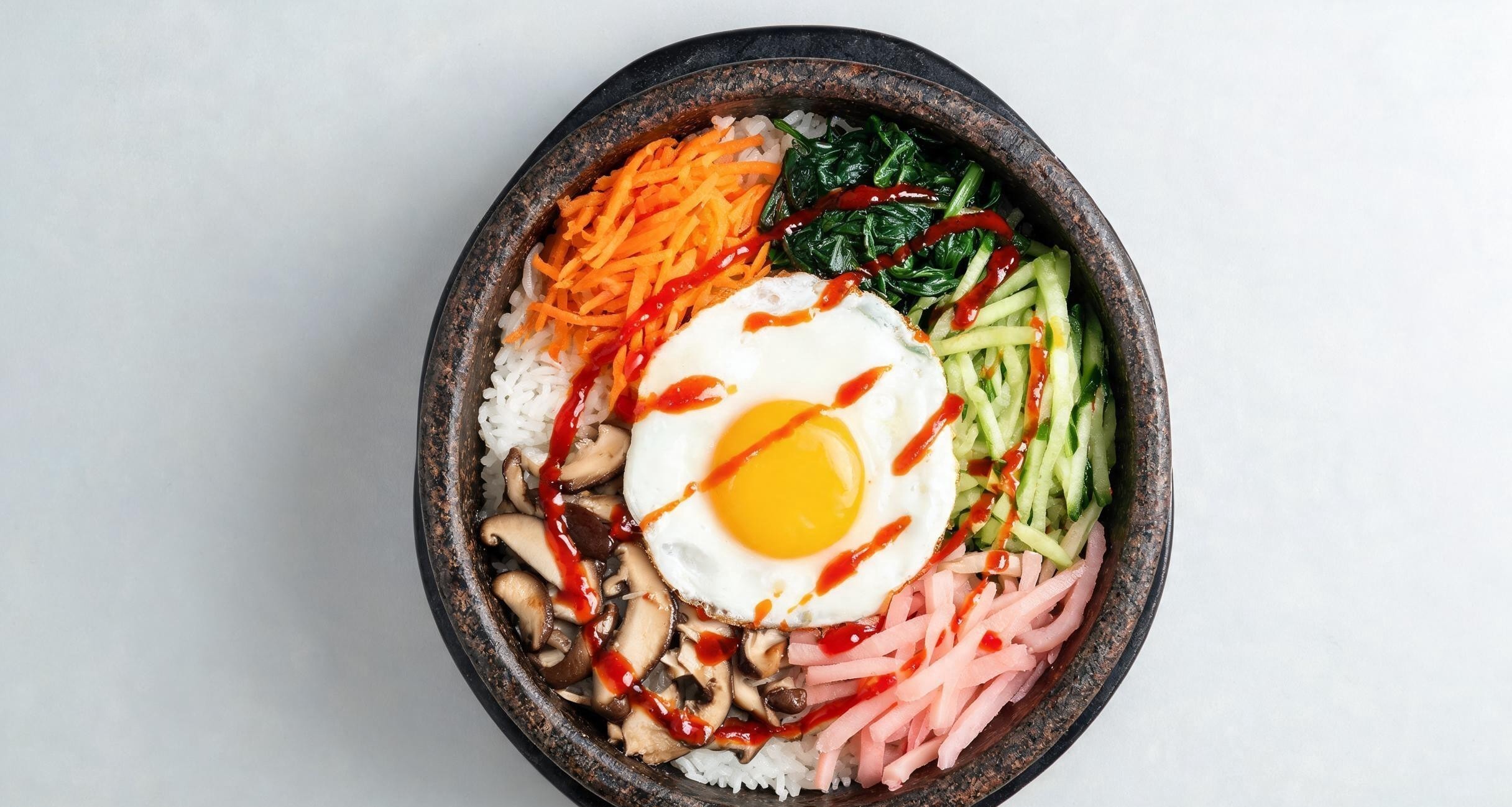
My mother made bibimbap on the nights she did not feel like cooking anything complicated, which sounds funny because bibimbap looks like a lot of work. There are vegetables to blanch, season, and arrange. There is rice to cook properly, which means short-grain and nothing else. There is an egg to fry. But my mother treated it as a clean-out-the-fridge meal, a way to use up the spinach that was wilting, the bean sprouts that had been sitting too long, the zucchini that was on its last day. She would set out small bowls of each prepared vegetable, a spoonful of gochujang, and we would assemble our own. The act of mixing it all together at the table was part of the meal. It was never the same twice, and it was always good.
The rice is the foundation and it must be short-grain white rice, cooked so that each grain is tender but still holds its shape. Sushi rice from the Japanese aisle at the grocery store works fine. Wash it until the water runs clear, then cook it with a little less water than you think it needs. Overcooked rice turns bibimbap into mush, and there is no recovering from that. The rice should be glossy and slightly sticky, with each grain separate but willing to cling to its neighbors. Season the cooked rice with a tablespoon of sesame oil and a pinch of salt while it is still warm. Some people skip this step, but my mother never did, and the rice in her bibimbap had a nutty depth that plain rice cannot match. You can also add a splash of sesame oil to the cooking water for an extra layer of fragrance.
The vegetables, called namul, are what make or break the bowl. My mother always included spinach, bean sprouts, zucchini, carrots, and shiitake mushrooms, but the combination varies by season and preference. Each vegetable is cooked individually and seasoned separately. Spinach is blanched for thirty seconds, squeezed dry, and tossed with sesame oil, garlic, and a pinch of salt. Bean sprouts get the same blanching treatment but are seasoned with sesame oil, a drop of soy sauce, and a sprinkle of sesame seeds. Zucchini and carrots are sliced into thin matchsticks and sauteed separately in a little oil until just tender. Shiitake mushrooms are sliced and cooked until their moisture evaporates and they begin to brown.
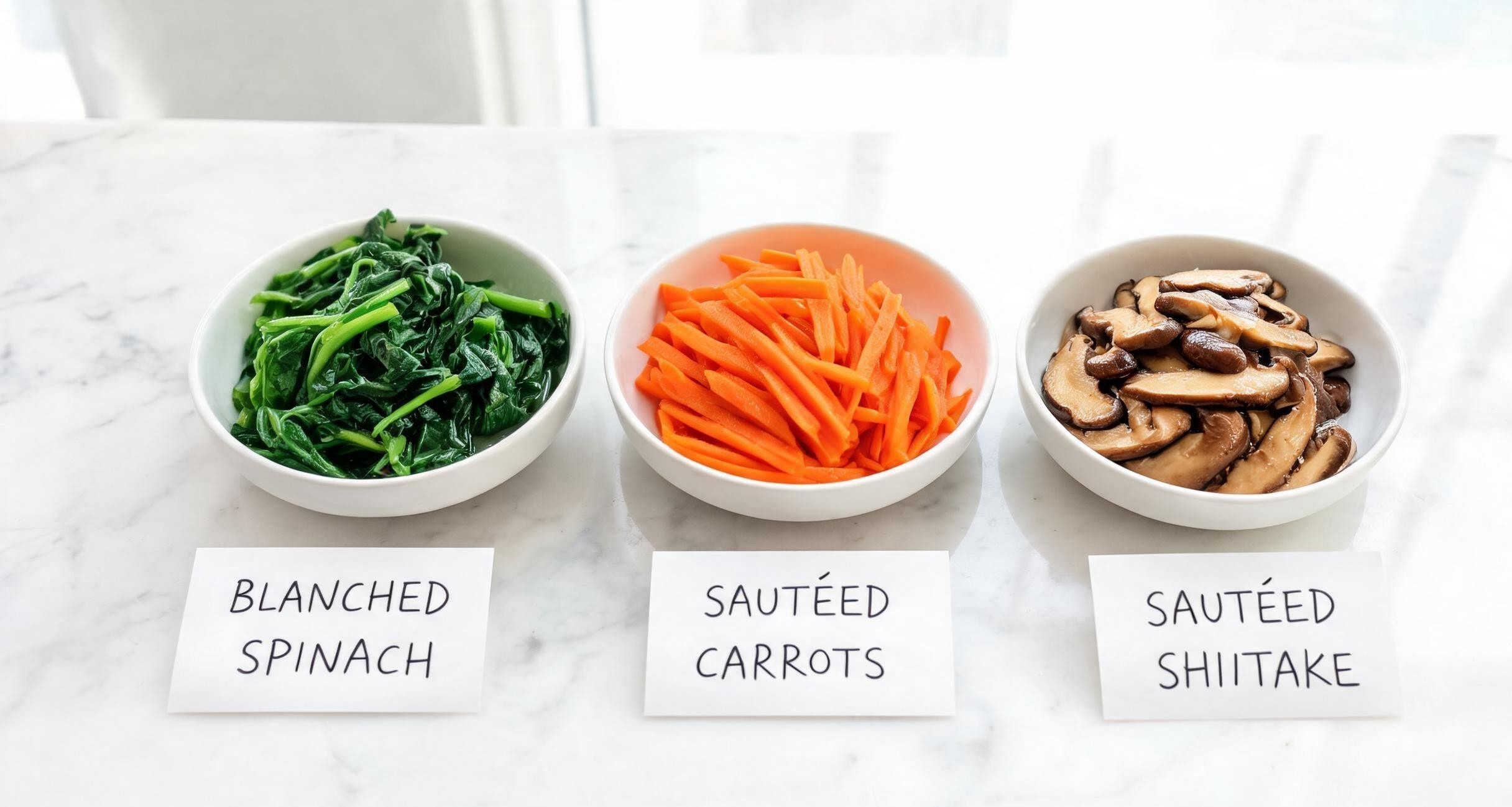
You do not need all of these vegetables every time. Bibimbap is flexible. Use what is fresh and what sounds good. But cook and season each one on its own. This is the part that feels tedious, and I will not pretend otherwise. It takes about forty-five minutes to prep everything. But once the vegetables are done and arranged in small piles around the bowl, the effect is striking: a circle of bright colors against white rice, each component distinct. The effort shows.
The egg is the crown. A sunny-side-up egg with a runny yolk is traditional and non-negotiable in my opinion. When you break the yolk and fold it into the rice and vegetables, it creates a rich, creamy coating that brings everything together without the need for any additional sauce. Fry the egg in a non-stick pan with a thin layer of oil, keeping the white firm but the yolk completely liquid. Slide it onto the top of the bowl.
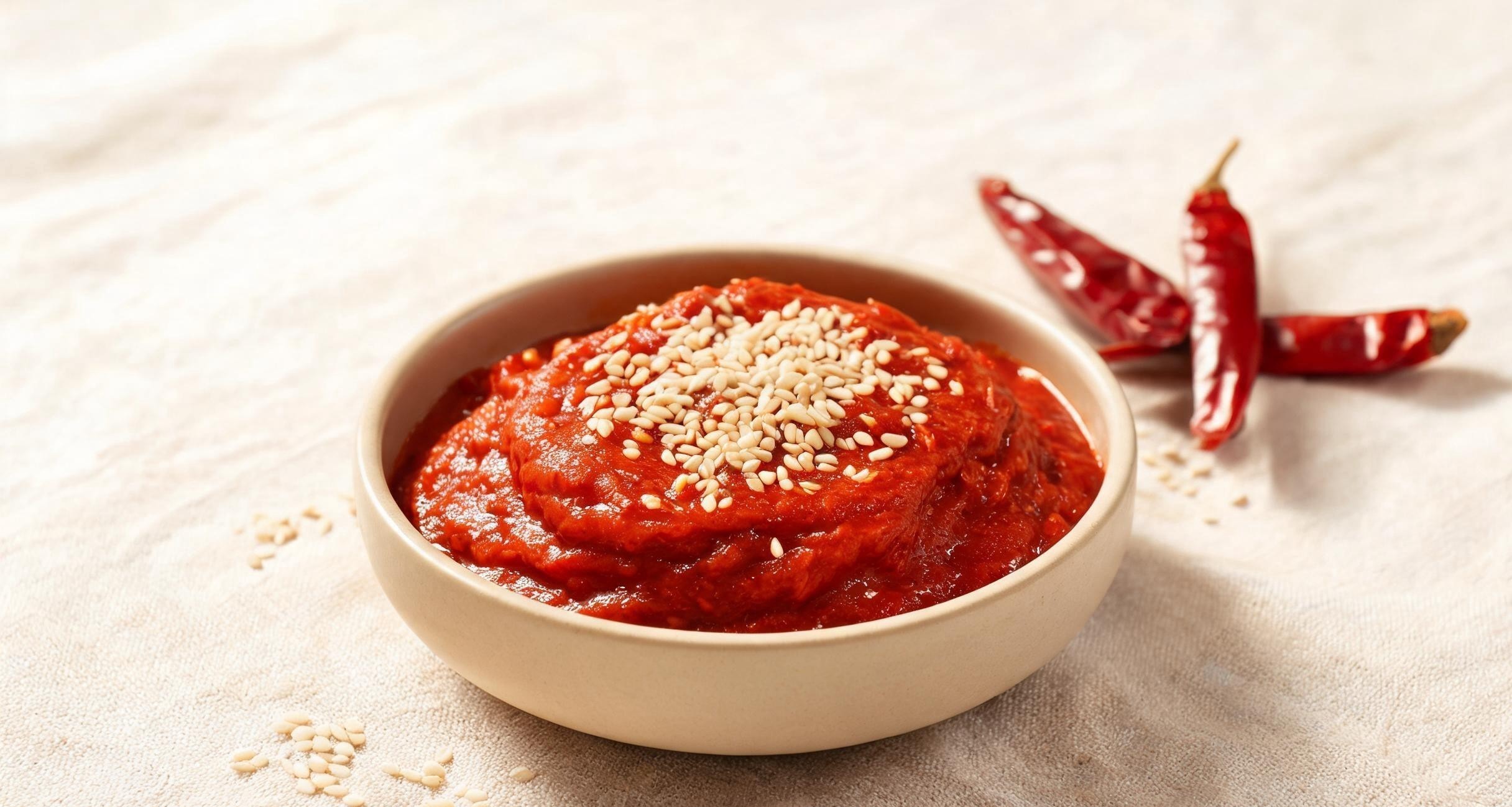
Gochujang, the fermented Korean chili paste, is the seasoning. Place a tablespoon or two in the center of the bowl, right on top of the rice. When you mix everything together, the gochujang coats the rice and vegetables with a deep, savory heat that is unlike any other hot sauce. Some people add a drizzle of sesame oil on top as well. I always do. The mixing is the best part. Use your spoon or chopsticks to fold the rice, vegetables, egg, and gochujang together until the bowl becomes a uniform, messy, glorious heap. A dolsot bibimbap, served in a hot stone bowl, will give you a layer of crispy rice on the bottom called nurungji that many Koreans consider the best part. You can achieve a version of this at home by using a cast-iron skillet that you have heated in the oven. The rice that makes contact with the hot metal crisps and toasts, and those crunchy bits mixed into the soft rice and vegetables are extraordinary. Bibimbap is comfort food in its purest form: warm rice, seasoned vegetables, a rich egg, and a sauce that makes you want to keep eating long after you are full. My mother knew this, which is why she always made extra.
The gochujang is the last thing you add, and how you mix it in matters. Most people dump it in the center and stir everything together immediately, which distributes the heat unevenly. The better approach is to place a small amount on your spoon with each bite, adjusting the spice level as you go. The egg yolk, still slightly runny, acts as a binder that coats the rice and mellows the chili paste. If the yolk is fully cooked, the dish loses that richness and becomes drier. I learned this from a Korean friend who watched me violently stir my bowl and gently stopped my hand.