My first attempt at jerk chicken was on a gas grill in my backyard in Atlanta, and it was terrible. I had mixed together a marinade of scotch bonnet peppers, scallions, thyme, allspice, soy sauce, and lime juice, following a recipe from a cookbook that promised authentic Jamaican flavor. The problem was that I marinated the chicken for two hours, cooked it over direct high heat for twenty minutes, and served chicken that was burned on the outside and raw at the bone. The flavor was there, underneath the char, but the technique was completely wrong. It took two more attempts and a long phone call with a friend's mother who grew up in Montego Bay before I understood what I was doing wrong, and even then the results were inconsistent for the first few tries. Jerk chicken is not hard once you understand the principles, but those principles are different from almost every other grilling technique most people know.
The marinade is where jerk chicken starts, and it is not something you rush. Most recipes call for at least four hours, but overnight is better, and twenty-four hours is ideal. The base of the marinade is scotch bonnet peppers, which are seriously hot, registering between 100,000 and 350,000 on the Scoville scale. For a whole chicken broken down into pieces, I use four to six peppers, seeded if you want some heat control, left whole if you want the full experience. My friend's mother, who goes by Miss Pauline, told me to always leave some seeds in. She said the heat should be present but not dominating, a slow burn that builds as you eat, not a shock to the system on the first bite. I use five peppers with about half the seeds removed, and that gives a steady warmth that does not overwhelm the other flavors in the marinade.
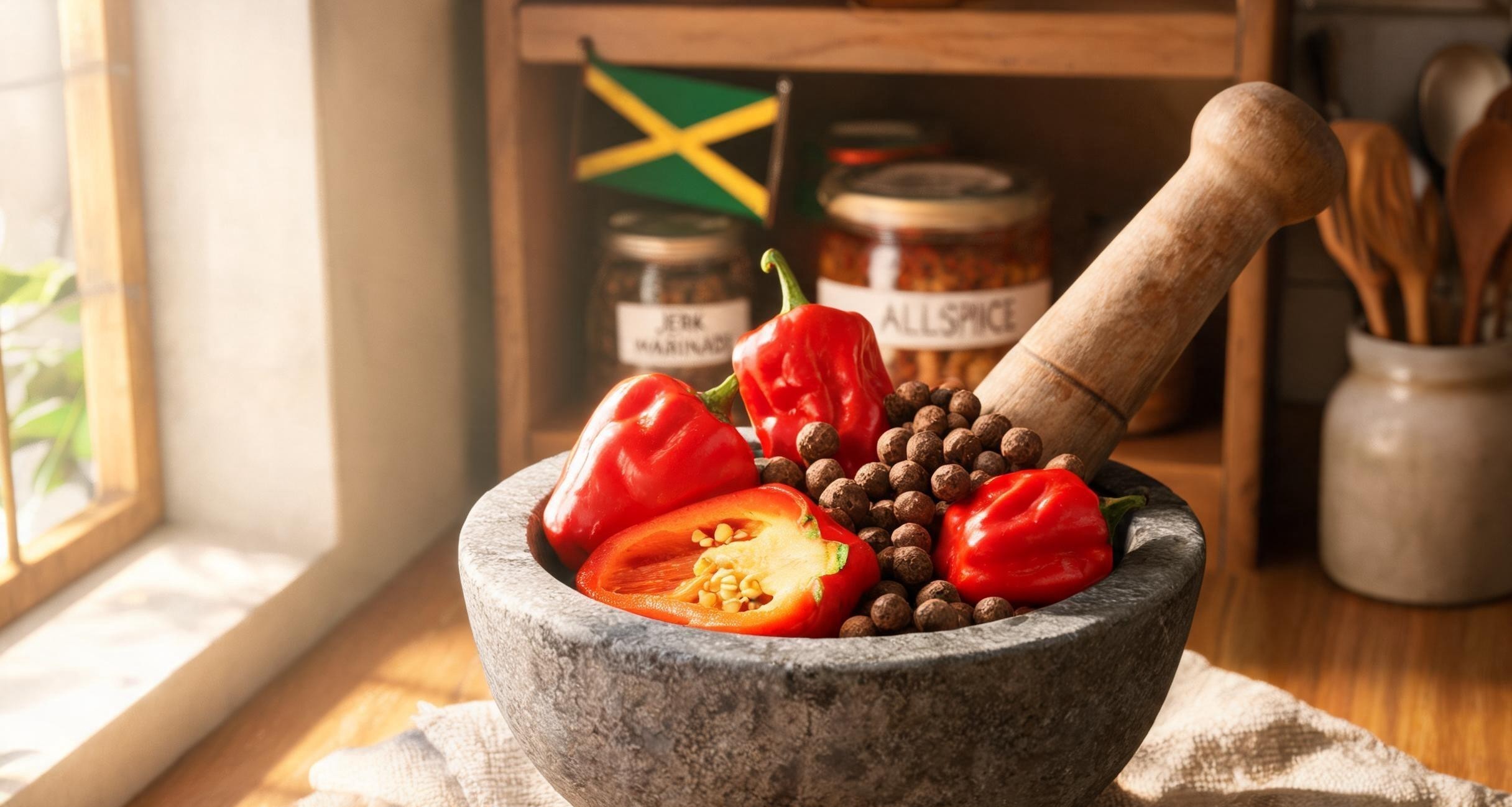
Beyond the peppers, the marinade needs scallions, lots of them, roughly a whole bunch, chopped coarse. Fresh thyme, at least two tablespoons of leaves stripped from the stems. Ground allspice, which is the spice that gives jerk its distinctive flavor and is sometimes called pimento in Jamaica. Garlic, ginger, a splash of soy sauce for umami, brown sugar for caramelization, and lime juice for acidity. Some people add cinnamon, nutmeg, or cloves, but Miss Pauline said those are optional and she does not use them. I blend everything together in a food processor until it forms a thick, rough paste, then rub it all over the chicken, getting it under the skin where possible. The chicken goes into a zip-top bag and into the refrigerator for at least twelve hours. The longer it sits, the deeper the flavor penetrates.
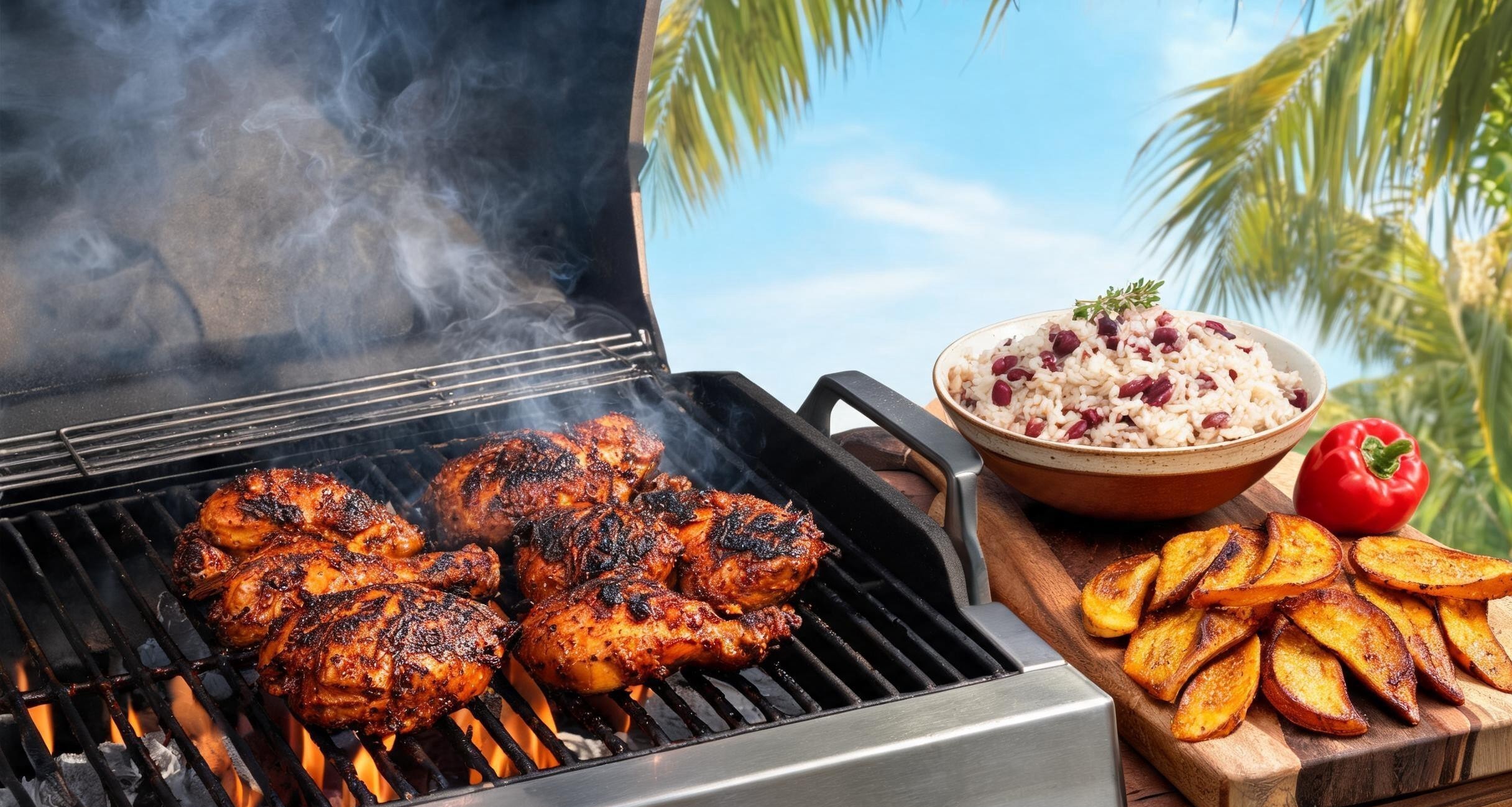
The cooking is where most people, myself included, go wrong. Authentic jerk chicken is cooked over charcoal or wood, slowly, with indirect heat and plenty of smoke. You do not grill jerk chicken the way you grill burgers. On a gas grill, the best approach is to turn one burner to medium-low, leave the other burners off, and place the chicken on the unlit side with the skin up. Close the lid and let it cook slowly for about an hour and fifteen minutes, until the internal temperature reaches 165 degrees. If you want smoke, you can put a small foil packet of wood chips on the lit burner. Pimento wood is traditional, but hickory or apple works fine. The point is low, slow heat. The skin will not be crisp this way, but the meat will be tender and deeply flavored throughout.
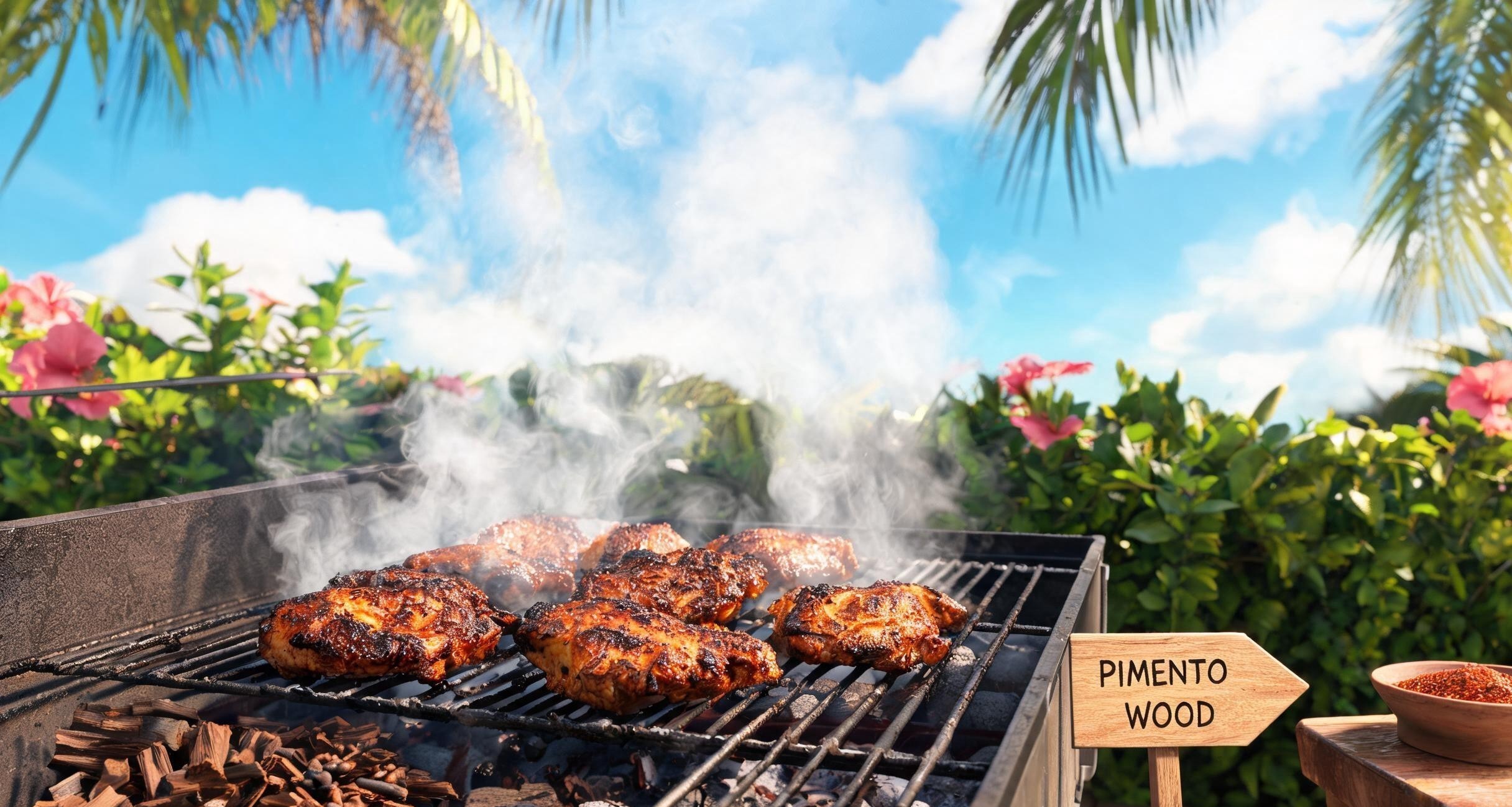
If you want crisp skin, which I do, you finish the chicken over direct heat for the last three to four minutes, moving it to the hot side of the grill and watching it closely. The sugar in the marinade will caramelize quickly, and the skin will go from pale to deeply browned in a matter of minutes. You have to pay attention during this step, because the line between caramelized and burnt is thin. I use tongs to flip the pieces once, give each side about two minutes, then pull them off. The result should be chicken that is sticky, sweet, spicy, and smoky, with skin that shatters when you bite into it and meat that is juicy all the way to the bone. It is not the same as what you get from a jerk pit on the side of the road in Jamaica, but it is close enough that Miss Pauline, when I sent her a photo, said it looked proper.
Miss Pauline also told me something about jerk chicken that I had not considered. She said that in Jamaica, jerk is not just a flavor or a cooking method. It is a social event. People gather around the jerk pit, the chicken cooks slowly for hours, and the smell draws neighbors and passersby. The cooking is as much about the gathering as it is about the food. I have tried to recreate some of that feeling by cooking jerk chicken for groups of friends on summer weekends, setting up the grill in the afternoon and letting people eat as the chicken comes off. It is a different experience from a quick weeknight dinner, and the chicken tastes better when there are people standing around waiting for it. The anticipation is part of the flavor, or at least it feels that way when you finally get your piece.