I used to ruin steaks. Not occasionally, not on bad nights, but almost every single time I cooked one. I would buy a nice ribeye, bring it to room temperature, season it generously, heat a pan until it was smoking, and then do the one thing that guarantees a bad result: I would move the steak. I would flip it too early, press it down with a spatula, check the underside every thirty seconds, and eventually pull it off the heat when the outside was gray and tough and the inside was a different shade of gray and also tough. The problem was not the steak or the pan. The problem was that I could not leave it alone long enough to develop a crust.
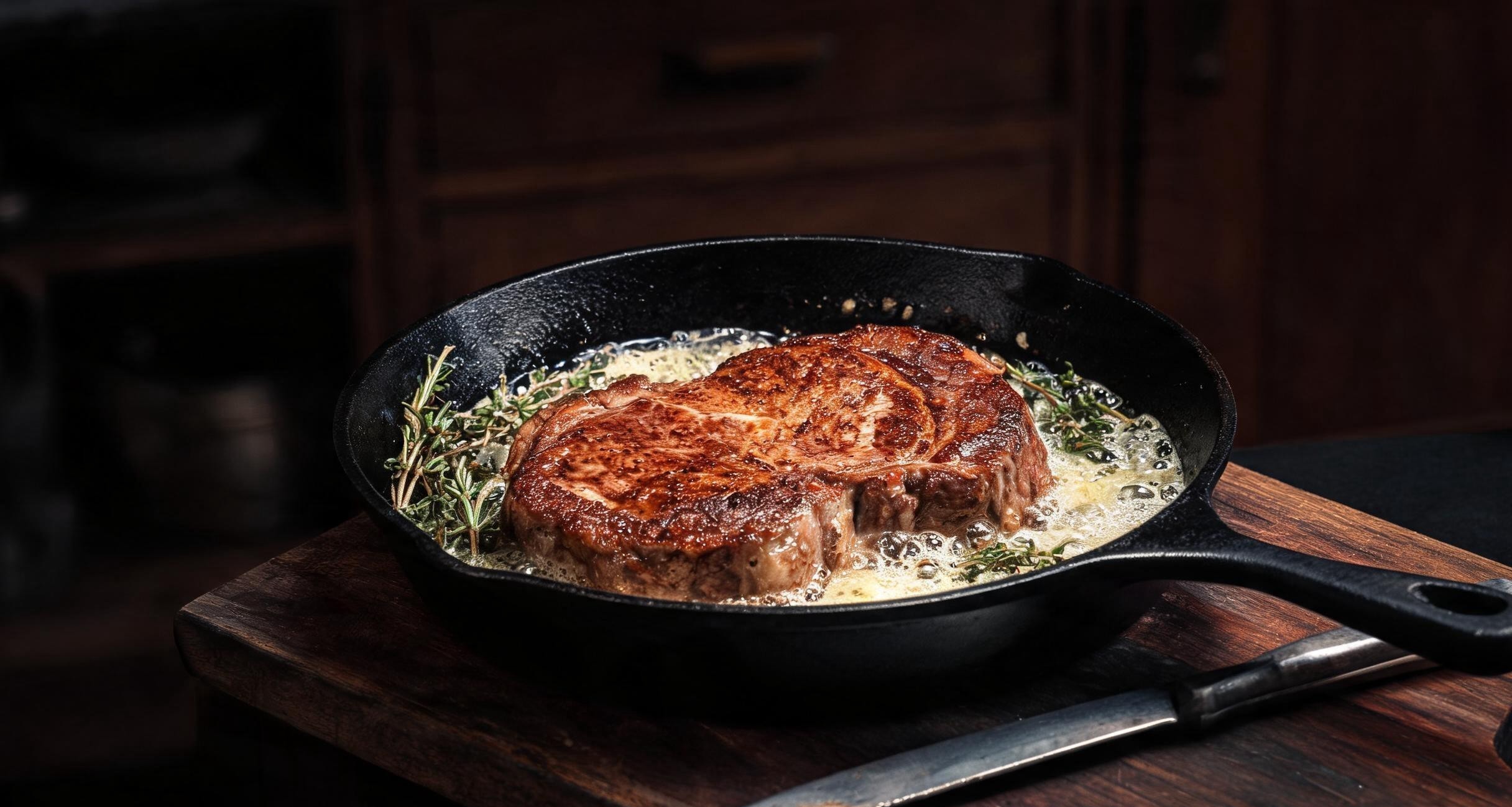
A good cast-iron pan is the only tool you need for this. Stainless steel works too, but cast iron holds heat more evenly, which matters when you are trying to maintain a screaming-hot surface for several minutes. I use a twelve-inch Lodge pan that I have had for eight years. It is black and seasoned and has probably cooked three hundred steaks at this point. Before the steak goes in, I heat the pan over high heat for a full five minutes, until a drop of water flicked into the pan evaporates in under a second. Then I add a thin layer of oil with a high smoke point, something like grapeseed or avocado, and let that heat for another thirty seconds.
The steak should be thick. I buy ribeyes that are at least an inch and a half, preferably two inches. Thicker steaks give you more time to develop a crust without overcooking the center. I pat the steak completely dry with paper towels, which is a step most people skip and which makes a significant difference in how well the crust forms. Moisture is the enemy of browning. Then I salt both sides generously with kosher salt and add cracked black pepper. Some people add garlic powder or other spices at this stage, but I keep it to salt and pepper. The steak should be good enough on its own that it does not need help from a spice rub.
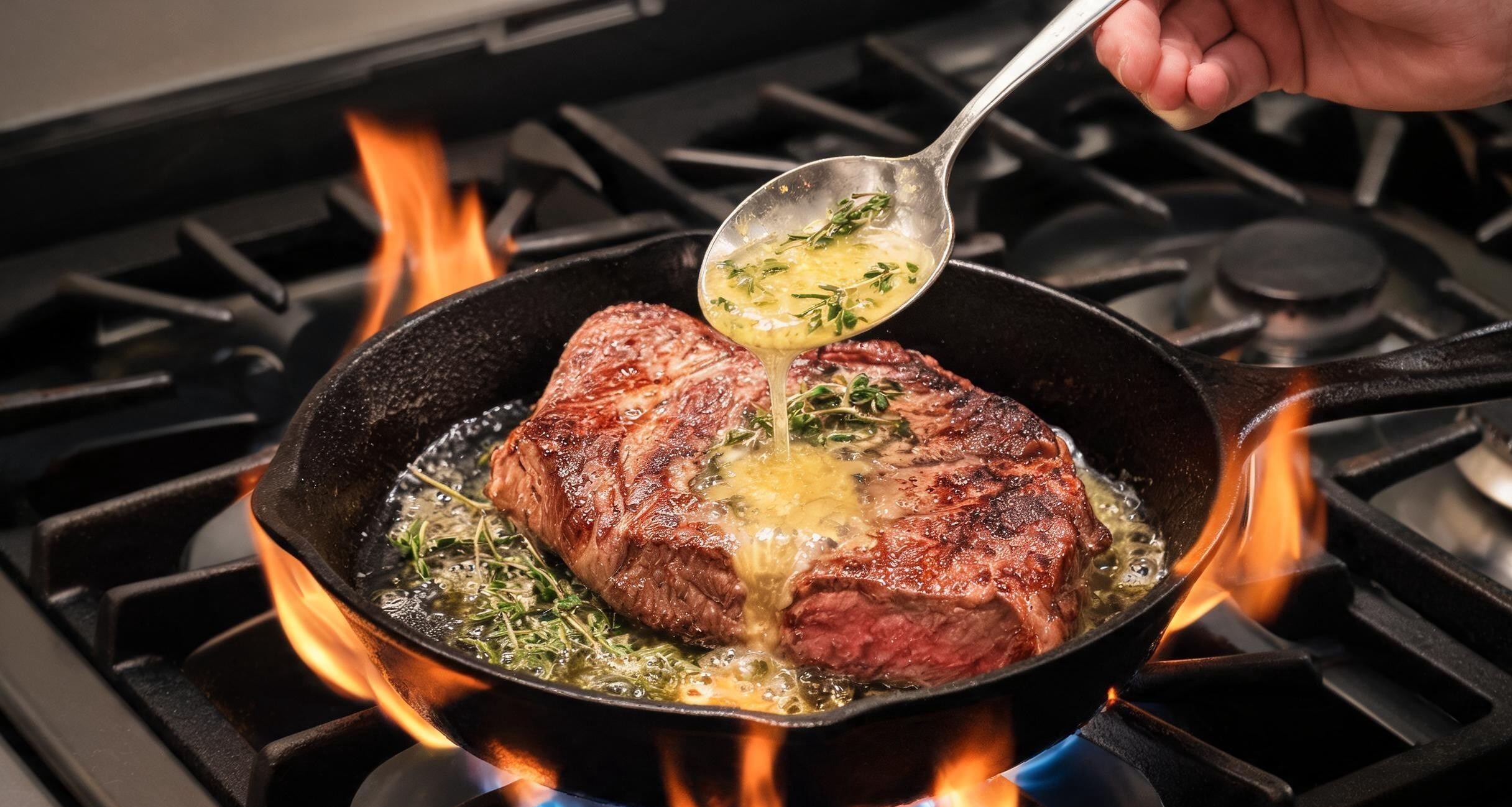
Here is where most people get nervous: once the steak goes in the pan, you do not touch it for three to four minutes. The meat will stick at first. That is fine. It will release on its own once the crust has formed. If you try to move it and it resists, it is not ready. Leave it alone. After three or four minutes on the first side, flip it once. Only once. Then add two tablespoons of cold butter, three peeled garlic cloves, and a few sprigs of fresh thyme to the pan. As the butter melts, tilt the pan slightly and use a spoon to baste the top of the steak with the foaming butter.
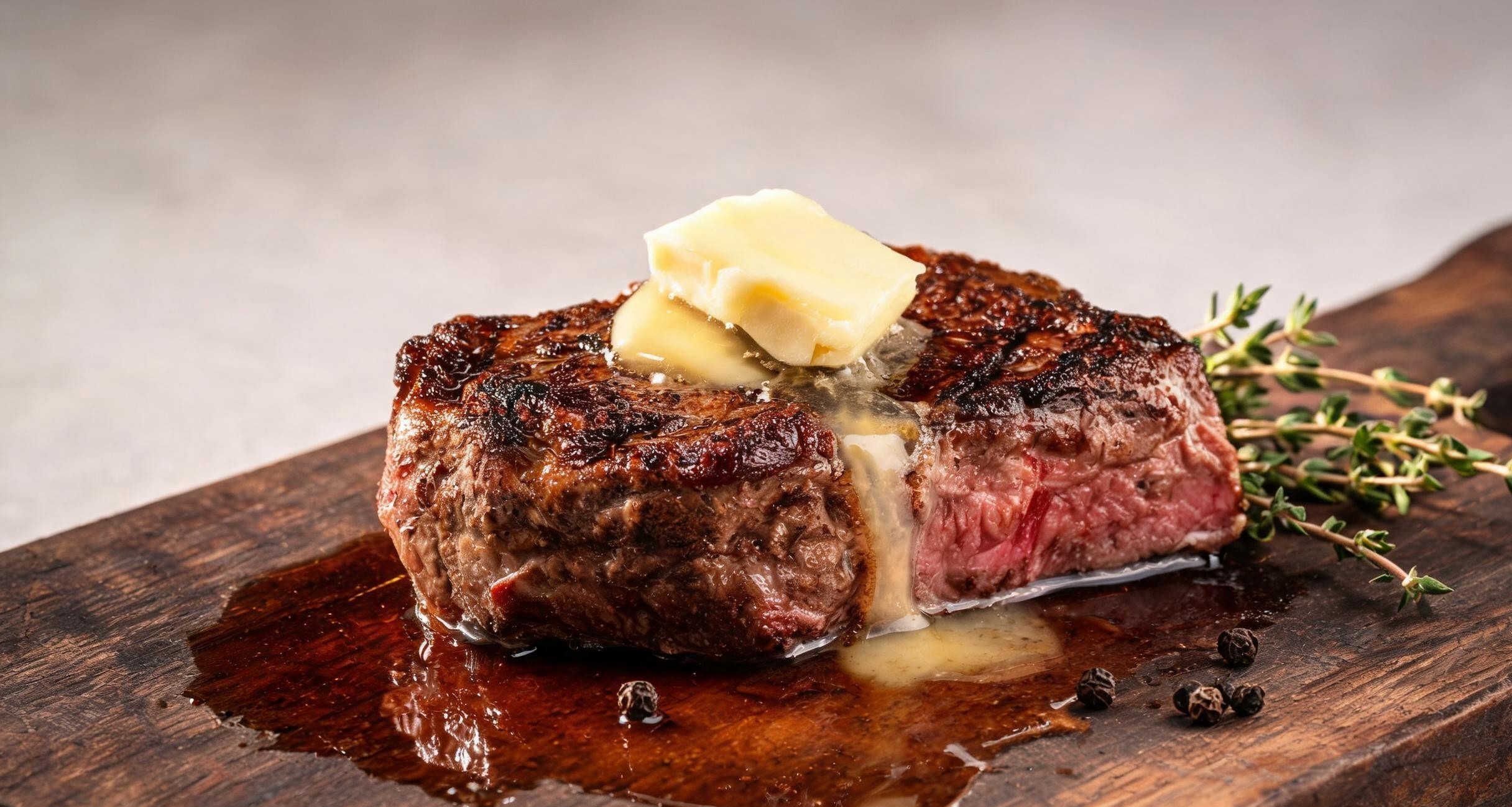
The rest is not optional. I used to skip it, and I used to wonder why my steaks were dry. Rest the steak for at least five minutes, eight if you can stand it. The internal temperature will continue to rise slightly as the meat rests, and the juices will redistribute throughout the steak instead of running out onto the cutting board the moment you slice into it. After the rest, slice against the grain, season with a pinch more salt if needed, and serve. The whole process, from heating the pan to the first bite, takes about twenty minutes.
I have tried this method with different cuts of beef. Ribeye is my default because the fat marbling keeps it juicy, but it works with New York strip, filet mignon, and even a thick-cut sirloin if you are careful. The only cut I would not use is something very lean, like eye of round, because there is not enough fat to create a good crust and the meat will dry out before it develops any color. For seasoning, I have experimented with compound butters, peppercorn sauces, and blue cheese toppings, and they all work, but the version I keep coming back to is salt, pepper, butter, garlic, and thyme. It is the simplest version, and it is the one that lets the quality of the beef show through most clearly.
I have taught this method to probably a dozen people at this point, and the ones who struggle most are the ones who cannot stop checking the steak. They want to peek under it, lift an edge, see how it is going. I understand the impulse. A two-inch ribeye costs between fifteen and twenty-five dollars, and the idea of leaving it alone on a hot pan with no supervision feels risky. But the risk is in moving it, not in leaving it. The steak will tell you when it is ready. When the edges start to brown and pull away from the pan slightly, when you see a thin line of color creeping up the side of the steak, that is when you flip. It is not a timer thing. It is a visual thing. Once you learn to read the signs, you will never overcook a steak again, and you will stop thinking of pan-searing as something that requires skill. It requires patience. That is a different thing entirely.
I have taught this method to probably a dozen people at this point, and the ones who struggle most are the ones who cannot stop checking the steak. They want to peek under it, lift an edge, see how it is going. I understand the impulse. A two-inch ribeye costs between fifteen and twenty-five dollars, and the idea of leaving it alone on a hot pan with no supervision feels risky. But the risk is in moving it, not in leaving it. The steak will tell you when it is ready. When the edges start to brown and pull away from the pan slightly, when you see a thin line of color creeping up the side of the steak, that is when you flip. It is not a timer thing. It is a visual thing. Once you learn to read the signs, you will never overcook a steak again, and you will stop thinking of pan-searing as something that requires skill. It requires patience. That is a different thing entirely.