Every risotto recipe I have ever read includes the phrase 'stir constantly.' I have also seen 'stir frequently,' 'stir occasionally,' and 'do not stop stirring or the rice will stick.' After making risotto roughly fifty times over the past few years, I can tell you that none of these instructions are accurate. You do need to stir risotto, but you do not need to stand at the stove for twenty minutes with a wooden spoon in your hand, unable to do anything else. The rice does not stick if you have the heat right. It does not burn if you pay attention. And it will come out creamy and properly cooked whether you stir it every thirty seconds or every two minutes. The constant-stirring myth is the single biggest reason people think risotto is difficult, and it is the first thing I tell people to ignore when they ask me for the recipe.
The rice matters more than the stirring. You need Arborio, Carnaroli, or Vialone Nano, which are short-grain Italian rices with a high starch content. The starch is what creates the creamy texture, as it releases from the outside of the grain during cooking while the inside remains al dente. Long-grain rice, basmati, jasmine, or any regular rice will not work because it does not have the right starch profile. Carnaroli is generally considered the best for risotto because it holds its shape better than Arborio during cooking, but Arborio is easier to find and works perfectly well for a weeknight version. Do not rinse the rice before cooking. You want the surface starch to remain so it can be released during the stirring process and create the sauce that makes risotto what it is.
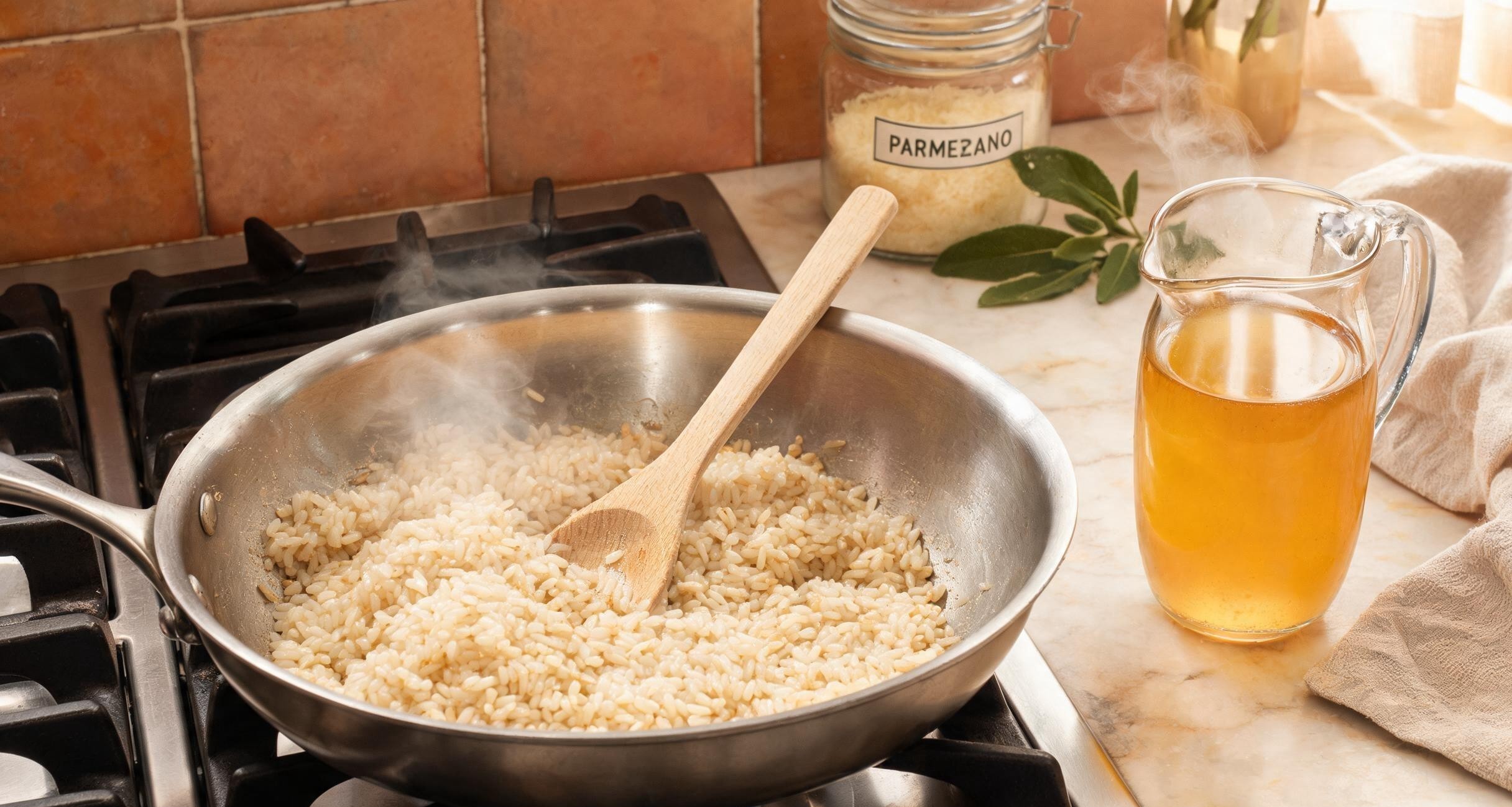
The technique that actually works on a weeknight goes like this. Heat your broth in a saucepan and keep it at a bare simmer on a back burner. In a wide, heavy-bottomed pan, saute a diced onion or shallot in butter or olive oil until soft. Add the rice and stir it around for about a minute until the grains are coated in fat and slightly translucent at the edges. Pour in a splash of white wine and stir until it is absorbed. Then add the broth one ladleful at a time, stirring after each addition until most of the liquid is absorbed before adding the next. The whole process takes about eighteen minutes. You do not need to stir constantly. Stir every thirty to sixty seconds, making sure to scrape the bottom and sides of the pan. If you need to step away for a minute to chop something or set the table, the rice will survive.
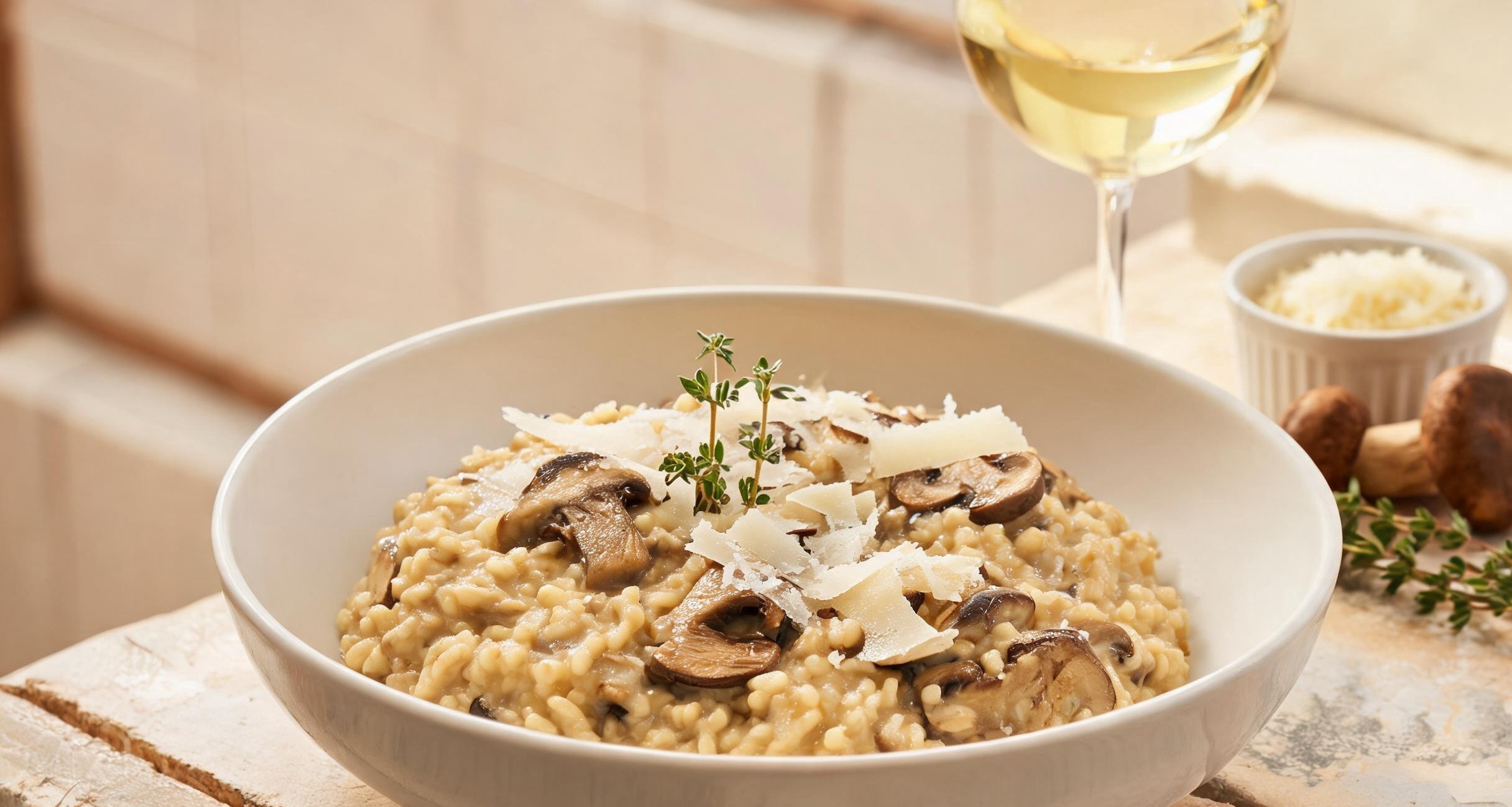
For a mushroom risotto, which is the version I make most often, I cook a mix of cremini and dried porcini mushrooms separately while the rice is cooking. The dried porcini get rehydrated in hot water, then chopped and added to the pan along with the sauteed cremini mushrooms about halfway through the rice cooking time. The liquid from soaking the porcini gets strained and added to the broth, which gives the risotto a deep, earthy mushroom flavor that fresh mushrooms alone cannot provide. Some people add cream at the end, but I do not. The creaminess should come from the rice starch and the butter you add at the end, not from dairy. If you add cream, you mask the flavor of the rice and the mushrooms and end up with something closer to a soup than a risotto. The mushroom flavor should be earthy and concentrated, not diluted by cream.
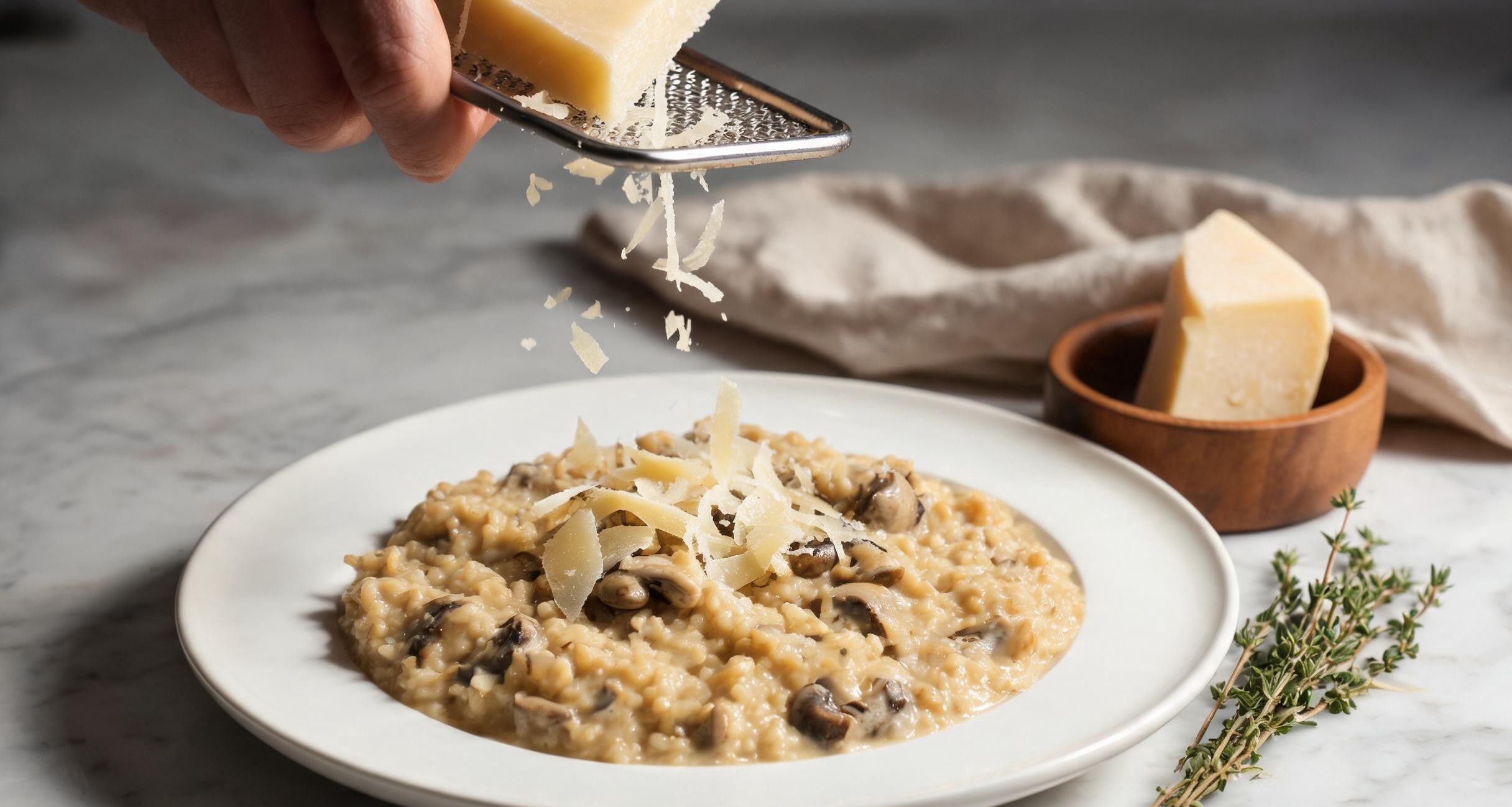
The finish is the part that people skip and the part that makes the biggest difference. When the rice is tender but still has a slight bite at the center, remove the pan from the heat. Add a generous knob of cold butter, about two tablespoons, and a handful of grated Parmigiano-Reggiano. Stir vigorously for about thirty seconds. This is called mantecatura, and it is the step that gives risotto its characteristic creamy, flowing texture. The cold butter and cheese emulsify with the starchy cooking liquid to create a sauce that coats each grain of rice without being soupy. Season with salt and pepper, serve immediately in warmed bowls. Risotto waits for no one. It starts to set and lose its creaminess the moment it leaves the pan, so have your bowls ready and your table set before you finish the last addition of broth.
I have served this risotto to people who said they did not like mushrooms, and they ate it without complaint. The mushroom flavor in this recipe is not the earthy, overwhelming kind that turns people off. The porcini broth is subtle, more of a background richness than a dominant flavor. The fresh mushrooms contribute texture and a mild savory quality that integrates with the cheese and butter. If you really dislike mushrooms, you could substitute asparagus or peas, adding them in the last five minutes of cooking, and the technique would remain the same. But the mushroom version is the one that convinced me that risotto is worth the effort, and it is the one I keep coming back to. It is a dish that works for a weeknight dinner with a glass of white wine, and it also works for a dinner party where you want something that looks elegant without requiring last-minute attention. You can make the broth and saute the mushrooms ahead of time, keep them warm, and finish the risotto in twenty minutes when you are ready to serve. That flexibility is what makes it a practical recipe, not just a special occasion one.