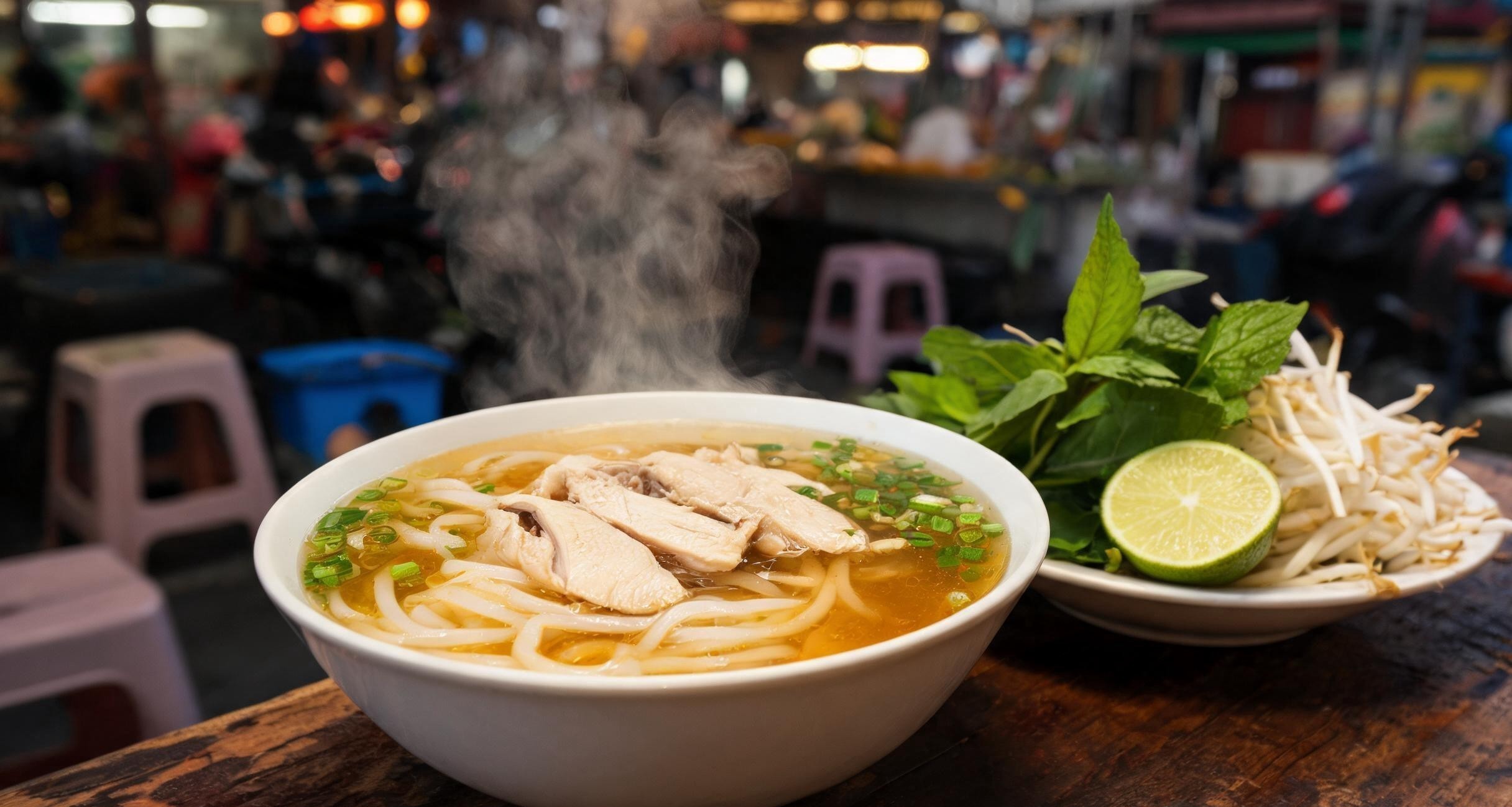
The pho stall was on a narrow side street in the Old Quarter of Hanoi, tucked between a motorbike repair shop and a place selling plastic buckets. There were six small plastic stools around a low table, a propane burner, and a pot that had been simmering since before dawn. The owner was a woman in her sixties who spoke no English and smiled at me like she had been expecting me. I pointed at the pot, she ladled a bowl, and I sat down on one of the tiny stools with my knees somewhere near my chin. The broth was clear and amber, with a depth of flavor I had never encountered in any pho outside of Vietnam. It was sweet from the chicken, aromatic from charred ginger and star anise, and light in a way that made me realize every bowl I had eaten before was a cartoon version of the real thing. I went back the next morning, and the morning after that, and on the third day she let me watch her make it.
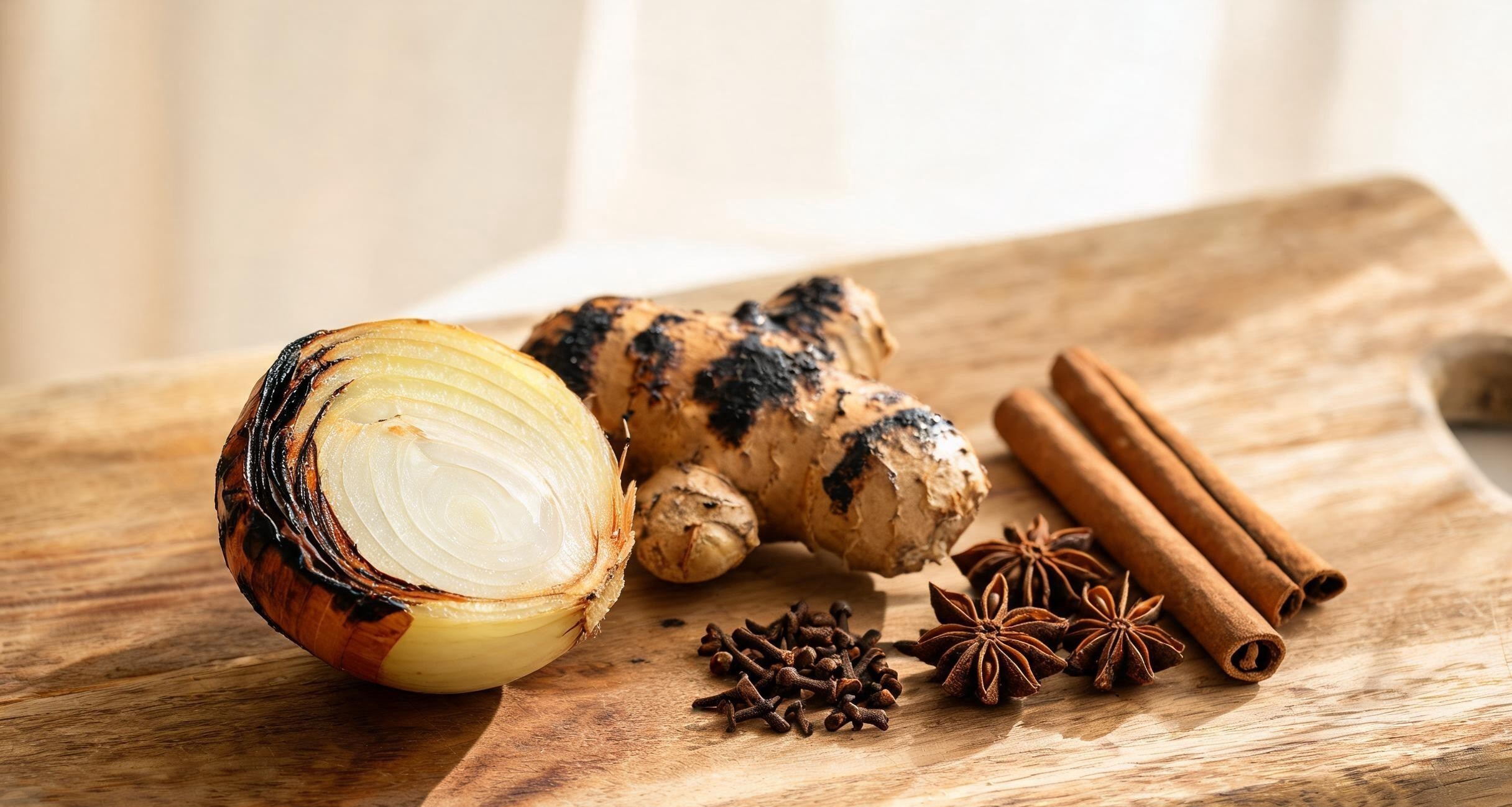
The broth is everything in pho, and it takes time. This woman used a whole chicken, cut into pieces, plus chicken bones she had been saving. The chicken went into cold water along with a large onion and a knob of ginger that she had charred directly over the burner until both were blackened and fragrant. She dropped in a handful of star anise, a piece of cinnamon bark, and a few whole cloves. Then she brought the pot to a boil, skimmed the surface carefully, and lowered the heat to a bare simmer. The pot sat there for hours, barely bubbling, while she went about her morning, occasionally skimming the foam that rose to the top. She told me, through gestures, that a clear broth requires patience and skimming. If you let it boil hard, the broth turns cloudy and the fat emulsifies. Low and slow is the rule.
I have adapted her method for home kitchens, and it works, but it does require a long stretch of mostly unattended cooking. Start with a whole chicken, about four pounds, plus two pounds of chicken backs or necks if you can find them. Char one large yellow onion and a five-inch piece of ginger under the broiler or directly on a gas burner until both are blackened on all sides. Put the chicken, bones, charred onion, and ginger in a large stockpot with about four quarts of cold water. Add three star anise, one cinnamon stick, four whole cloves, and one tablespoon of whole coriander seeds that you have toasted briefly in a dry pan. Bring to a boil, then immediately reduce to the lowest possible simmer. Skim every ten minutes for the first hour. Then leave it alone, barely bubbling, for about ten to twelve hours. Yes, really.
After about two hours, remove the whole chicken from the pot. It will be fully cooked by now. Let it cool, then pull the meat off the bones in large pieces and set it aside. Return the bones to the pot. The chicken meat will go into the final bowls, and the long simmer of the bones will give the broth its body. Strain the broth through a fine-mesh sieve lined with cheesecloth. It should be clear and amber. Season it with fish sauce and a pinch of sugar. Do not add salt at the beginning. Fish sauce provides the salty, umami element that pho needs, and adding it at the end gives you control over the final seasoning.
The noodles are flat rice noodles, banh pho, and they should be cooked separately from the broth. Soak them in warm water for about 30 minutes if they are dried, or rinse them if they are fresh, then drop them into boiling water for about 30 seconds until tender. Divide the noodles among bowls, top with the shredded chicken, and ladle the hot broth over everything. Serve with a plate of garnishes: fresh Thai basil, cilantro, bean sprouts, sliced jalapenos, lime wedges, and a bottle of hoisin and sriracha on the side.
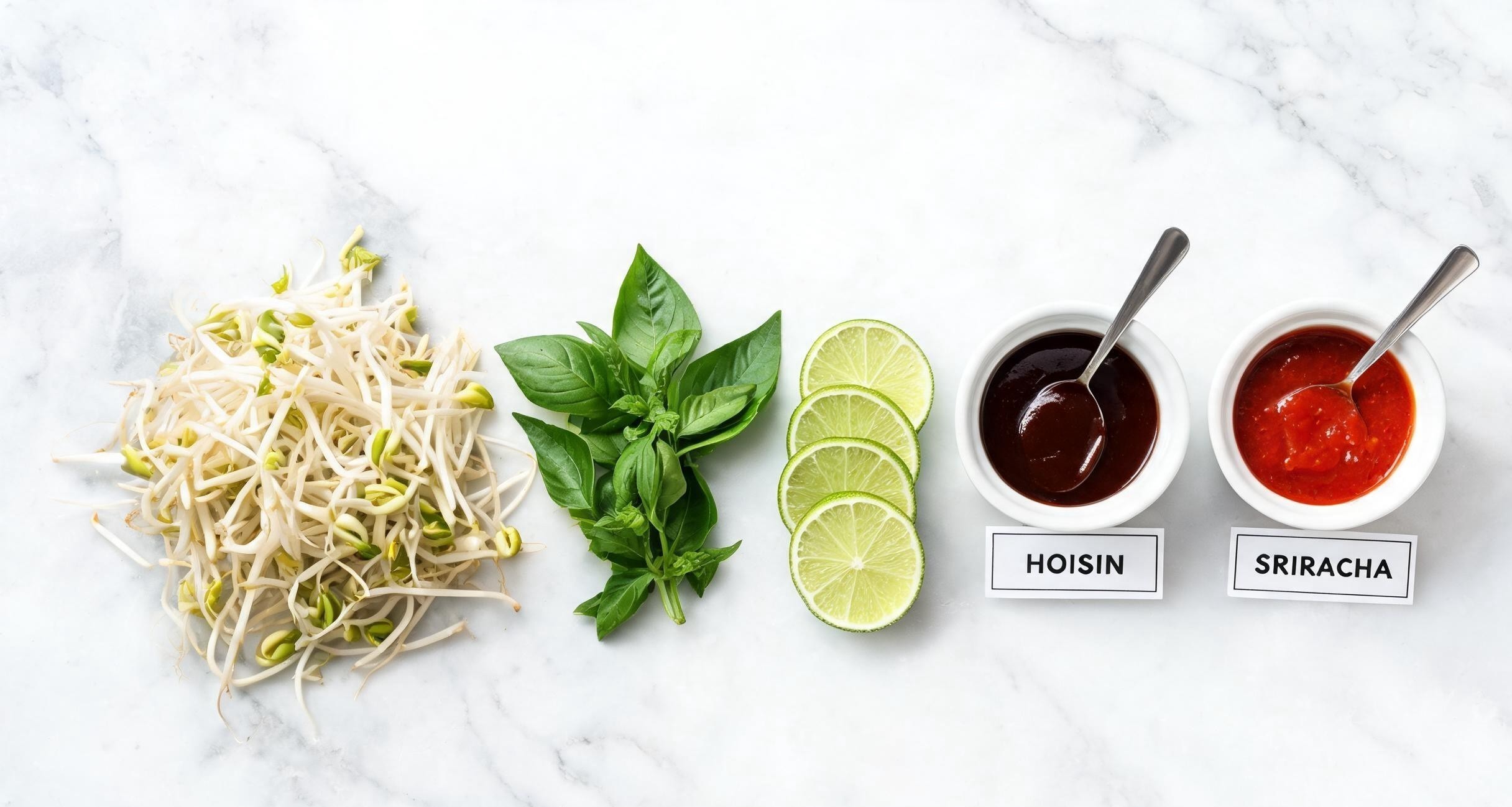
Eating pho the way they do in Hanoi means picking up the bowl with both hands and drinking some of the broth before you even touch the noodles. It is hot, so you blow on it and sip it carefully, and that first sip tells you everything about whether the broth is right. It should be clean, slightly sweet, aromatic, and complex. The herbs and lime you add at the table are personal. Some people use a lot of them, some use none. The woman at the stall used only a squeeze of lime and a few torn basil leaves. I followed her lead. The best pho I have ever had was in six plastic sips on a street that smelled like motorbike exhaust and star anise, and I have been trying to get back to that bowl ever since.