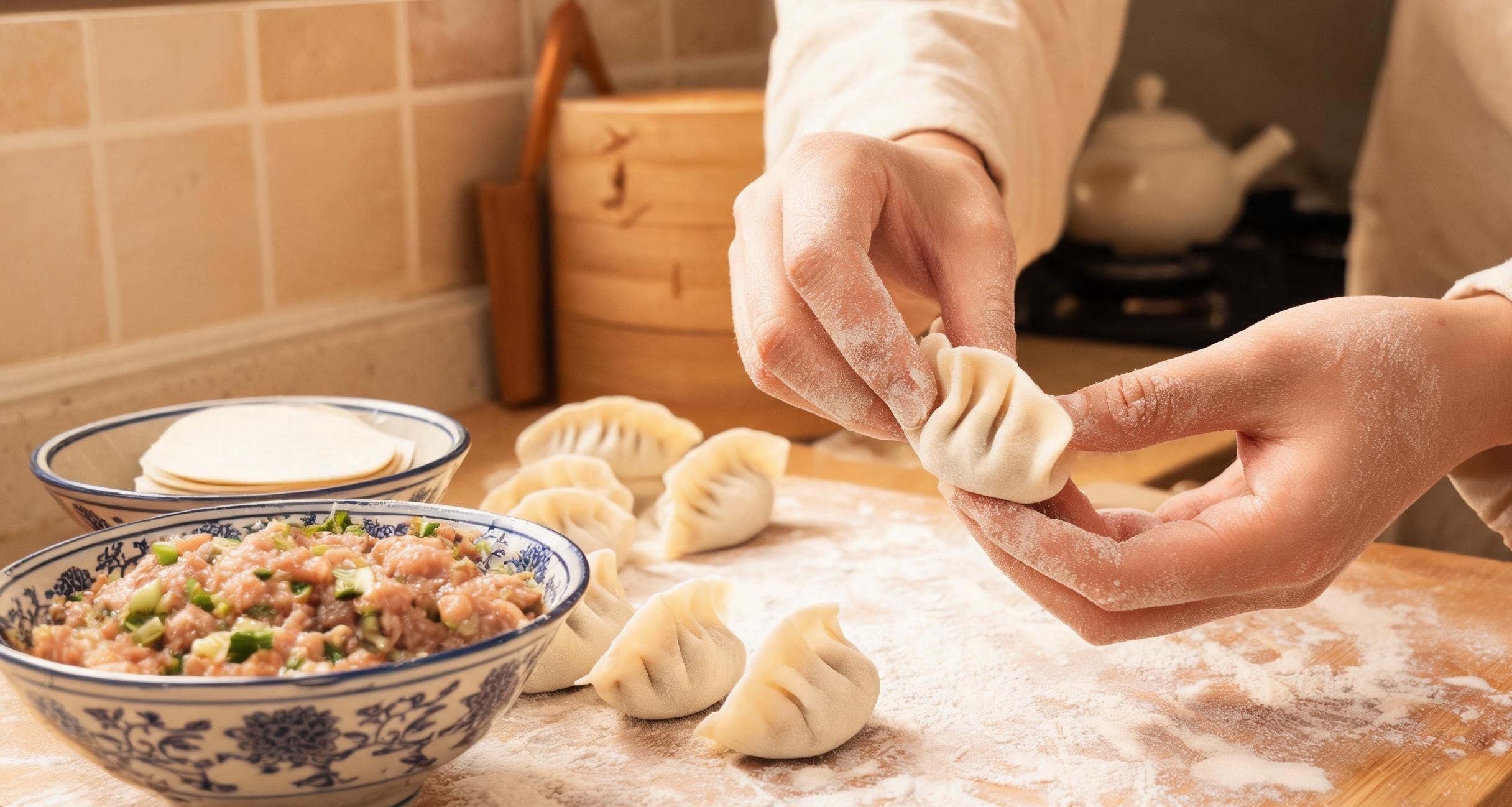
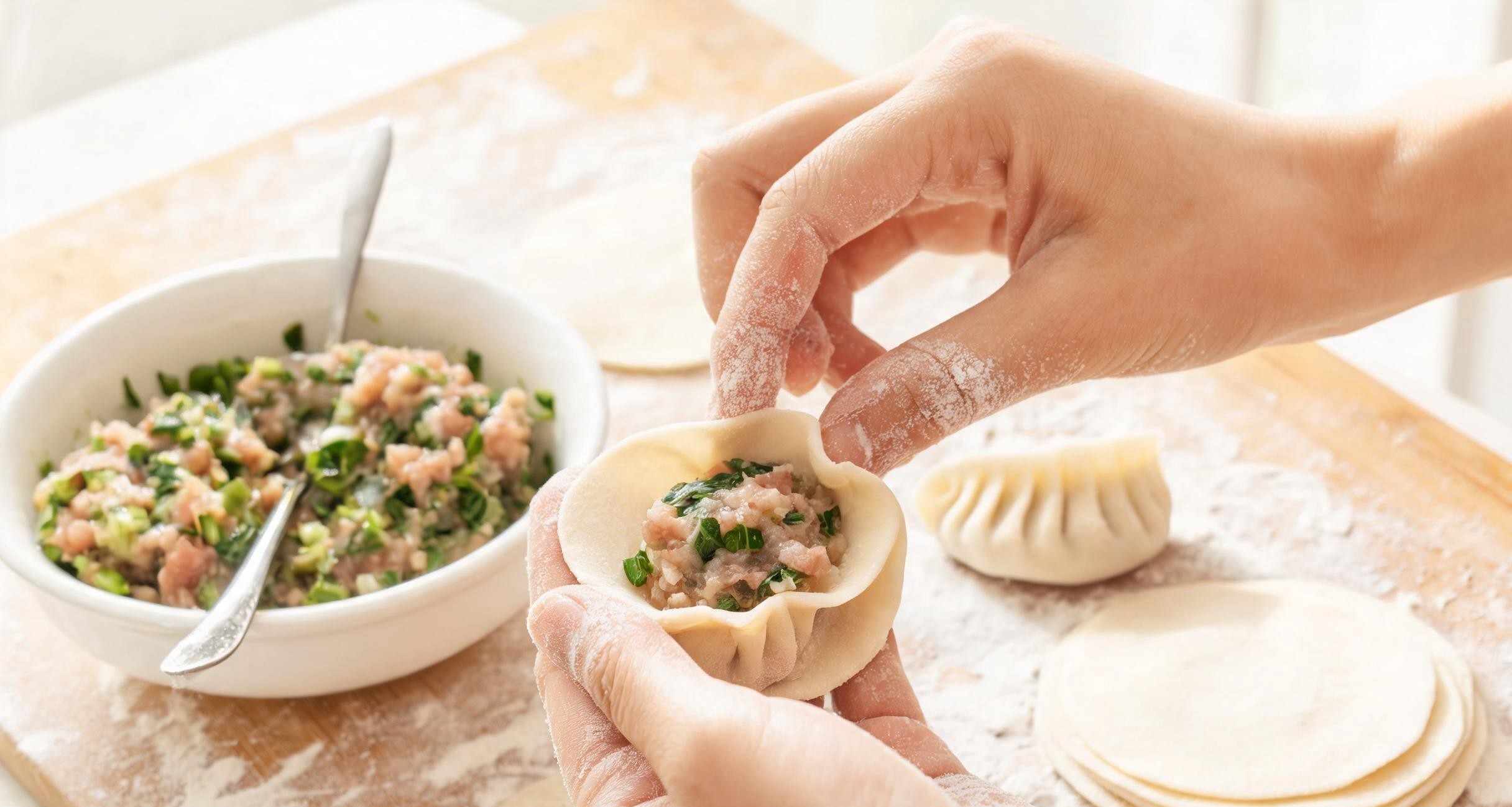
I arrived at the apartment in Jinan, the capital of Shandong province, on a Saturday afternoon in November, and the first thing that happened was that my host's mother handed me an apron. The kitchen was already full. Three aunts were sitting around a large wooden table dusted with flour, and the table was covered with bowls of filling, stacks of wrappers, and a bamboo steamer the size of a bicycle wheel. The filling was pork and chive, mixed by hand in a large stainless steel bowl with soy sauce, sesame oil, Shaoxing wine, and a handful of ginger that one of the aunts had minced with a cleaver. The wrappers were made by hand that morning, rolled out with a wooden dowel by my host's eighty-year-old grandmother, who was sitting in the corner of the kitchen working at a pace that would put any machine to shame. Each wrapper was a perfect circle, thin in the center and slightly thicker at the edges, exactly three inches in diameter. I counted. She made forty wrappers in the time it took me to fill and fold five dumplings, and she did not look up once. I had been in the country for two hours and I was already behind.
The folding technique for dumplings in Shandong is specific and unforgiving. You hold the wrapper in your left hand, place a tablespoon of filling in the center, fold the wrapper in half, and then make a series of pleats along the top edge with your right thumb and index finger, pressing each pleat into the flat bottom edge to seal it. The number of pleats varies by family, but in this household it was eighteen per dumpling, and they counted. I managed twelve on my first attempt, which was deemed acceptable. My second attempt had fourteen, and one of the aunts nodded with what I interpreted as approval. By my twentieth dumpling, I was hitting sixteen consistently, and the shape had gone from lopsided to something that resembled a crescent moon. The process was meditative once I stopped thinking about it. Filling, folding, pleating, pressing, placing. Filling, folding, pleating, pressing, placing. The repetition settled into a rhythm, and the kitchen noise, the aunts talking, the grandmother's rolling pin tapping against the table, the steam rising from the pot, became a kind of music.
Making dumplings in northern China is a communal event, and the event has rules. The men do not make dumplings. They drink tea and talk in the living room while the women work in the kitchen. I was an exception because I was a guest, and my host had prepared his mother for the fact that I wanted to participate. But even with permission, I was aware that I was entering a space with its own hierarchy and its own pace. The grandmother was in charge. She decided when the wrappers were ready, when the filling needed more soy sauce, when the water in the pot was boiling hard enough. The aunts followed her lead without question. The daughters-in-law washed dishes and refilled tea. The young children ran in and out, grabbing pieces of raw dough and eating them like crackers. Nobody was performing for anyone. This was just Saturday, the way it happened every week in this household, the way it had happened for decades.
The dumplings were cooked in two batches: the first batch went into boiling water, and the second went into the bamboo steamer. The boiled dumplings, called shui jiao, were served with a dipping sauce of black vinegar, soy sauce, minced garlic, and chili oil. The steamed dumplings, zheng jiao, were served plain. The difference between the two is textural. Boiled dumplings have a softer, more slippery skin, and the filling absorbs a little of the cooking water, making it moister. Steamed dumplings have a slightly chewier skin and a more concentrated filling, because the moisture stays inside. I ate four of each and then went back for more of the boiled ones, which I preferred. The vinegar dipping sauce cut through the richness of the pork, and the chili oil added a slow burn that built with each bite. The grandmother, who had been watching me eat, pushed the plate of steamed dumplings closer to me and said something in Shandong dialect that my host translated as: try more of these, you are too thin.
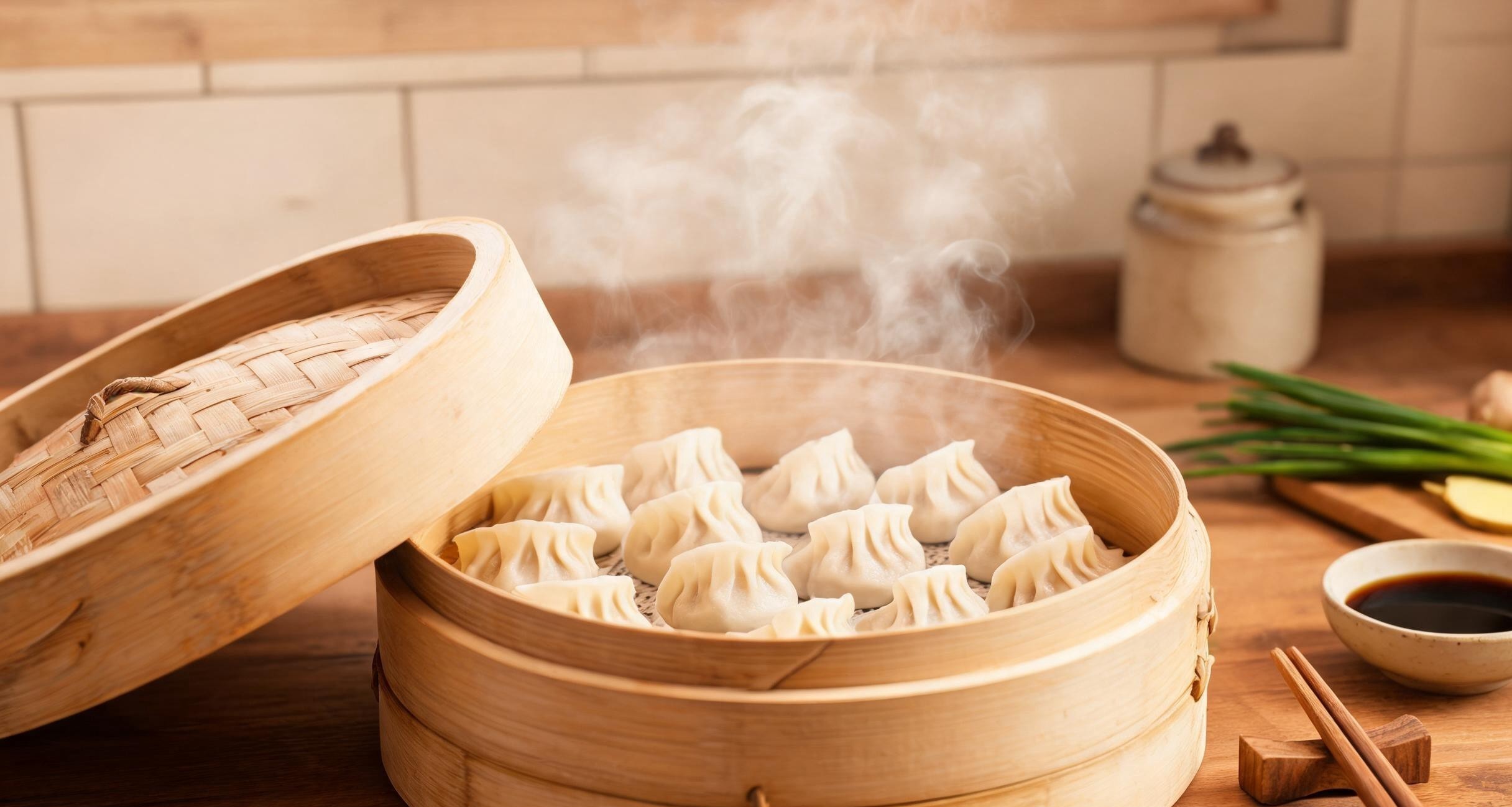
There were twenty people at the table when we sat down to eat. The apartment was small, two bedrooms and a combined kitchen-living room, and the table was pushed against the wall with chairs lined up on both sides. There was no tablecloth, just a piece of plastic that had been taped to the surface. The dumplings arrived in waves, transferred directly from the steamer baskets and the boiling pot to serving plates that never stayed full for long. People reached across the table, grabbed dumplings with chopsticks, dipped them in the communal sauce bowls, and ate without ceremony. Children were fed by their mothers, who blew on each dumpling before placing it in the child's bowl. Grandparents were served first. Tea was poured constantly. The conversation was loud and overlapping, mostly in dialect, and I understood maybe ten percent of what was being said. I did not need to understand. The food and the noise and the warmth of the room told me everything I needed to know about what this meal meant to the people sharing it.
What struck me most was the wastelessness of the process. Every scrap of dough was used. Every bit of filling found its way into a wrapper. The leftover dumplings were frozen on trays and saved for quick meals during the week. The broth from the boiling water was saved and used for soup the next day. The dumpling wrappers that tore or were too thin were fried in oil and eaten as snacks by the children. Nothing was discarded. This efficiency is not about frugality, although frugality plays a role. It is about respect. Respect for the ingredients, the labor, and the tradition. Dumpling night in northern China is not just a meal. It is an act of continuity, a practice that connects the grandmother making wrappers in the corner to the children eating them at the table, and through them to all the generations that did the same thing in the same way in kitchens just like this one. I was a guest for one afternoon, but I understood that I was watching something that had been repeating, week after week, year after year, for longer than anyone in that room could remember.