I watched a woman named Dona Sofia make mole negro in a kitchen the size of a closet in Oaxaca City, and by the end of the second day I understood why people say it takes a village. Not because one person cannot physically make it, though the labor is staggering. But because the knowledge required, the specific techniques and ingredient ratios and timing, is not written down anywhere. It lives in the hands and the memory of the women who make it, passed from mother to daughter, adjusted by taste and feel rather than by recipe cards. Dona Sofia has been making mole negro for forty years. She learned from her mother, who learned from her grandmother. The mole I watched her make used roughly thirty ingredients, and I counted at least twelve separate cooking steps before the sauce was even close to done.
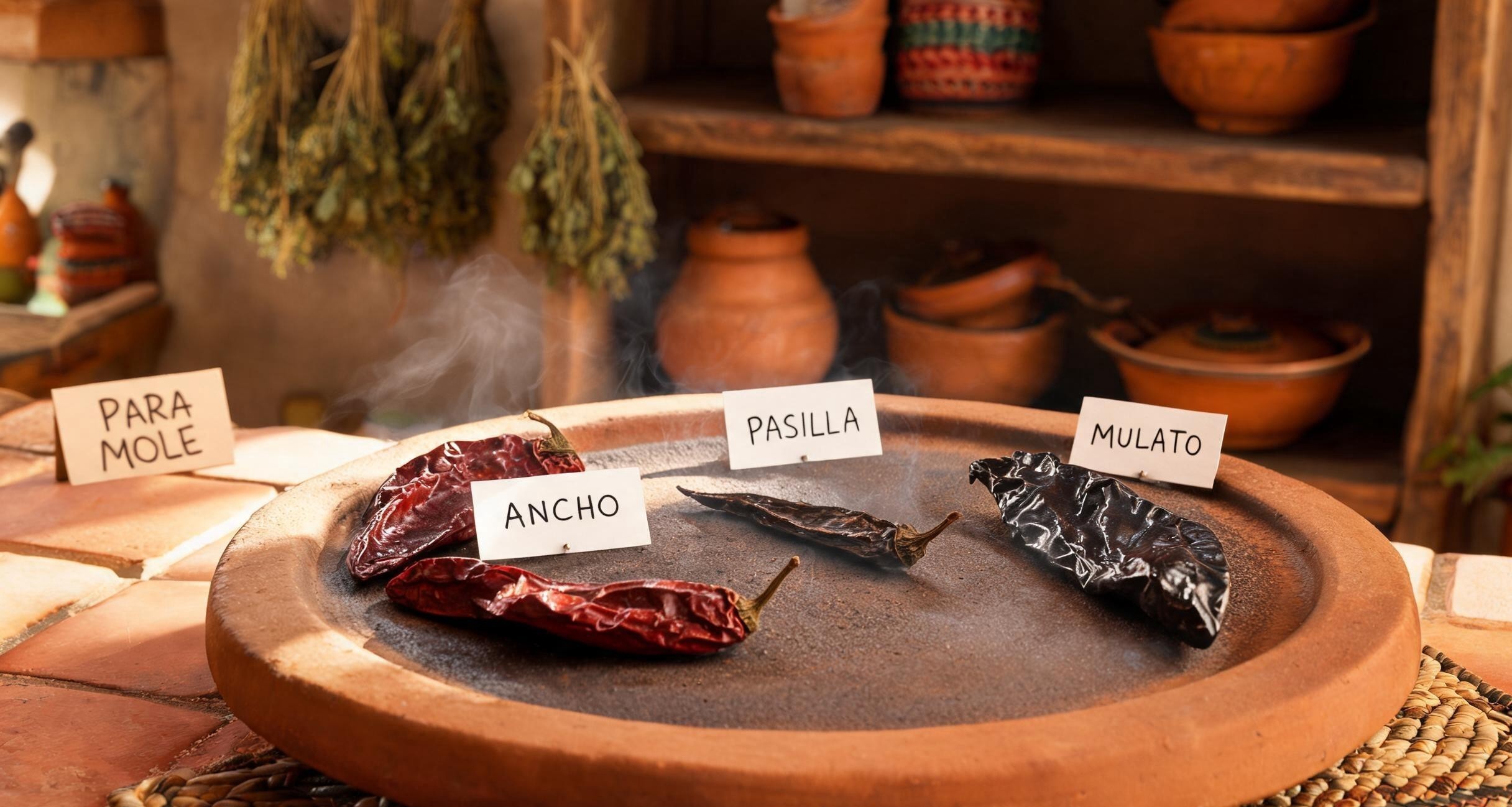
Mole negro is the darkest and most complex of the seven traditional moles of Oaxaca. The color comes from chiles that have been charred nearly black, in particular chilhuacle negro and mulato peppers, along with a small amount of pasilla oaxaquena. Dona Sofia toasted the dried chiles on a comal, a flat clay griddle, turning them with her fingers, one at a time, until they were blackened but not burnt. The difference between charred and burnt is about thirty seconds, and she knew exactly when to pull each one off without testing or smelling. After toasting, she soaked the chiles in hot water for twenty minutes, then blended them into a paste with a metate, the stone grinding tool that pre-dates the blender by several centuries. She uses a blender for some steps, she told me, but the chile paste is always ground on the metate because the stone produces a texture that the metal blade cannot replicate.
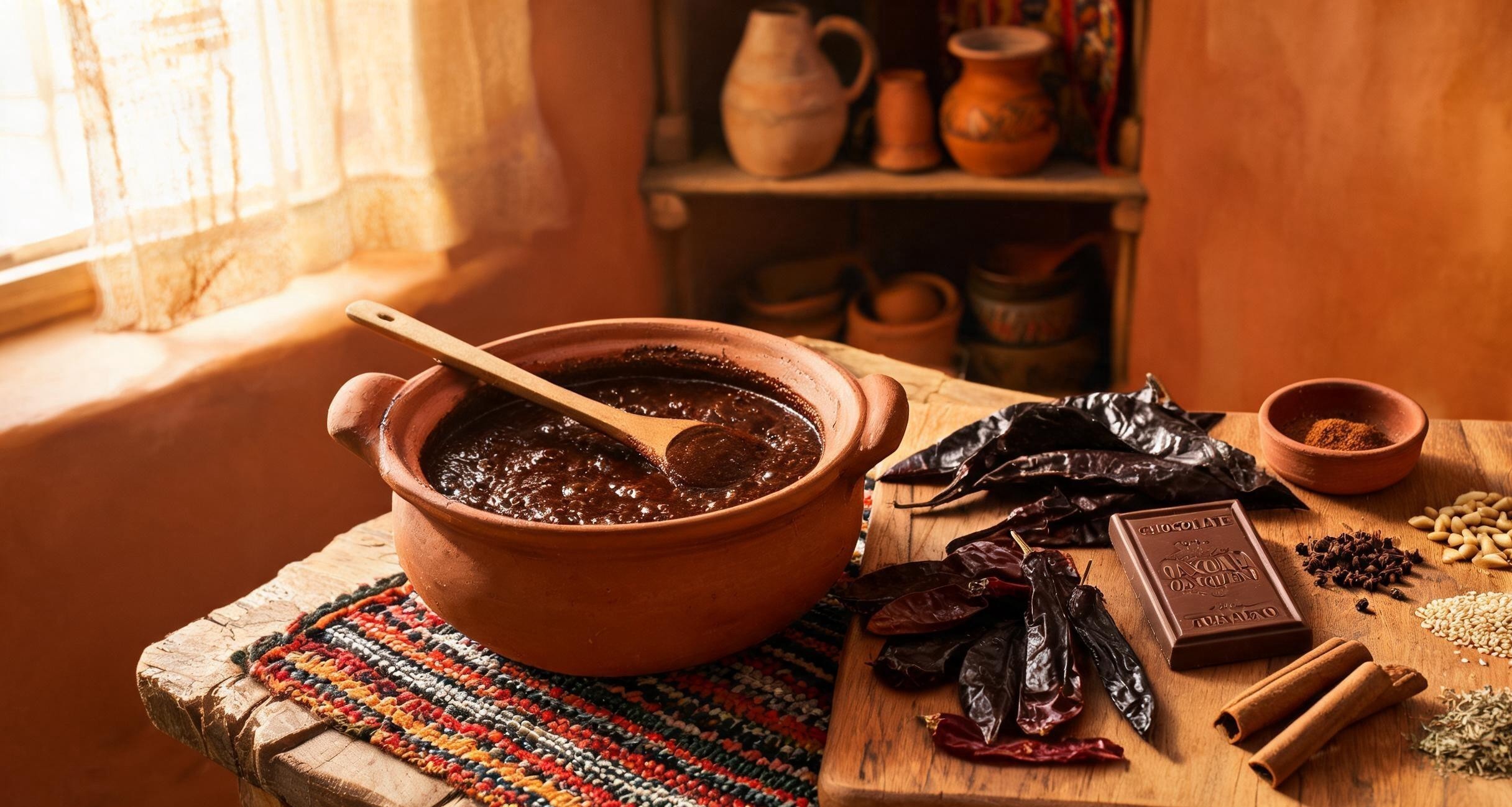
Beyond the chiles, mole negro includes ingredients that would seem unlikely in a sauce if you did not know the tradition. Burnt tortillas, for one, which add both color and a slightly bitter, smoky depth. A piece of Oaxacan chocolate, which contributes sweetness and a hint of bitterness from the cacao. Plantain, which thickens the sauce and adds a subtle sweetness. Sesame seeds, peanuts, almonds, and walnuts, each toasted separately and ground individually before being combined. Whole cloves, cinnamon sticks, black peppercorns, and cumin seeds, toasted in a dry pan until fragrant. Garlic and onion, charred directly on the comal until the skins are completely black. Dona Sofia moved between these ingredients with a calm efficiency that comes from decades of repetition, toasting, soaking, grinding, and frying each component at the right moment.
The assembly happens on the second day. Dona Sofia heated a generous amount of lard in a large clay pot and fried the chile paste, stirring constantly to prevent it from sticking, for about fifteen minutes. Then she added the ground nuts and seeds, followed by the spice pastes, the burnt tortilla, the plantain, and the chocolate, each one going in at a specific time and in a specific order. The pot simmered on a low flame for four hours, with occasional stirring and tasting. Dona Sofia adjusted the salt and added a spoonful of sugar at the end to balance the bitterness of the charred ingredients. The final sauce was dark, almost black, with a glossy sheen and a thickness that coated the back of a spoon. She served it over pieces of chicken that had been cooked in the mole during the last hour. The taste was unlike anything I have experienced: smoky, slightly bitter, nutty, fruity from the chiles, with a warmth that built slowly and lingered. It was not spicy in the way people typically mean when they talk about Mexican food. It was complex, layered, and difficult to describe without sounding like you are making it up.
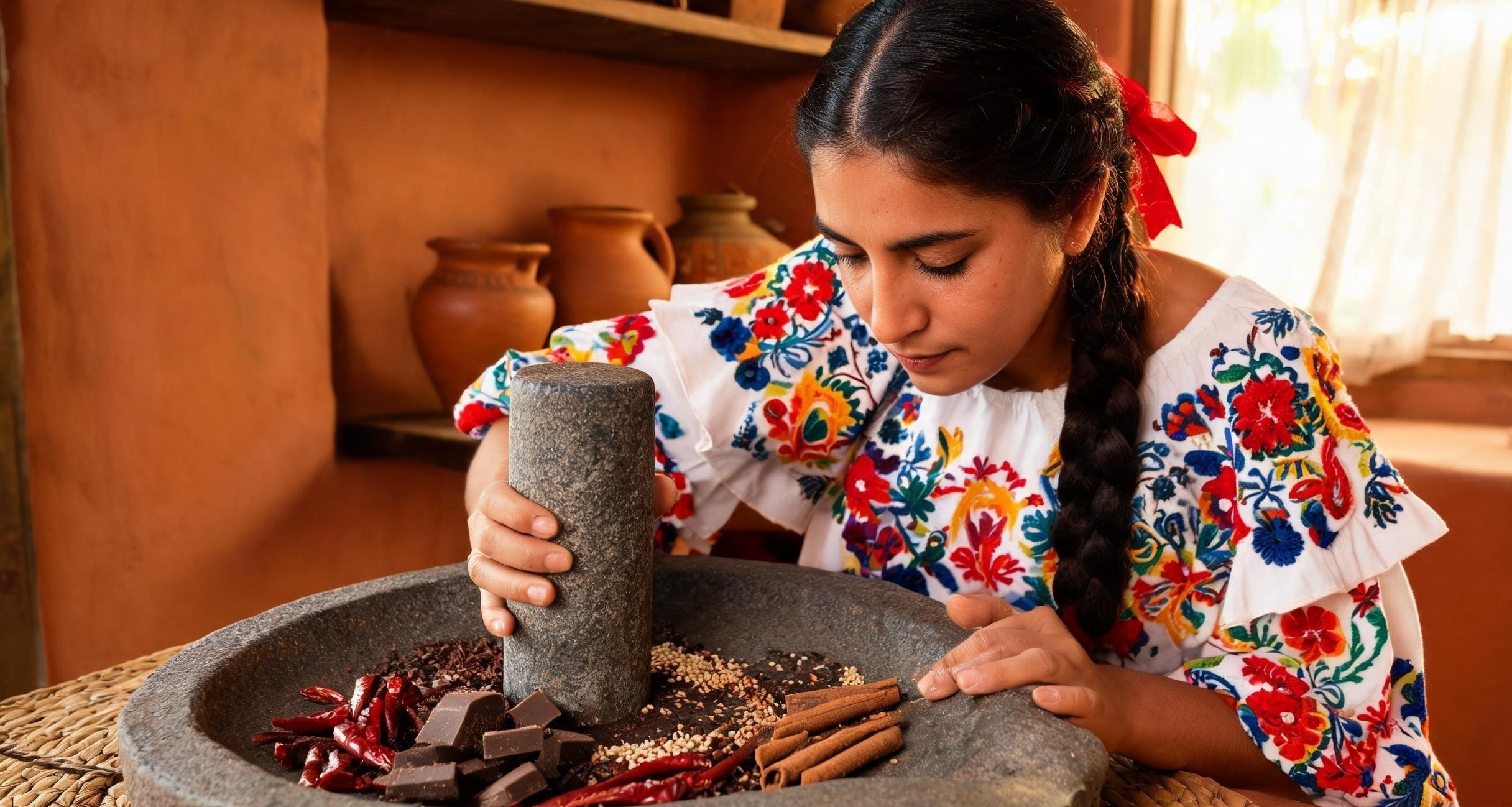
Oaxaca is famous for seven moles: negro, coloradito, rojo, verde, amarillo, chichilo, and manchamantel. Each one is distinct. Mole rojo is redder and simpler, built around dried red chiles and tomatoes. Mole verde is fresh and herbaceous, made with tomatillos, epazote, and pumpkin seeds. Mole coloradito is sweeter and thicker, with more chocolate and a reddish-brown color. But they all share the same basic principle: a large number of ingredients, each prepared separately and combined with care, cooked slowly until they become something greater than their parts. The work is enormous. A batch of mole negro for a family gathering can take two or three days and costs a significant amount in ingredients. That is why mole is reserved for special occasions, weddings, baptisms, and the Day of the Dead. It is not a weeknight sauce. It is a commitment. And once you have had it made properly, by someone like Dona Sofia, you understand why that commitment exists. Nothing else tastes like it.