I was eleven years old the first time my grandmother put me to work during kimjang, the Korean tradition of making kimchi in bulk before winter. My job was to peel garlic. Not a few cloves. I peeled an entire two-pound bag, my fingers sticky and stinging, while my mother and halmeoni worked at the kitchen table with the cabbage. The apartment in Koreatown smelled so strongly of fish sauce and chili flakes that the neighbors complained through the walls. Nobody in my family apologized. That smell was the smell of preparation. It meant we would eat well for months.
Kimjang typically happens in late November or early December, when the temperature drops low enough to slow fermentation but has not yet reached freezing. The tradition goes back centuries in Korea, born from a practical need: before refrigeration, you had to preserve enough vegetables to last through the cold months. Entire villages would gather to make kimchi together, and the work was shared among dozens of hands. In 2013, UNESCO added kimjang to its list of Intangible Cultural Heritage of Humanity, which pleased the older generation and gave the tradition a formal recognition it had never really needed. The practice survives because of family obligation, not because of a UNESCO designation.
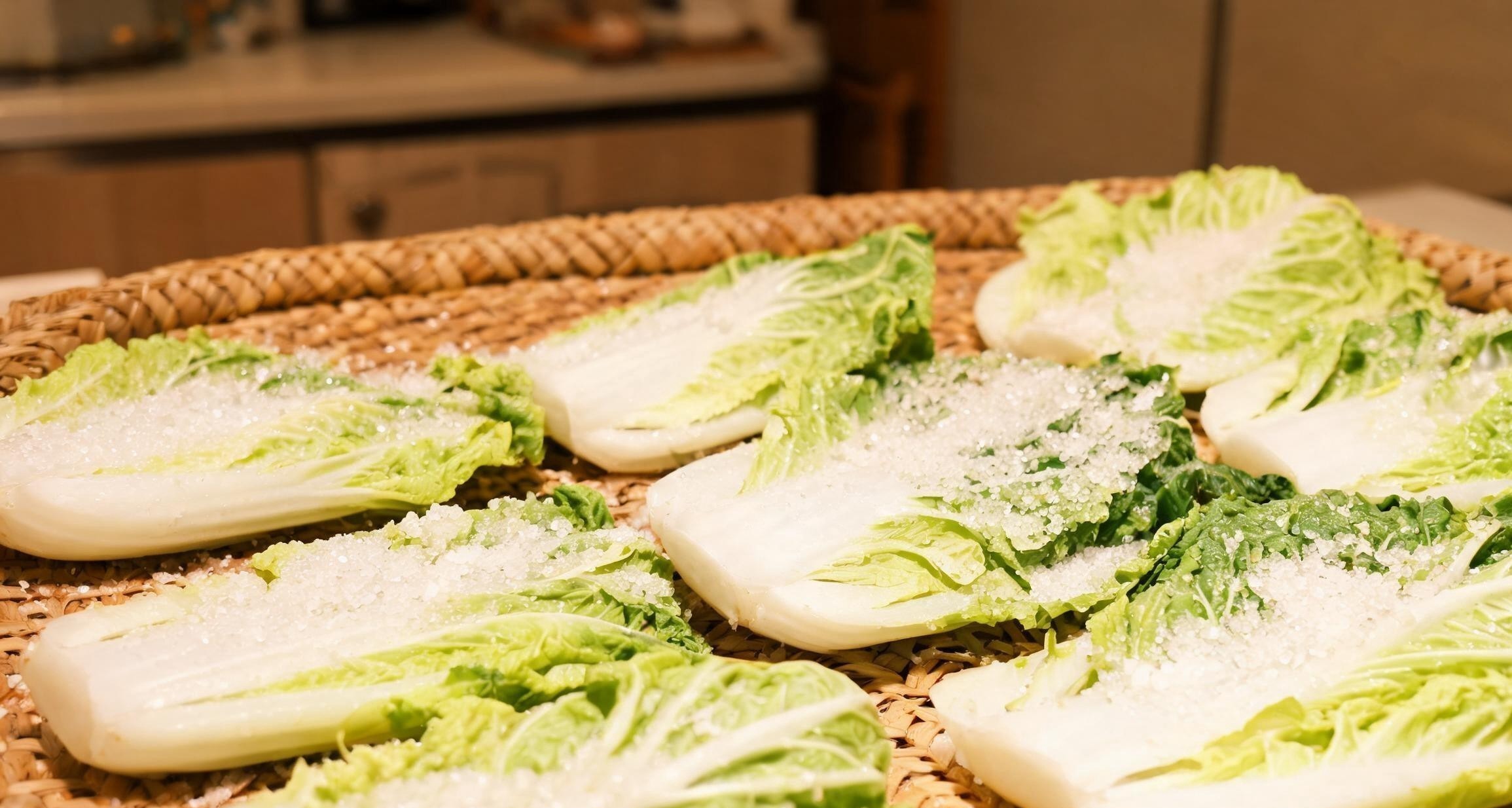
The process starts with the cabbage. For a small household batch, you need two heads of napa cabbage, each one cut lengthwise into quarters. The quarters get a heavy coating of coarse sea salt -- about half a cup total, distributed between the layers -- and then they rest. This is the salting step, and it takes at least six hours, sometimes eight. The salt draws water out of the cabbage leaves, softening them so they can absorb the seasoning paste later. Every two hours, you turn the cabbage pieces over and redistribute the salt. The cabbage releases a surprising amount of liquid. By the end, the leaves are pliable and slightly translucent at the edges.
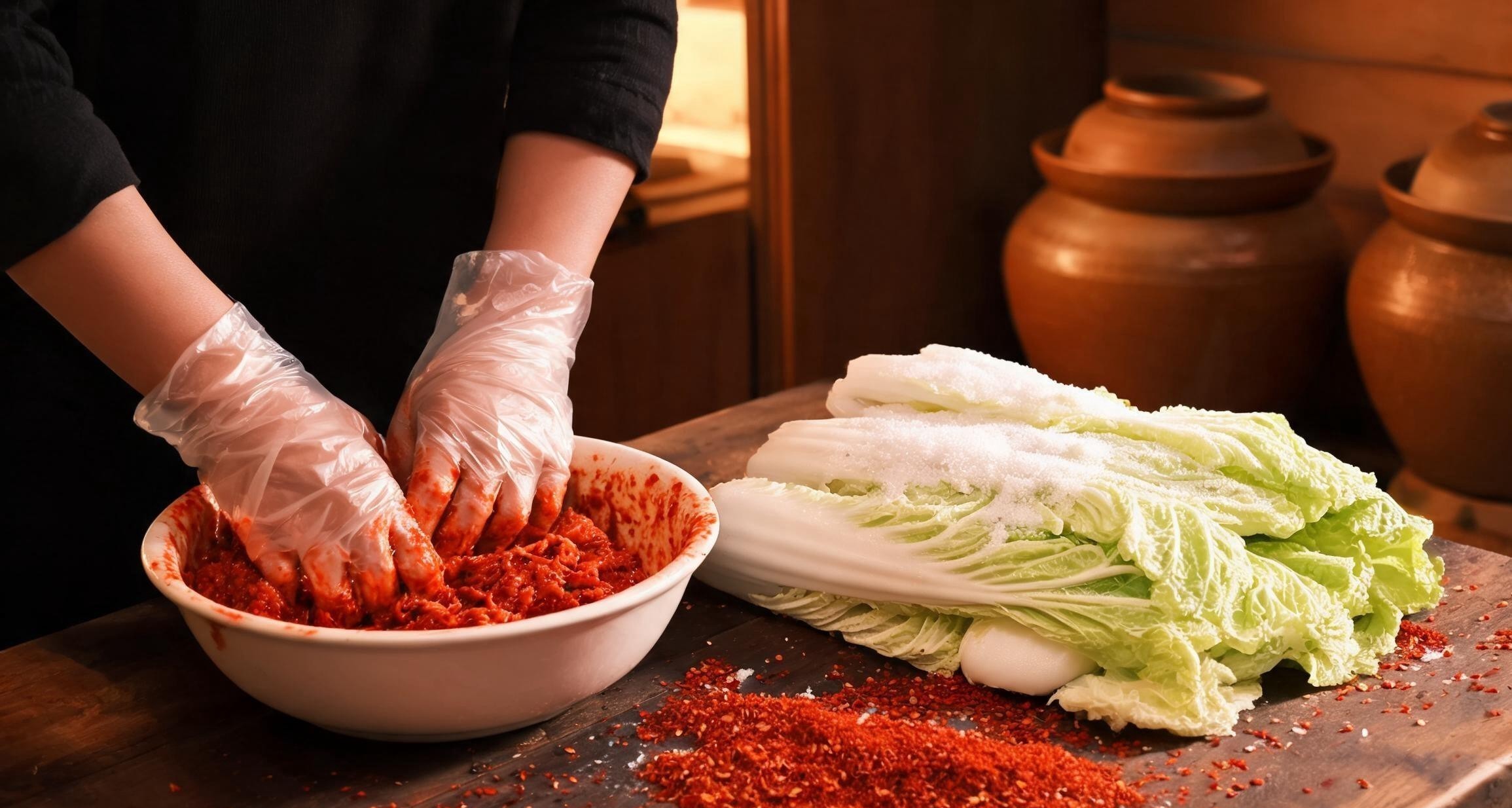
While the cabbage salts, you make the paste. This is where every family diverges. My grandmother's recipe, which I still use, calls for a quarter cup of gochugaru (Korean chili flakes), three tablespoons of fish sauce, one tablespoon of fermented salted shrimp called saewujeot, four cloves of minced garlic, one tablespoon of minced ginger, and a small daikon radish cut into thin matchsticks. Everything gets mixed together in a large bowl, and you can add a tablespoon of sugar if the chili flakes are particularly sharp. The paste should be thick and rust-red. It stains everything it touches. My grandmother used to say that if your hands were not still faintly pink the next morning, you had not made enough kimchi.
Once the cabbage has finished salting, you rinse it three times in cold water to remove excess salt, then drain it in a colander for about thirty minutes. The cabbage should still taste salty but not aggressively so. Then you put on a pair of disposable gloves -- this is non-negotiable -- and spread the paste between every single leaf, working from the outside in. Each quarter gets a generous coating. You fold the quarters back into their original shape and pack them tightly into a clean container.
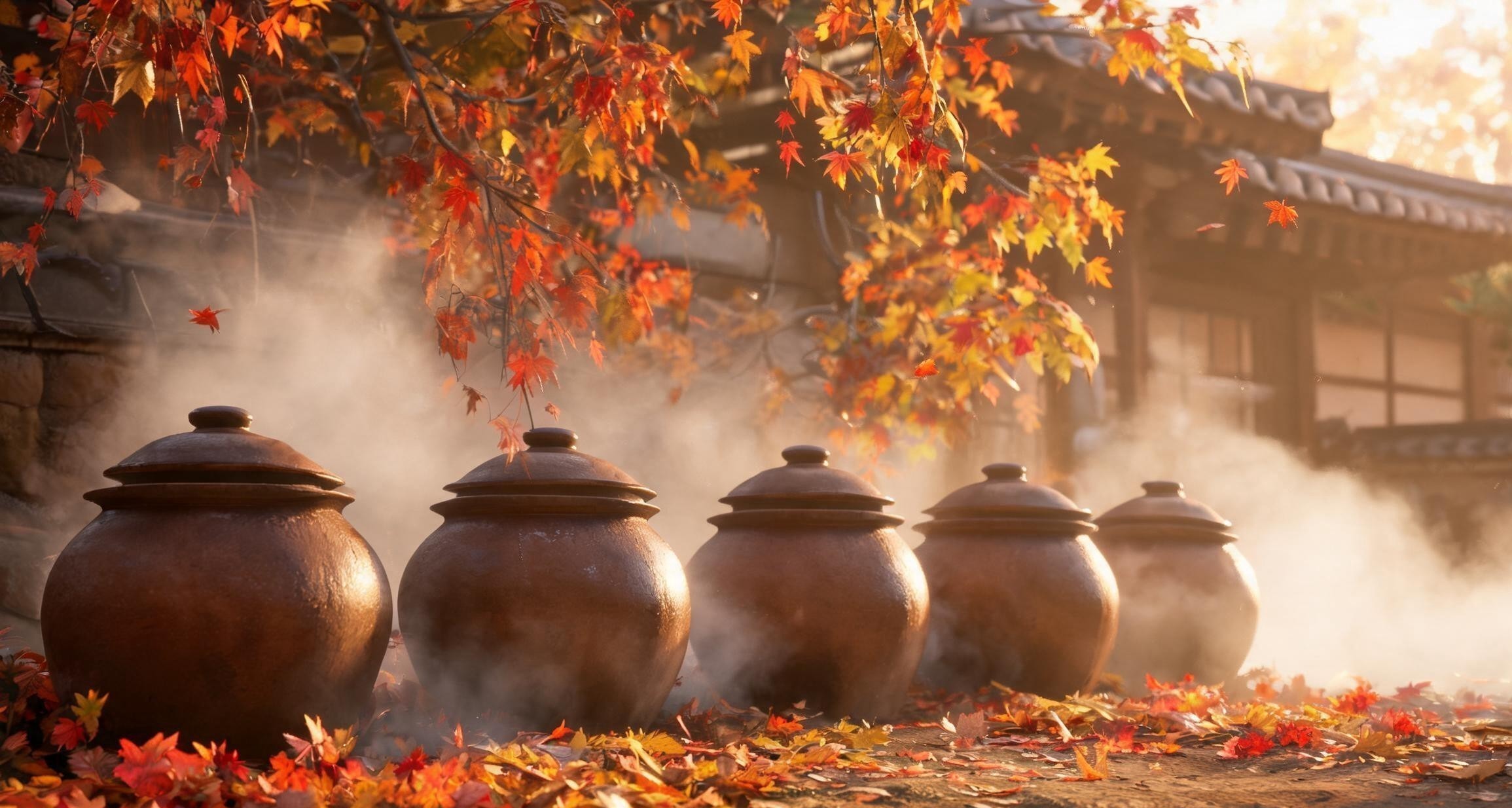
In Korea, kimchi is traditionally packed into onggi, the large earthenware pots that sit on the ground outside the house. The porous clay of an onggi allows gases from fermentation to escape slowly, which keeps the kimchi from building up too much pressure while still developing flavor. The pots are partially buried in the ground to keep the temperature stable. In my grandmother's apartment in Los Angeles, there was no yard and no onggi. She used a five-gallon food-grade plastic bucket with a tight-fitting lid, kept on the balcony where the November air stayed cool. The kimchi fermented in that bucket for about a week before she moved it into the refrigerator, where it would slow down and last for months.
For those of us living in smaller spaces, the process can be scaled down. A two-head batch, like the one described here, fits easily into a one-gallon glass jar. After packing the seasoned cabbage into the jar, press it down firmly to remove air pockets, then leave it at room temperature for 24 to 48 hours to kick-start fermentation. Bubbles will appear at the surface. The kimchi is ready to refrigerate once it tastes tangy but still has some crunch, usually around day two or three. Keep it in the fridge and it will continue to develop flavor for weeks.
The communal side of kimjang is the part that matters most to the people who practice it. In Korea, families still gather at their parents' house for a full weekend of kimchi-making, and the work is divided by role. The eldest daughter usually leads the seasoning. The sons-in-law handle the heavy lifting, carrying cabbages and mixing large batches in basins on the floor. The grandchildren peel garlic, slice radishes, or run errands for extra salt. At the end of the day, everyone eats a meal together -- often fresh kimchi with rice, maybe some braised short ribs -- and the matriarch sends each family home with enough kimchi to fill their own refrigerator. It is a distribution system built entirely on the assumption that people will show up and do the work.
My grandmother passed away three years ago. The last kimjang she participated in was in November 2022, at my mother's house in Torrance. She was ninety-one and could not stand for more than an hour at a time, so she sat in a chair at the kitchen table and tasted the seasoning paste, adjusting it with small pinches of salt or an extra spoon of fish sauce until it was right. The rest of us did the physical work. When it was done, we packed the kimchi into jars and labeled them with the date, the same way she had taught us. Those jars are empty now, but the recipe card, written in her handwriting on a stained index card, sits in my kitchen drawer. I make kimchi every November. I always peel the garlic myself.