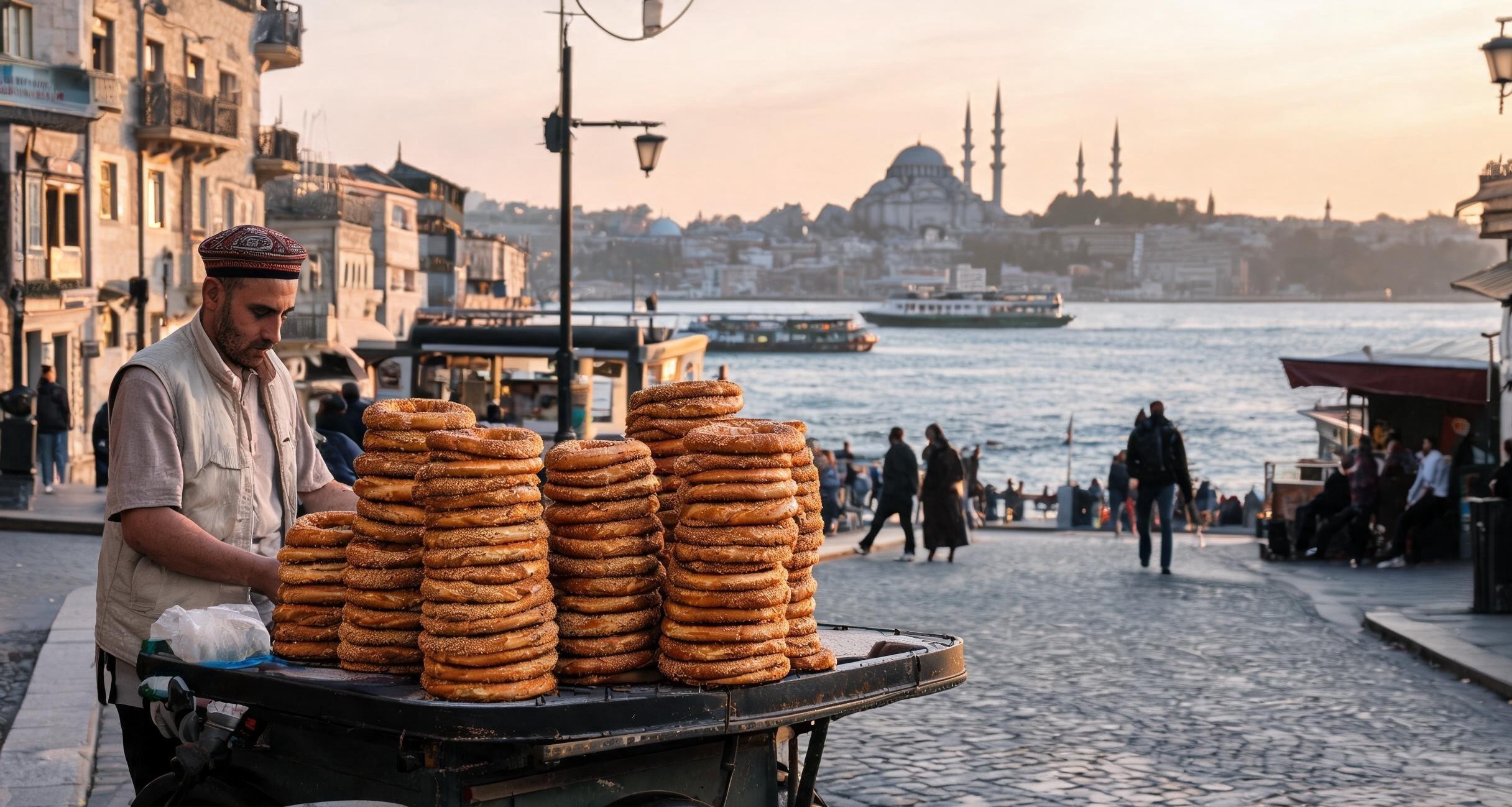
The simit seller on the Galata Bridge arrives every morning at six and sets up his cart near the middle span, where the Bosphorus view is best. He has been doing this for thirty-two years, or so he told me through a friend who translated, and his hands move with the practiced efficiency of someone who has shaped the same dough tens of thousands of times. Simit is a circular bread encrusted with sesame seeds, crisp on the outside and soft inside, and it costs one lira. I bought one on my first morning in Istanbul and ate it standing at the railing, watching the ferries cross the channel and the seagulls circle the fishing boats below. The bread was warm and the sesame seeds were toasted dark, and it tasted better than any breakfast I had eaten in a hotel. The simit seller did not care that I was a tourist. He handed me the bread, took my coin, and moved on to the next customer. No performance, no story, just bread on a bridge at sunrise. That was the moment Istanbul's street food started making sense to me.
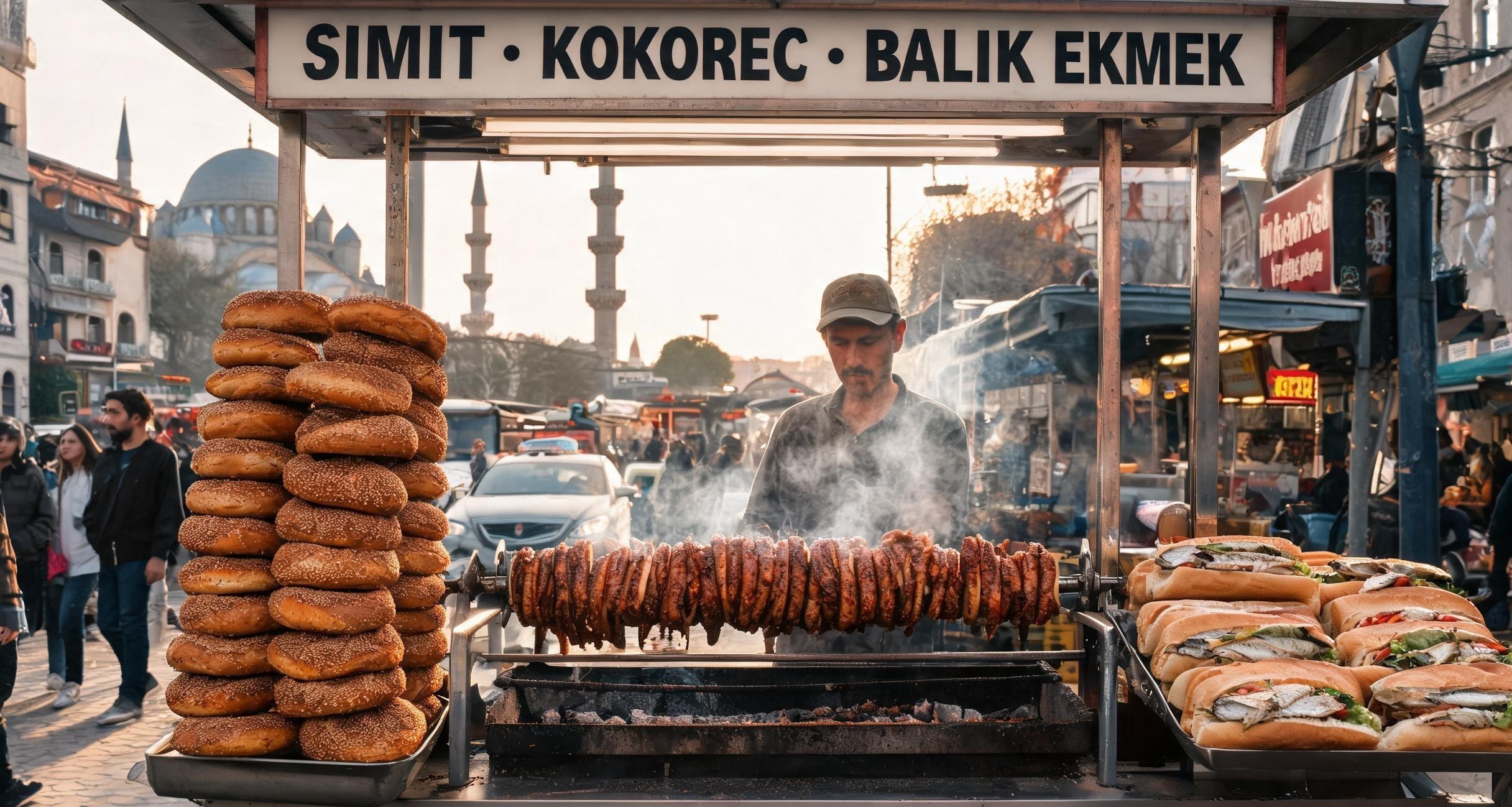
Balik ekmek, fish bread, is a sandwich that exists because of the location more than the recipe. The boats docked at the Eminonu pier grill mackerel over open charcoal and stuff it into half a loaf of crusty white bread with raw onion, lettuce, and a squeeze of lemon. It costs about twenty-five lira, which is roughly two dollars, and you eat it standing next to the boat while the ferries load and unload behind you. The fish is not complicated. It is grilled whole, skin on, until the flesh flakes and the skin chars slightly. The bread soaks up the fish juices and the lemon juice, and the raw onion adds a sharp bite that cuts through the oil. It is not elegant food. It is functional, filling, and perfectly suited to its environment. I ate three of them during my week in Istanbul, always at Eminonu, always standing up, and each one was exactly the same as the last. Consistency in street food is underrated. When a vendor has been making the same sandwich for twenty years, they have removed the guesswork, and what remains is just good food, repeated reliably.
Kokorec is the dish that tourists walk past without knowing what it is, and the people who know what it is either love it or refuse to go near it. It is lamb or goat intestines, cleaned and wrapped around seasoned offal, then grilled on a horizontal spit and shaved into a sandwich. I first saw it at a stand near Taksim Square at midnight, the spit turning slowly over charcoal, the outer layer crisping and sizzling. The vendor shaved thin slices into a crusty roll with tomato and spices, and I ate it because I had promised myself I would try everything. The texture was surprising: crispy on the outside from the grilling, soft and rich inside, with a depth of flavor that came from the seasoning and the slow rendering of fat. It was not something I would eat every day, but it was honest food, made from parts of the animal that many cultures throw away, and it had been a street staple in Istanbul for generations. The vendor told me his grandfather used to sell the same thing from a cart in the same neighborhood, and the recipe had not changed.
Kumpir is a baked potato the size of your fist, split open and loaded with butter, cheese, corn, olives, sausage, pickles, and whatever else you point at from the display case. The kumpir stands in Ortakoy, under the Bosphorus Bridge, are famous in Istanbul, and the line on a weekend afternoon can be thirty people long. What makes kumpir unusual is not the potato itself but the loading process. The potato comes out of the oven piping hot, the vendor splits it lengthwise, mashes the interior with butter and grated kasar cheese until it is smooth and creamy, and then starts adding toppings based on your instructions. I watched a woman ahead of me order hers with sweet corn, Russian salad, pickles, and ketchup, which seemed chaotic, but when it came out it looked like a meal. I ordered mine simpler: butter, cheese, olives, and a drizzle of ketchup. The potato was fluffy and the cheese was still melting, and the combination was the kind of carb-heavy comfort food that you crave on a cold afternoon near the water. I sat on a bench and ate the whole thing and felt like I had accomplished something.
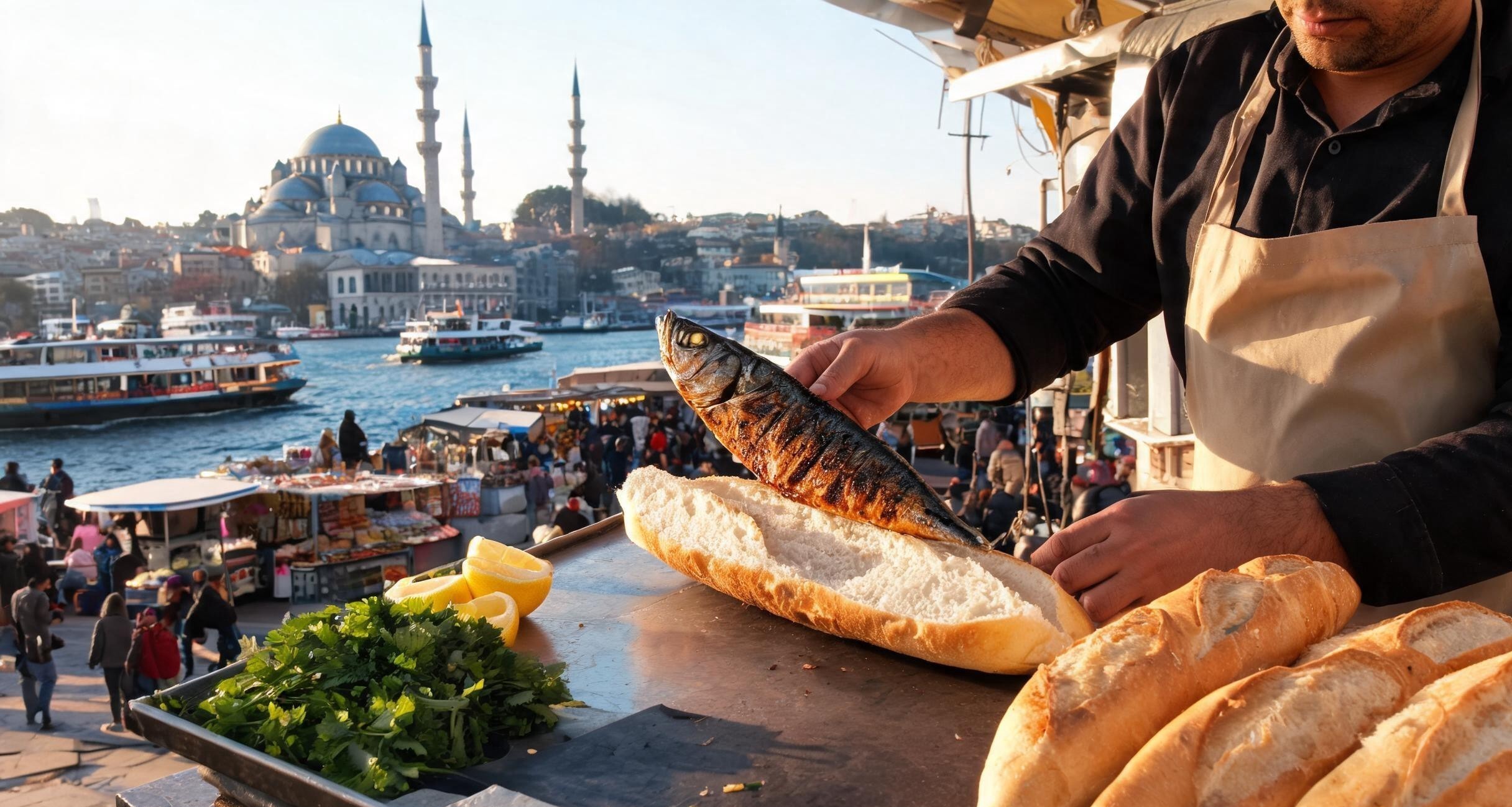
The thing that connects all of these foods is that they are affordable, available, and made by the same person or family for years, sometimes decades. The simit seller, the fish boat operators, the kokorec vendor, the kumpir stands: they are not pop-ups or food trucks chasing trends. They are permanent fixtures in the neighborhoods they serve, and the locals rely on them the way they rely on the bakery and the green grocer. This is not a curated street food scene designed for visitors. It is the actual food that Istanbul residents eat when they are in a hurry, when they are broke, or when they just want something specific and do not want to cook it themselves. The prices are low enough that everyone can participate, and the quality is high enough that nobody has to settle.
Istanbul has a reputation for kebabs, and the kebabs are fine. But the real food culture of the city lives on the sidewalks, on the bridges, and in the narrow alleys where the vendors have been set up since before anyone can remember. The simit at dawn, the fish sandwich at noon, the kumpir in the afternoon, the kokorec at midnight. These are not dishes you find in restaurants. They are dishes you find by walking, by watching what the locals are eating, and by being willing to try something you cannot pronounce. Istanbul's street food is not polished or photogenic. It is real, it is cheap, it is filling, and it is one of the best reasons to visit the city.