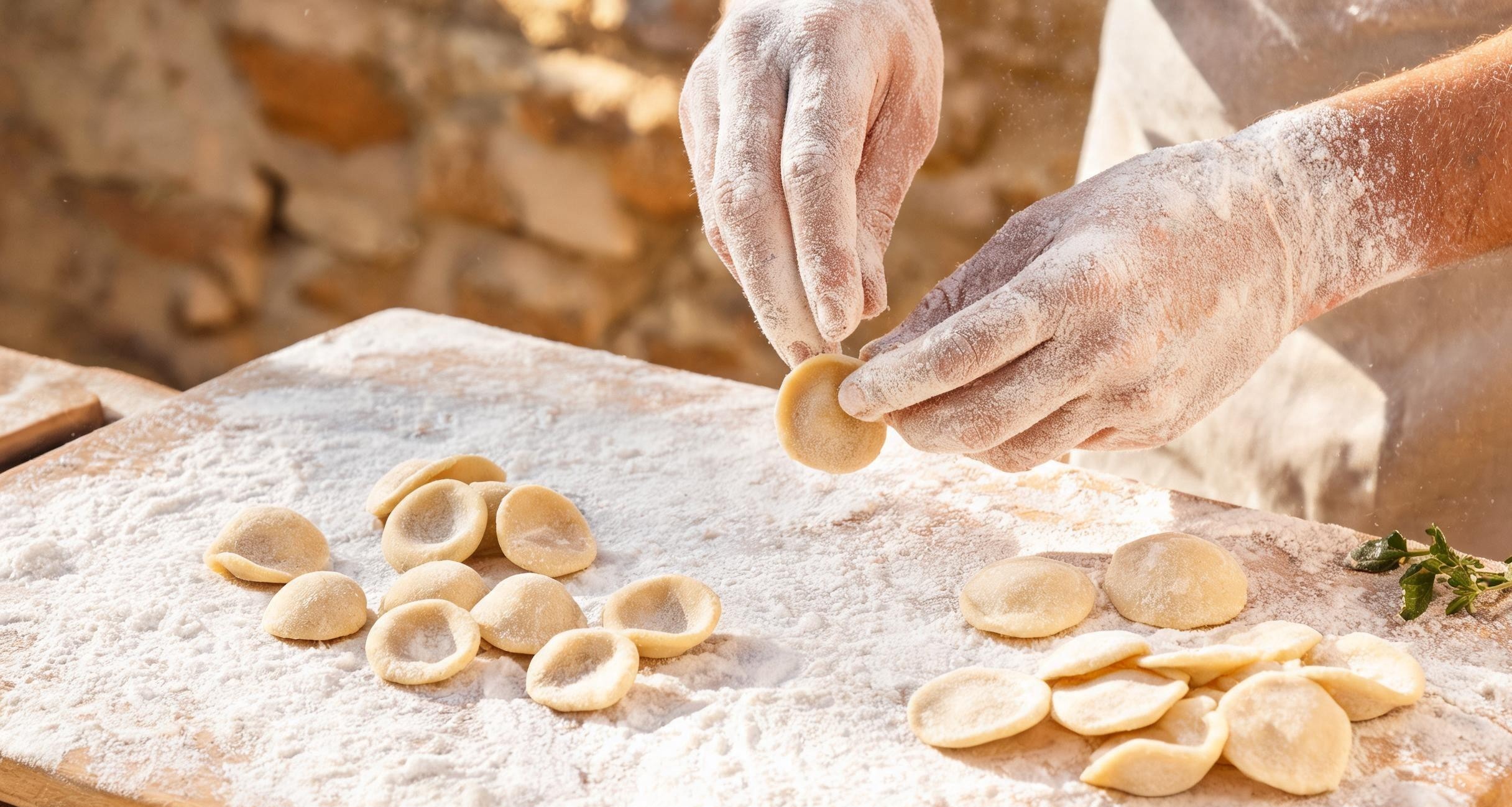
The first time I saw a woman making orecchiette on the streets of Bari, I stopped walking and stood there for twenty minutes. She was sitting on a low wooden stool outside her front door, a wooden board across her lap, a pile of semolina dough next to her, and a knife in her right hand. She would tear off a piece of dough the size of a grape, press it against the board with the flat of the knife, drag it toward her with a quick flick of her wrist, and flip it over her thumb. The motion took less than two seconds, and what came off the board was a small ear-shaped pasta that she tossed into a basket lined with a cloth. She was making hundreds of these, one after another, while talking to her neighbor across the narrow street. The speed and rhythm of it were almost musical, and the finished orecchiette were perfectly uniform in a way that seemed impossible without a mold or a machine. I bought a kilo from her for four euros and cooked them that night with broccoli rabe and anchovy, and I have been trying to replicate her technique at home ever since.
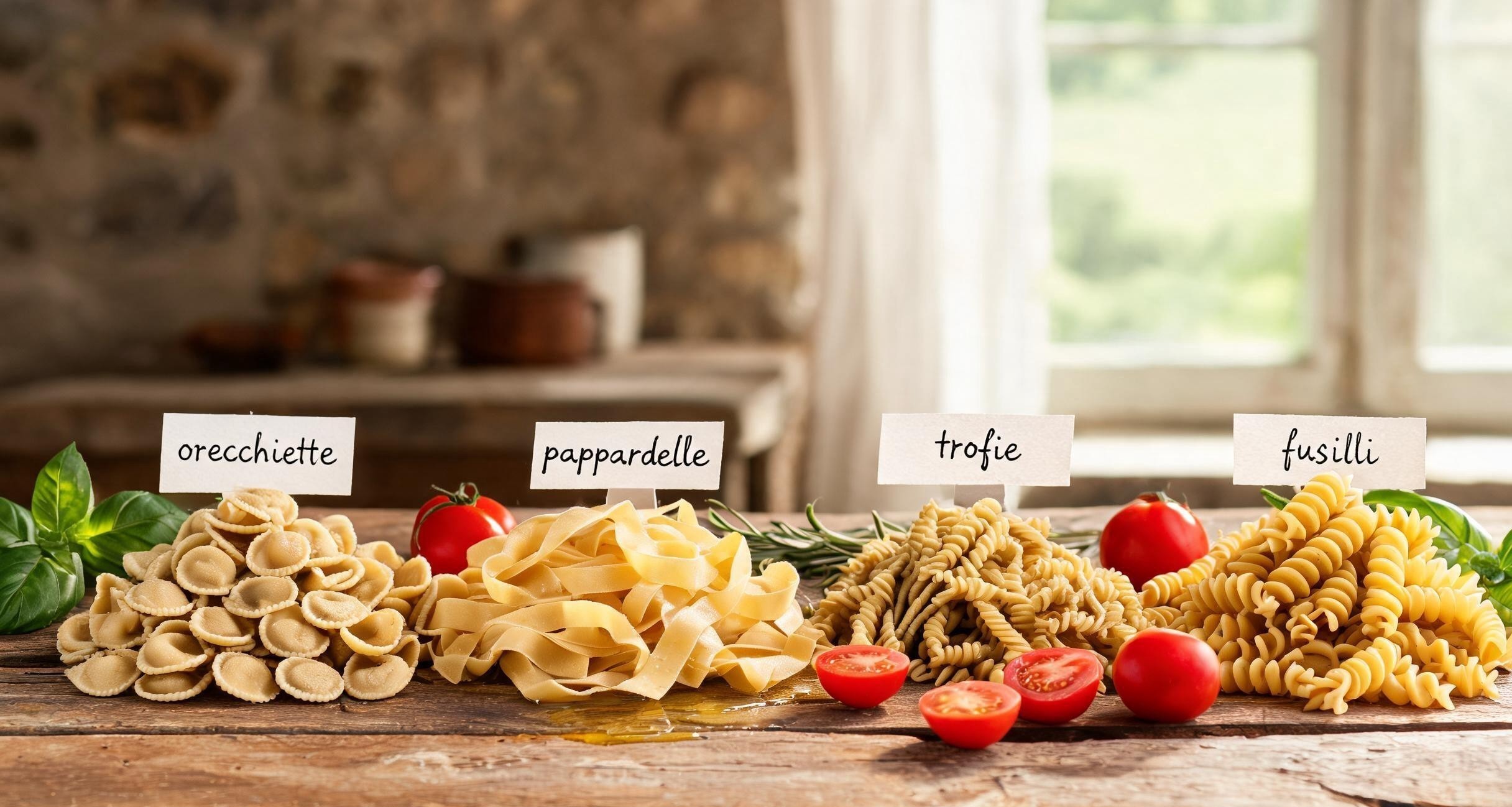
Every region in Italy has a pasta shape that defines it, and the shape is never arbitrary. In the north, where dairy is abundant and the climate is cooler, you find flat ribbons like tagliatelle in Emilia-Romagna and pappardelle in Tuscany, wide noodles designed to carry rich meat ragu. In Emilia-Romagna, the classic pairing is tagliatelle al ragu, a dish that Americans know as spaghetti bolognese but that no Italian would serve with spaghetti. The wide, flat surface of tagliatelle holds the ragu in a way that thin round spaghetti cannot. The sauce clings to each strand and distributes evenly across the bite. When I ate tagliatelle al ragu at a small trattoria in Bologna, the ragu had been simmering for five hours, and the fresh egg pasta was so thin I could see my fork through it. The combination was simple and perfect, and it made me realize that the shape of the pasta was not decoration. It was engineering.
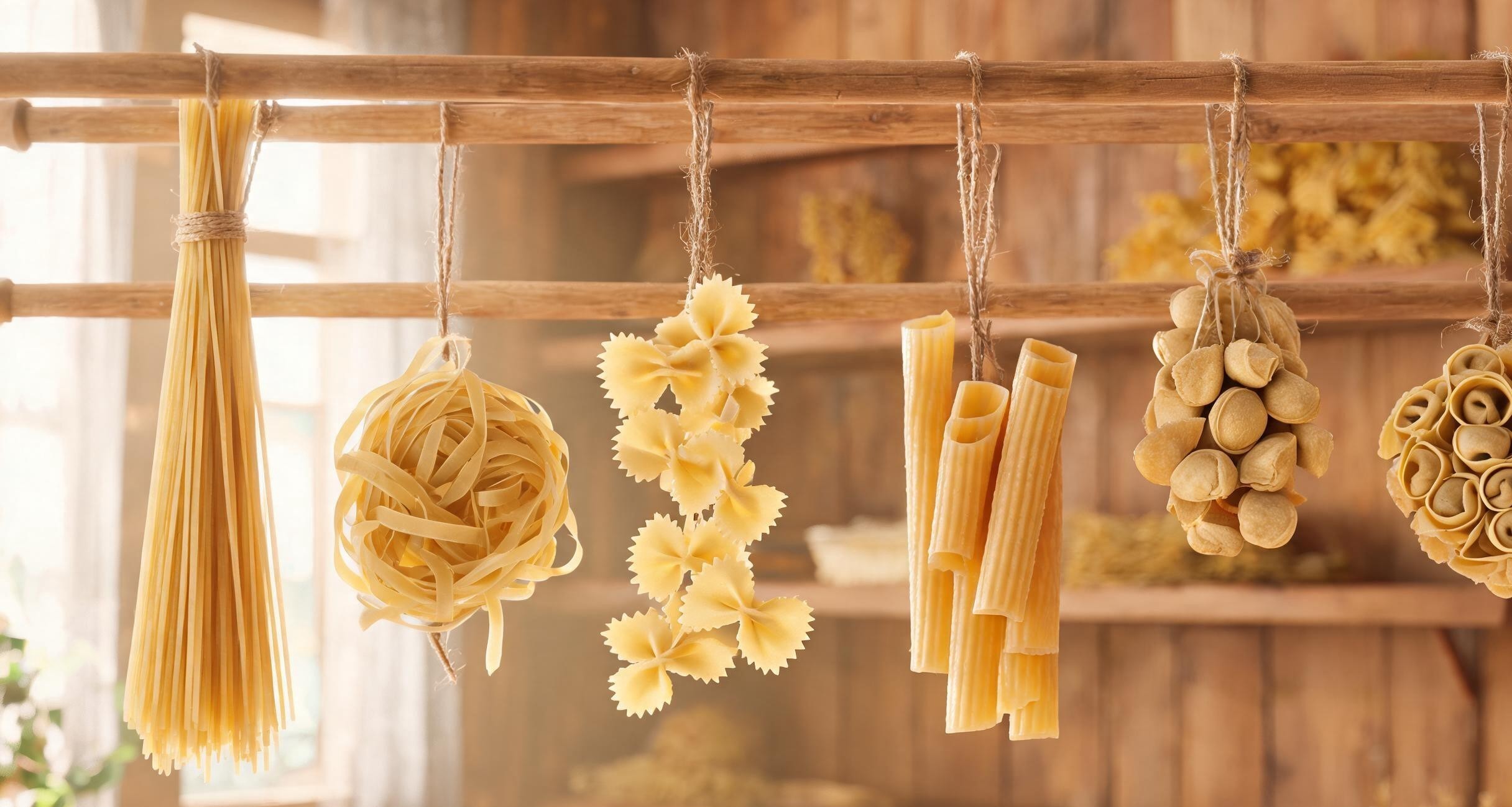
In Campania, the pasta is dried, not fresh, and the shapes are long and tubular. Spaghetti and vermicelli come from this region, made with hard durum wheat and water, no eggs, and dried slowly at low temperatures. The result is a pasta with a firm, slightly chewy texture that stands up to the aggressive olive oil and tomato-based sauces of southern Italian cooking. I visited a pasta factory in Gragnano, a town south of Naples that has been producing dried pasta since the 1700s, and the process was mesmerizing. The dough is extruded through bronze dies, which gives the surface a rough texture that sauce clings to, then dried on wooden racks in rooms with open windows, where the sea breeze from the Amalfi Coast passes through. The whole process takes three to five days, depending on the shape and thickness, and the pasta that comes out is different from anything you find in a supermarket. It cooks up firm and holds its shape, with a surface texture that grabs the sauce instead of repelling it.
Sardinia has a pasta called fregula, small balls of semolina dough that are toasted in a pan before being boiled. The toasting step gives the pasta a nutty, almost smoky flavor and a texture that is somewhere between couscous and orzo. Fregula is traditionally cooked with seafood broth and clams, and the toasted grains soak up the liquid in a way that creates a dish that is closer to risotto than pasta. I first tried it in Cagliari, at a restaurant that served it with a handful of saffron threads stirred in at the end, which turned the broth a deep gold. The combination of the nutty toasted pasta, the briny clams, and the floral saffron was unlike any pasta dish I had eaten before. It was a reminder that Italian cooking is not just about tomatoes and basil and Parmesan. The country has dozens of pasta traditions that most foreigners never encounter, each one shaped by the local grains, the available proteins, and the cooking methods that have been passed down for centuries.
The rules about which pasta goes with which sauce are real, and they are followed with the seriousness of law in Italy. Spaghetti with meatballs is an Italian-American invention that you will not find in Italy. Penne alla vodka is not a traditional Italian dish. Fettuccine alfredo, while it has roots in Rome, is a simplified version of a dish that Italians would barely recognize. The real Italian pasta tradition is regional, specific, and deeply tied to place. What you eat in Naples is different from what you eat in Genoa, which is different from what you eat in Palermo. The shapes, the sauces, the cooking methods: they all change from one province to the next, and they change for good reasons. The wheat that grows in Puglia is different from the wheat that grows in Piedmont. The seafood available in Sicily is different from the pork available in Emilia-Romagna. The pasta traditions grew out of what was available and what worked, and they stuck because they worked well.
What I have come to appreciate after years of eating pasta across Italy is that the shape of the noodle is not a small detail. It is the detail. A ragu that tastes perfect with pappardelle would feel heavy and wrong with penne. A light seafood sauce that works beautifully with linguine would get lost on rigatoni. The Italians have had five hundred years to figure out which shapes go with which sauces, and the result of all that trial and error is a pasta culture where every pairing makes sense on a mechanical level. The sauce needs the pasta to carry it, and the pasta needs the sauce to give it flavor. When the pairing is right, you taste both. When it is wrong, you taste neither. That is not snobbery. It is just physics.