I have made chocolate lava cakes maybe sixty times in the last three years, and the first twenty were a mess. Either the center was completely set, which meant I had made a regular chocolate cake in a small bowl, or the whole thing collapsed into a puddle when I tried to turn it out. The problem is that the window between underbaked and overbaked is about ninety seconds wide, and oven temperatures vary, and ramekins hold heat differently depending on their material. Ceramic ramekins take longer to transfer heat than metal ones. A convection oven bakes faster than a conventional one. There is no universal time that works every time. You have to learn to read the signs. The edges should be set and slightly pulled away from the sides of the ramekin. The center should jiggle when you shake it gently, like gelatin, not like liquid. That jiggle is the molten center, and it will continue to cook for another minute after you pull it from the oven, which is why you need to act fast.
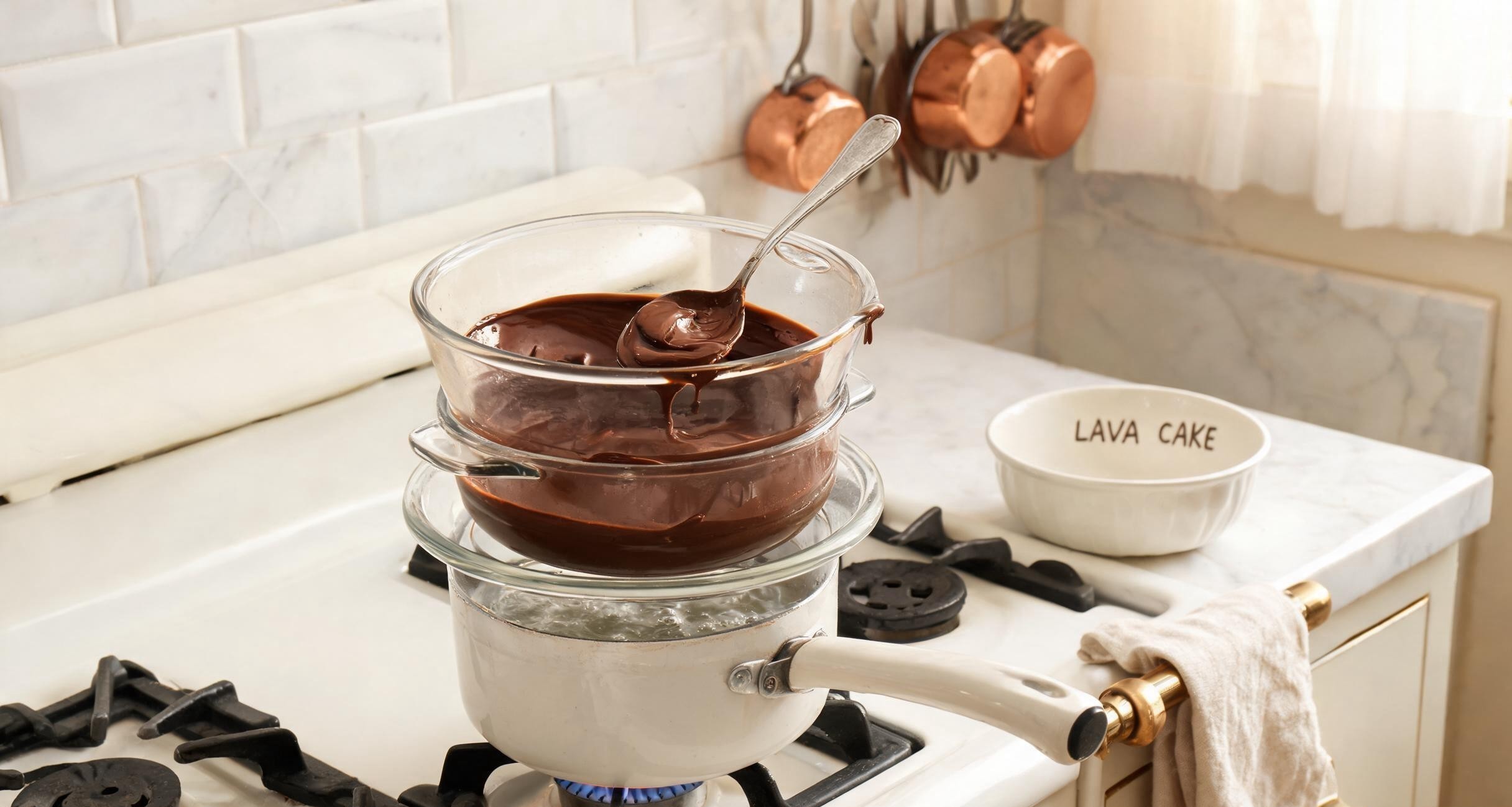
The batter itself is straightforward. Four ounces of dark chocolate, at least sixty percent cacao but I prefer seventy, and four ounces of unsalted butter, melted together in a heatproof bowl set over simmering water. Stir until smooth and let it cool for a few minutes. In a separate bowl, whisk two whole eggs and two egg yolks with a third of a cup of sugar until the mixture is thick and pale, about three minutes of whisking by hand or a minute with a hand mixer. The sugar needs to dissolve completely, which is why you whisk it this long. Fold the chocolate mixture into the egg mixture gently, then sift in two tablespoons of all-purpose flour and fold that in. Do not overmix. A few streaks of flour are fine. Overmixing develops the gluten and makes the cake dense instead of tender. Divide the batter between two buttered and cocoa-dusted ramekins, filling each one about three-quarters full. You can refrigerate them at this point for up to a day before baking, which makes this a practical dinner party dessert. Add one extra minute to the bake time if you are baking them cold.
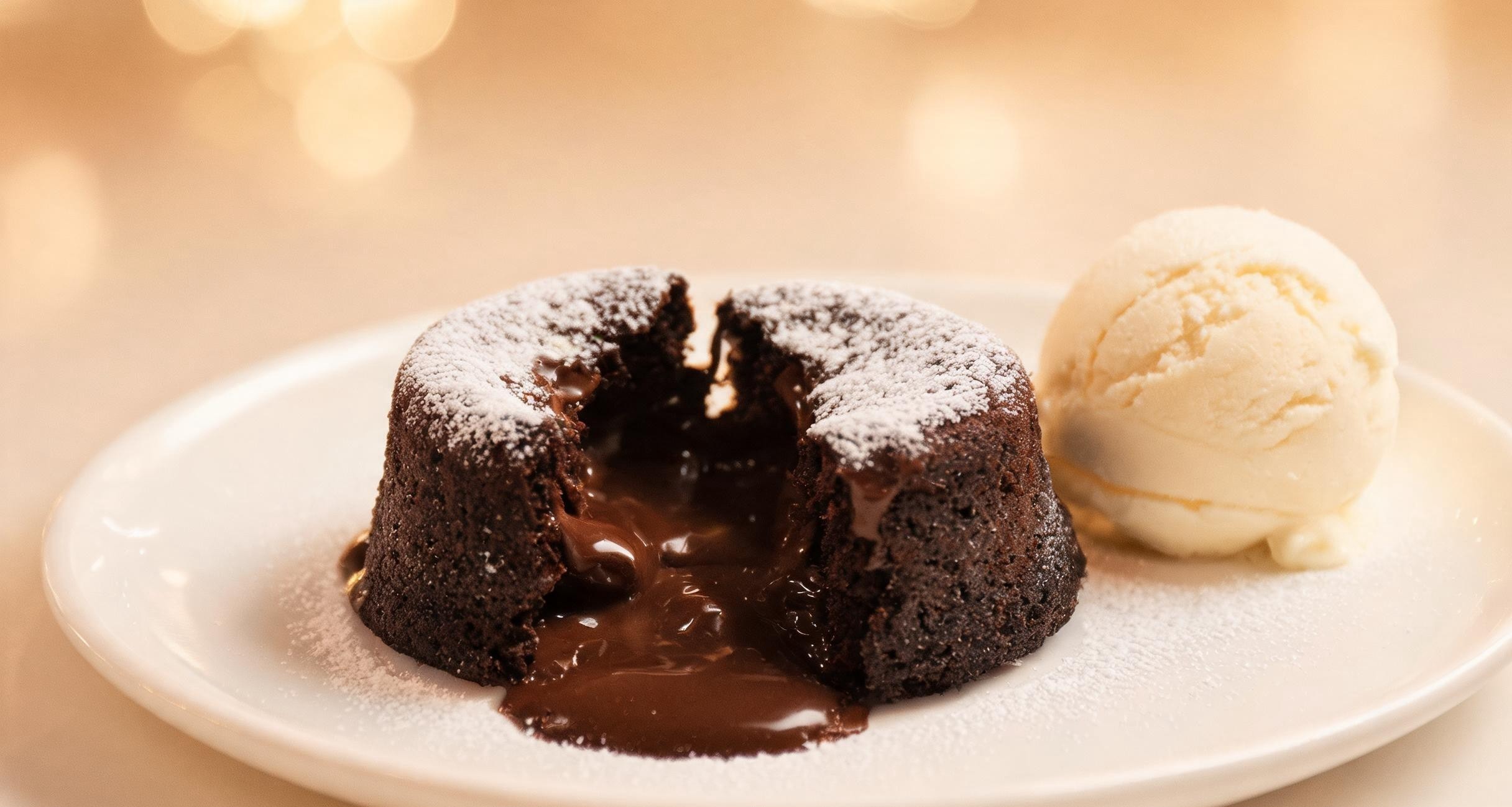
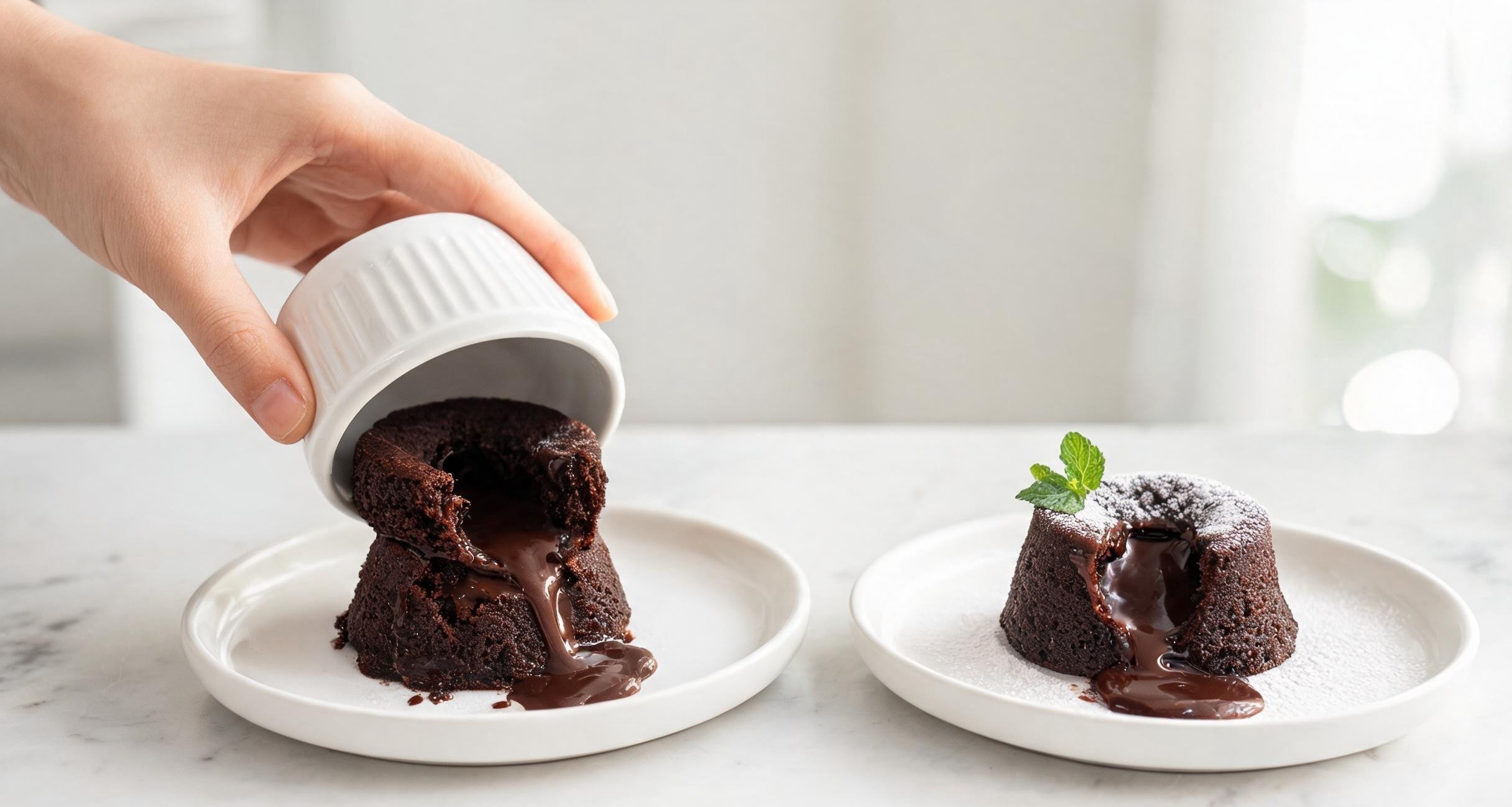
The baking is where everything matters. Preheat your oven to 425 degrees, which is hotter than most cake recipes call for, because the high heat sets the exterior quickly while the interior stays liquid. Place the ramekins on a baking sheet and bake them for exactly twelve minutes if your oven runs true, thirteen if it runs cool, eleven if it runs hot. The only way to know is to test. After the first time you make these, you will know your oven and you will not need to guess again. The cakes are done when the edges are firm and the center has a visible jiggle. Remove them from the oven and let them sit for exactly one minute. No more. Then run a thin knife around the edge of each ramekin, place a plate upside down on top, and flip the whole thing over in one confident motion. Tap the bottom of the ramekin once or twice, then lift it away. The cake should slide out in one piece with a small pool of molten chocolate spilling from the center onto the plate.
I serve these with a scoop of vanilla ice cream, because the contrast between the hot, rich cake and the cold, sweet ice cream is the combination that makes the dessert feel like more than the sum of its parts. A dusting of powdered sugar on top looks nice but is not necessary. A few raspberries or a drizzle of heavy cream work too, but ice cream is the standard for a reason. The first time I got the timing right and the center flowed out onto the plate the way it does in restaurants, I stood in my kitchen at ten o clock at night and ate both of them. My husband got none. I am not proud of that, but I am honest about it.
A few practical notes. Use good chocolate. The difference between a cake made with seventy percent cacao Valrhona and one made with supermarket baking chocolate is significant. The higher-quality chocolate has a smoother melt and a more complex flavor that carries the dessert. I have also tried this with semi-sweet chocolate chips in a pinch, and it works, but the filling is sweeter and less nuanced. The butter matters too. Use unsalted butter, and if you have European-style butter with a higher fat content, even better. The higher fat content makes the batter richer and the molten center more silky. If you are making these for a dinner party, prep the batter and fill the ramekins a few hours ahead, then refrigerate them. When your guests are eating their main course, put the ramekins in a 425-degree oven, and they will be ready by the time everyone has finished. Timing is the whole trick.