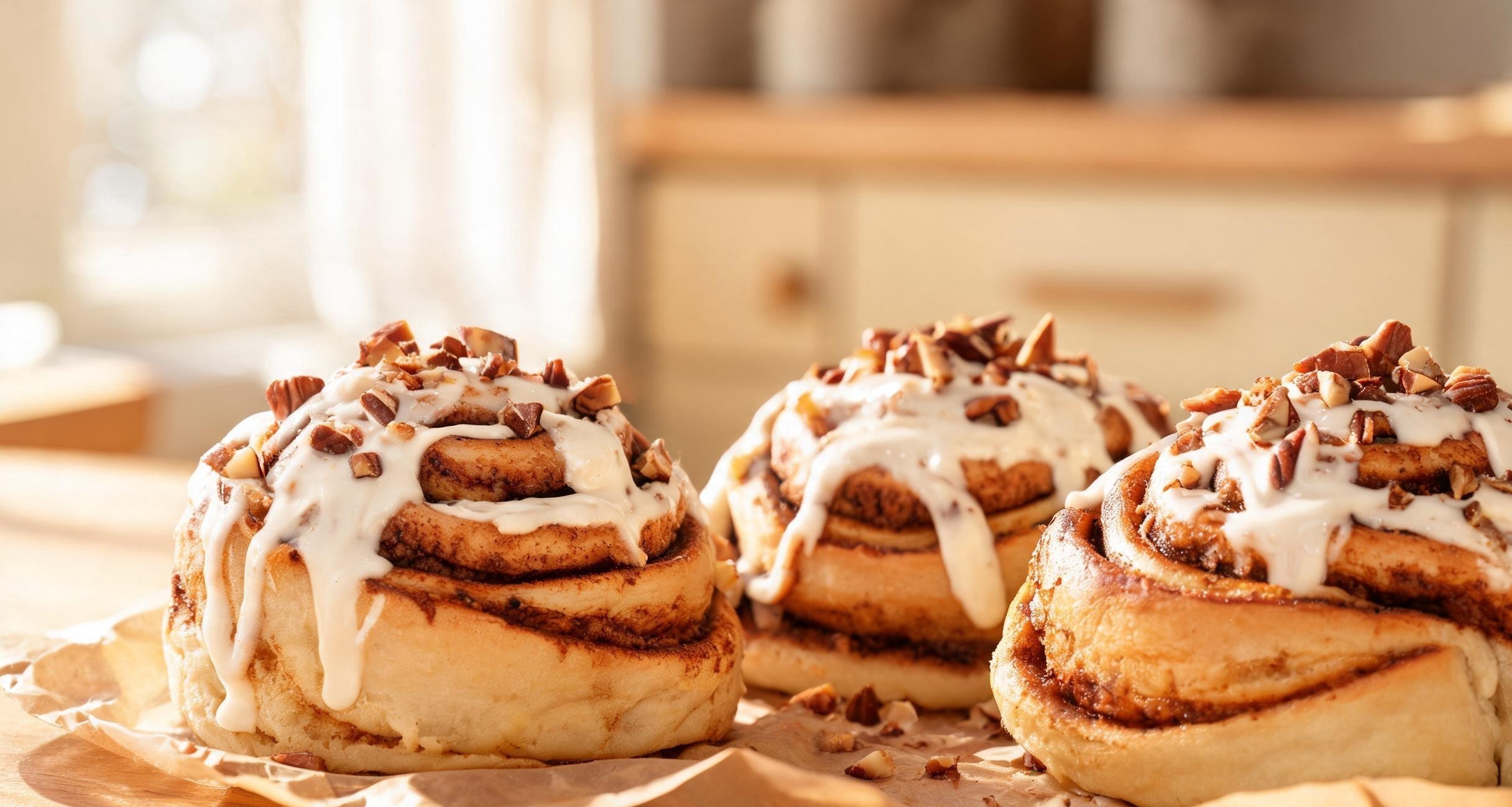
The first Christmas my husband and I spent together, I woke up at five in the morning to make cinnamon rolls by hand. I had never made them before, but I had seen enough food blogs to believe it was a straightforward process. Mix dough, let it rise, roll it out, spread butter and sugar and cinnamon, roll it up, cut it, let it rise again, bake it, frost it. Simple. What the blogs did not mention is that the dough is sticky and difficult to roll out at four in the morning when you are working in a cold kitchen, and that the filling will squeeze out the sides when you try to roll the dough into a tight log, and that cutting the log into even slices requires a length of dental floss, not a knife. My first batch looked like it had been made by someone who was half asleep, which I was. They tasted fine, if a bit dense. But the next year I tried again, and the year after that, and by the fourth year I had a recipe that I would put up against any bakery version. It is the only thing I make every Christmas morning without fail.
The dough is an enriched brioche-style dough, which means it has butter, milk, and egg in addition to the standard flour, yeast, and sugar. The fat content is what makes the rolls soft and slightly rich, with a tender crumb that pulls apart in layers. I mix two and a quarter teaspoons of instant yeast with a cup of warm milk and a tablespoon of sugar, let it sit for five minutes until it foams, then add a third of a cup of melted butter, one egg, and a teaspoon of salt. Then I add about three and a half cups of all-purpose flour, a cup at a time, mixing until the dough comes together into a shaggy ball. I turn it out onto a floured surface and knead it for about eight minutes, adding flour as needed, until it is smooth and elastic. The dough goes into a greased bowl, covered with plastic wrap, and left to rise until doubled, which takes about an hour and a half.
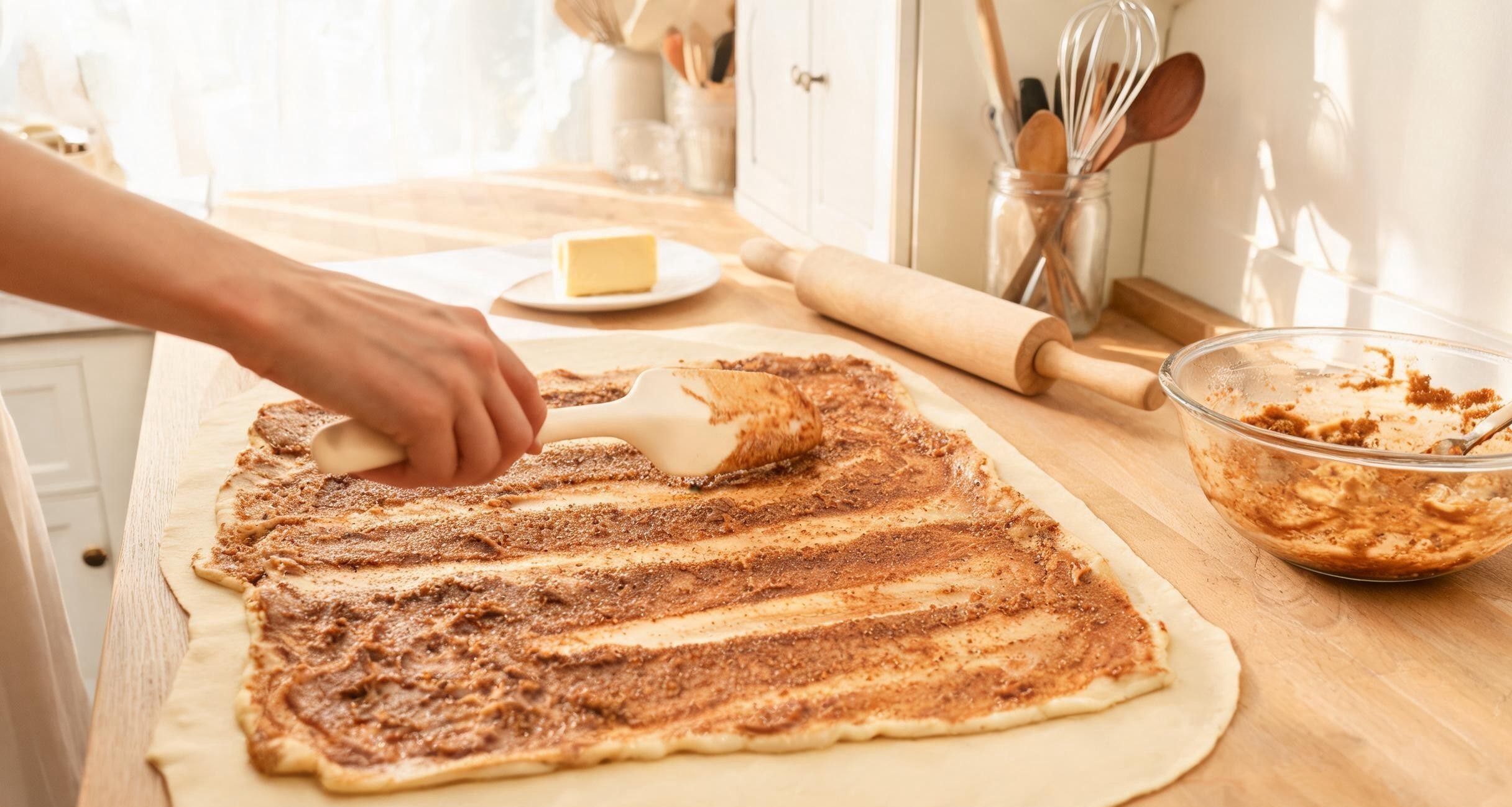
While the dough rises, make the filling. Melt a half cup of butter and set it aside. In a separate bowl, mix three quarters of a cup of dark brown sugar with two tablespoons of ground cinnamon and a quarter teaspoon of salt. Dark brown sugar is important here because the molasses content gives the filling a deeper, more caramel-like flavor than light brown sugar. Once the dough has risen, punch it down and turn it out onto a lightly floured surface. Roll it into a rectangle about eighteen inches long and twelve inches wide, with the long side facing you. Brush the surface with the melted butter, leaving a half-inch border at the far edge. Sprinkle the cinnamon-sugar mixture evenly over the butter. Starting from the long edge closest to you, roll the dough up tightly into a log, pinching the seam to seal it. If the filling squeezes out, press it back in. Use a length of unflavored dental floss to cut the log into twelve even slices, sliding the floss under the log, crossing the ends over the top, and pulling. This gives cleaner cuts than a knife.
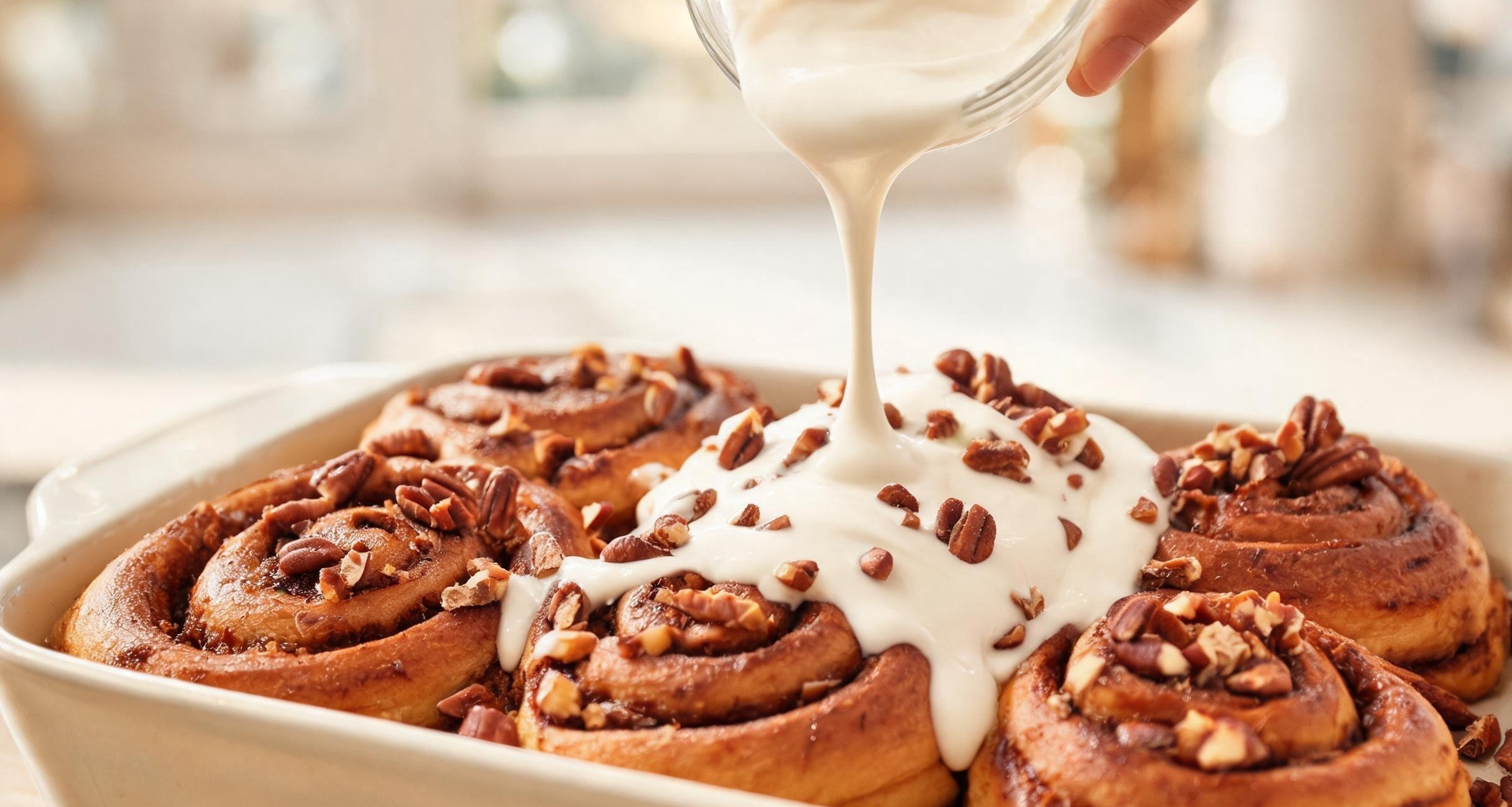
Arrange the slices in a buttered nine-by-thirteen inch baking pan, leaving a little space between them. Cover with plastic wrap and refrigerate overnight. The cold retard slows the yeast down and allows the flavors to develop, and it means you can wake up on Christmas morning, pull the pan from the fridge, and let the rolls sit on the counter while the oven preheats. They will need about thirty to forty-five minutes to come to room temperature and puff up slightly. Then bake them at 350 degrees for twenty-five to thirty minutes, until the tops are golden brown and the centers are set. While they bake, make the frosting: beat a quarter cup of softened butter with four ounces of cream cheese until smooth, then add two cups of powdered sugar, a teaspoon of vanilla extract, and a tablespoon of milk. Beat until fluffy. Spread the frosting on the rolls while they are still warm from the oven, so it melts slightly into the crevices.
The reason this recipe works every year, and the reason I keep coming back to it, is the overnight step. Cinnamon rolls are not difficult, but they are time-consuming, and making them from start to finish on Christmas morning would mean getting up at four thirty, which even I am not willing to do anymore. The overnight refrigeration does double duty: it develops the flavor and it makes the timing manageable. You do the work the night before, when you are still awake and functioning, and the morning requires nothing more than preheating an oven and waiting. The rolls that come out are soft, fragrant with cinnamon, and sweet without being cloying, thanks to the tangy cream cheese frosting that cuts the richness of the dough. I have tried variations, adding pecans or raisins or swapping the cinnamon for cardamom, but I always come back to the plain version. It is the one my husband expects, and the one I have made enough times that I could do it with my eyes closed. Some mornings, I almost do.