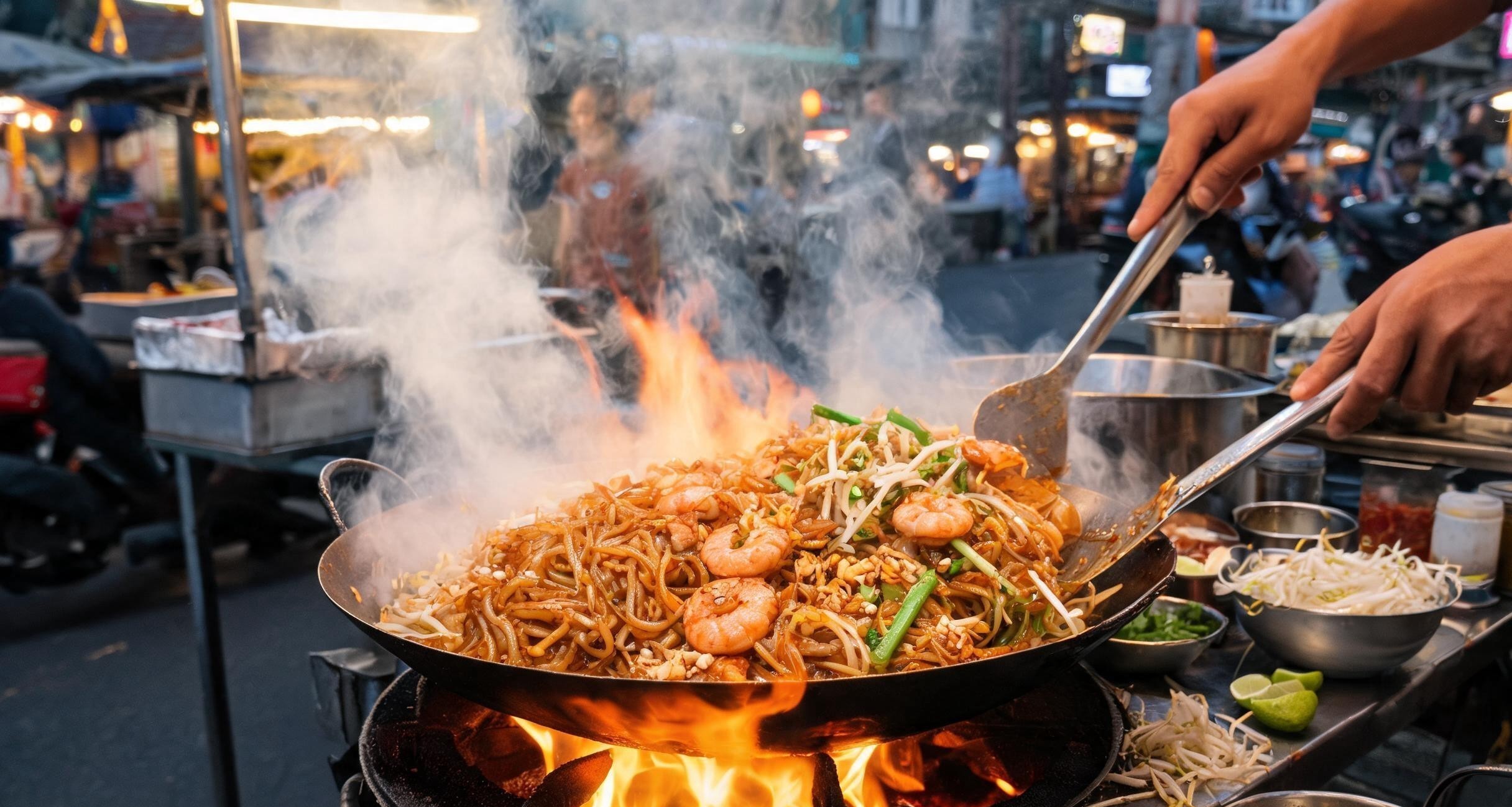
The man at the pad Thai cart on Sukhumvit Soi 38 works with a wok that is hotter than anything I have ever used in a home kitchen. I know this because I stood close enough to feel the heat on my face, a wall of it that hit me every time he tossed the noodles in the air. He cooks over a high-pressure gas burner with a wide blue flame that engulfs the bottom of the carbon steel wok, and he works fast. One order at a time, each one taking about two minutes from the moment the oil hits the wok to the moment the noodles land on the plate. I ate there four nights in a row and ordered the same thing each time: pad Thai with shrimp, extra lime. By the fourth night he recognized me and added an extra egg without being asked. That egg, fried in the smoking oil until the edges were lacy and crisp, was the best part of a dish that was already the best pad Thai I have ever had.
The wok itself was well-seasoned, black and smooth from years of use, with a slight concavity that held the oil in the center. The vendor, whose name I never learned because my Thai is limited to about twelve words, started each order the same way. A ladle of oil into the wok, let it heat until it shimmered, then crack two eggs directly into it. He broke the yolks with the edge of his spatula and scrambled them quickly, about fifteen seconds, then pushed them to one side. In went a handful of shrimp, small ones, shell-on, and they curled and turned pink in under a minute. Then the soaked rice noodles, a tangle of flat, translucent strips about the width of fettuccine, went into the wok along with a sauce he kept in a plastic squeeze bottle. I asked him what was in the sauce and he pointed to a row of containers behind him: tamarind paste, fish sauce, palm sugar, and a dark soy sauce. The squeeze bottle was a pre-mixed blend of all four.
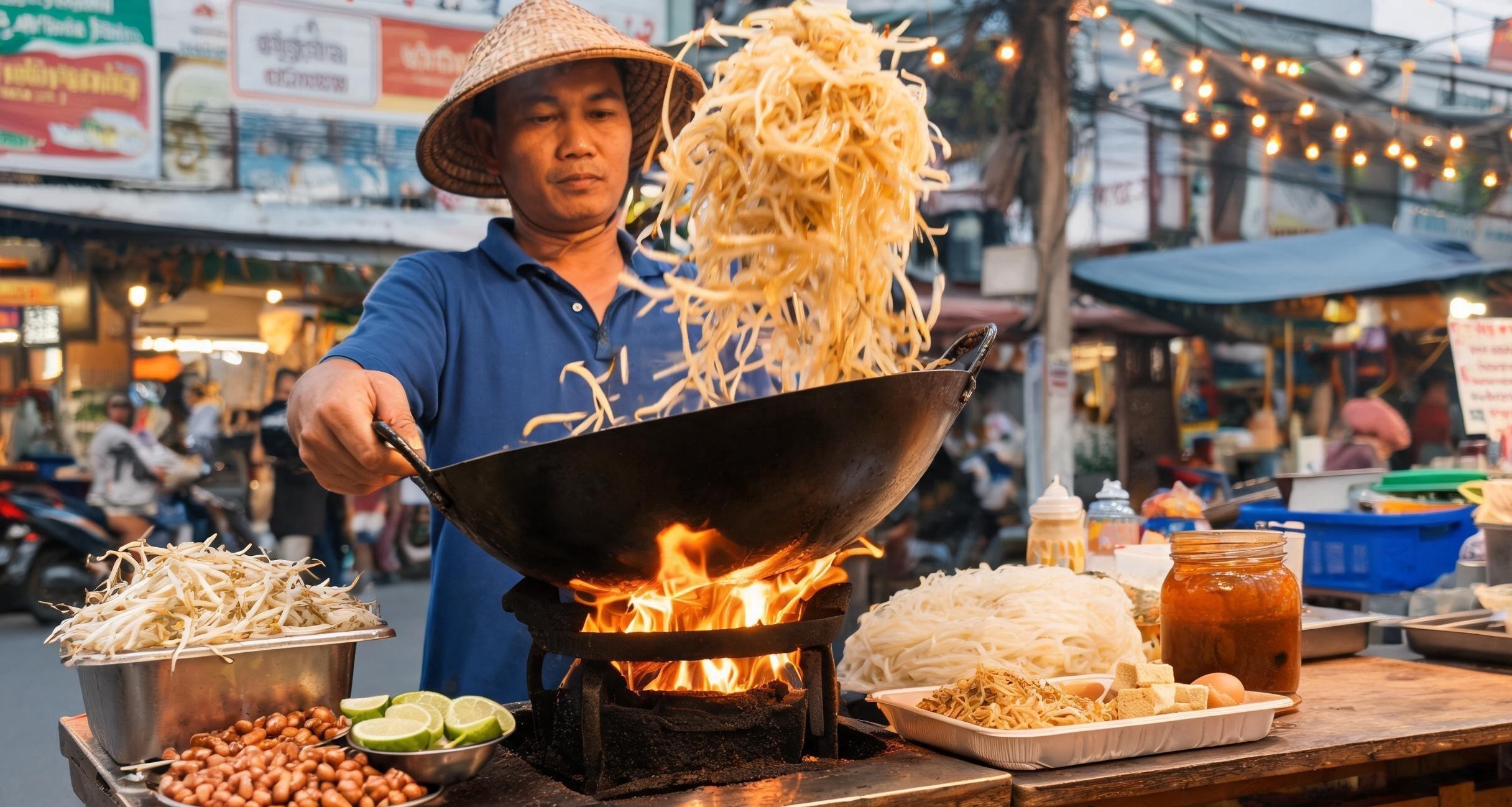
The tamarind paste is the ingredient that makes pad Thai what it is, providing the sour component that balances the salt of the fish sauce and the sweetness of the palm sugar. I have seen recipes that substitute lime juice or vinegar, and they produce something edible, but the flavor is different. Tamarind has a fruity acidity that is rounder and more complex than lime or vinegar, with a slight sweetness of its own. The palm sugar, which comes in hard discs that you shave or grate, contributes a caramel-like sweetness that white sugar cannot match. The fish sauce adds salt and umami. The proportions matter, and the vendor told me, through a combination of gestures and the few English words he knew, that the ratio is roughly three parts tamarind to two parts fish sauce to one part palm sugar. I wrote it down on a napkin and have used it as my starting point ever since.
Once the noodles and sauce were in the wok, the vendor added bean sprouts and chopped garlic chives, tossing everything together with quick, sharp flicks of the wrist that sent flames licking up the sides of the wok. That flaring is wok hei, the breath of the wok, and it is the thing that home cooks cannot replicate without serious heat. Wok hei is not just high temperature. It is the interaction between the high heat, the oil, and the food, producing a smoky, slightly charred flavor that permeates everything in the pan. You can get a rough approximation on a home gas stove by using the highest burner setting and a well-seasoned carbon steel wok, but it will never be quite the same as what you get from a jet-fueled burner on a Bangkok sidewalk. I have accepted this, and I still make pad Thai at home because it is still good, just different.
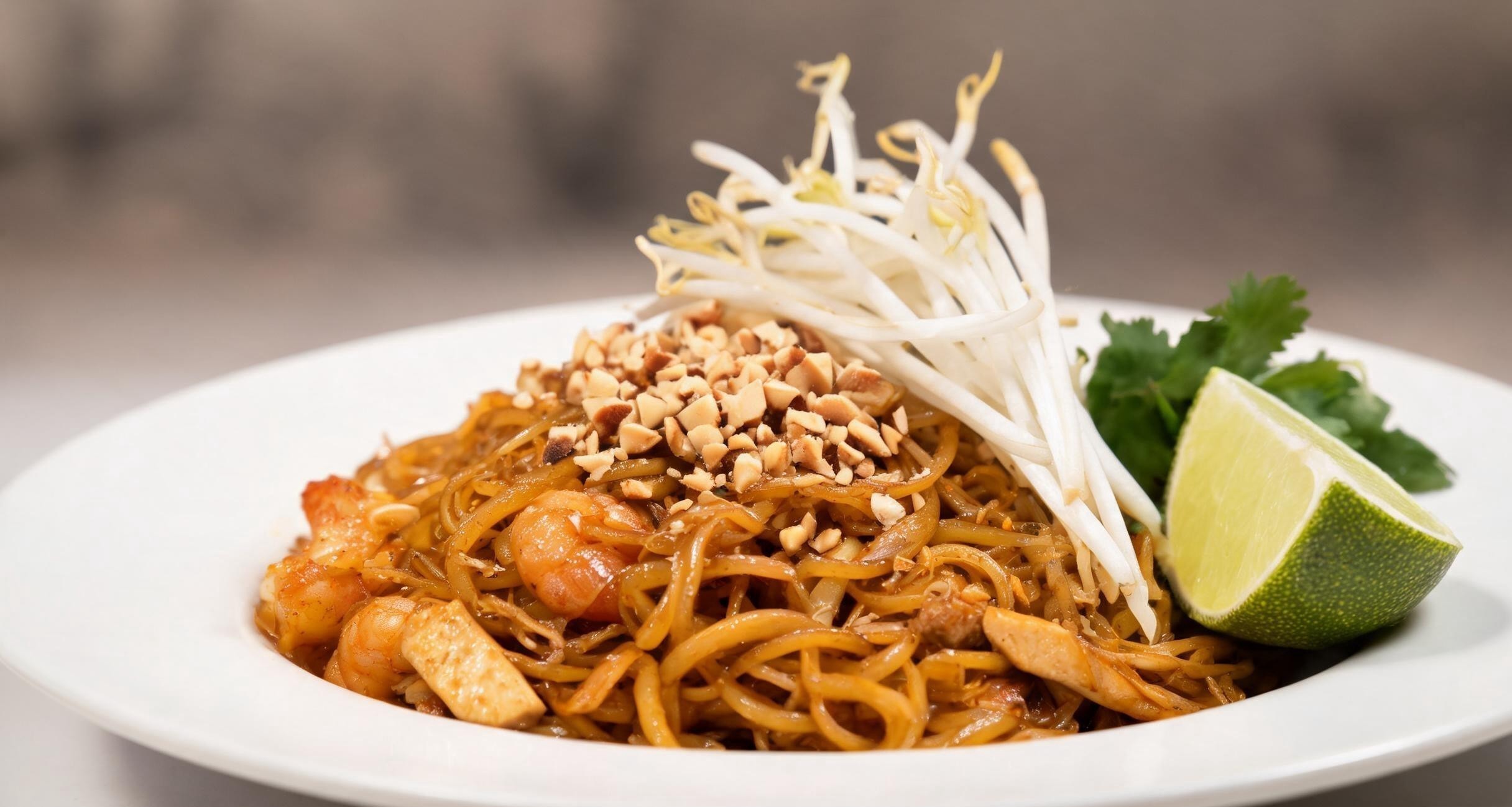
To make pad Thai at home with reasonable results, soak three ounces of flat rice noodles in room-temperature water for thirty minutes, until they are pliable but not soft. Mix the sauce: three tablespoons of tamarind paste, two tablespoons of fish sauce, and one tablespoon of palm sugar (or dark brown sugar in a pinch), stirred until the sugar dissolves. Heat a wok or large skillet over the highest heat your stove can manage, add two tablespoons of neutral oil, and crack in two eggs, scrambling them quickly. Add six to eight peeled shrimp and cook for one minute. Add the drained noodles and the sauce, and toss for about two minutes until the noodles are cooked through. Add a handful of bean sprouts and a quarter cup of chopped garlic chives or regular chives, toss once more, and plate. Top with crushed roasted peanuts and a wedge of lime. It will not taste exactly like what I had on Sukhumvit Soi 38, but it will be better than most restaurant versions in the US, and you will know what it is supposed to taste like.