I pulled into a gravel driveway in Mobile, Alabama, on a Saturday afternoon in late March and the first thing I noticed was the propane flame. It was coming from a steel burner the size of a washing machine, and the 60-quart pot sitting on top of it was already rolling. Reggie Bouchard, who I had met once before at a food conference in New Orleans, was standing next to the pot in a pair of rubber boots, dropping whole red potatoes into the water with a pair of long metal tongs. He looked up when I parked and waved me over without taking his eyes off the pot. "You're just in time," he said. "Crabs go in next."
The yard behind Reggie's house has a screened porch, a live oak throwing shade over the lawn, and a long folding table covered in newspaper. I've eaten seafood boils at restaurants from Texas to Florida, and they've ranged from pretty good to pretty bad. But the ones I keep thinking about are the ones that happen in backyards like this, cooked by people who learned the process from their parents and have been tweaking it ever since.
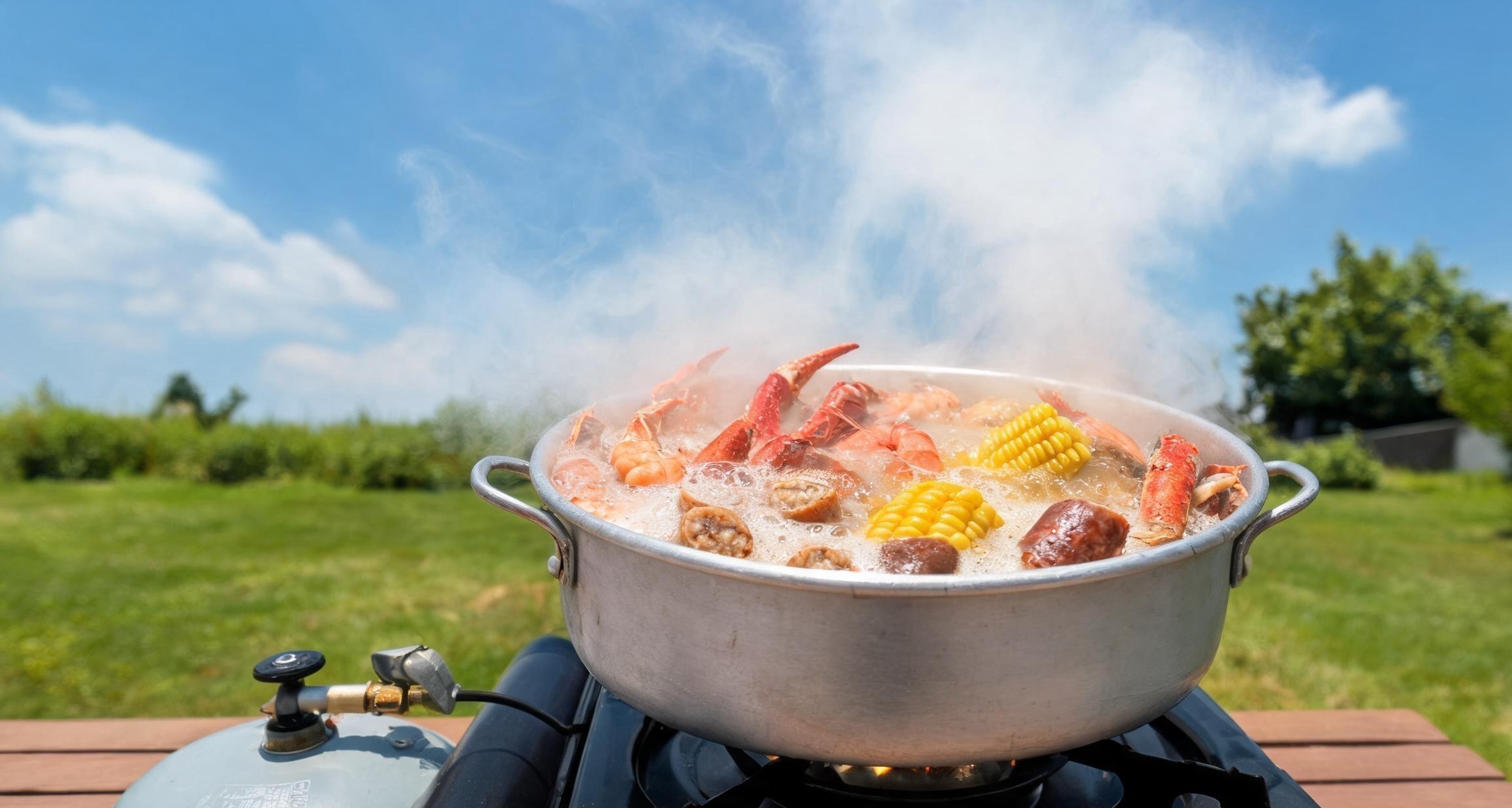
Reggie's family has been boiling seafood on the Gulf Coast for four generations. Today he uses a mix of blue crab and Gulf shrimp, plus Andouille sausage and corn on the cob. His seasoning is straightforward: Zatarain's Crab Boil, two boxes for a 60-quart pot, plus a cup of salt, half a bottle of hot sauce, and the juice of six lemons. "My grandmother didn't measure anything," he told me. "She cooked by feel. I measure because my wife insists on it, but honestly, the difference is negligible."
The timing matters more than the seasoning. Reggie is strict about it. Potatoes go in first and get twenty minutes. The sausage goes in at the fifteen-minute mark. Crab goes in for twelve minutes. Shrimp only get three, maybe four if they're jumbo, because shrimp turn rubbery faster than anything else in the pot. The corn goes in during the last five minutes so it stays crisp. He told me this with the confidence of someone who has ruined a batch of shrimp by forgetting them for two extra minutes and has never made that mistake again.
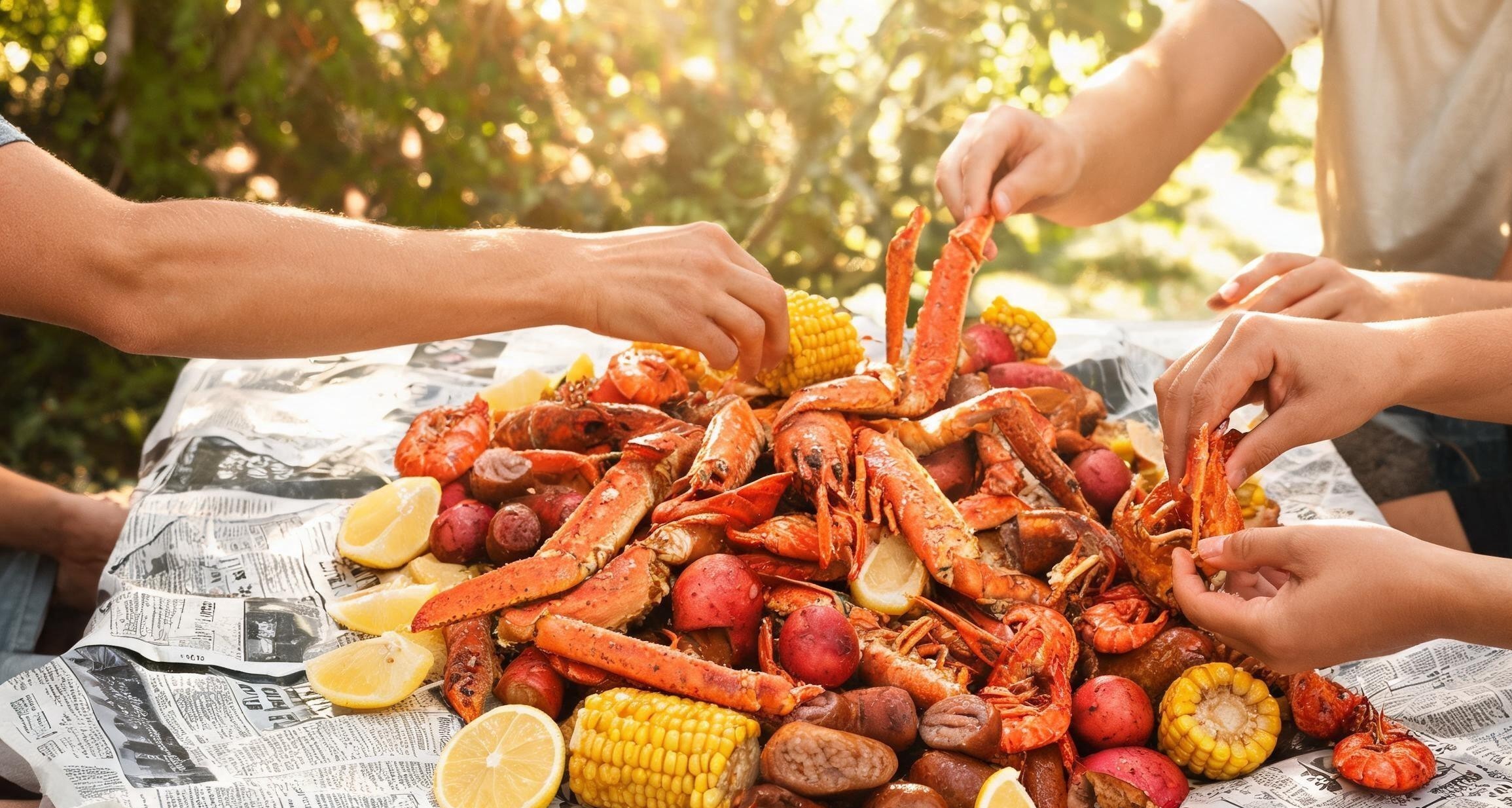
When the crab and shrimp come out, Reggie drains the pot with a wire basket insert and dumps everything onto the newspaper-covered table. The broth that comes with it is half the reason you're here. It soaks into the bread, it flavors the potatoes, it gives the corn a salty, spicy kick that you can't get any other way.
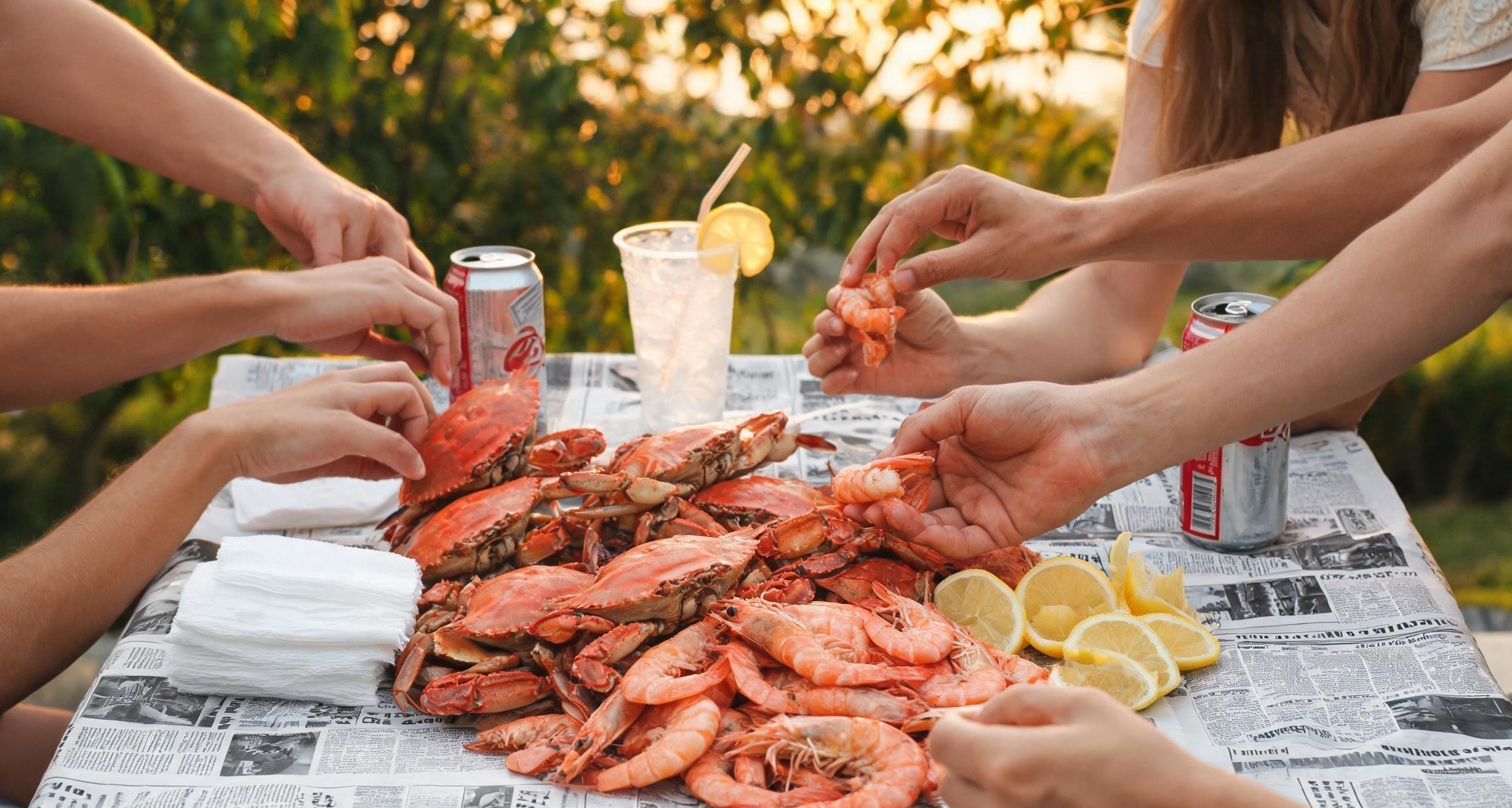
Three weeks later I drove to Panacea, Florida, to see Helen Gianopoulos, who runs a seafood boil every other Sunday for what she calls "anyone who shows up." Helen is seventy-one and has been doing this for close to fifty years. She does not use Zatarain's. She mixes her own dry rub: paprika, cayenne, black pepper, coriander seed, mustard seed, and whole cloves, toasted in a dry skillet before grinding. The smell fills her kitchen for an hour afterward.
"Store-bought boil is fine," Helen told me. "But it's someone else's idea of what a boil should taste like. I wanted my own." She rubs the spice mix into the crab and shrimp before they go in the pot, almost like a dry brine. The water gets salt, a cut onion, garlic, and thyme. Helen's boil tasted different from Reggie's — the dry rub gave the shellfish a spiced crust that the broth alone couldn't produce, with coriander and clove coming through in a way that made me think of autumn even though it was April.
The third family was in Bay St. Louis, Mississippi. Charles and Lynette Nguyen have been running their backyard boils for twenty-three years. Charles is Vietnamese American and grew up eating seafood his father caught in the Gulf, but his boil has its own personality. He goes heavy on lemons and garlic — a dozen lemons and two full heads, unpeeled, dropped into the water with everything else. The garlic softens and people squeeze the cloves onto their bread like butter. He adds fresh cilantro during the last two minutes, which gives the steam a green, fragrant quality I haven't encountered anywhere else. It came from trying to make a boil his Vietnamese mother would enjoy — she found Cajun seasoning heavy, so the lemons and garlic were his compromise.
What struck me after visiting all three families was how personal the boil is despite the shared structure. Everyone agrees on the basics: big pot, propane burner, newspaper on the table, the same core ingredients. But the seasoning and timing are where the personality comes through. Reggie's boil tastes like Mobile. Helen's tastes like the Florida Panhandle. Charles and Lynette's tastes like a Gulf Coast that has room for a Vietnamese grandmother at the table.
The logistics are simpler than you'd think. You need a 60-quart pot, a propane burner rated for at least 100,000 BTU, a wire basket insert, and long tongs. Food cost runs about eight to twelve dollars per person. The whole thing takes about an hour and a half from lighting the burner to the first bite.
The sides are not optional. French bread for soaking up the broth. Coleslaw for cutting the heat. Sweet iced tea because you're standing outside in ninety-degree humidity and the pot is radiating heat in your direction. Skip the sides and you're eating shellfish with bare hands, which is fine, but it's not a boil. The boil is the whole spread — the table, the paper, the bread, the tea, the people grabbing crab with their fingers and not caring about the mess.