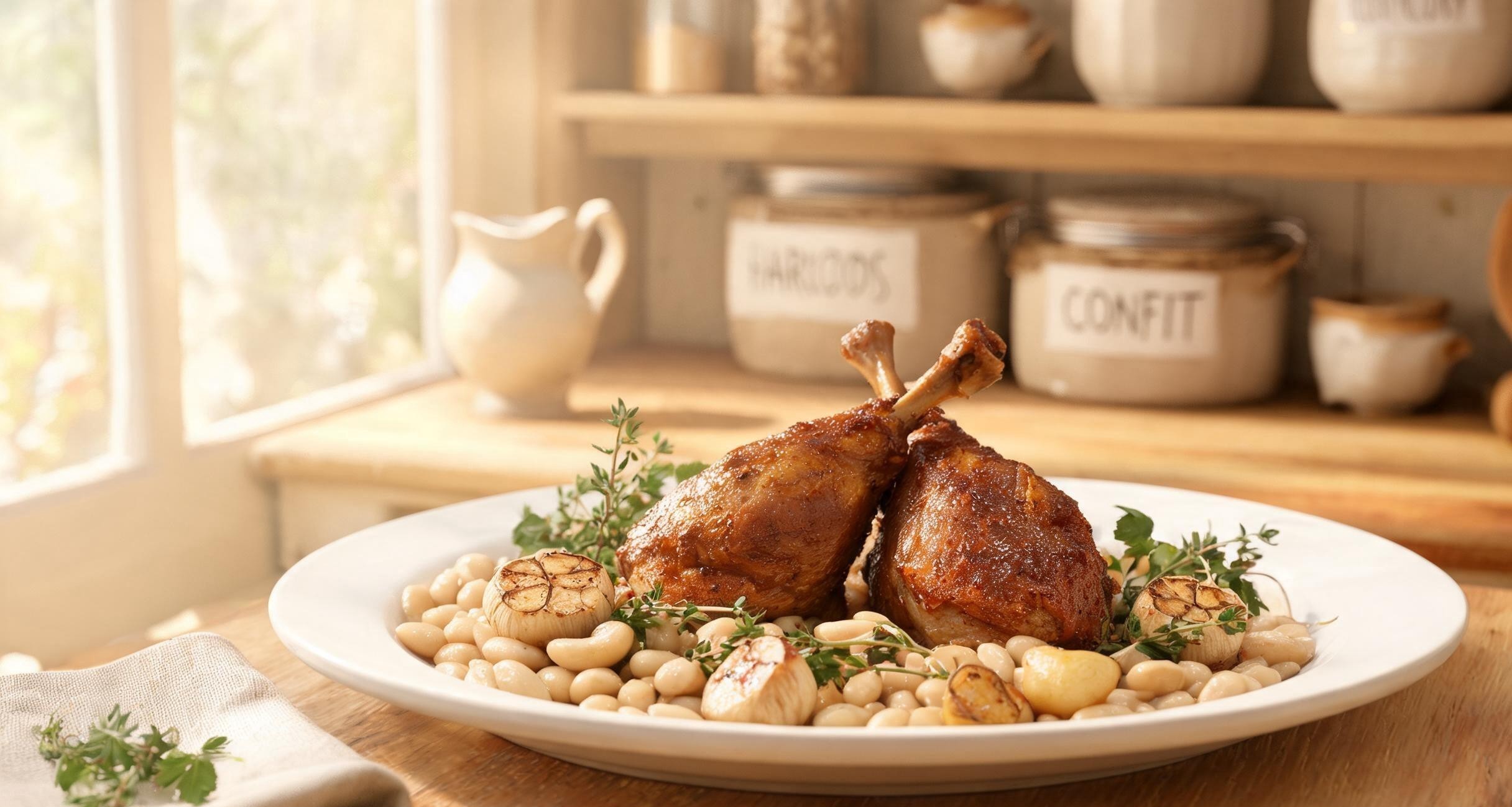
Duck confit sounds like something that requires a professional kitchen, copper pots, and a lineage of French cooking that stretches back generations. In reality, the technique is one of the simplest in French cooking. You salt the duck legs, let them cure in the refrigerator for a day or two, then cook them very slowly, completely submerged in their own fat, until the meat is so tender it pulls away from the bone with almost no pressure. The entire active cooking time is maybe ten minutes of actual work spread over four days. The rest is waiting, which is the hardest part for most home cooks, myself included.
The first step is sourcing the duck legs. You want whole legs with the thigh and drumstick still attached, with the skin on. I buy them from a butcher who sources Moulard duck, which has a higher fat content than the Pekin duck you usually find in supermarkets. More fat means more confit fat at the end, which is not a problem because duck fat keeps indefinitely in the refrigerator and makes everything it touches taste better. You can fry potatoes in it, roast vegetables, cook eggs, or spread it on bread. A jar of duck fat in the fridge is one of the most useful things a home cook can have.
The cure is straightforward: kosher salt, a few crushed garlic cloves, thyme, and bay leaves. I rub the mixture all over the duck legs, getting it into every crevice, then arrange them in a single layer in a dish and refrigerate for twenty-four to thirty-six hours. The salt draws out moisture and seasons the meat through to the bone. After the cure, rinse the legs thoroughly and pat them completely dry. Any moisture left on the skin will prevent it from crisping properly later, so this step matters more than it seems.
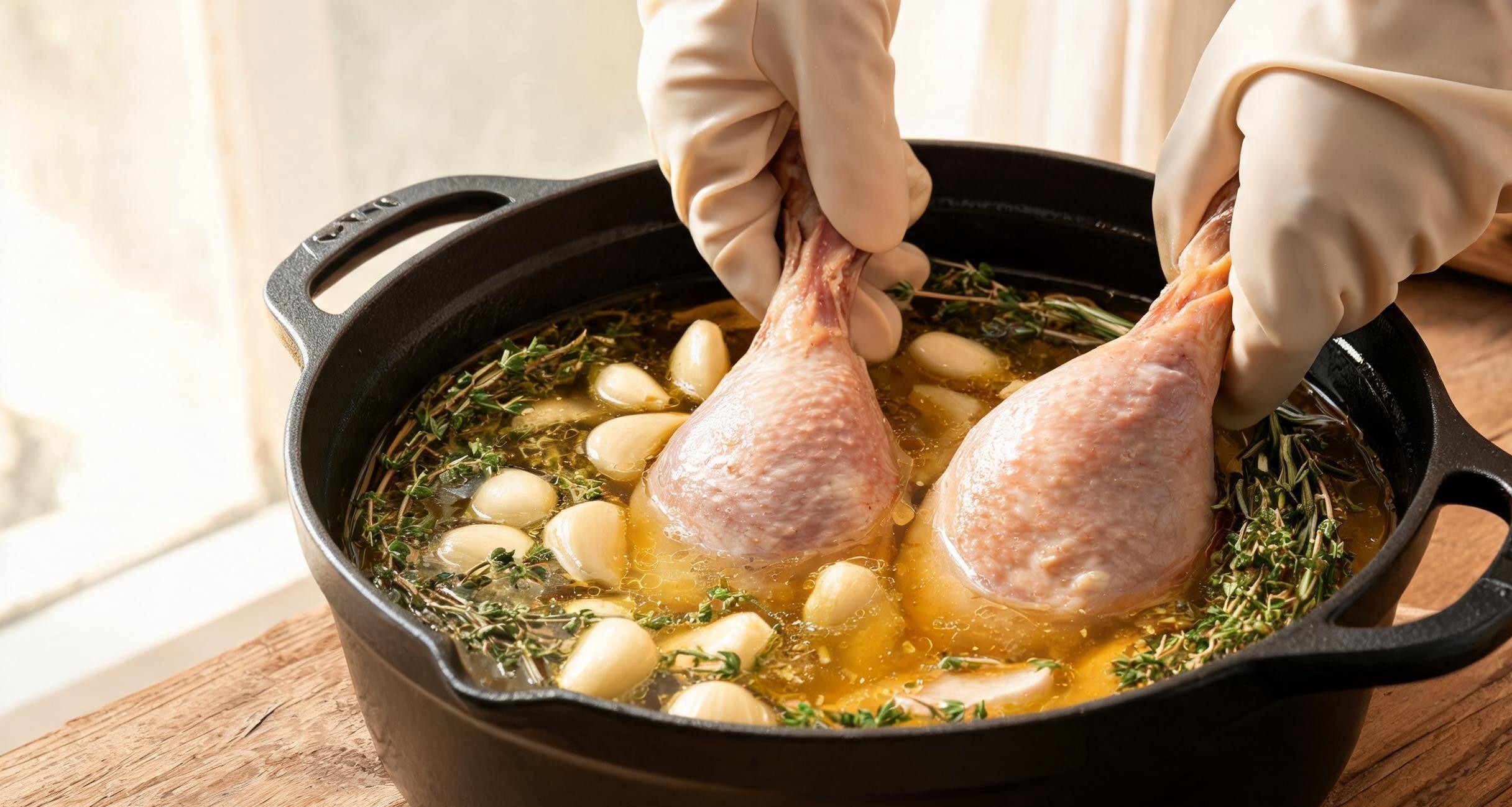
For the slow cook, I use a Dutch oven. Place the duck legs in the pot, add enough duck fat to cover them completely, and put it in a 275-degree oven for about three hours. The fat should not boil. It should barely shimmer. You are poaching the duck in fat at a low temperature, which breaks down the connective tissue without drying out the meat. After three hours, the legs should be fork-tender and the skin should be pale and soft. At this point, you can either proceed to the crisping step or let the legs cool in the fat and store them in the refrigerator for up to a week.
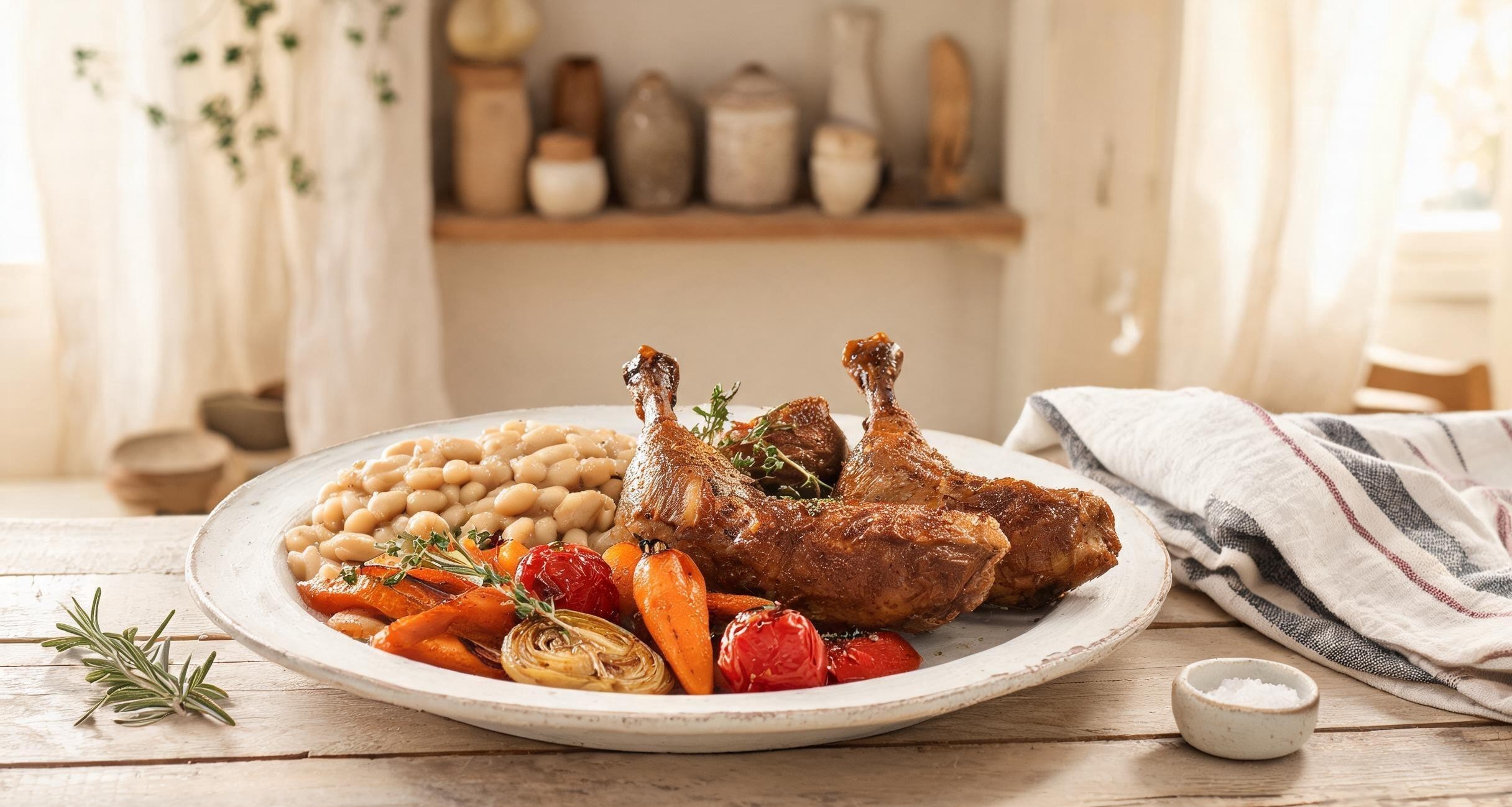
When you are ready to eat, remove the legs from the fat, scrape off any excess, and place them skin-side down in a cold cast-iron pan. Turn the heat to medium and let the skin render slowly. Do not try to speed this up with high heat or the fat will burn before the skin crisps. It takes about eight to ten minutes. When the skin is deep golden and crackling, flip the legs for just thirty seconds to warm the meat side, then serve. I like them with a simple salad of frisee and a sharp mustard vinaigrette, or over white beans cooked with garlic and rosemary.
I make a batch of duck confit every few months now, usually four to six legs at a time. The confit keeps in the refrigerator for at least a week, which means I can have a restaurant-quality dinner ready in ten minutes on any given weeknight. Pull a leg from the fat, crisp it in a pan, and serve it with whatever vegetables are in the fridge. It is one of the most practical things I have learned to cook, and it is also one of the most impressive. People who come over for dinner do not expect to be served something that was cooked in fat for three days, and the reaction when they bite through that crispy skin is always the same: a moment of silence, followed by questions about how it was made. The answer is always patience, salt, and duck fat. That is all it takes.
I should mention that you do not need to buy rendered duck fat to make this. The fat comes from the duck legs themselves as they cook. When you put the cured duck legs in a pot and add heat, the fat renders out of the skin and meat and pools around the legs. After three hours in the oven, a pound of duck legs will produce roughly a cup of rendered fat, which is usually enough to cover the legs themselves during cooking and leave you with a small jar of leftover fat for other uses. If you are starting with lean legs and the fat does not fully cover them, you can supplement with store-bought duck fat or, in a pinch, a mild oil like canola, though the flavor will not be as good. The first time I made confit, I did not have enough fat and added canola oil to cover the legs. The duck cooked fine, but the pure duck fat version I made the second time was noticeably richer and more flavorful.
I should mention that you do not need to buy rendered duck fat to make this. The fat comes from the duck legs themselves as they cook. When you put the cured duck legs in a pot and add heat, the fat renders out of the skin and meat and pools around the legs. After three hours in the oven, a pound of duck legs will produce roughly a cup of rendered fat, which is usually enough to cover the legs themselves during cooking and leave you with a small jar of leftover fat for other uses. If you are starting with lean legs and the fat does not fully cover them, you can supplement with store-bought duck fat or, in a pinch, a mild oil like canola, though the flavor will not be as good. The first time I made confit, I did not have enough fat and added canola oil to cover the legs. The duck cooked fine, but the pure duck fat version I made the second time was noticeably richer and more flavorful.