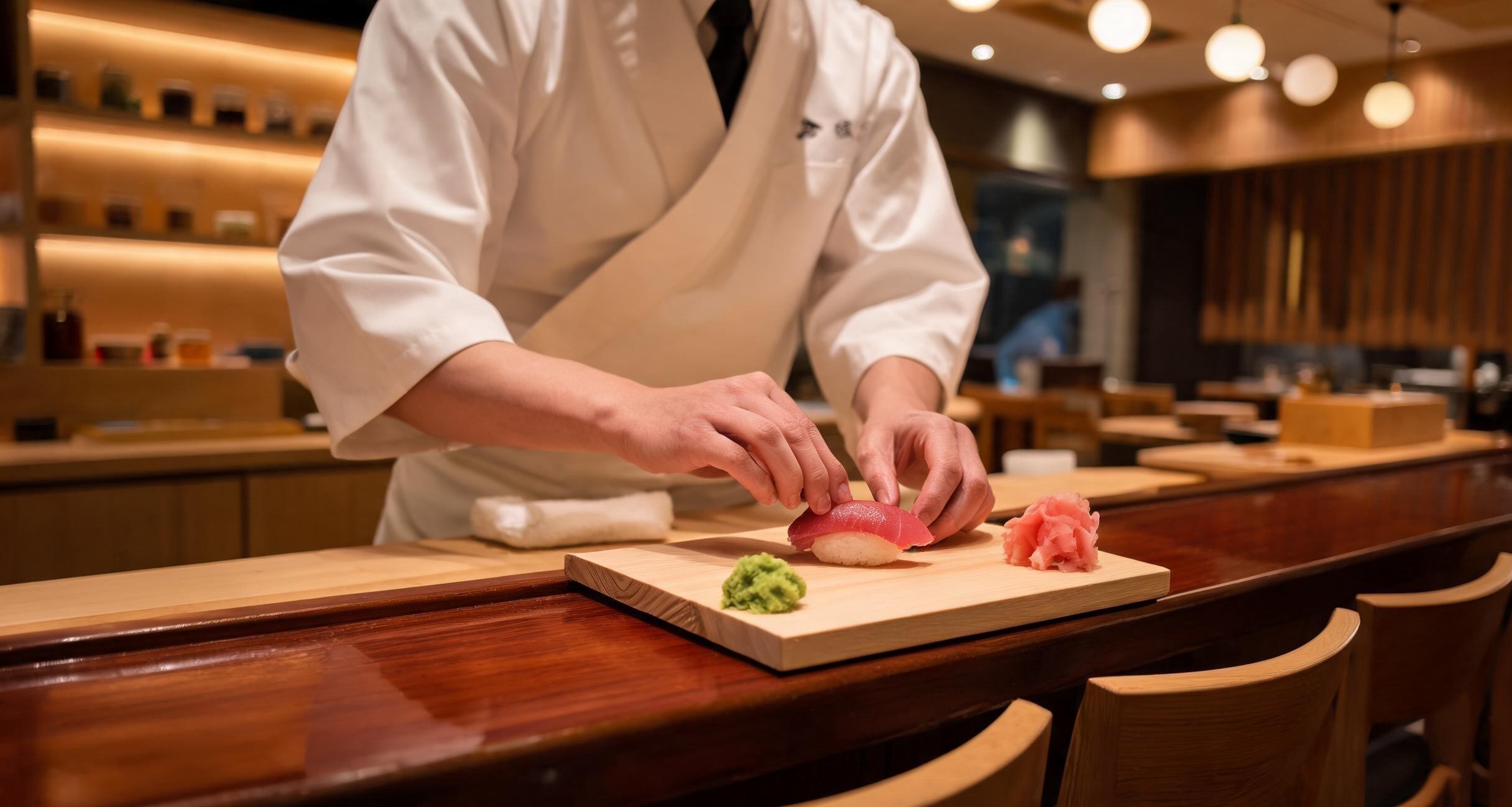
The sushi bar was on a narrow street in Ginza, down a set of stairs, with eight counter seats and no sign in English. I almost walked past it. My friend, who has lived in Tokyo for six years, led me down the stairs and we sat at the counter on a Tuesday afternoon. The chef was a quiet man in his fifties who nodded at us and did not offer a menu. He served what he had bought at the morning market, and the meal was one of the best lunches I have eaten at any price. Seven pieces of nigiri and a hand roll, thirty dollars total, and every piece of fish was better than anything I have had at sushi restaurants that charge three times as much. The lesson is not that expensive sushi is bad. It is that you do not need to spend a fortune to eat extremely well at a sushi counter in Tokyo.
The meal started with tai, red snapper, which had been lightly scored and dressed with a bit of ponzu. The texture was firm and clean, with a sweetness that surprised me. I usually find snapper mild to the point of bland, but this piece was different. The chef told my friend, who translated, that he had picked it up from a specific vendor at Toyosu market that morning. He had inspected it himself and rejected several fish before choosing this one. The care was evident. The next piece was akami, lean tuna from the loin, with a deep red color and a clean, meaty flavor. It was not the fatty otoro that people pay hundreds of dollars for. It was the everyday cut, and it was exceptional.
The third piece was hamaguri, a type of clam that I had never tried. The chef served it on a small piece of seasoned rice, the clam still slightly translucent. It was briny and sweet, with a texture that was somewhere between firm and tender. The fourth piece was aji, horse mackerel, which the chef scored and served with a dab of grated ginger and a thin slice of scallion. The ginger cut through the oiliness of the fish and gave it a sharp, clean finish. By the fourth piece, I realized that the chef was constructing a progression of flavors, from light to rich, from mild to assertive.
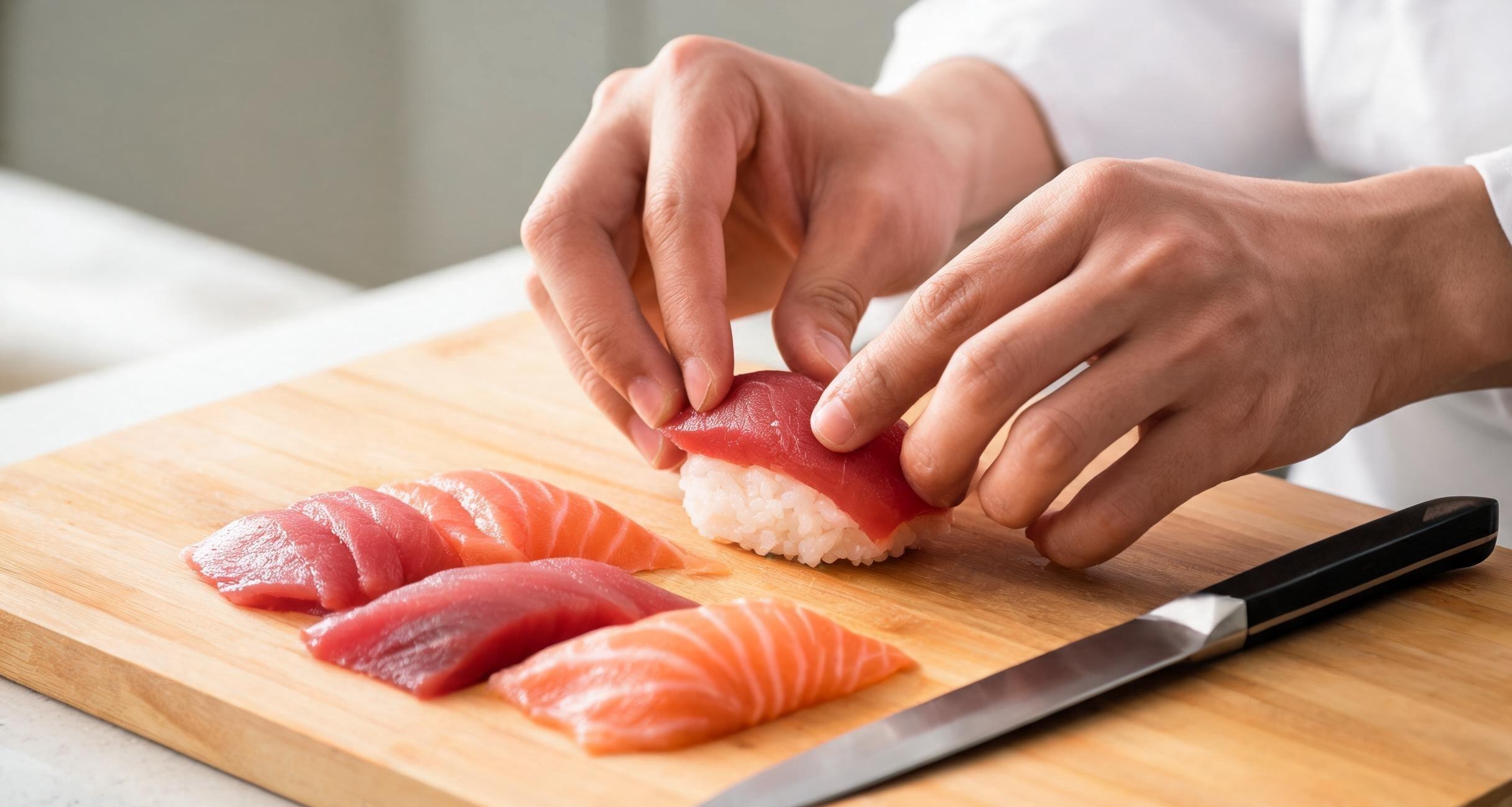
The fifth piece was salmon, lightly torched with a blowtorch so the fat on the surface rendered and the exterior developed a slight char. The inside was still cool and silky. The sixth was anago, saltwater eel, glazed with a sweet soy-based sauce and served warm. The anago was the richest piece so far, with a soft, yielding texture and a caramelized sweetness from the glaze. The final nigiri piece was tamago, the Japanese omelet, which the chef had made himself that morning. It was sweet and custardy, almost like a dessert, and it signaled the end of the nigiri portion of the meal.
The hand roll was tekamaki, a simple tuna roll wrapped in nori with sushi rice. The chef placed the roll on the counter in front of me, still warm from the rice, and told me to eat it immediately because the nori would soften. I did. The nori crackled, the rice was warm, and the tuna was clean and simple. It was the least complex thing I ate that afternoon, and it was perfect. I finished with a bowl of miso soup and a cup of green tea, and the total bill was about three thousand yen, roughly thirty dollars at the time.
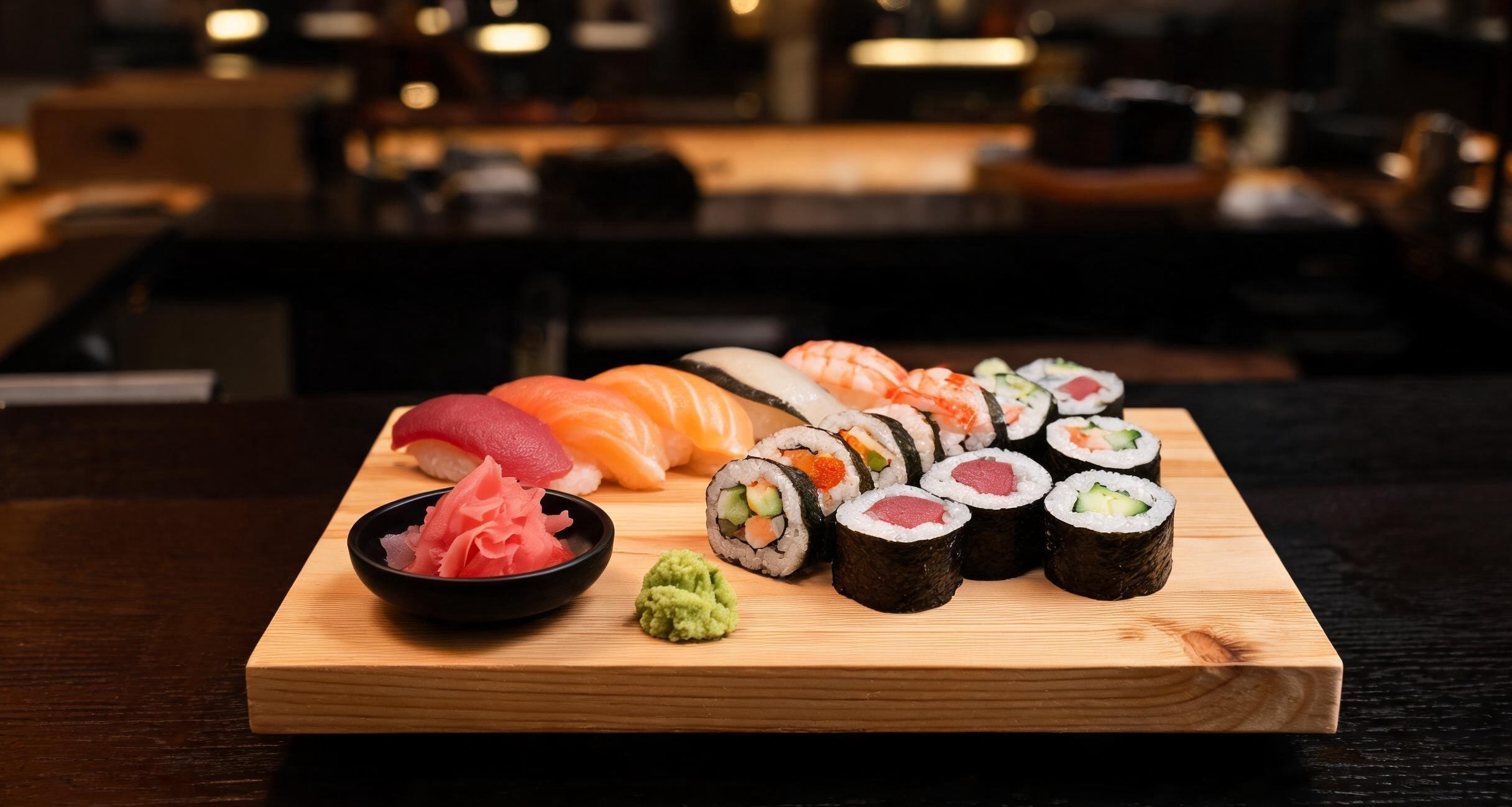
What I took away from this lunch was not that expensive sushi is a waste of money, though some of it surely is. It was that the relationship between a skilled chef and a good market can produce something extraordinary at a modest price. This chef was not famous. His restaurant was not in any guidebook I could find. He showed up at the market at five in the morning, picked the best fish he could find, and served it simply and skillfully at a small counter on a quiet street. That is the model that makes Tokyo the best city in the world for sushi, not the Michelin-starred temples where a meal costs hundreds of dollars. It is the small, anonymous counters, tucked into basements and side streets, where a chef who has been doing this for decades serves what the market gave him that morning and charges a fair price. Find one, sit at the counter, eat what he puts in front of you, and leave happy.
The rice is what separates a good sushi bar from a great one. At this price point, the chef was using a short-grain blend from Niigata, seasoned with red vinegar instead of the more common rice vinegar. Red vinegar gives the rice a slightly darker color and a deeper, almost nutty flavor that pairs better with lean fish. I asked the chef about it and he shrugged, saying it was just what his teacher had used. That kind of inherited decision-making is what makes eating at a counter in Tokyo different from eating sushi anywhere else. You are not just tasting the food. You are tasting decades of choices that nobody wrote down.