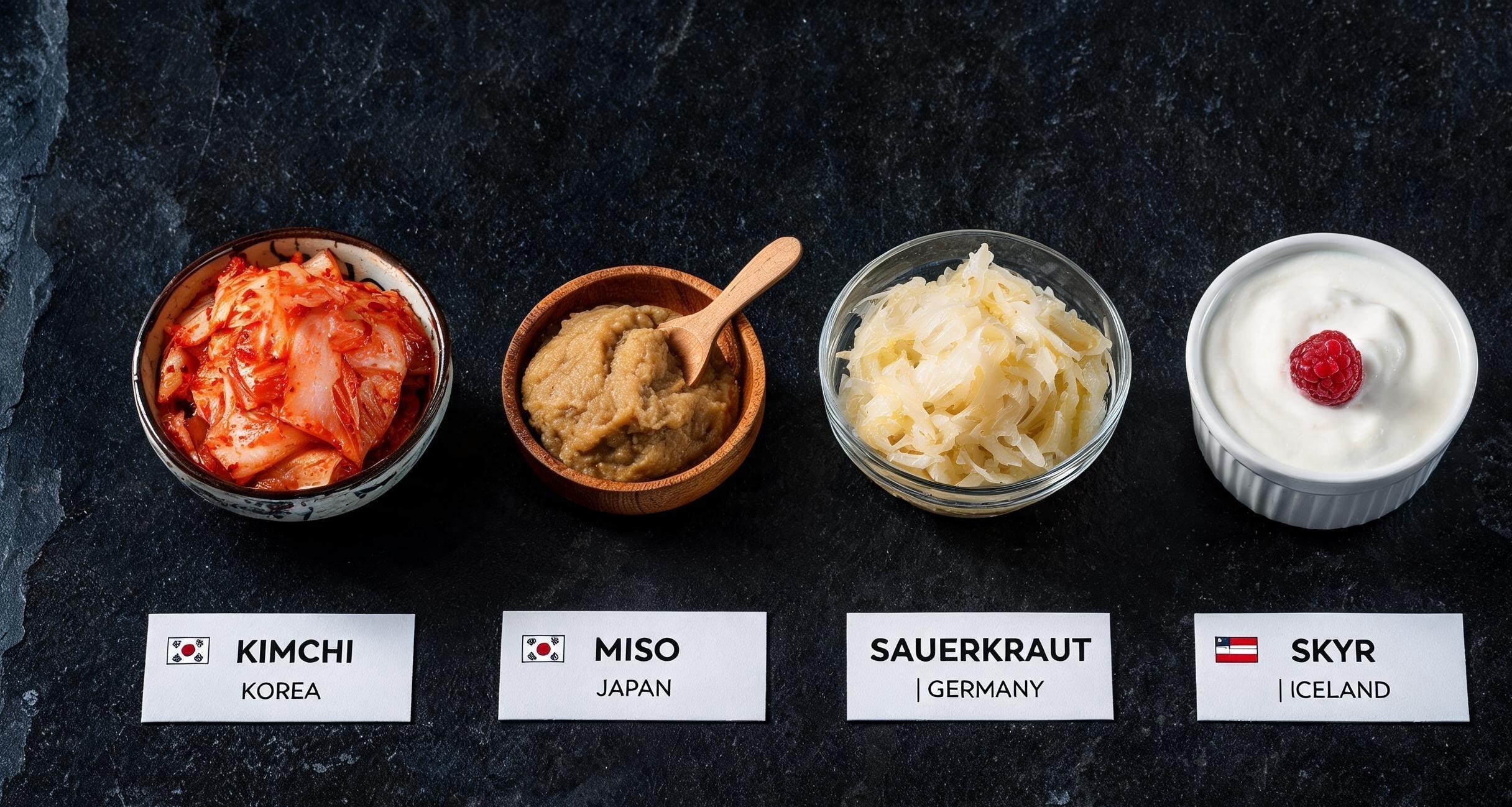
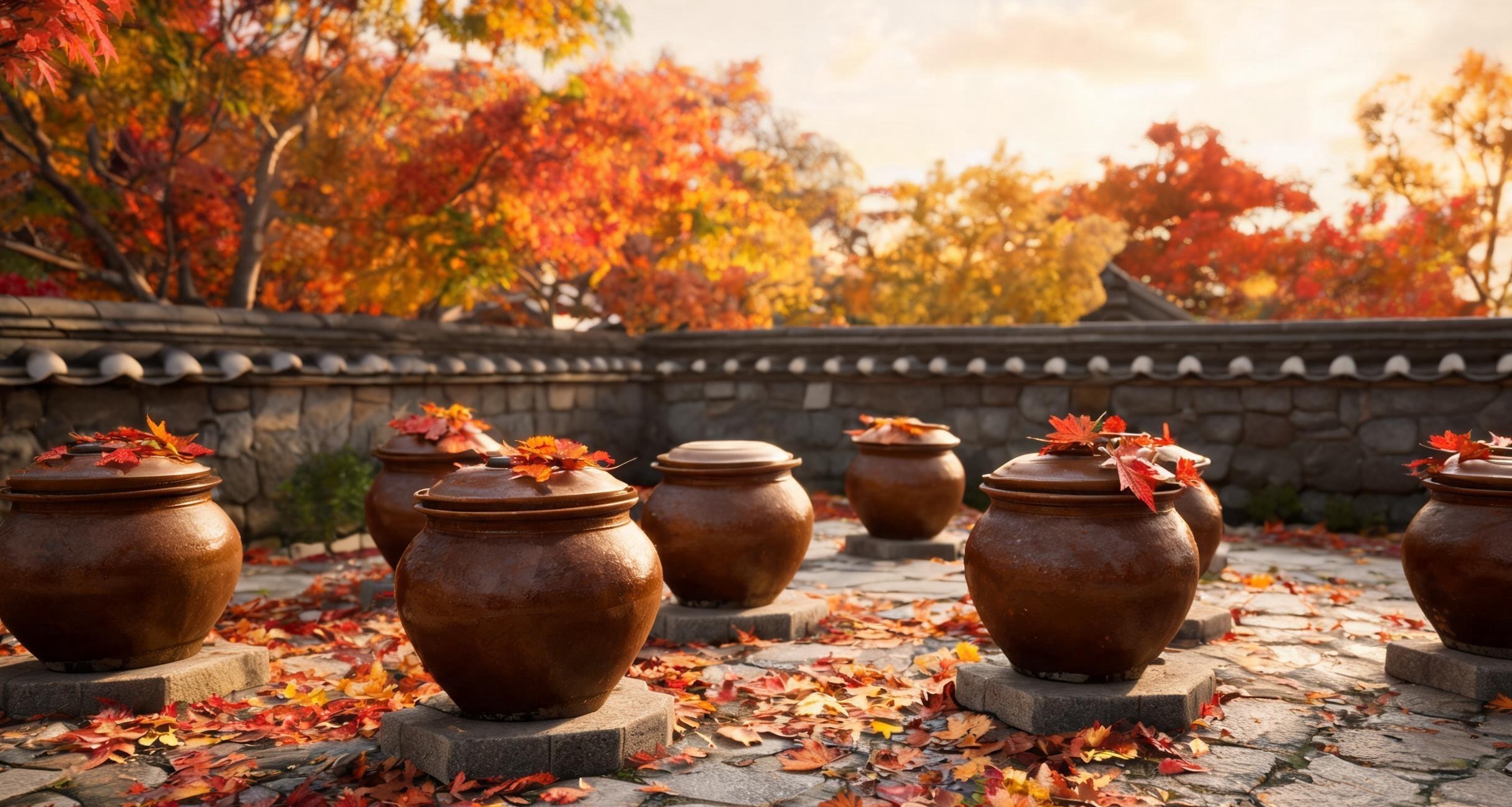
My grandmother kept a crock of kimchi in the corner of her kitchen in Seoul, and the smell of it was the first thing I noticed when I walked through the door. It was not a pleasant smell, exactly. It was sharp and sour and faintly sulfurous, like something was alive in there, which it was. The crock was an onggi, a traditional Korean clay pot that is unglazed on the outside, which means it is porous enough to let the ferment breathe while keeping out contaminants. My grandmother made kimchi every November, during the first cold snap, and the batch she made would feed the family through the winter. She never used a recipe. She had made it so many times that the proportions existed only in her hands and her memory. Napa cabbage, Korean radish, gochugaru, fish sauce, garlic, ginger, and jeotgal, a fermented shrimp paste that smelled even worse than the kimchi itself. She mixed it with her bare hands, packed it tightly into the onggi, and left it on the balcony for three days before moving it to the cool corner of the kitchen. After two weeks, the kimchi was ready. After a month, it was better. After three months, it was something else entirely, deeply sour and complex, and she would serve it with plain rice and nothing else.
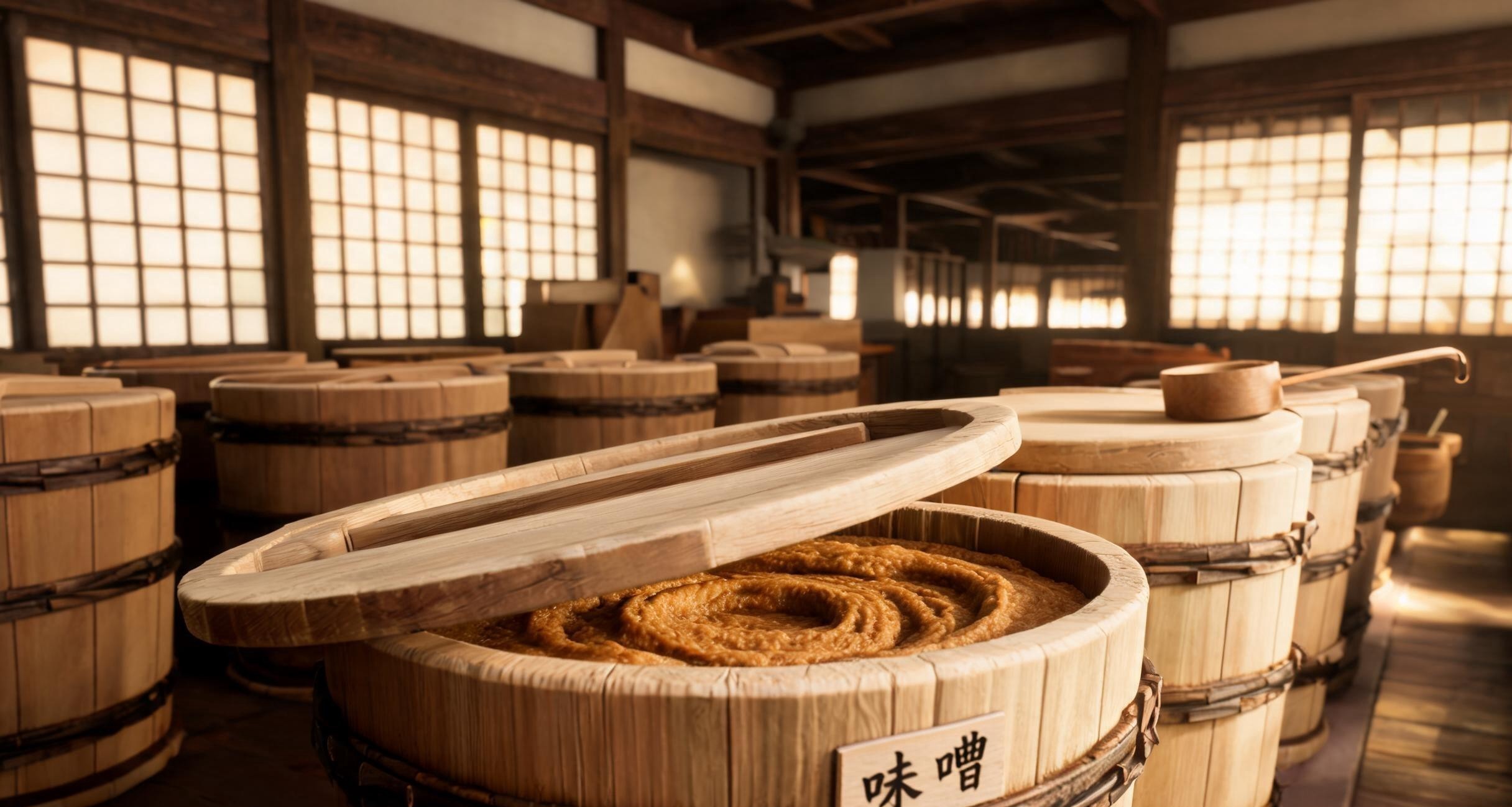
In Japan, miso is the fermentation tradition that most people know, and the production process is strikingly different from kimchi. Miso is made from soybeans, salt, and koji, a cultivated mold that converts the starches in the soybeans into sugars and then into alcohol and lactic acid. The mixture is packed into cedar vats and aged for anywhere from three months to three years, depending on the type. I visited a miso maker in Nagano prefecture who had been using the same vats for forty years, and he told me that the vats themselves contribute to the flavor because wild yeast and bacteria have colonized the wood over decades, creating a microflora that cannot be replicated in a new vat. The miso from his factory was dark and dense, with a caramel sweetness and an umami depth that the supermarket stuff, aged for six months in stainless steel, could not touch. He served me a bowl of miso soup made from his three-year aged miso, and it was one of the simplest and most satisfying things I have ever eaten. It tasted like the building, the wood, the climate, and the forty years of care that went into every batch.
German sauerkraut is the most straightforward of the fermented foods I have studied, and the most forgiving. Cabbage, salt, and time. That is it. The cabbage is shredded, mixed with salt at a ratio of about two percent by weight, and packed into a vessel, traditionally a large stoneware crock. The salt draws water out of the cabbage through osmosis, creating a brine that submerges the cabbage and creates an anaerobic environment where lactic acid bacteria can thrive. The bacteria consume the sugars in the cabbage and produce lactic acid, which lowers the pH and preserves the cabbage. The process takes three to six weeks at room temperature, and the result is a crisp, sour, slightly salty condiment that is served with sausages, pork, and potatoes across Germany. I visited a sauerkraut producer in Bavaria who ferments in wooden barrels the size of bathtubs, and he let me taste his product at different stages. At one week, it was sharp and almost spicy. At three weeks, it had mellowed and the sourness was clean and bright. At six weeks, it was complex, with a depth that reminded me of good wine. The same cabbage, the same salt, and time was the only variable.
Iceland has a fermented food tradition that most people outside the country have never heard of and fewer have tried. Surstrommur, which translates roughly to fermented shark, is made by gutting and beheading a Greenland or basking shark, burying it in a shallow grave of gravel and sand for six to twelve weeks, and then hanging it to dry for several months. The fermentation process breaks down the urea and trimethylamine oxide in the shark's flesh, which would otherwise be toxic. The resulting product has an aroma that I can only describe as a combination of ammonia and old cheese, and the taste is sharp, fishy, and challenging. I tried it once at a restaurant in Reykjavik and I will not be trying it again. But the logic behind it is sound: Iceland is a country with a short growing season, limited fresh food, and a long winter, and fermentation was a survival strategy. The fact that Icelanders still eat surstrommur today, more as a cultural practice than a dietary necessity, says something about the hold that fermented foods have on a culture. They are not just food. They are memory, history, and identity, stored in a jar or a barrel or a buried shark.
What connects kimchi, miso, sauerkraut, and surstrommur is not the specific ingredients or the specific techniques. It is the principle: take something fresh, add salt or bacteria or both, and let time do the work. Fermentation is the oldest food preservation method in the world, predating cooking, predating agriculture, predating civilization. Every culture on earth has at least one fermented food, because fermentation is what happens when you have surplus food and you need to keep it from spoiling. The specific ferments vary by climate, by available ingredients, and by cultural preference, but the underlying process is the same: microorganisms eat sugars and produce acid, which preserves the food and transforms its flavor. What started as a practical necessity became, over thousands of years, a cooking tradition with its own aesthetics, its own rituals, and its own heroes. My grandmother with her kimchi on the balcony. The miso maker in Nagano with his cedar vats. The sauerkraut producer in Bavaria with his wooden barrels.
The thing about fermentation that I keep coming back to is the patience it requires. You cannot rush it. You cannot microwave it. You cannot improve it by adding more salt or more sugar or more anything. You mix the ingredients, you put them in a container, and you wait. In a world where everything is available immediately, where food can be delivered in twenty minutes and recipes can be made in an instant pot, fermentation is an act of resistance. It says that some things cannot be accelerated, that time is an ingredient, and that the best flavors are the ones that develop slowly, in the dark, without anyone watching. My grandmother knew this. The miso maker in Nagano knows this. The sauerkraut producer in Bavaria knows this. They do not need science to tell them that fermentation works. They have tasted the results, year after year, and they trust the process. That trust is the foundation of every fermented food tradition in the world.