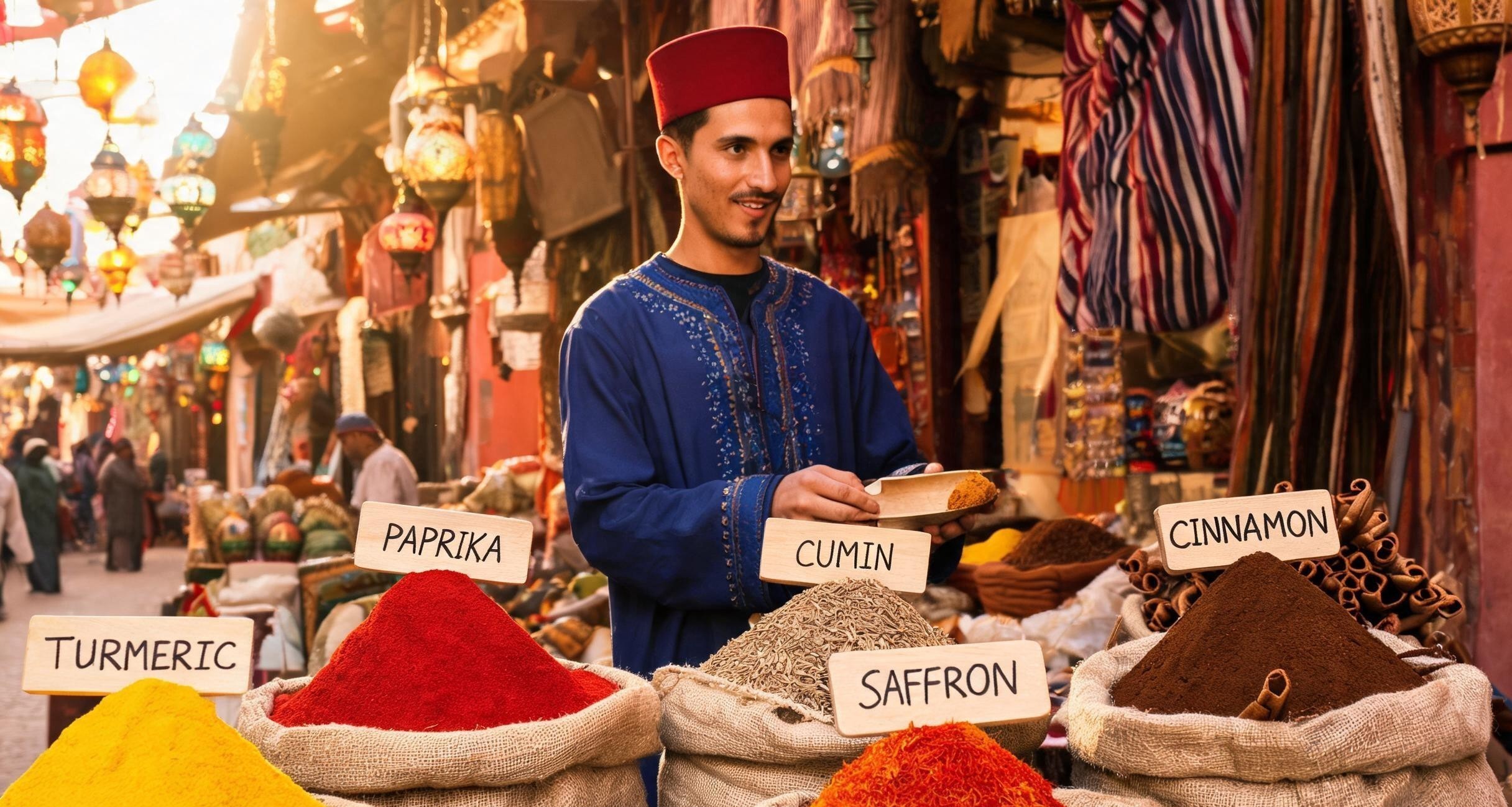
The first spice I bought in Marrakech was saffron, and it was fake. I know this now, but I did not know it then, standing in a narrow stall in the souk where the walls were lined with burlap sacks full of brightly colored powders and the air was thick with cumin and cinnamon. The vendor, a smiling man in a djellaba, held up a small plastic bag of thin red threads and told me it was the best saffron in Morocco, hand-harvested from the fields outside Taliouine. The price was reasonable, about fifteen dollars for a gram, which I later learned was exactly the price point where fake saffron lives. Real saffron costs more than that. Much more. The threads I bought were safflower, a completely different plant that looks vaguely similar when dried and dyed. It has no flavor worth mentioning. I used it in a paella a week later and wondered why the rice was not turning yellow. That was my introduction to the Marrakech spice market, and it was a useful one, because it taught me the only rule that matters: assume everything is a negotiation, and verify everything before you pay.
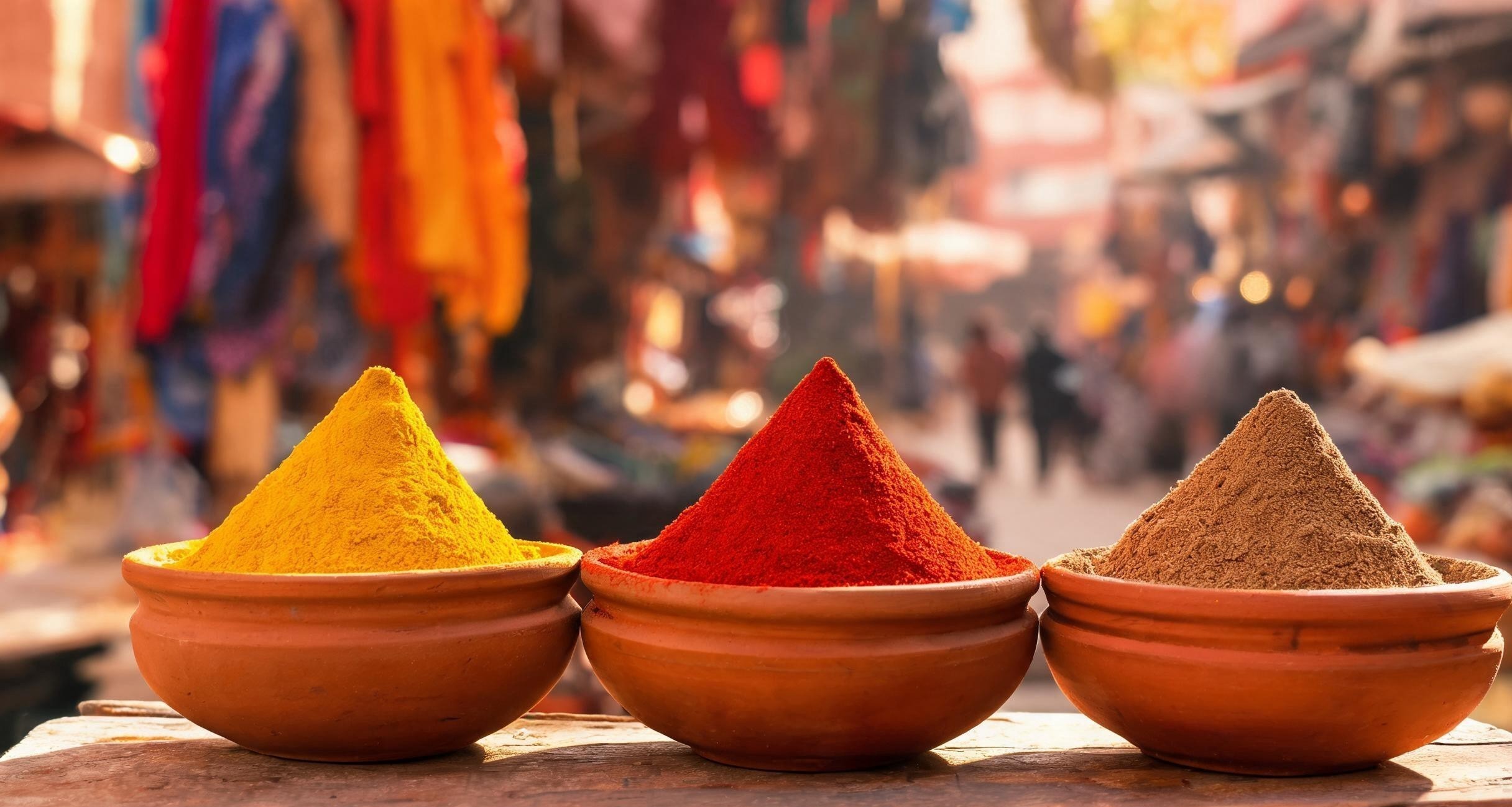
The spice market, or herboristerie, is in the northern part of the medina, near the Rahba Kedima square. The stalls are small, often no bigger than a walk-in closet, and they are packed floor to ceiling with spices, dried herbs, soaps, argan oil, and assorted apothecary items. The colors are what hit you first: pyramids of bright yellow turmeric, deep red paprika and cayenne, green cumin seeds, brown cinnamon bark, pale pink rosebuds, and the purple of dried lavender. The display is beautiful and intentional. The vendors arrange the spices in cones and mounds to catch the eye of passersby, and the visual impact is the first step in a sales process that has been refined over centuries. The most photogenic stalls are not necessarily the ones with the best products. They are the ones with the best displays.
After the saffron incident, I went back to the market with a Moroccan friend who worked as a translator for tourists. She walked me through the stalls and pointed out what was worth buying and what was not. Good buys include ras el hanout, the Moroccan spice blend whose name translates to "head of the shop" because it traditionally contains the best spices the merchant has. A proper ras el hanout can contain twenty to thirty spices, including cumin, cinnamon, coriander, turmeric, black pepper, cardamom, clove, ginger, nutmeg, and dried rosebuds. Every vendor makes their own blend, and the quality varies. My friend told me to smell it before buying. A good ras el hanout should be complex and aromatic, with no single spice dominating. If it smells overwhelmingly of cumin or cinnamon, the blend is unbalanced or the vendor is using cheap spices to fill it out.
Other good buys include argan oil, which is pressed from the nuts of the argan tree that grows only in southwestern Morocco. Real argan oil has a nutty, slightly toasty flavor and is used both for cooking and as a skin treatment. The cosmetic grade and the food-grade grade are different, and they are priced differently. The vendors sometimes mix them or sell the cheaper cosmetic grade as food-grade oil. The way to tell is the smell: food-grade argan oil has a stronger, more toasted aroma, while cosmetic oil is milder and more neutral. My friend also recommended buying preserved lemons, which are sold in jars and used in tagines and salads. Good preserved lemons are soft and salty with a bright, fermented flavor. Bad ones are hard and overly salty with no complexity. Open the jar and smell before you buy. Dried lavender, cumin seeds, and cinnamon bark are also reliable purchases, though you should compare prices across a few stalls before committing.
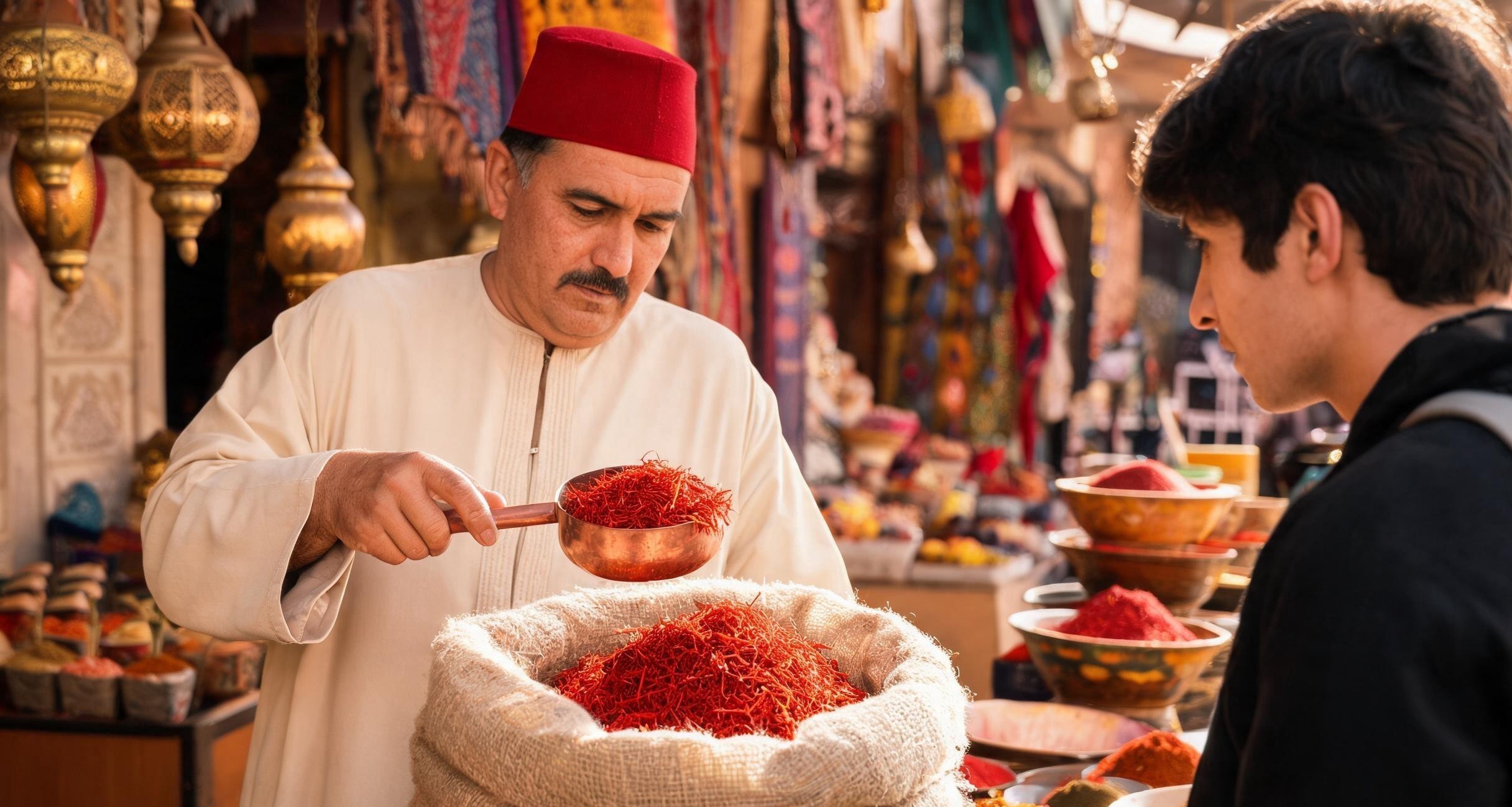
The scams in the spice market are not always malicious. Some vendors genuinely believe that their safflower is saffron, or that their diluted argan oil is the real thing. But some are deliberate. The most common trick is the free tea ceremony. You walk into a stall, the vendor offers you mint tea, you sit down and drink it while he shows you his wares, and the social obligation of the tea creates pressure to buy something. The tea is nice and the hospitality is real in many cases, but you should not feel obligated. Thank the vendor, finish your tea, and leave if you are not interested. The other common trick is the bulk discount. The vendor quotes you a price per kilo that sounds cheap, but you do not need a kilo of anything, and the small bags he eventually offers are more expensive per gram than the bulk price suggested. Carry a small notebook, write down prices as you go, and compare before you buy. The spice market in Marrakech is one of the most visually striking markets in the world, and you can come home with excellent spices if you keep your eyes open and your wallet closed until you are sure.