Most people show up at Oktoberfest thinking the main event is the beer. I showed up thinking the same thing, and for the first two hours, I was not wrong. The Hofbrauhaus tent was loud, packed, and chaotic in the way that only a party with ten thousand people holding liter steins can be. But by early afternoon, hungry in a way that only heavy drinking makes you, I followed a group of locals toward the back of the Theresienwiese grounds, away from the big tents, toward the food stalls. That walk changed the entire trip. The beer was fine. The food was the reason to come back. I had expected sausages on buns and pretzels the size of steering wheels, and those things were there, but they were the surface level of a food scene that runs much deeper and far more interesting than anything being sold inside the beer tents.
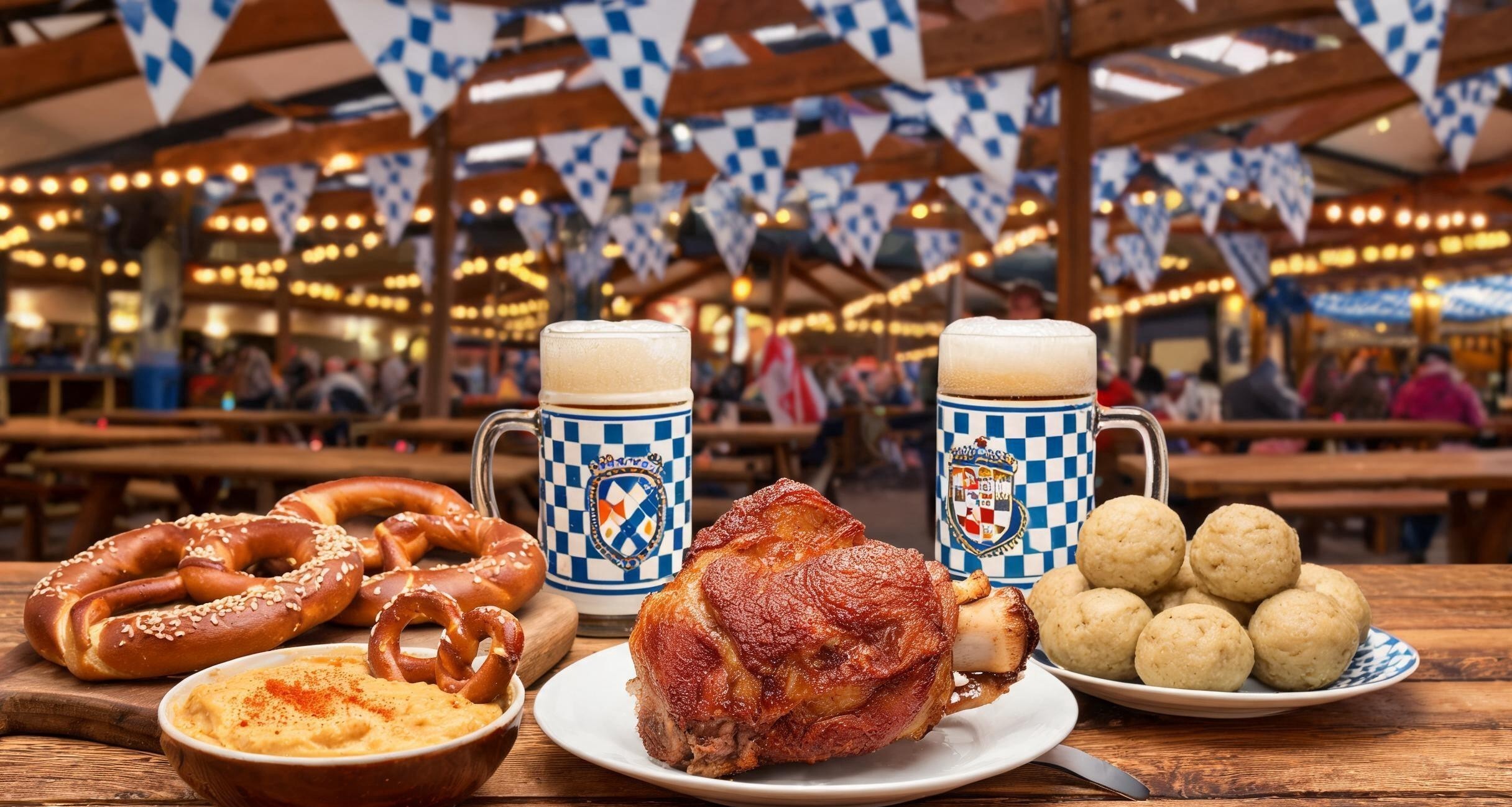
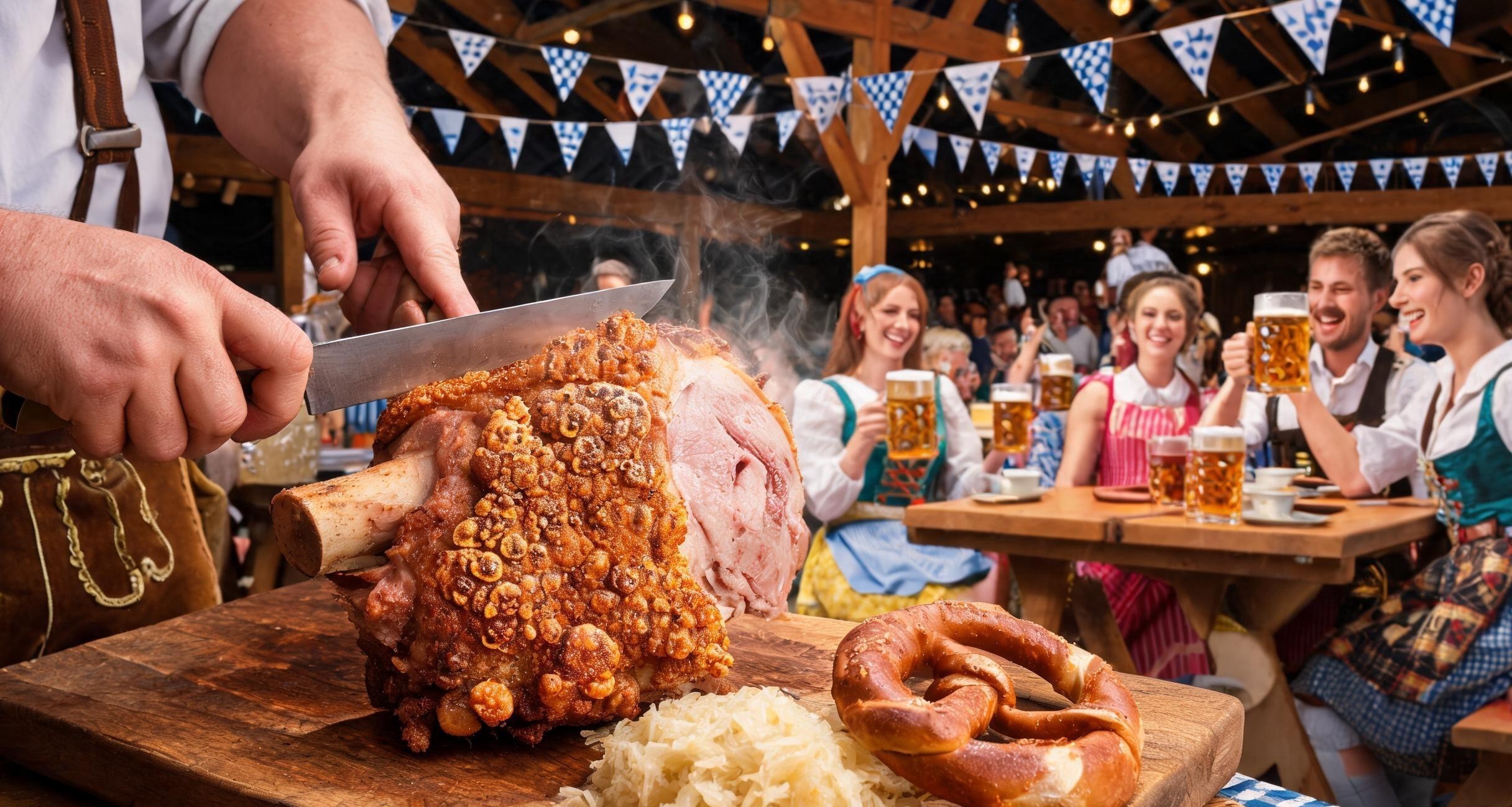
Schweinshaxe, a roasted pork knuckle, is the dish that separates the Oktoberfest regulars from the tourists who eat nothing but pretzels. I ordered one at a stand run by a woman named Helga, who had been working the festival for twenty-three years. The knuckle arrived on a wooden board, the skin blistered and crackling, the meat underneath so tender it fell from the bone with the lightest push of a fork. She served it with potato dumplings called knodel, which are dense and starchy in a way that sounds unappealing but makes perfect sense once you drag them through the pork jus pooled on the board. Helga told me she sells between two and three hundred portions a day during the festival. At sixteen euros each, I understood why she had been coming back for over two decades. The pork is rubbed with caraway and salt and roasted at high heat until the skin blisters and crisps, while the meat underneath braises in its own fat for hours.
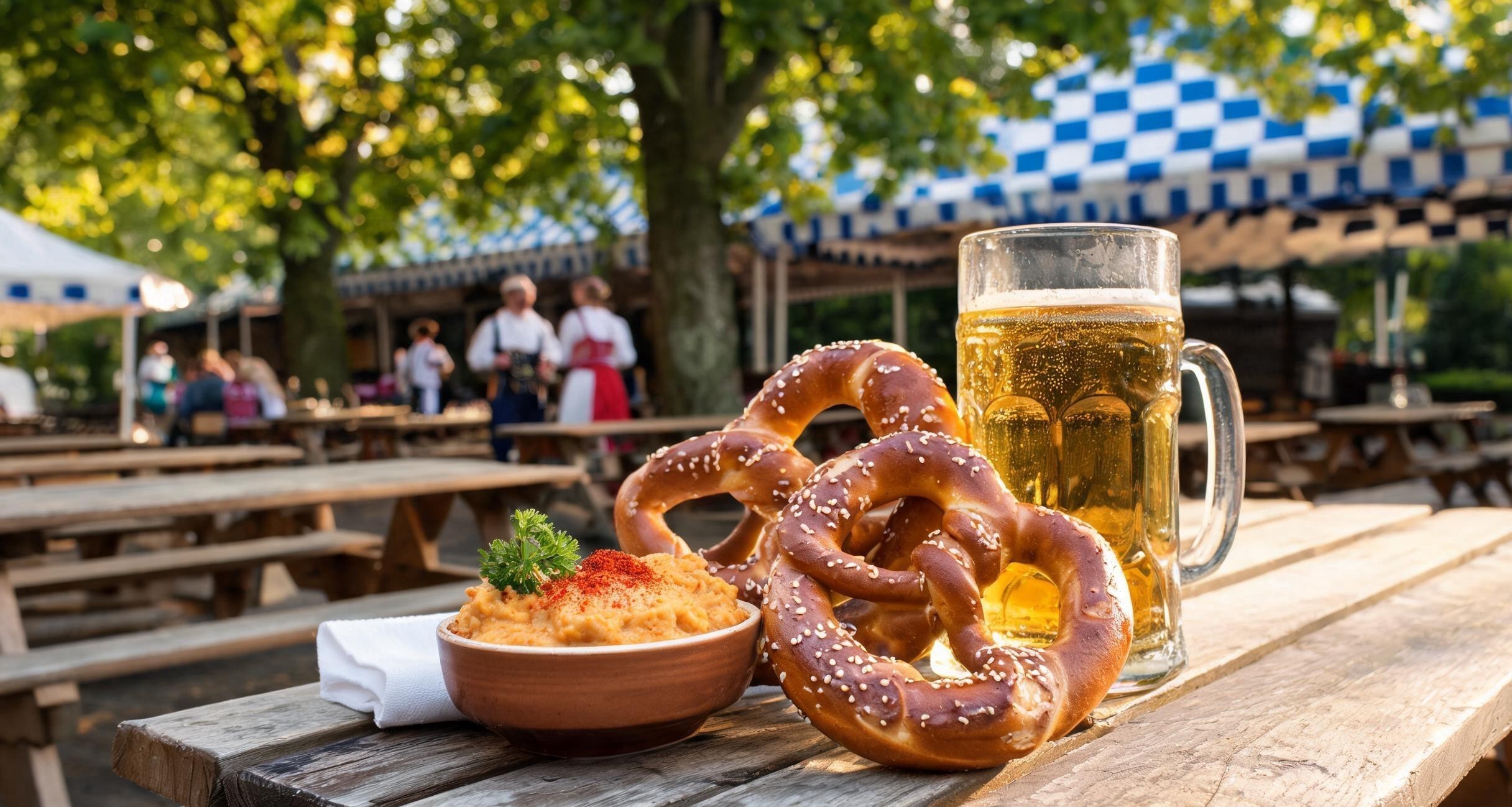
Obatzda is another thing visitors walk right past without knowing what it is. It looks like a pile of something a toddler made. In reality, it is a mix of aged Camembert, butter, beer, and paprika, mashed together and spread thick on dark bread. I had it at a small counter inside the Ochsenbraterei tent, one of the oldest operating tents at Oktoberfest, and the bartender, a guy named Thomas who was pouring beer one-handed while slicing bread with the other, told me that obatzda used to be a way for Bavarian families to use up cheese that was getting too strong to eat on its own. Now it is a staple. The salty, funky spread with the sharp bite of raw onion on dense rye bread is one of those combinations that makes you wonder why it has not caught on everywhere. I ate three slices, each one thick with the spread, and followed it with another liter of beer. Thomas told me that during the festival he goes through forty kilograms of Camembert a week.
The weisswurst, a pale white sausage made from veal and pork back bacon, comes with its own set of rules. Tradition says you should never eat weisswurst after noon, a rule that originated in Munich and still holds weight among older Bavarians. I broke the rule at two in the afternoon and no one called the police, but Thomas gave me a look. You peel the casing off with a fork, dip the sausage in sweet mustard, and eat it with a soft pretzel and a glass of wheat beer. The meat is delicate, almost mild, with a faint hint of lemon and parsley. It is not the kind of sausage that announces itself. It is quiet food, meant to be eaten standing up, quickly, before the casing cools and becomes difficult to remove. The pretzels that come with it are soft and warm, dusted with coarse salt, and they serve the same purpose that bread does with pate: a neutral vehicle for something richer.
For dessert, there is Kaiserschmarrn, a torn pancake dusted with powdered sugar and served with applesauce or plum compote. The name roughly translates to emperor's mess, which is exactly what it looks like on the plate: shredded, caramelized pieces of pancake, some crispy, some soft, piled high. I ate it at a stall near the southern end of the grounds, sitting on a bench next to a family from Nuremberg who were on their twelfth consecutive year of attending Oktoberfest together. The father told me they skip the beer tents entirely now and just eat their way through the food stalls. After trying the Kaiserschmarrn, I understood why. It is warm, sweet, and messy, and it tastes like something a grandmother would make if your grandmother had unlimited access to butter and a cast-iron griddle the size of a manhole cover. The pancake is made from a batter of eggs, flour, milk, and raisins, cooked in butter until golden.
I left Oktoberfest on my last afternoon with a dinkelbrot, a dense spelt bread, stuffed with roasted pork loin and horseradish cream, bought from a stall I had walked past a dozen times without stopping. It was the best thing I ate all week. The bread was chewy and nutty, the pork was thinly sliced and still warm, and the horseradish cut through everything with a sharpness that cleared my head after four days of heavy food and heavier beer. I ate it standing in the parking lot, watching families pack up their things and the tent crews start taking down the decorations. A man next to me was eating the same thing, and we nodded at each other in the way that people do when they are both eating something good and have no reason to speak. Oktoberfest is a beer festival, sure. But the food is the part that stays with you after you fly home and the headache fades.