I started making focaccia because I was afraid of every other bread. Sourdough felt like a commitment I was not ready for. Bagels demanded precision I did not have. But focaccia is just flour, water, yeast, salt, and a staggering amount of olive oil. The dough is wet and sticky and kind of a mess to handle, but that is the point. You do not need to knead it in any traditional sense. You fold it a few times, let it rise, stretch it into a pan, and wait. The oven does the rest. My first focaccia was far from pretty, but it tasted like something I would have paid good money for at an Italian bakery. I have made it at least twice a month ever since.
The high hydration in focaccia dough, typically around 80 to 85 percent water to flour by weight, is what gives the bread its characteristic open crumb and pillowy texture. This also makes it sticky and slightly intimidating to work with if you are not used to wet doughs. The solution is olive oil. Coat your hands, the bowl, and the sheet pan with it, and the dough will slide around without sticking to everything. I use a light, fruity olive oil for the dough itself and save the good stuff, the peppery, green, expensive oil from Puglia, for drizzling on top at the end. The cheap oil goes into the pan. The good oil goes on the bread.
My go-to recipe uses 500 grams of bread flour, 400 grams of warm water, 7 grams of instant yeast, 10 grams of salt, and about 60 milliliters of olive oil in the dough, with more for the pan. Mix the flour, water, and yeast until combined, let it rest for 15 minutes, then add the salt and oil. Fold the dough over itself a few times in the bowl, cover it, and leave it at room temperature for about an hour. Then fold it again and put it in the fridge for a slow overnight rise. The cold ferment builds flavor and makes the dough easier to stretch the next day. If you are in a hurry, you can skip the fridge and let it rise at room temperature for a total of about 4 hours, but the flavor will be noticeably better with the overnight rest.
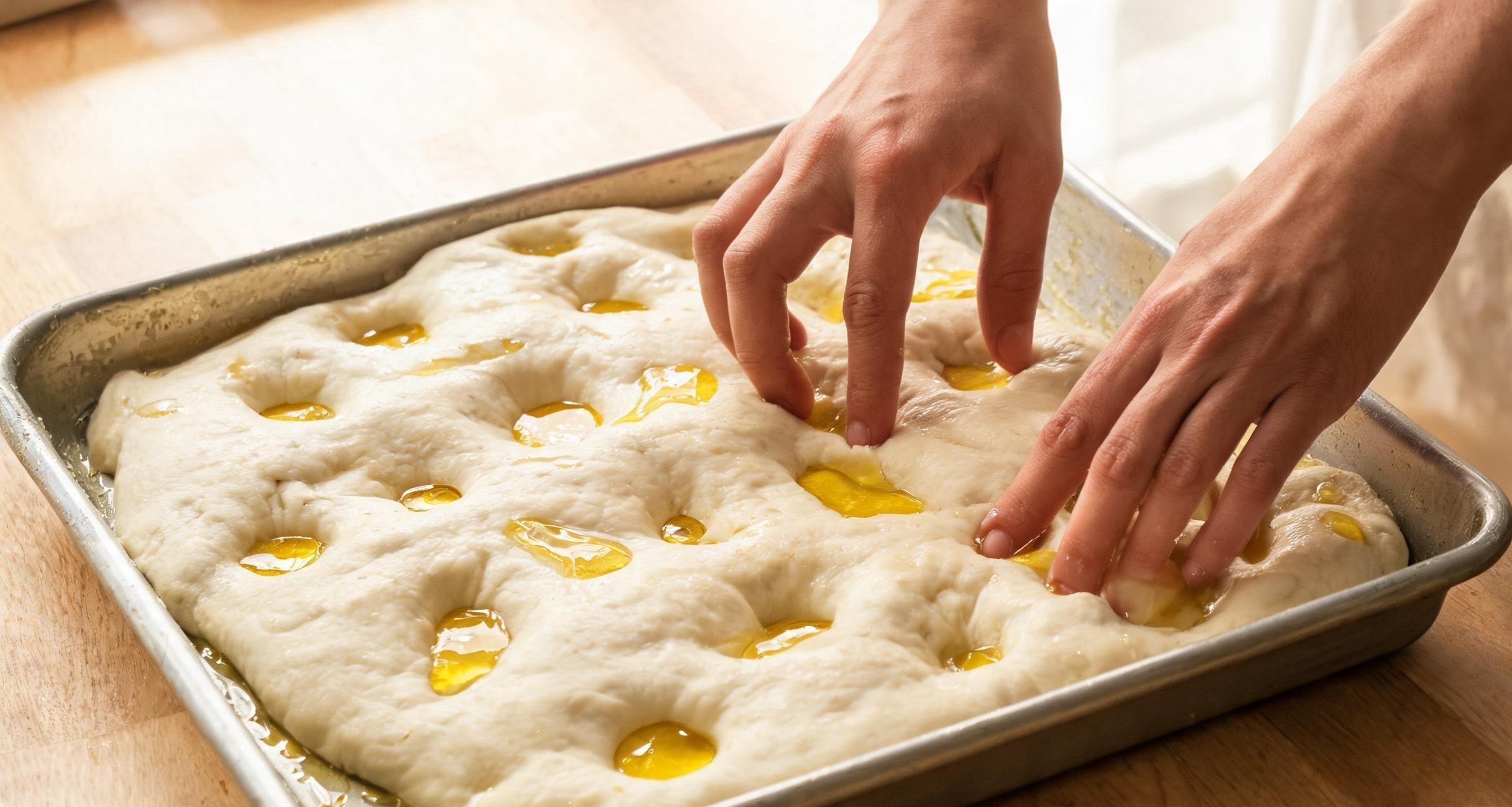
The next morning, or whenever you are ready to bake, pour a generous amount of olive oil into a half-sheet pan and transfer the dough into it. Let it sit for about 30 minutes to relax, then gently stretch it toward the edges of the pan. If it resists, wait ten minutes and try again. Do not force it. The dimpling step, where you press your fingers all over the surface to create those characteristic little pockets, is not just decorative. Those dents hold the olive oil and create crispy wells on the top. Let the dough rise one more time, about an hour, until it puffs up visibly.
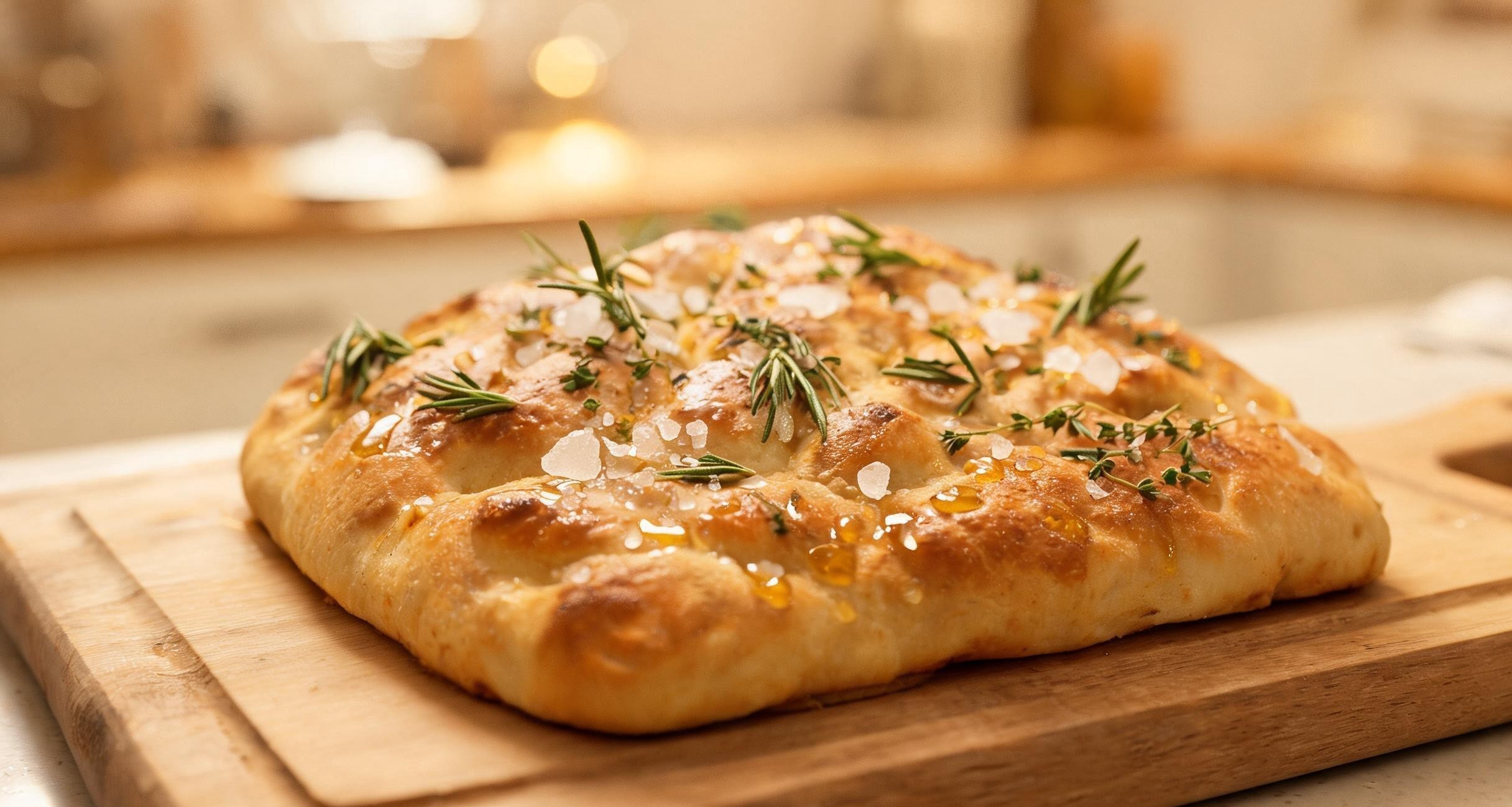
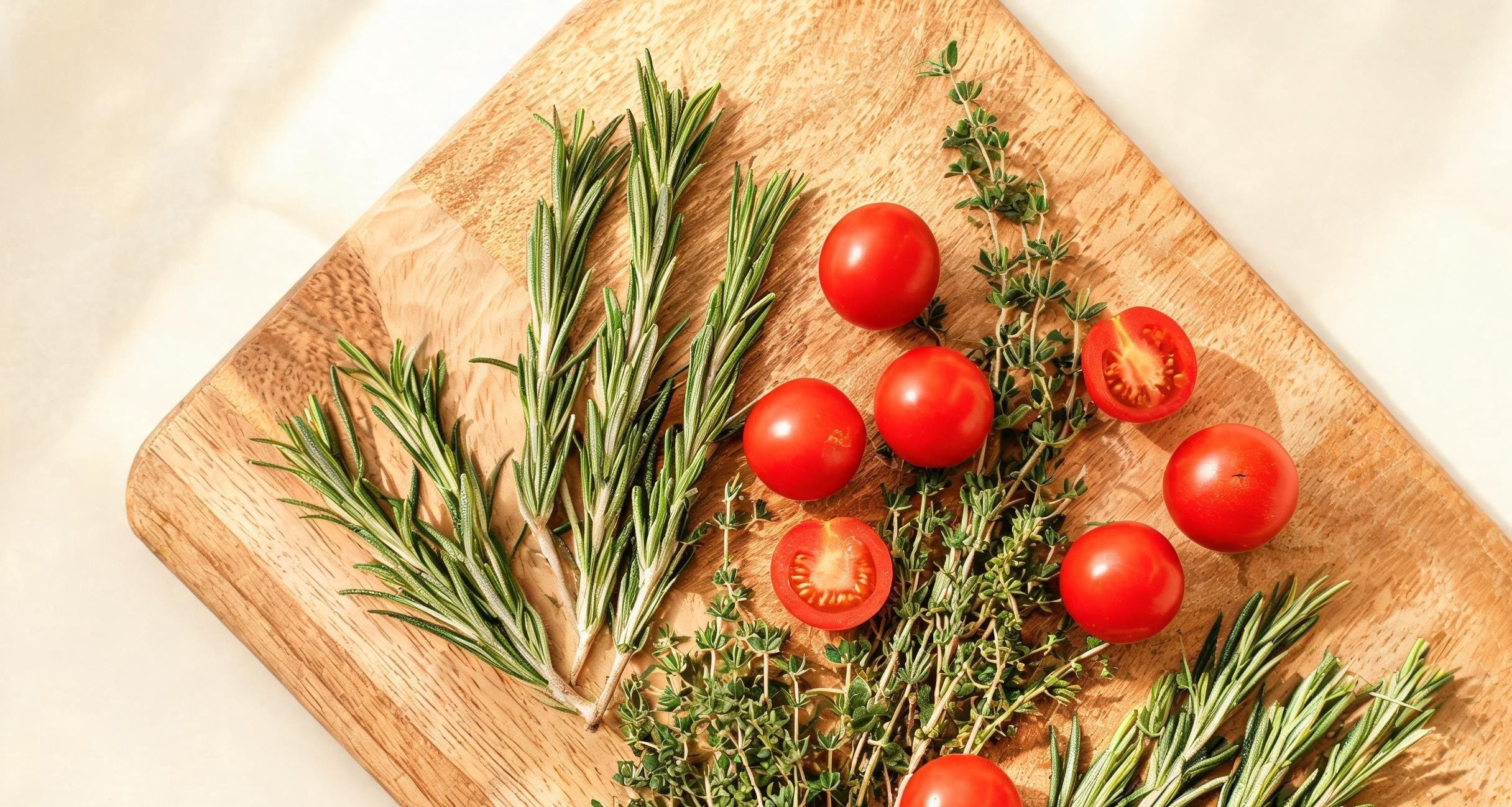
Before baking, I press fresh herbs into the surface. Rosemary is the traditional choice, and it is a good one, but do not stop there. Thyme, oregano, and thinly sliced garlic all work. Last summer I used cherry tomatoes from the garden, pressing them into the dough cut-side down, and the result was spectacular. Flaky sea salt on top is essential. Kosher salt works in the dough but the topping needs something flaky and coarse, like Maldon, that crunches between your teeth and contrasts with the soft bread.
Bake at 425 degrees for about 25 minutes. The focaccia should be deeply golden on top and sound hollow when you tap the center. Let it cool for at least ten minutes in the pan before slicing, because the olive oil pooled in those little wells is extremely hot. I have burned my tongue more times than I care to admit by not following my own advice. Focaccia is best the day it is made, but it reheats beautifully in a 375-degree oven for about five minutes. I have also used leftover focaccia to make the best grilled cheese sandwiches of my life, because the olive oil in the bread crisps up in the pan and adds a richness that regular bread cannot match. It will not last long anyway. The combination of a crispy olive-oil crust and a soft, airy interior is hard to resist, and this is one bread where you really can let the toppings reflect what you have on hand or what is growing outside your door. If you have never made bread before, start here. The dough forgives almost every mistake. The olive oil masks any dryness. The herbs make it look like you know what you are doing. And the first time you pull a golden, dimpled, herb-studded rectangle out of the oven, you will understand why people who bake bread keep doing it.