In 1998, I walked into a bakery in a small town outside Lyon and asked for a baguette. The woman behind the counter handed me a soft, pale, pre-packaged loaf wrapped in cellophane. It cost about one franc and it was, without exaggeration, the worst bread I had eaten in France. The crust was thin enough to peel off with my fingers, and the inside was dense and slightly sweet, more like supermarket bread than anything a real bakery should produce. I ate half of it and threw the rest away. What I did not know at the time was that this bakery, like thousands of others in France during the 1980s and 1990s, had stopped making bread by hand and had switched to frozen par-baked loaves from industrial suppliers. The bread arrived at the shop partially baked, frozen, and the staff finished it in the oven. It looked like bread and it was warm when you bought it, but it was not bread in any meaningful sense. The 1993 bread decree was France's response to this crisis, and it is one of the most interesting food laws in the world.
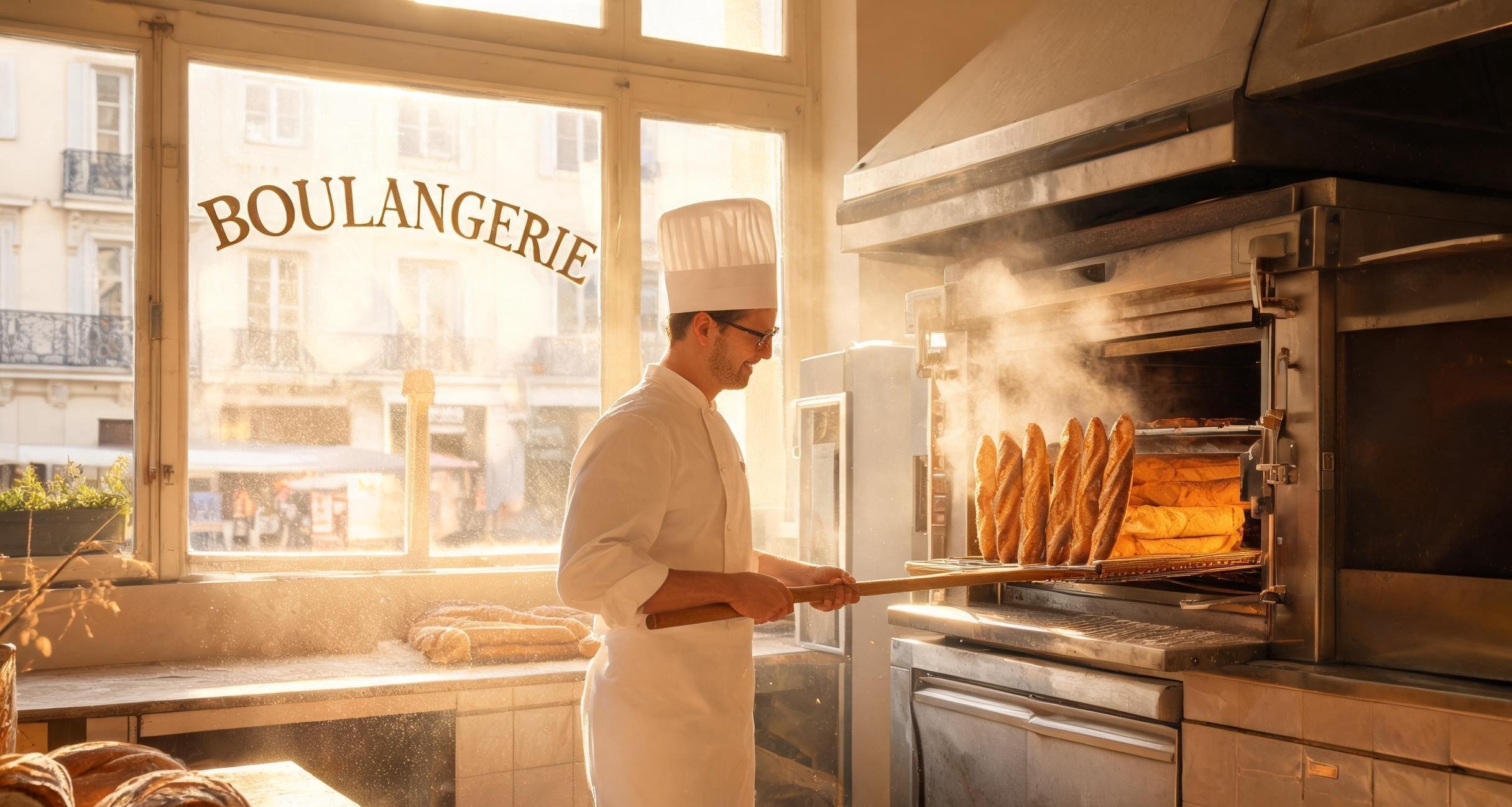
The 1993 decree, formally known as the Decret Pain, established a legal definition for what could be sold as a baguette de tradition francaise. To qualify, the bread must be made entirely on the premises where it is sold. It must contain only wheat flour, water, salt, and yeast or sourdough. No additives, no preservatives, no ascorbic acid to speed up the fermentation, no frozen dough, no pre-based loaves from a factory. The dough must be fermented for a minimum of time, shaped by hand or by approved mechanical means, and baked in the shop's own oven. The law did not ban industrial bread. It simply created a protected category that consumers could trust. If a bakery displays the sign baguette de tradition, you know it was made by hand on that site. If it does not display the sign, it might be factory bread finished in a shop oven, and you can decide for yourself whether that is what you want.
The law was controversial when it was passed. Industrial bakers argued that it was protectionist, that frozen bread served a market need, and that quality could be achieved with modern methods. Artisanal bakers argued that it did not go far enough, that it still allowed too many compromises, and that the real problem was supermarket bread masquerading as bakery bread. Both sides had a point. The compromise that emerged in the final text was imperfect but effective. Within five years of the decree, the number of French bakeries making bread by hand had stabilized and begun to increase. Within ten years, a new generation of bakers had entered the profession, drawn by the possibility of making a living from real bread. Today, France has roughly 33,000 bakeries, and the vast majority of them produce at least some bread under the tradition designation. The law worked, not because it was perfect, but because it gave consumers a clear choice and bakers a reason to do the work.
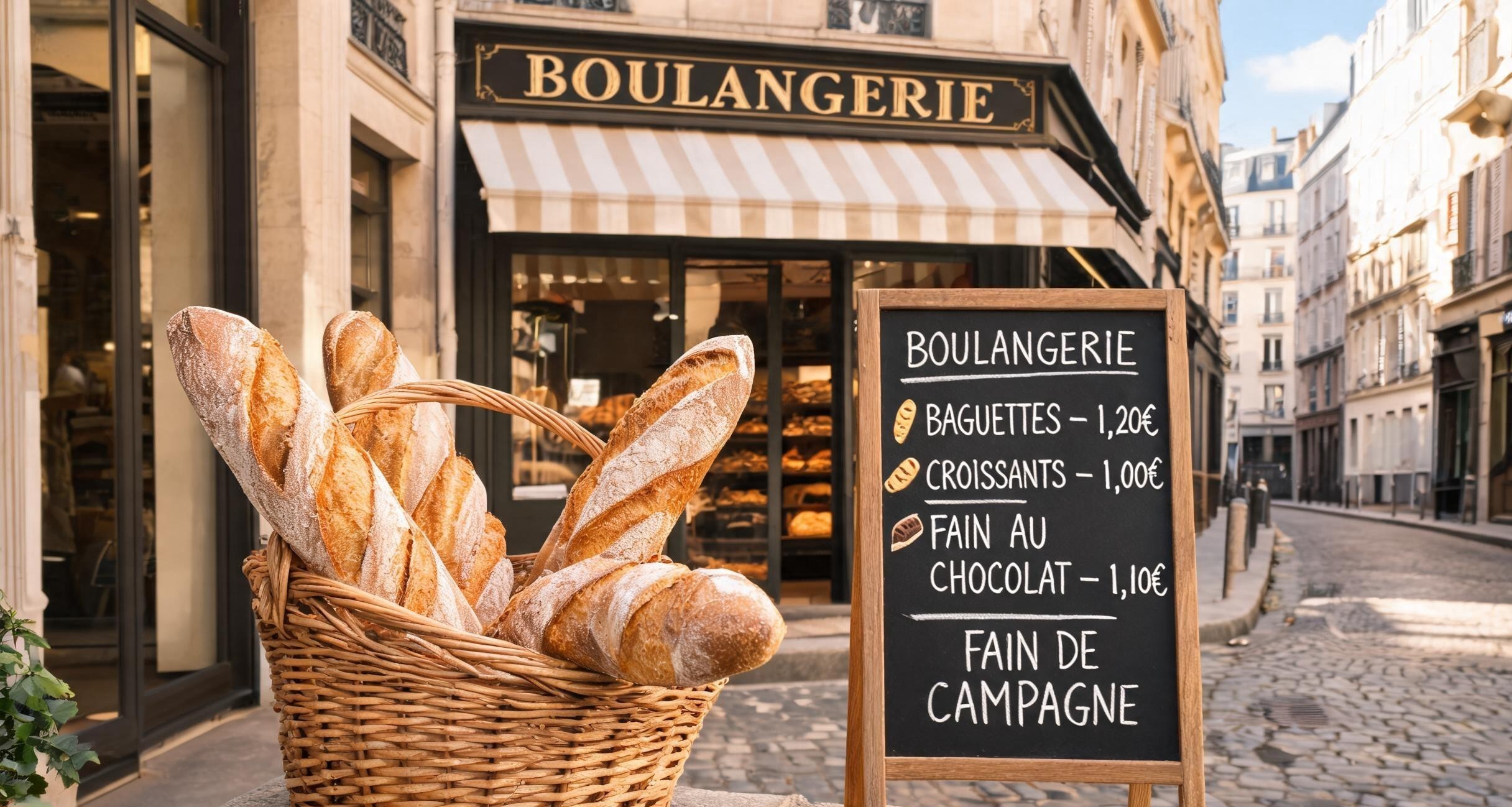
The economics of bread in France are worth understanding because they are different from the economics of bread anywhere else. A baguette de tradition costs roughly the same everywhere in France, usually between one euro and one euro thirty. The price is not regulated by the government, but it is effectively regulated by competition and culture. A bakery that charges significantly more for its baguette will lose customers, because the French buy bread daily and are sensitive to price. A bakery that charges significantly less will go out of business, because the margins on a one-euro baguette are already thin. The result is a stable, affordable staple that is available within walking distance of almost every home in France. I have paid the same price for a baguette in Paris, in Lyon, in a village of two hundred people in the Auvergne, and in a suburb of Marseille. The consistency is remarkable, and it is the direct result of a food culture that treats bread not as a luxury but as a right.
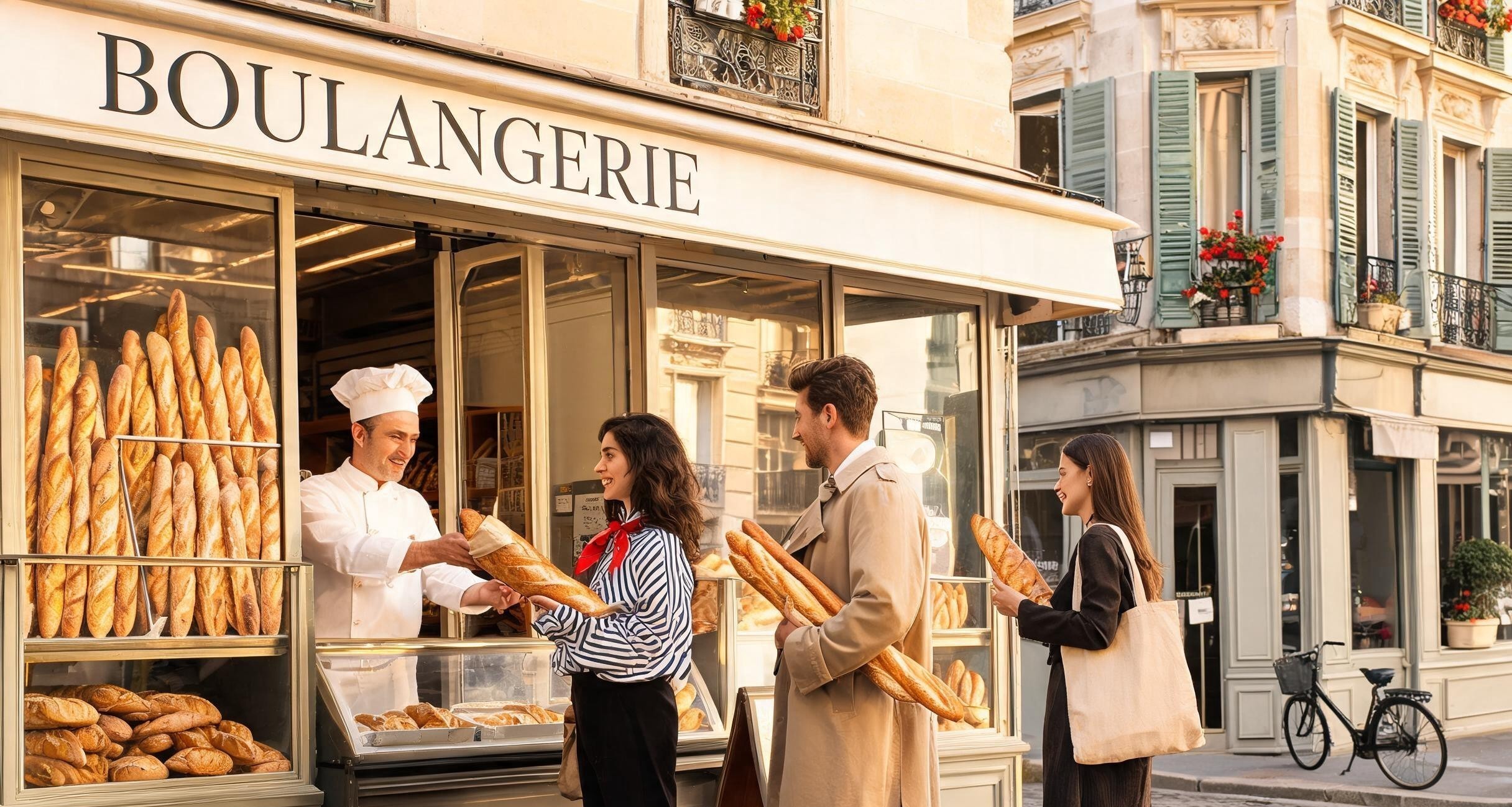
The annual Grand Prix de la Baguette, held every year in Paris since 1994, is both a serious competition and a cultural event. Bakers submit their best baguettes, and a panel of judges evaluates them on appearance, crust, crumb structure, aroma, and taste. The winner receives a cash prize and the right to supply the Elysee Palace, the presidential residence, with bread for the following year. The competition matters because it raises the standard for the entire industry. When a small neighborhood bakery wins, it validates the idea that great bread can be made anywhere, not just at famous institutions. The judges are not looking for innovation. They are looking for execution: a crust that crackles when you press it, an interior with irregular holes that shows the dough fermented properly, a flavor that is wheaty and slightly tangy, not sweet or bland. These are the qualities that the bread decree was designed to protect, and the Grand Prix is the annual check on whether the system is working.
What France has done with bread, no other country has replicated at the same scale. Italy has protections for specific products like Parmigiano-Reggiano and prosciutto di Parma, but it does not have a national bread law. Japan has a thriving bakery culture, but it is largely imported and adapted from European traditions. The United States has seen a sourdough revival in the last decade, but it is a niche market, not a national standard. France's bread law works because it reflects a cultural consensus that bread matters, that the quality of daily bread is a measure of a society, and that the government has a role in protecting that quality without dictating the specifics. The law is not about telling bakers what to do. It is about telling consumers what they are getting, and letting the market sort out the rest. It is a simple idea that has worked for thirty years, and it is the reason you can walk into any bakery in France and buy a real baguette for one euro.