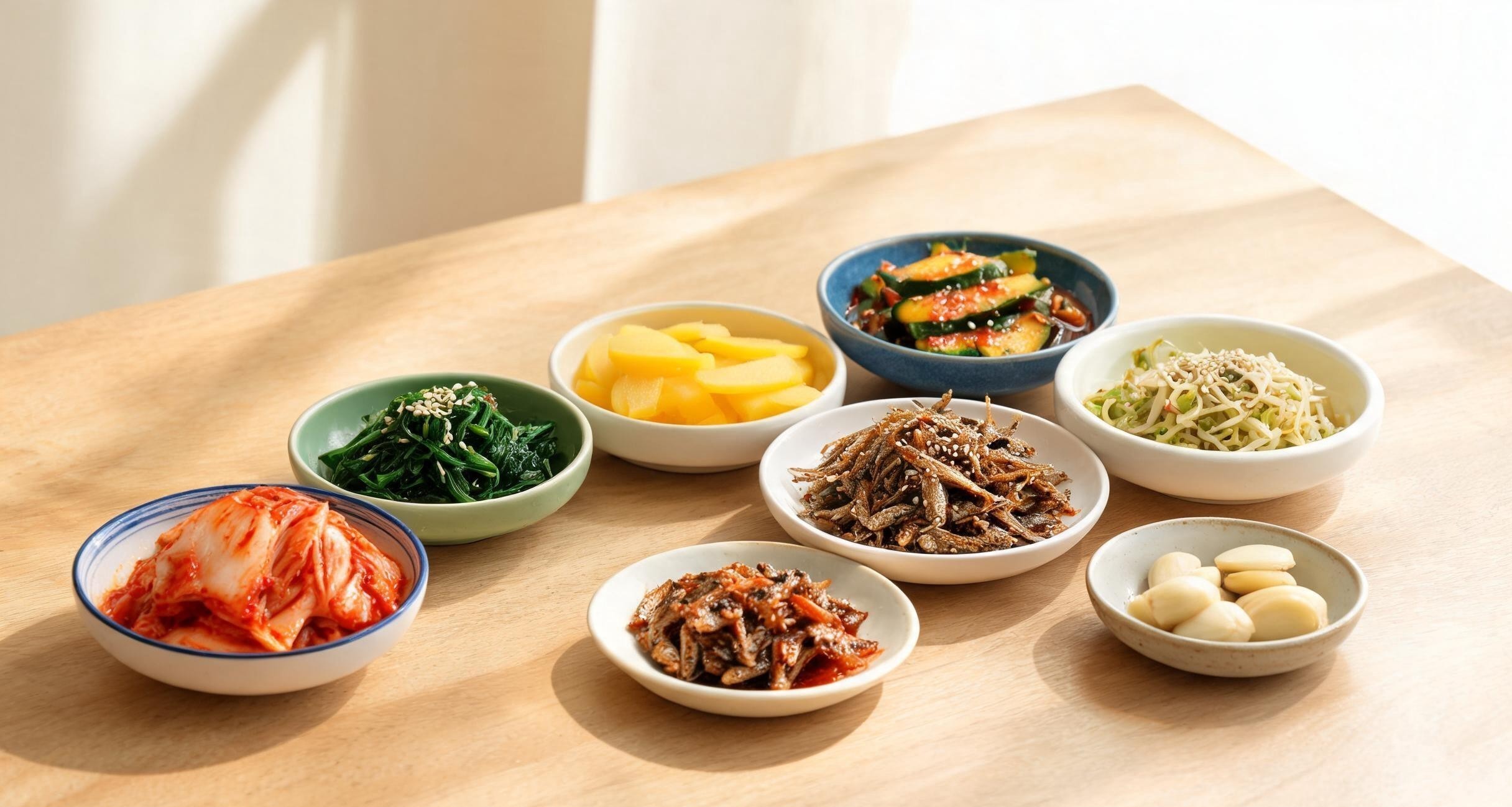
When I was a child, my mother kept four things in the refrigerator at all times: rice, kimchi, soy sauce, and gochugaru, the red pepper flakes that go into nearly every Korean side dish. The banchan, the small plates of seasoned vegetables and pickles and fermented things that surround the main dish at a Korean table, were not special occasion food. They were Tuesday. My mother made three or four different banchan every evening, and they were never the same from one day to the next because she used whatever was in the crisper drawer and whatever was left over from the day before. A half-head of cabbage became kimchi. A bunch of spinach became sigeumchi namul, blanched and dressed with sesame oil and garlic. A few carrots became a quick pickle with rice vinegar and a pinch of sugar. The banchan were not the focus of the meal, but without them the meal felt bare, like a table missing its tablecloth.
The role of banchan in a Korean meal is different from what side dishes mean in most other cuisines. In American cooking, a side dish is usually a starch or a vegetable that complements the protein. In French cooking, the garnish serves a similar function, often more decorative than substantial. But in Korean cooking, banchan are not subordinate to the main dish. They are co-equal. A typical home dinner might include grilled fish or a stew as the centerpiece, but the table will also hold four to six small plates of banchan, and the meal is eaten by taking a bite of rice, a bite of banchan, and a bite of the main dish in rotation. The banchan provide texture and flavor contrast: something crunchy, something fermented, something fresh, something spicy, something sweet. That range of flavors and textures in a single meal is what makes Korean food feel complete in a way that a plate of meat and two sides does not.
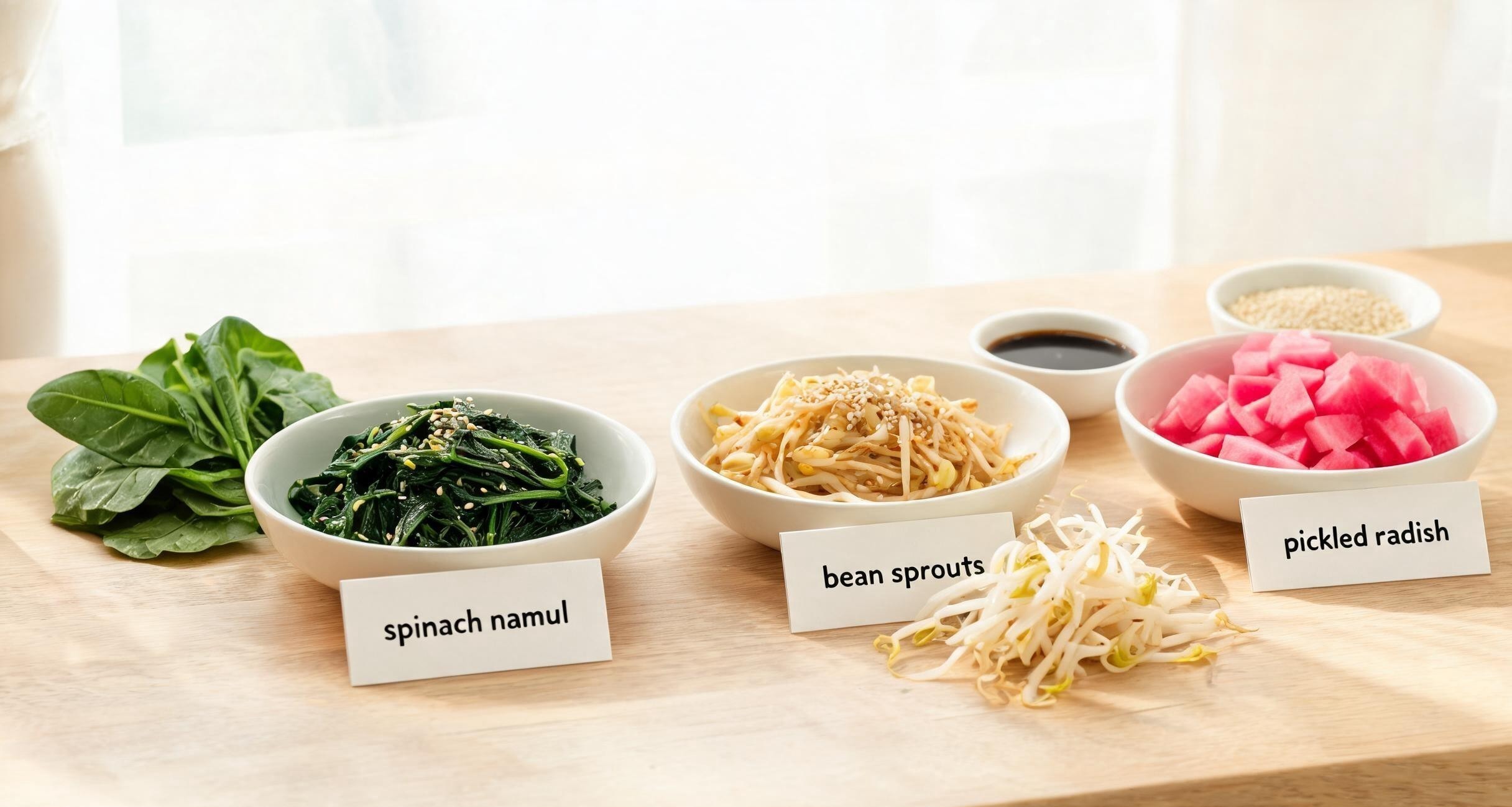
Kimchi is the most famous banchan, and it deserves its reputation, but it is only one of dozens of common banchan that appear on Korean tables. Kongnamul muchim is seasoned soybean sprouts, blanched and dressed with sesame oil, garlic, and a pinch of gochugaru. Oi muchim is sliced cucumber with a sweet-sour dressing of rice vinegar, sugar, sesame oil, and sometimes a little gochugaru. Gaji namul is roasted eggplant, peeled and torn into strips, dressed with soy sauce, sesame oil, and minced garlic. Sigeumchi namul is spinach, blanched for exactly thirty seconds, squeezed dry, and dressed with sesame oil and a sprinkle of sesame seeds. Each of these takes less than ten minutes to prepare, and each one adds a specific flavor and texture to the meal. The spinach is soft and earthy. The cucumber is crisp and bright. The sprouts are crunchy and slightly nutty. Together, they create a range that a single side dish cannot.
Banchan change with the seasons in a way that feels natural rather than deliberate. In summer, when the heat makes heavy food unappealing, my mother would make more fresh, lightly dressed banchan: cucumber salad, fresh lettuce leaves with ssamjang, raw zucchini slices dipped in gochujang. In winter, the banchan shifted to heartier, more preserved things: kkakdugi, the cubed radish kimchi that ferments faster than cabbage kimchi and has a crisper texture; jangjorim, soy-braised beef that keeps in the refrigerator for weeks; and gamja jorim, small potatoes braised in soy sauce and corn syrup until they are glossy and sweet. The seasonal shift was not something my mother talked about. She just cooked what made sense for the weather, the way she wore lighter clothes in summer and heavier ones in winter without thinking about it.
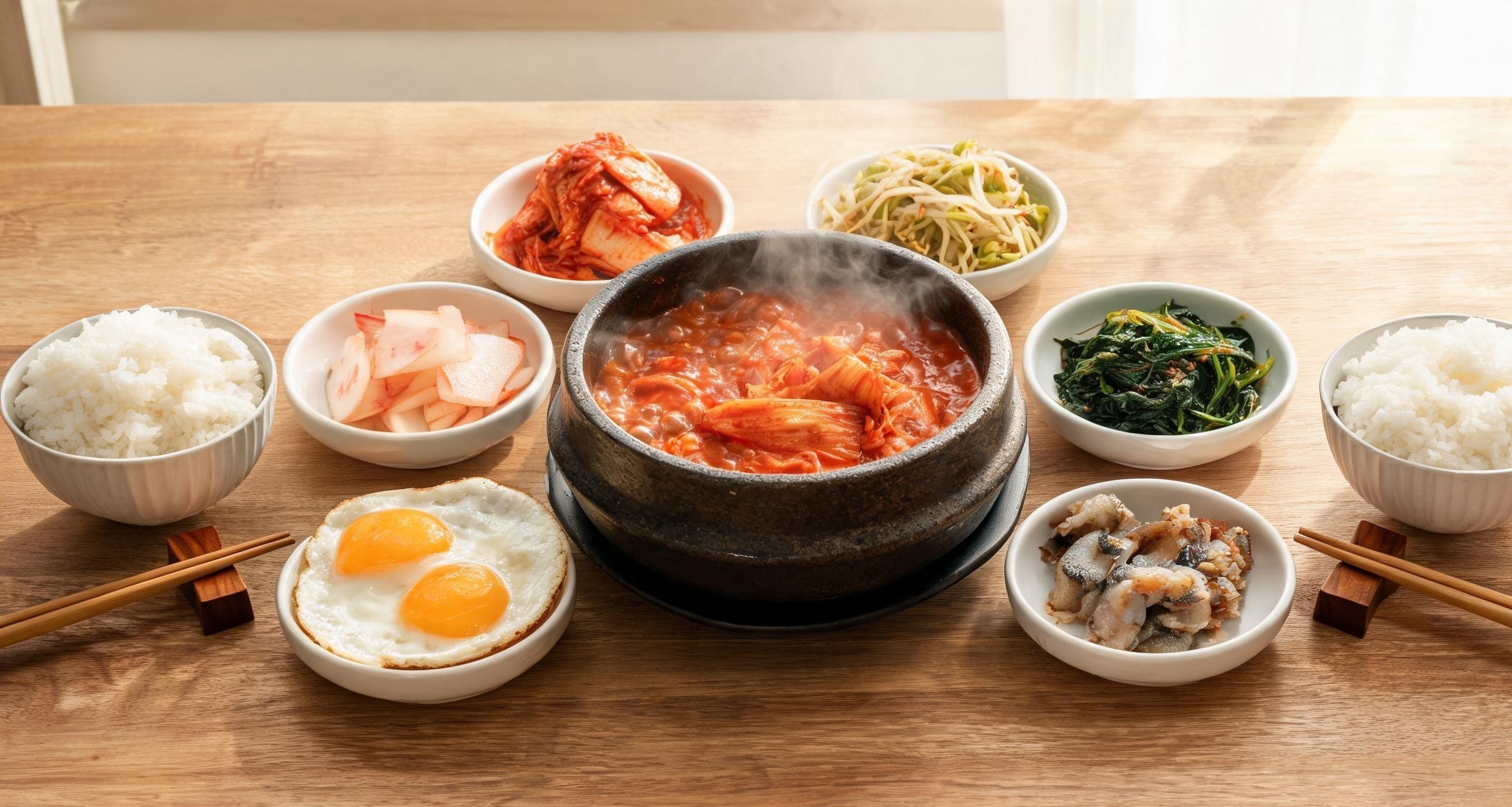
When I have people over for dinner and I want to serve a Korean meal, the banchan are what take the most time, not the main dish. I will make kimchi jjigae or grilled short ribs, which are straightforward, but the banchan require assembling four or five different preparations, each one simple on its own but time-consuming in combination. I usually start the day before, blanching the spinach, making a quick radish pickle, and preparing the bean sprouts. On the day of the dinner, I make one or two fresh banchan right before serving, like the cucumber salad or a quick toss of shredded carrot with sesame oil. The result is a table that looks generous and abundant, the way my mother's table always did, and the meal feels complete in a way that a single main dish with a side salad does not. The banchan are the reason Korean food photographs so well. All those small plates in different colors, different textures, different flavors, spread across the table like a mosaic.
What I miss most about living away from my mother's kitchen is not any single dish. It is the banchan. I can make kimchi, and I do, but I rarely make four or five different banchan for a weeknight dinner the way she did. It feels like too much work for one person. But when I go home and sit at her table and see the spread of small plates, each one a different color and texture, I remember that the banchan are what turn a meal into a Korean meal. The rice is the foundation, the main dish is the anchor, and the banchan are the details that make the whole thing feel right. My mother does not think of herself as a particularly good cook. She thinks she is just feeding her family. But the banchan she makes every evening, without recipes, without measuring, are the most specific and personal food I have ever eaten.