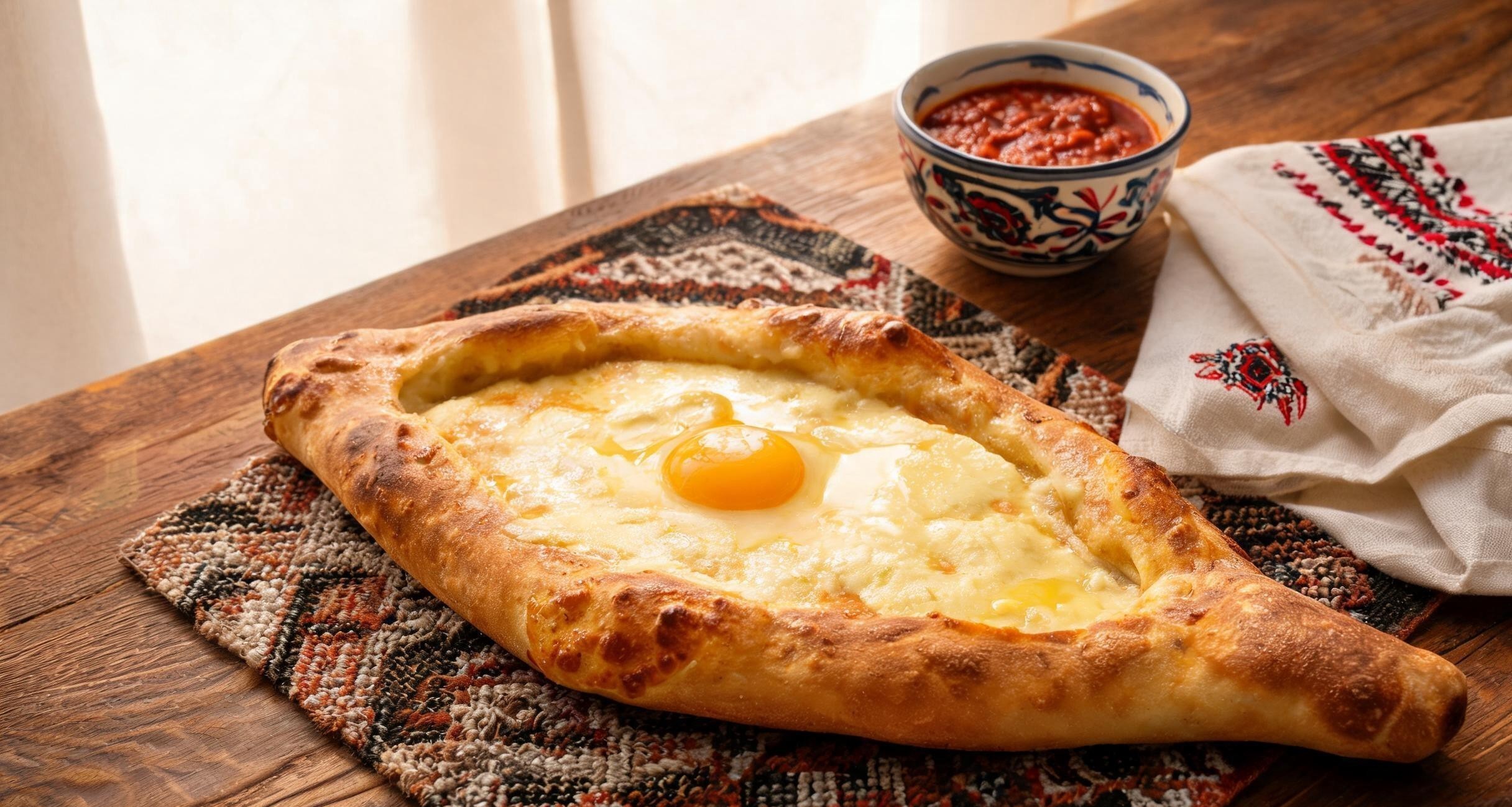
The first khachapuri I ate in Tbilisi arrived at the table still bubbling. It was the Adjarian style, shaped like a small boat with an open well in the center filled with molten sulguni cheese and a raw egg sitting on top. The waiter instructed me to tear off pieces of the bread crust and stir the egg into the cheese, mixing everything together until it became a thick, creamy sauce. I did as I was told, and within thirty seconds I understood why this bread is considered Georgia's national dish. The combination of stretchy cheese, rich egg yolk, and buttery bread is the kind of thing that makes you stop talking and just eat. I was in Tbilisi for a week and I ordered khachapuri at least once a day, sometimes twice, and by the end I was convinced that Georgia had figured out something about bread and cheese that the rest of the world was missing.
There are at least half a dozen distinct regional styles of khachapuri across Georgia, and arguing about which one is best is a reliable way to start a conversation with any Georgian. The Imeretian version is the simplest: a flat, round bread filled with cheese, cooked in a pan until both sides are golden. It looks like a thick pizza with no sauce. The Adjarian version, the boat-shaped one with the egg, is the most photogenic and the one most tourists encounter first. The Mingrelian style adds an extra layer of cheese on top of the filling. The Rachvan version uses no cheese at all in the filling, replacing it with a mix of mashed potatoes and cheese grated over the top, which sounds wrong until you try it and realize the potato adds a softness that keeps the bread from being overwhelmingly rich. Each region has its own shape, its own cheese blend, and its own fiercely held opinion about what counts as authentic.
The cheese matters more than anything else. Sulguni is the standard, a semi-soft, slightly salty cheese with a stretchy texture similar to mozzarella but with more tang. Imeretian cheese is milder and creamier. Some bakers use a mix of both. In Tbilisi, I watched a woman named Nino make khachapuri at a small bakery called Shemomechama, and she told me she uses a blend of sulguni and a local cheese called imeruli in a roughly three-to-one ratio. She grates the cheese by hand every morning, mixes it with a little egg and butter, and said the key is not to overmix. You want visible strands of cheese in the filling, not a uniform paste. The cheese is what makes khachapuri work, and if you substitute something mild or flavorless, the whole dish falls flat.
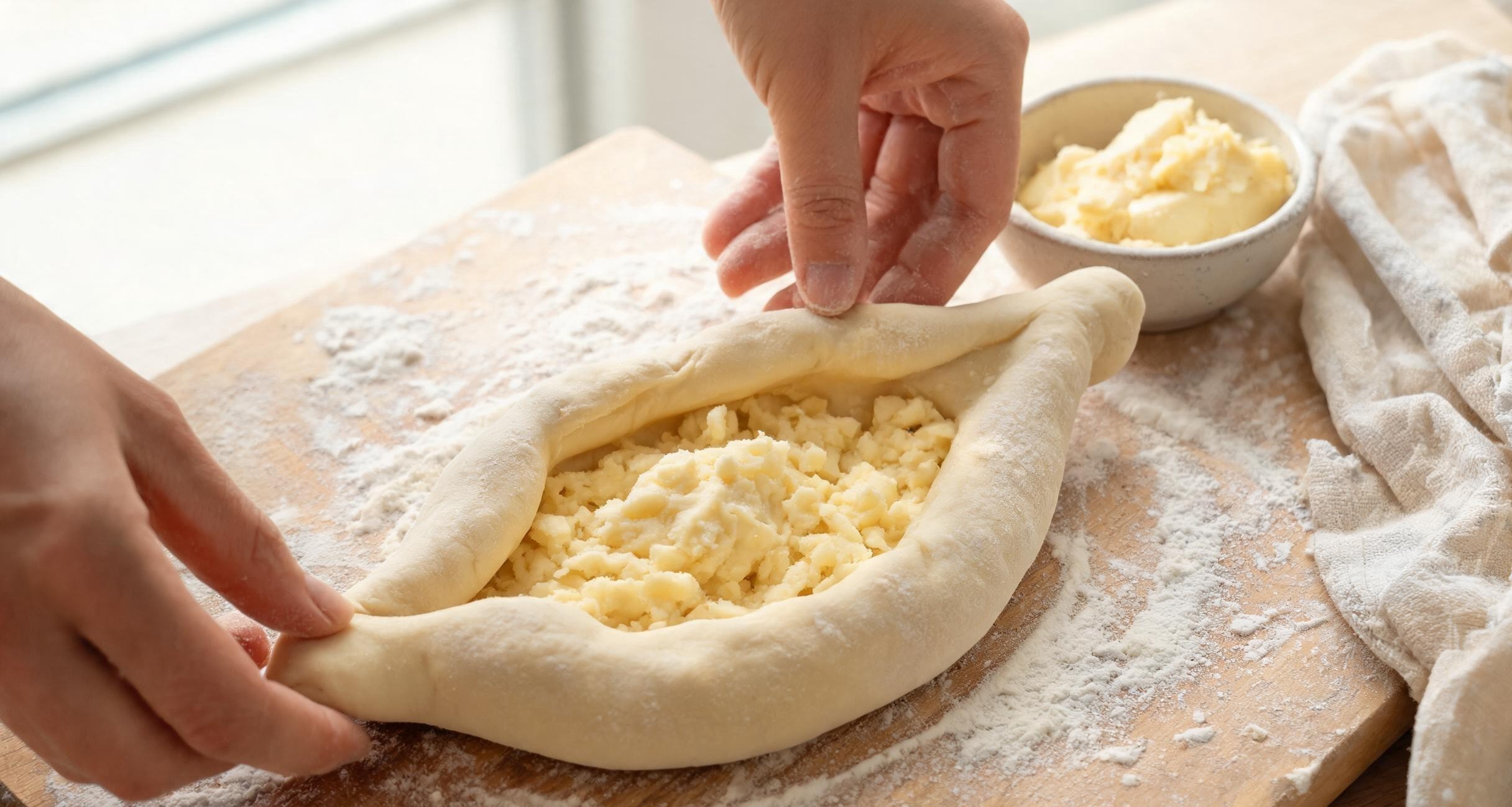
The dough is simpler than you would expect. Flour, water, yeast, a little salt, and a generous amount of butter or oil. Some recipes call for yogurt or kefir in the dough, which gives it a slight tang and a softer crumb. Nino used a dough that she had started the night before, letting it rise slowly in the refrigerator, which she said made it easier to stretch and gave the bread a better texture. The shaping is the hardest part, especially for the Adjarian style, where you have to form the dough into a boat shape with raised edges that hold the cheese filling in place. It takes practice. My first attempt looked like a sad calzone. My fourth looked like something you might actually serve to another person.
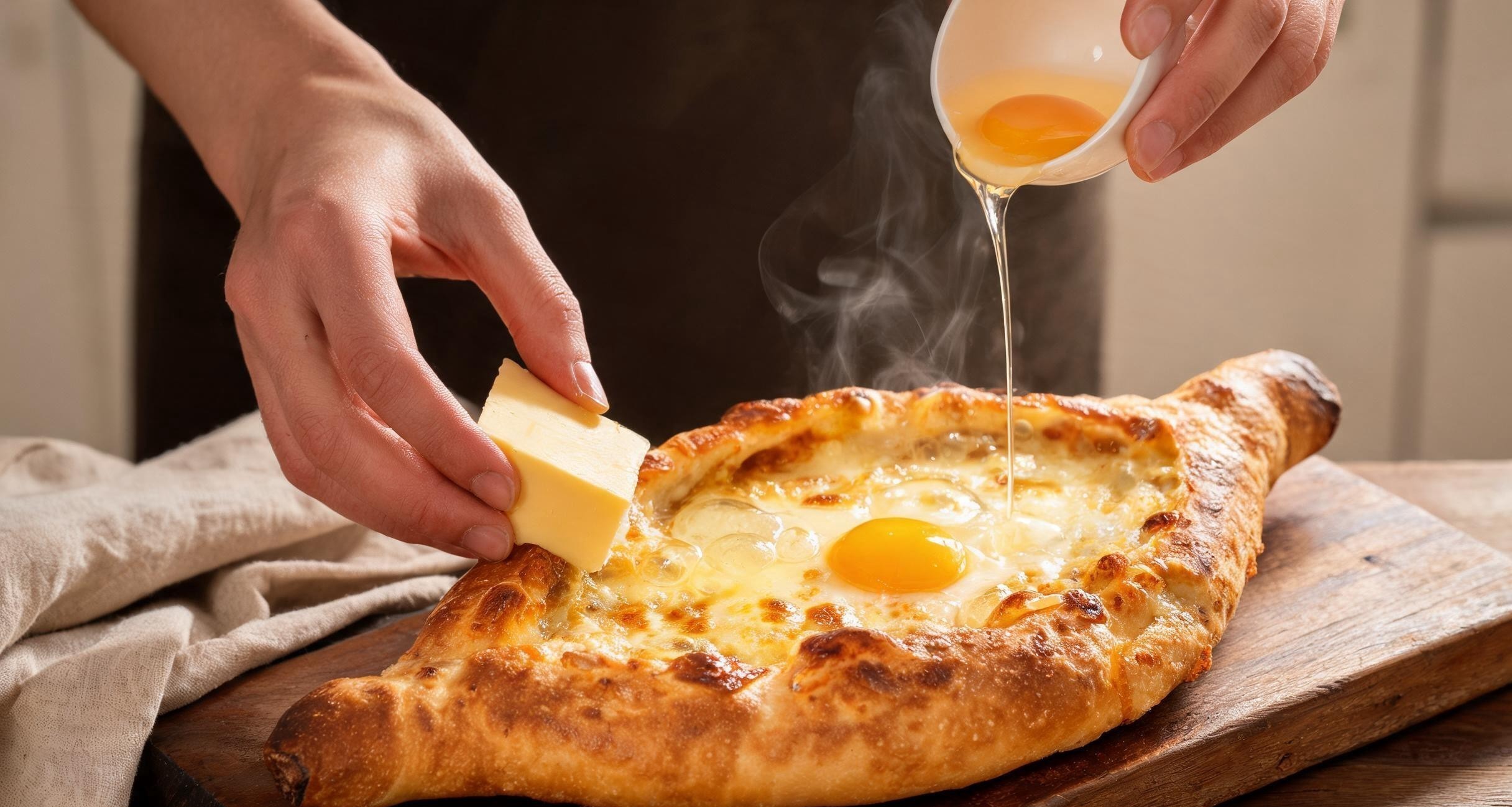
I ate khachapuri at least once a day for the week I spent in Georgia, and I never got tired of it. At a place called Pasanauri, a roadside restaurant north of Tbilisi, I had a version the size of a dinner plate, so loaded with cheese that the bread underneath was almost an afterthought. At a small shop in the old town, I tried a variation with green onions mixed into the cheese, which added a sharpness that cut through the richness. Every baker had a slightly different approach, and every version was worth eating. The bread is simple food, the kind that sustains a country, and spending a week eating it made me realize that the best dishes in the world usually start with bread and cheese and not much else. Georgia has been making this bread for centuries, and they have had long enough to get it right.
The price is the other thing worth mentioning. At most bakeries in Tbilisi, a khachapuri costs between three and six lari, which is roughly one to two dollars. A generous portion, enough for a full meal, is cheaper than a cup of coffee in most Western cities. I asked Nino how she could afford to make khachapuri at those prices, given the cost of cheese and butter, and she said the volume keeps the business running. She sells between two and three hundred pieces a day. At those margins, she makes enough to support herself and her daughter, who helps in the bakery on weekends. It is a business model that only works because the product is good enough to bring people back every single day, sometimes twice. And they do come back. The line at Shemomechama was never empty in the week I was visiting, and Nino never stopped moving.
Nino told me she learned to make khachapuri from her mother, who learned it from her grandmother, and that the bakery has been in the family for three generations. The recipe for the dough has not changed in that time, though the cheese blend shifts slightly depending on what is available and fresh at the market. Some weeks the sulguni is saltier, some weeks the imeruli is creamier, and the khachapuri adjusts accordingly. It is a flexible dish, built on a solid foundation of bread and cheese, that can accommodate small variations without losing its identity. That flexibility is part of why it has survived as long as it has. You do not need exact measurements or special equipment. You need flour, water, cheese, an oven or a stovetop, and the willingness to practice until the dough does what you want it to do. The Georgians have had hundreds of years to get it right, and the result is a bread that is simple, filling, and one of the most satisfying things you can eat with your hands.
Nino told me she learned to make khachapuri from her mother, who learned it from her grandmother, and that the bakery has been in the family for three generations. The recipe for the dough has not changed in that time, though the cheese blend shifts slightly depending on what is available and fresh at the market. Some weeks the sulguni is saltier, some weeks the imeruli is creamier, and the khachapuri adjusts accordingly. It is a flexible dish, built on a solid foundation of bread and cheese, that can accommodate small variations without losing its identity. That flexibility is part of why it has survived as long as it has. You do not need exact measurements or special equipment. You need flour, water, cheese, an oven or a stovetop, and the willingness to practice until the dough does what you want it to do. The Georgians have had hundreds of years to get it right, and the result is a bread that is simple, filling, and one of the most satisfying things you can eat with your hands.