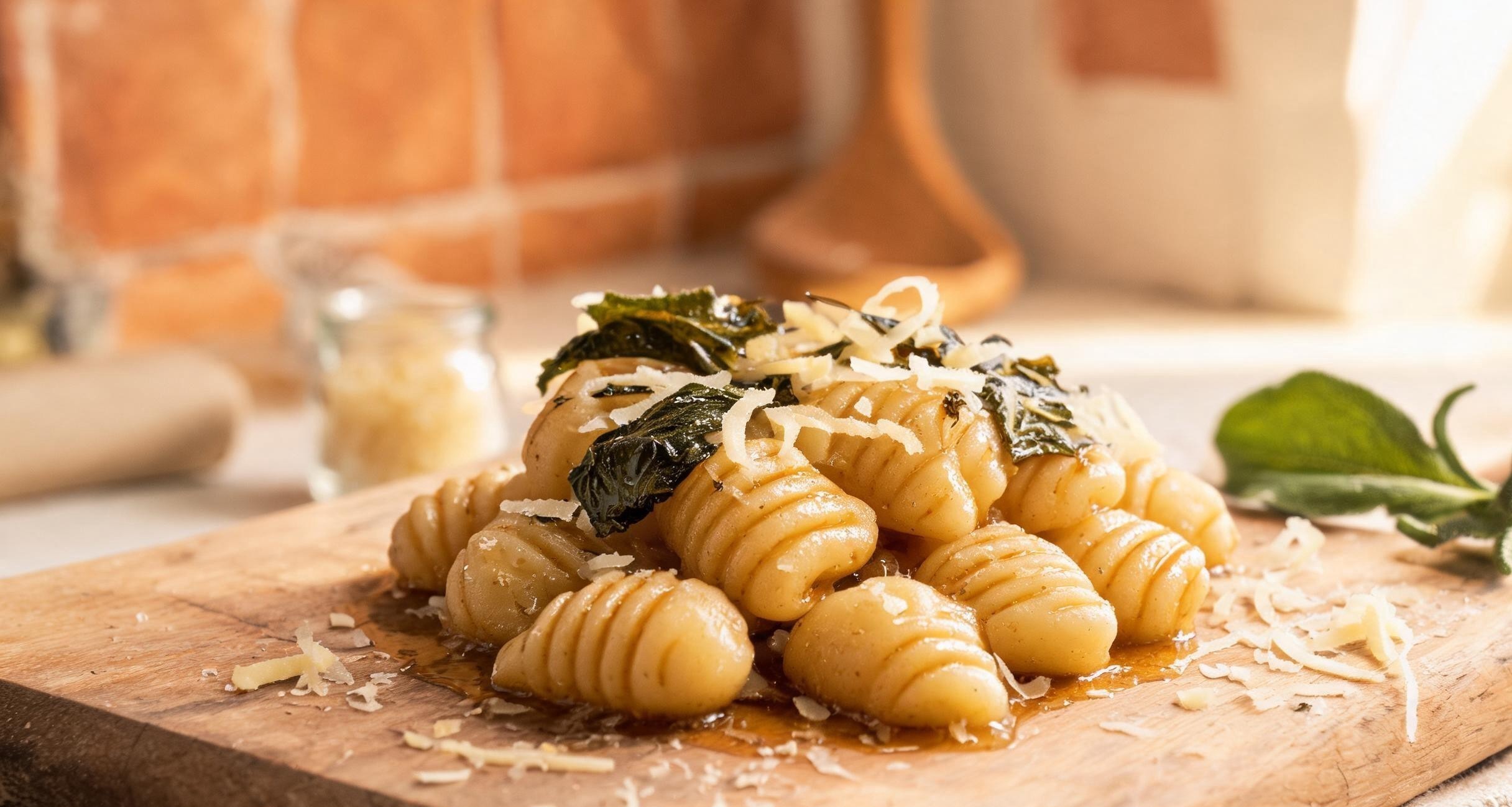
The first time I made gnocchi, I used boiled potatoes and too much flour, and the result was dense, gummy little lumps that could have doubled as fishing weights. They sank to the bottom of the pot, stayed there, and when I finally scooped them out, they tasted like raw flour with a faint memory of potato. I threw the whole batch away and started researching. I read Italian cookbooks, watched videos made by nonnas, and talked to a friend who had spent a year cooking in Bologna. She told me two things: bake the potatoes, do not boil them, and use as little flour as you can get away with. I tried again the following weekend with those two rules in mind, and the gnocchi floated. Light, tender, and barely holding together. That was the moment I understood that gnocchi are not dumplings or pasta. They are something in between, and they demand a delicate hand.
Start with one pound of russet potatoes. Russets are the best choice because they are starchy and relatively dry, which is exactly what you want. Bake them at 400 degrees for about an hour until they are completely soft in the center when pierced with a knife. Let them cool enough to handle, then peel them. A potato ricer is the best tool for mashing, because it breaks the potato into fine, fluffy particles without activating the gluten. If you mash with a fork or a masher, you compress the potato and the gnocchi will be heavy. Rice the potatoes onto a clean work surface and spread them out to cool completely. Warm potatoes absorb more flour, and more flour means heavier gnocchi.
Once the potatoes are cool, gather them into a loose mound, make a well in the center, and add one egg yolk, a pinch of salt, and about three-quarters of a cup of all-purpose flour. Start folding the mixture together with a bench scraper, not your hands. The heat from your hands will warm the dough and cause it to absorb more flour. Work gently, folding and pressing until the dough just comes together. It will look rough and shaggy at first. Do not knead it like bread dough. The less you handle it, the lighter the gnocchi will be. If the dough feels too sticky to work with, dust your board and your scraper with flour, but add as little as possible. The total amount of flour should be no more than one cup for one pound of potatoes.
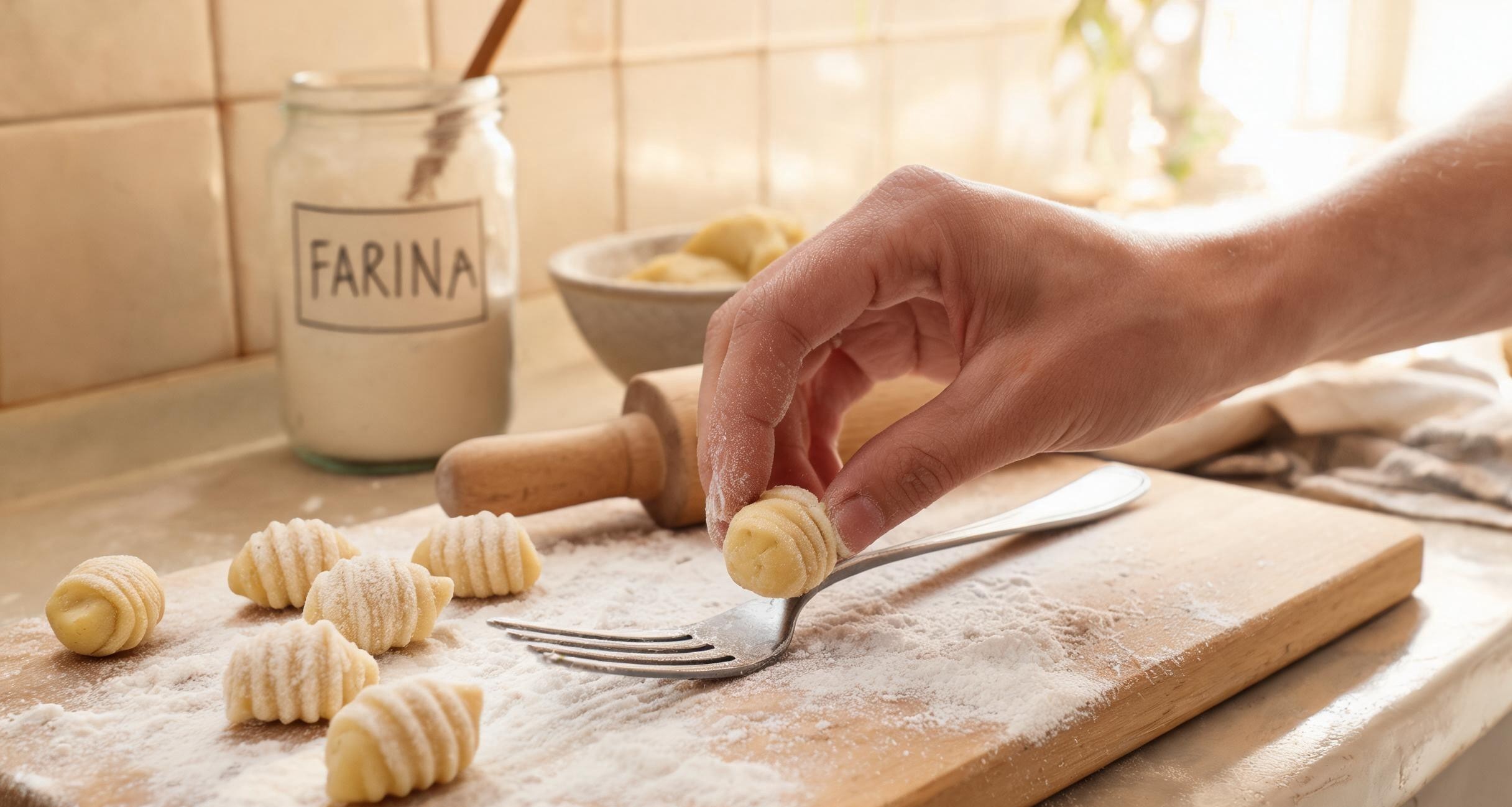
Cut a piece of dough off and roll it into a rope about three-quarters of an inch thick on a lightly floured surface. Cut the rope into one-inch pieces. Now comes the part that gives gnocchi their characteristic ridged shape. Hold a fork in one hand, tines facing down. Place a piece of dough on the tines and press gently with your thumb while rolling it off the end of the fork. The dough should curl slightly and pick up ridges on one side and an indentation from your thumb on the other. The ridges hold sauce, and the indentation catches it. It takes a few tries to get the pressure right. Too light, and there will be no ridges. Too hard, and the dough will squish flat.
Bring a large pot of salted water to a gentle boil, not a rolling boil. A vigorous boil can tear the gnocchi apart. Drop about a dozen gnocchi into the water at a time. They will sink. Within about 30 seconds to a minute, they will float to the surface. Let them float for about 15 seconds, then scoop them out with a slotted spoon and transfer them directly to a pan with your sauce of choice. Do not rinse them. Do not put them on a towel. From the water to the sauce, no detours.
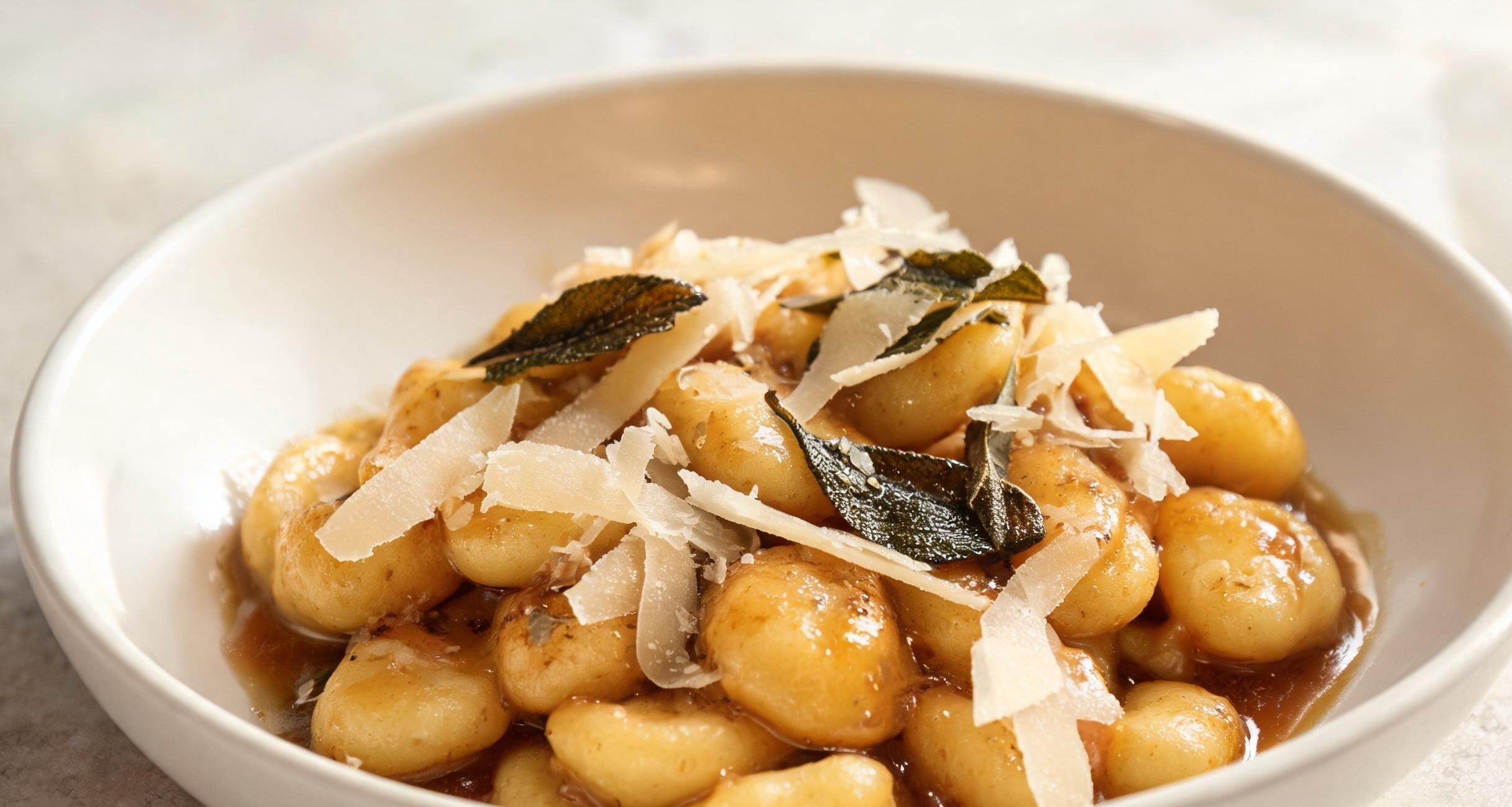
I tested this recipe twenty times, adjusting the flour amount, the egg, the resting time, the cooking temperature. The version I am most happy with uses one egg yolk instead of a whole egg, because the yolk adds richness without the extra moisture of the white. I have also tried adding a small amount of baked potato to each batch to lighten the texture, which works but is probably unnecessary for most home cooks. The biggest factor is restraint: less flour, less handling, less cooking time. Gnocchi should be delicate enough to feel like eating a cloud that happens to hold sauce. Heavy, gummy gnocchi are the result of overworking the dough or boiling the potatoes, and both are fixable problems once you know what to watch for. The small batch size here, one pound of potatoes, is intentional. Gnocchi do not scale up well for beginners. Make a small amount, get it right, then double it the next time.