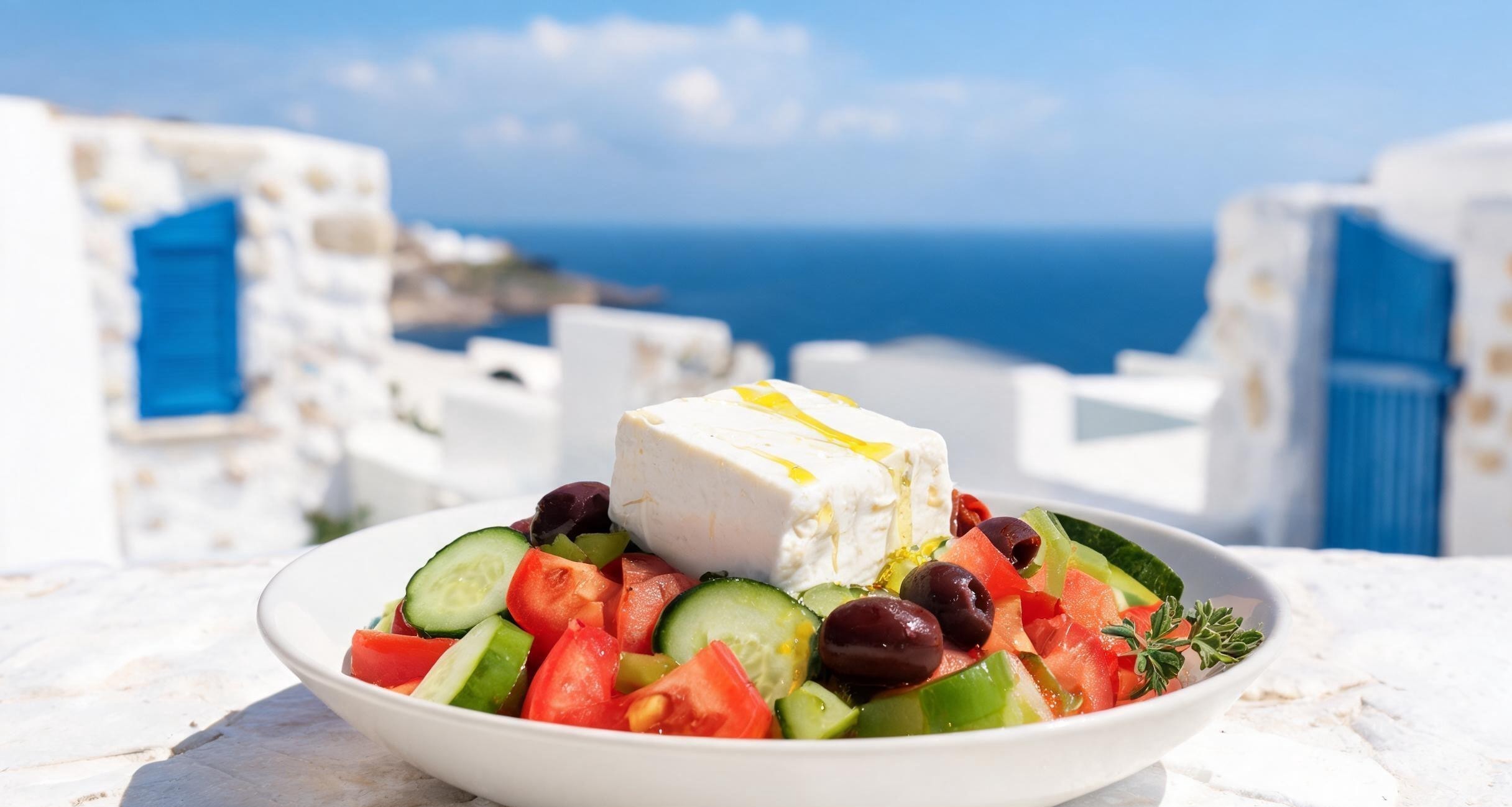
I ordered a Greek salad in a restaurant in Chicago once and received a bowl of chopped iceberg lettuce with cherry tomatoes, crumbled feta, and a few black olives from a can. The waitress was very nice about it when I asked if this was actually a Greek salad, and she said yes, that is how they make it here. I ate it because I was hungry, but it was not a Greek salad. A real Greek salad, called horiatiki, does not contain lettuce. It does not contain crumbled feta. It does not contain canned olives or cherry tomatoes. It is a specific combination of whole ingredients, served on a plate, not in a bowl, and if you put lettuce in it, a Greek person will look at you the way my grandmother looked at me when I put ketchup on her spaghetti.
The base of a proper horiatiki is large, firm tomatoes, preferably the kind that taste like something, which means in season and grown in soil, not hydroponically. You cut them into irregular wedges, not small cubes. The cucumber is peeled or partially peeled and cut into thick half-moons. The onion is sliced thin, and in Greece it is usually a dry, pungent red onion that retains some crunch. The olives are Kalamata, whole with the pit still in, not pitted and certainly not from a can. The green bell pepper is sliced into rings. Each ingredient keeps its shape on the plate. You eat it with a knife and fork. Nothing is chopped small enough to eat with a spoon.
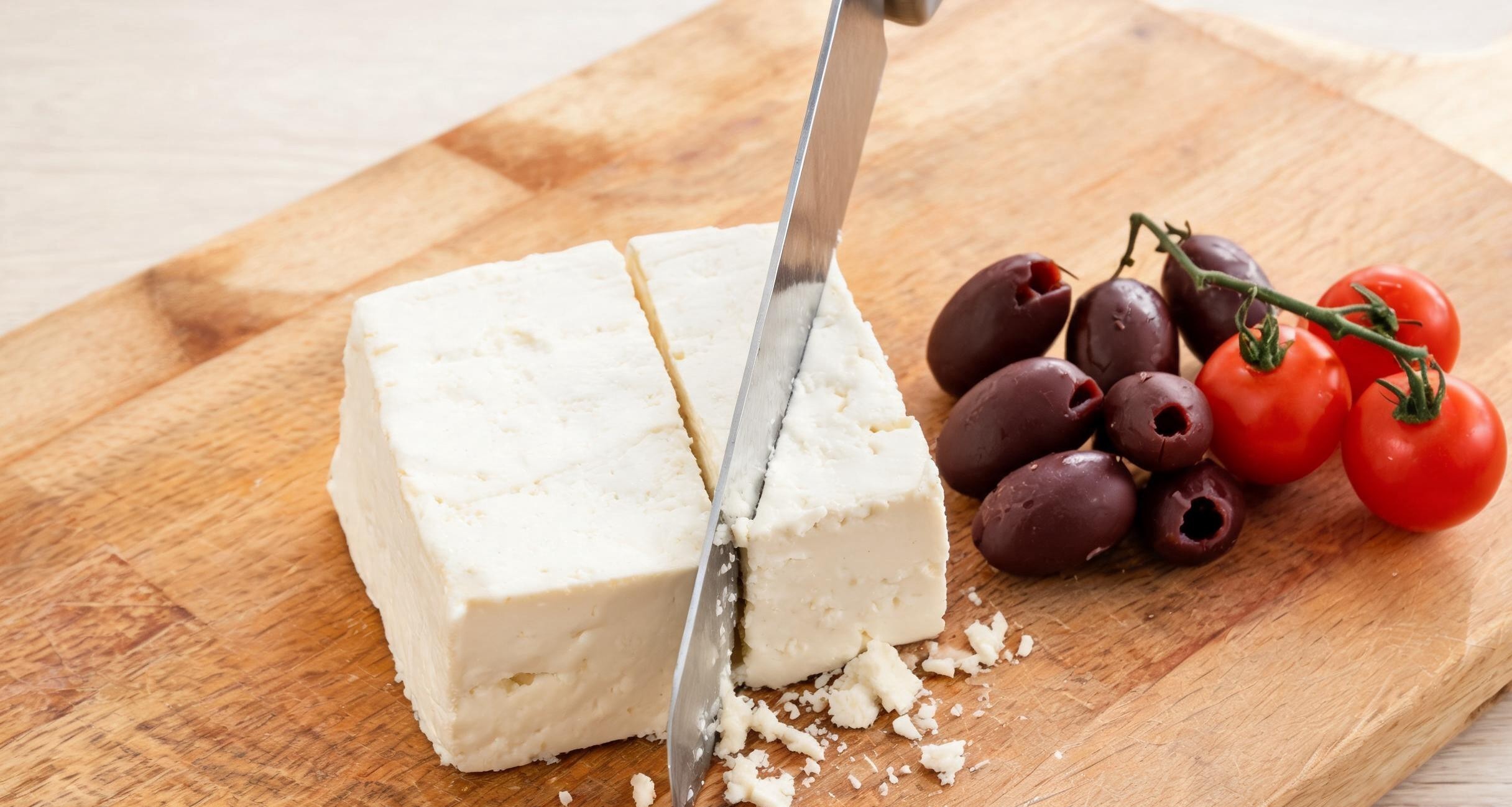
The feta is the centerpiece, and it is not crumbled. In Greece, feta for salad is cut into a single large slab, often a rectangle about two inches wide and half an inch thick, and placed on top of the vegetables. It is made from sheep's milk or a blend of sheep and goat milk, and it is dense, salty, and tangy in a way that the feta sold in most American supermarkets is not. The good stuff comes in a block submerged in brine, not pre-crumbled in a plastic tub. When you cut into the slab with your fork, it breaks into rough pieces that you eat along with the tomatoes and cucumber. The salt from the feta, combined with the olive oil, acts as the dressing.
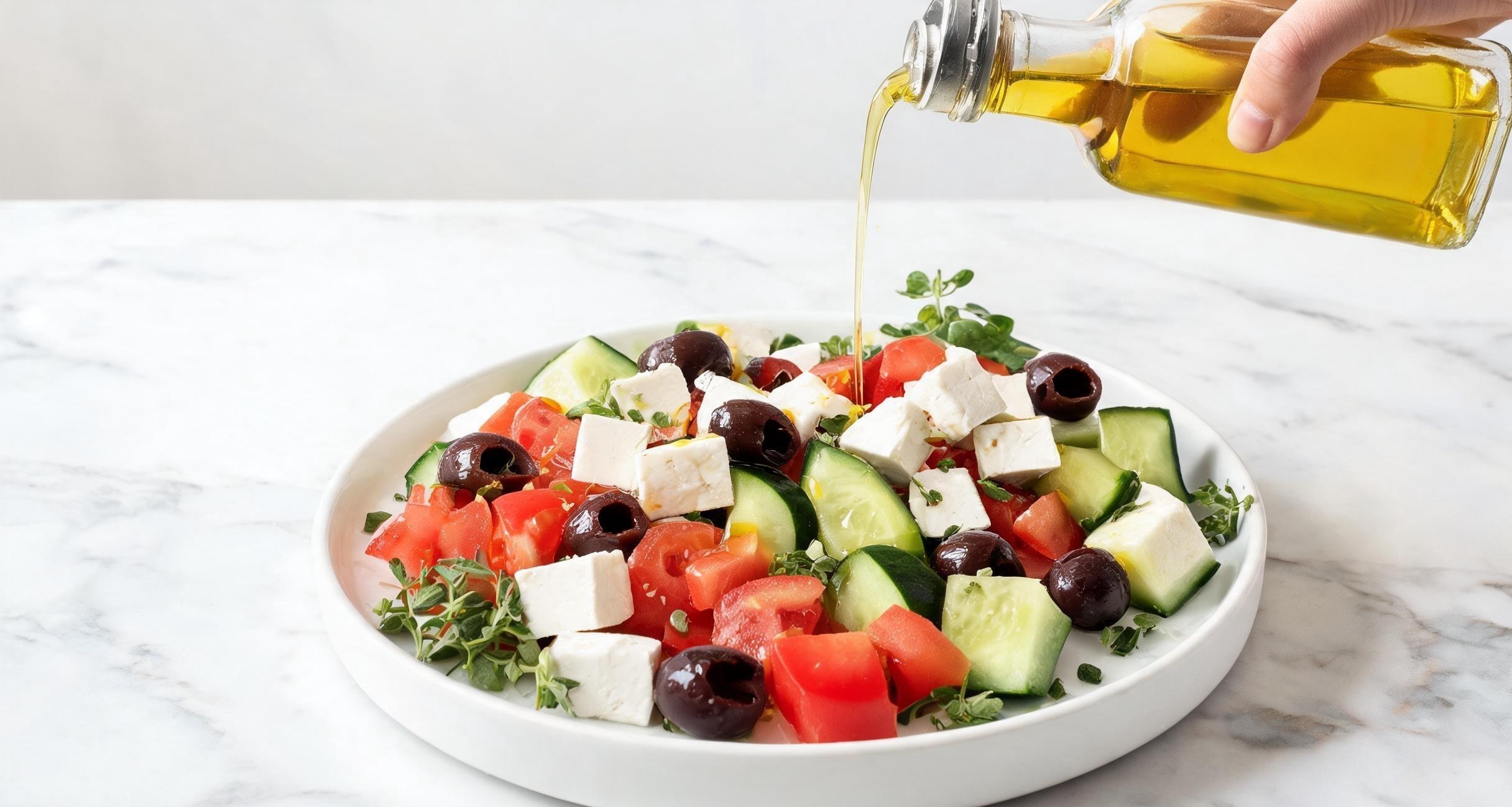
Speaking of olive oil: this is not the place to use something cheap. A Greek salad is essentially a vehicle for good olive oil. You pour it on generously, enough that it pools at the bottom of the plate. In Greece, they use extra virgin olive oil from local olives, and the quality is immediately apparent. The oil should be fruity and slightly peppery, not bland or waxy. Some people add a splash of red wine vinegar, but traditionalists skip it, arguing that the acidity of the tomatoes and the feta is enough. I skip the vinegar most of the time, but I add dried oregano, rubbed between my fingers before sprinkling it over the top.
There is a bread component that is usually not mentioned in recipes but is always present at the table in Greece. A thick slice of rustic bread, sometimes toasted, sometimes not, used to scoop up the olive oil and tomato juice that collects at the bottom of the plate. This is the best part of the salad, and it is the part that gets lost when you serve it in a bowl with chopped lettuce, because there is nothing to soak up. A horiatiki is a meal on its own in summer, when the tomatoes are at their best, and it requires almost no cooking. You need good ingredients, a sharp knife, and the willingness to let each component stay intact instead of chopping everything into uniform pieces.
I make this salad at least once a week from June through September, when the tomatoes at my local farmers market are good enough to justify eating them raw in large quantities. The key is restraint. Do not add lettuce. Do not crumble the feta. Do not use canned olives. Do not make a vinaigrette. Cut the vegetables into large pieces, lay them on a plate, put the feta slab on top, pour on the olive oil, add the oregano, and leave it alone. The salad is not a construction project. It is an arrangement of good ingredients that do not need you to do much to them. The less you do, the better it tastes, which is the kind of cooking advice that sounds simple but is surprisingly hard to follow.
I should mention the salt. In Greece, the feta is salty enough that you do not need to add additional salt to the salad. The olives contribute salt as well, and the bread, when you drag it through the olive oil at the bottom of the plate, picks up enough of everything to need no extra seasoning. This is one of the reasons the quality of the ingredients matters so much: when a dish has only five or six components, each one has to be good on its own. There is nowhere to hide. A mealy tomato ruins the whole plate. A bland olive does the same. A crumbly, flavorless feta makes the salad boring. But when every ingredient is right, the salad is one of the best things you can eat in summer, and it costs almost nothing to make. A good tomato, a cucumber, an onion, some olives, a block of feta, a bottle of olive oil, some oregano. That is the whole list.
I should mention the salt. In Greece, the feta is salty enough that you do not need to add additional salt to the salad. The olives contribute salt as well, and the bread, when you drag it through the olive oil at the bottom of the plate, picks up enough of everything to need no extra seasoning. This is one of the reasons the quality of the ingredients matters so much: when a dish has only five or six components, each one has to be good on its own. There is nowhere to hide. A mealy tomato ruins the whole plate. A bland olive does the same. A crumbly, flavorless feta makes the salad boring. But when every ingredient is right, the salad is one of the best things you can eat in summer, and it costs almost nothing to make. A good tomato, a cucumber, an onion, some olives, a block of feta, a bottle of olive oil, some oregano. That is the whole list.