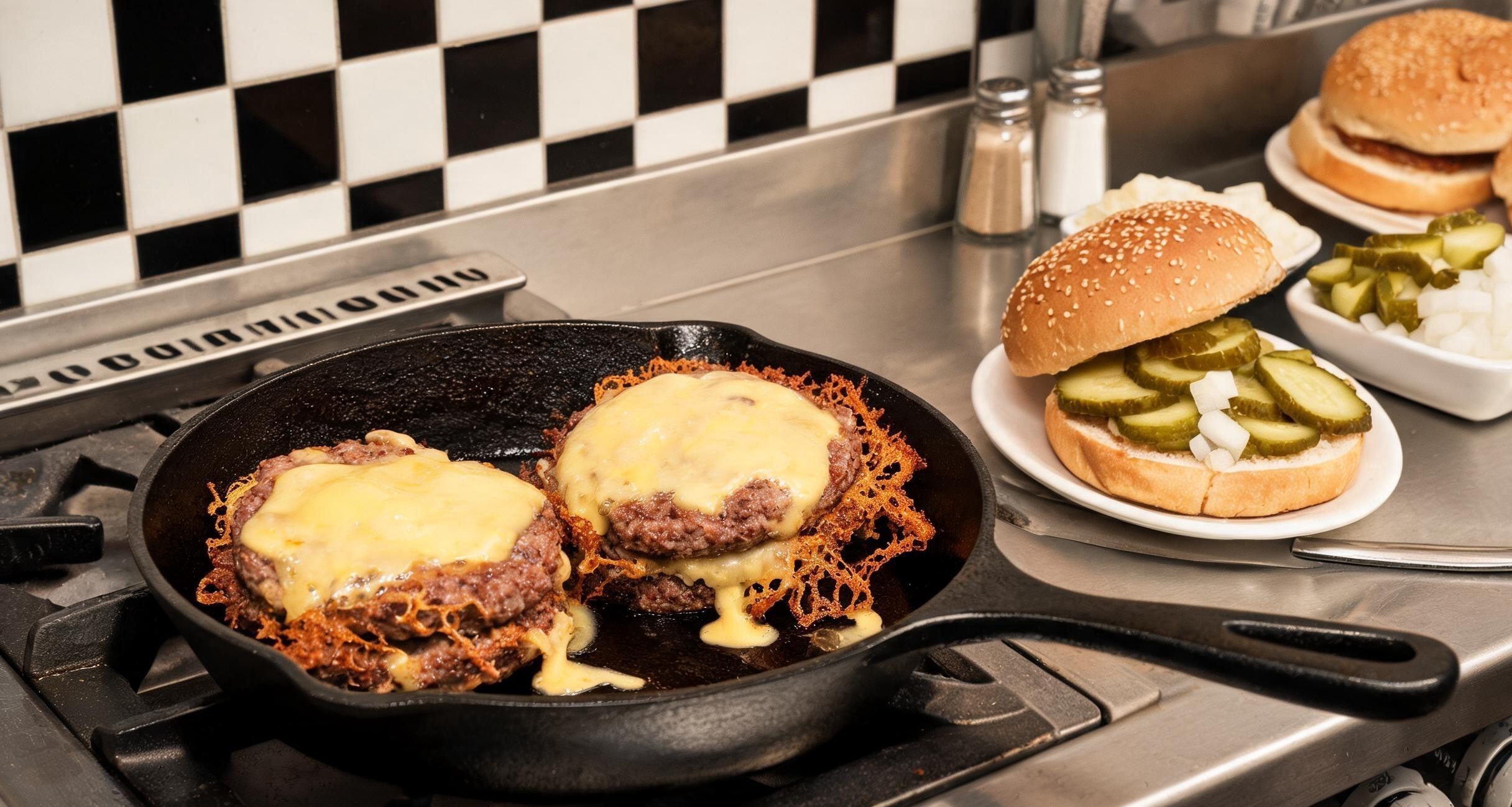
The first smash burger I made was a mess. I formed a ball of ground beef, dropped it onto a hot cast iron skillet, and pressed down with a spatula. The fat splattered everywhere. The beef stuck to the pan. The patty was paper-thin in the middle and thick at the edges. It looked like a crime scene. I scraped it off, put it on a bun with some cheese, and ate it anyway, and even with all the problems, it tasted better than any burger I had made using the standard method of forming a thick patty and hoping for the best. The crust that forms when ground beef hits a very hot surface and gets pressed thin is something you cannot replicate with a regular burger. It is crispy, salty, and brown in a way that makes the entire burger feel like it was cooked by someone who knows what they are doing.
The technique is simple enough that you can learn it in one attempt and master it in three. You need ground beef with at least twenty percent fat, preferably chuck. You need a cast iron skillet or a flat griddle, heated until it is smoking. You need salt, pepper, and soft buns. That is the whole list. No binders, no egg, no breadcrumbs, no Worcestershire sauce, none of the additions that people put in burger patties because they are afraid the meat will not hold together. A smash burger is not supposed to hold together. It is supposed to be thin and crispy and fall apart slightly when you bite into it. The fat holds it together enough, and the crust holds it together more.
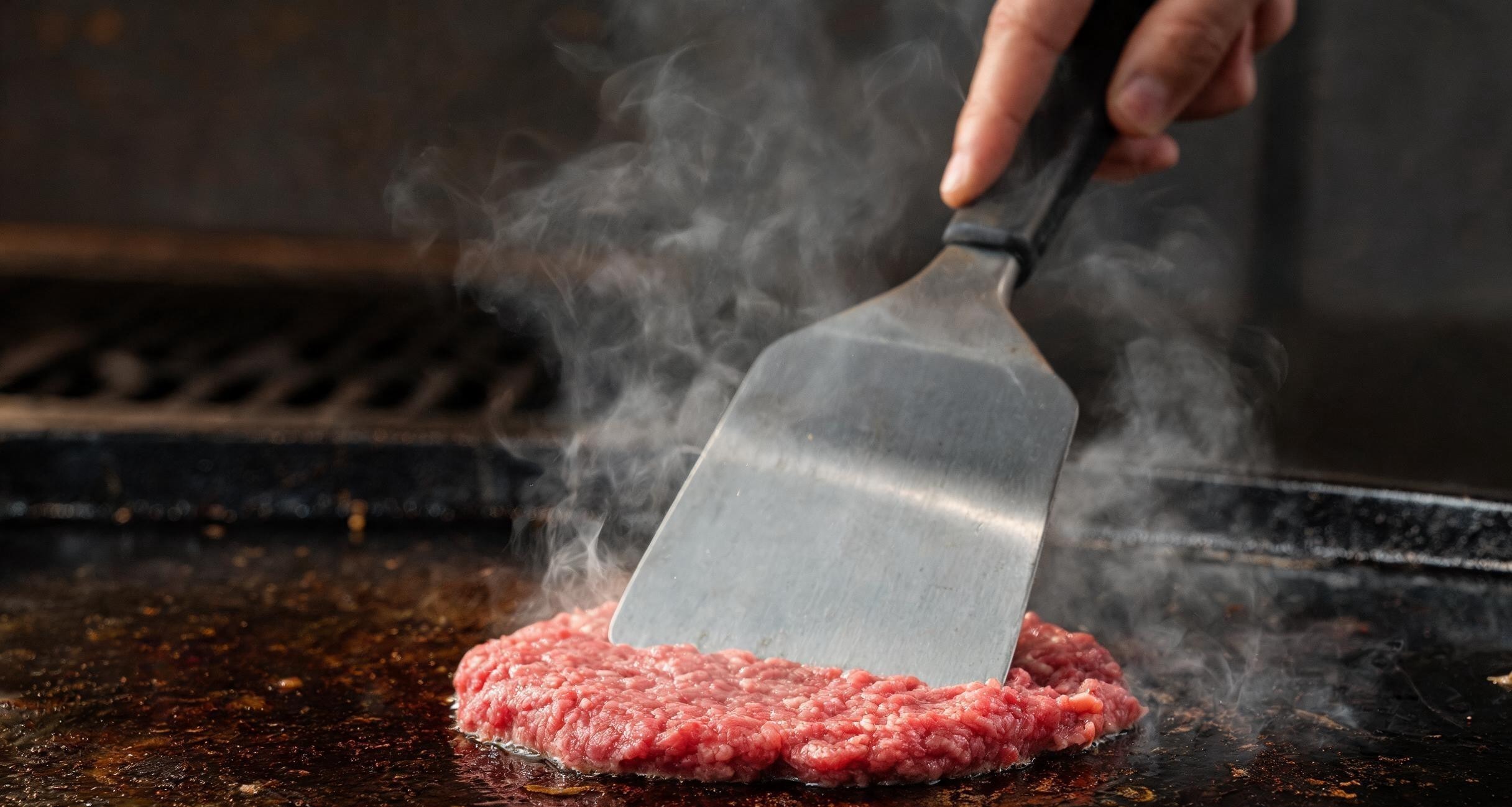
Form the beef into loose balls, about two to three ounces each, roughly the size of a golf ball. Do not pack them tightly. Do not season them yet. Seasoning goes on at the grill, not before, because salting ground beef ahead of time draws out moisture and makes the texture mealy. Heat the cast iron over high heat for at least five minutes. You want it hot enough that a drop of water sizzles and evaporates in a second. Add a small amount of oil, just enough to film the surface, and let it get hot. Then place a beef ball on the skillet and immediately press it flat with a heavy spatula or a burger press. Press hard. The patty should be thin, almost translucent in places, with ragged edges. The ragged edges are where the crispiness happens.
Season the top of the patty with salt and pepper while the bottom cooks. You will see the edges start to brown and the meat change color from red to pink to brown as it cooks through. A patty this thin, about a quarter inch thick, cooks in about sixty to ninety seconds per side. When you see the top surface of the meat starting to change color, flip it. Add a slice of American cheese immediately, and place the bun, cut side down, on top of the patty for the last thirty seconds. The bun toasts from the steam and heat of the meat, and the cheese melts onto the patty. American cheese is the correct choice here. It melts smoothly and has a mildness that lets the beef flavor dominate. Cheddar does not melt properly on a smash burger and its sharpness fights with the beef instead of supporting it.
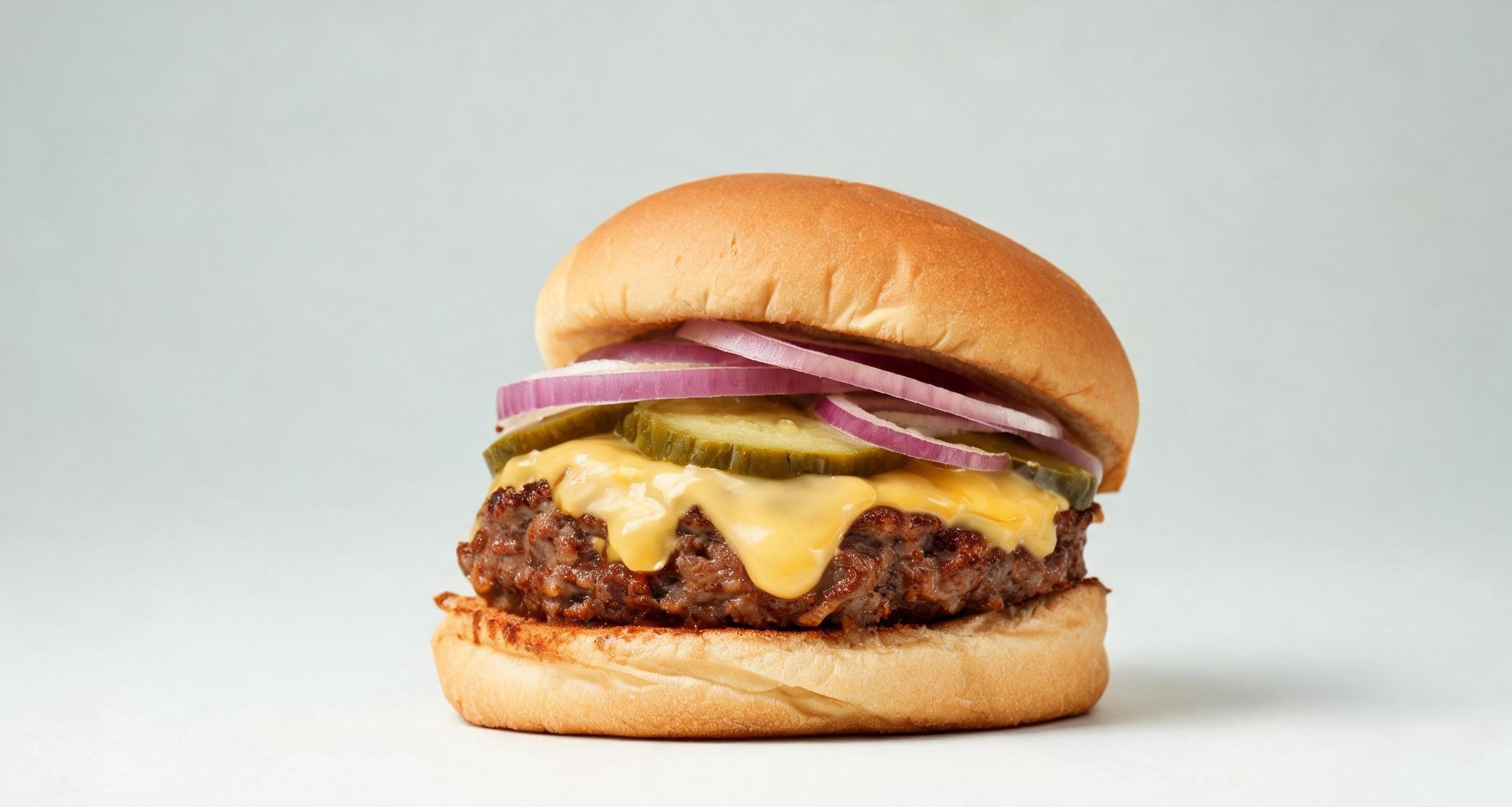
The bun is more important than most people realize. A smash burger needs a soft, slightly sweet bun that compresses when you bite into it. Potato buns work. Brioche buns work if they are not too rich. Martin's potato rolls are the standard recommendation, and they deserve the reputation. The bun should be toasted on the cut side, either in the pan at the end or under a broiler for a few seconds. A soft bun with a crispy beef patty and melted cheese is the texture combination that makes smash burgers work. If the bun is too crusty or too dense, the whole burger feels wrong. It should squish slightly when you pick it up.
I have made smash burgers for probably thirty people at this point, and the ones who are most skeptical are the ones who think a good burger has to be thick and medium-rare. A smash burger is not that. It is thin, well-done, and crispy, and the flavor comes from the browned crust, not from the internal temperature of the meat. The Maillard reaction, the chemical process that creates brown flavors on cooked meat, is maximized when the meat is thin and in direct contact with a hot surface. Every bite of a smash burger is crust. There is no soft, undercooked center to provide contrast. The contrast comes from the soft bun, the melted cheese, and whatever toppings you add. Pickles, raw onion, and a thin smear of mayonnaise are all you need. Ketchup and mustard are acceptable but optional.