I made my first batch of bagels on a Saturday morning in February because I was sick of paying six dollars for something that tasted like it had been sitting on a shelf since Thursday. My kitchen was cold, my flour was the wrong kind, and I had no idea what I was doing. Those first bagels were dense, pale, and vaguely bagel-shaped. My husband ate two anyway, which is either love or a lack of standards. I made another batch the following weekend, and the one after that, and within a month I had something worth putting cream cheese on.
The difference between a good bagel and a bread ring with a hole comes down to two things: the boil and the cold ferment. Skipping the overnight rest in the fridge is the number one mistake people make when they try this at home. That slow, cold proof tightens the gluten and concentrates the flavor in a way that a room-temperature rise simply cannot replicate. I mix the dough on Friday evening, shape it, and leave it on a sheet pan in the fridge overnight. By Saturday morning the bagels have firmed up and developed a slight tang that reminds me of the bagels I used to get at a shop on the Lower East Side that has since closed.
Flour choice matters more than you might think. Bread flour with a protein content around 12 to 13 percent gives the best chew. All-purpose works in a pinch but the texture will be softer, more like a roll. I use King Arthur Bread Flour and have never had a reason to switch. The hydration should sit around 50 to 52 percent, which is lower than most bread doughs. This stiffness is what gives bagels their dense crumb. If the dough feels too wet to handle, it probably is. Sprinkle a little extra flour on the board and keep going.
Shaping is the step that intimidates people the most, and it should not. Divide the dough into equal pieces, roughly 110 grams each if you want a standard-sized bagel. Roll each piece into a ball, then poke your thumb through the center to create the hole. Stretch the hole gently until it is about two inches across. The hole will shrink during baking, so make it bigger than you think it needs to be. Place the shaped bagels on a parchment-lined sheet pan, cover them, and put them in the fridge.
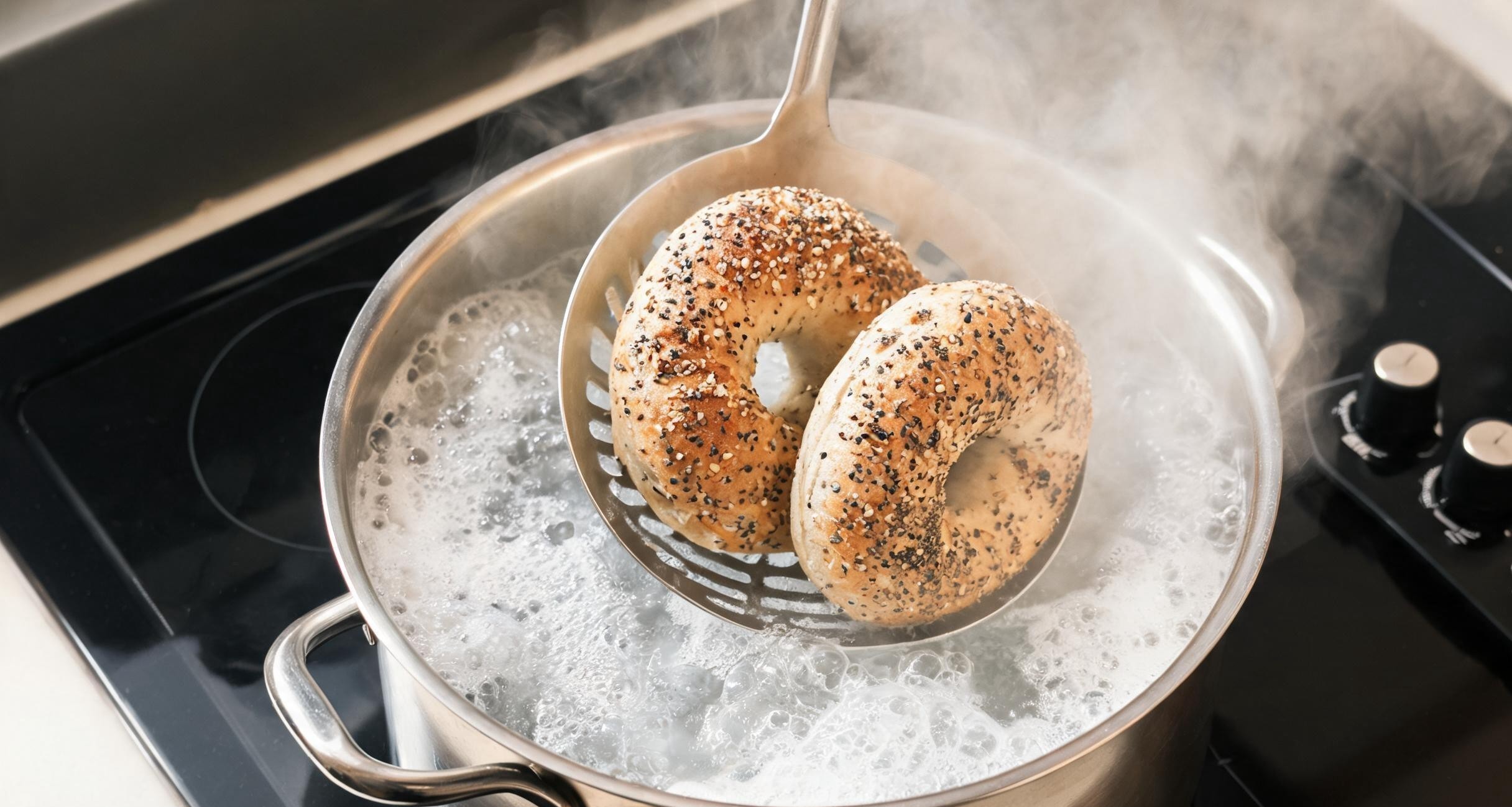
The boiling step is non-negotiable. Fill a wide pot with water, add a tablespoon of barley malt syrup if you can find it, or honey if you cannot, and bring it to a rolling boil. Drop the bagels in, no more than three or four at a time, and boil for thirty seconds per side. Remove them with a slotted spoon, let the excess water drain, and place them back on the parchment. If you want toppings, this is the moment. Everything bagel seasoning, sesame seeds, flaky salt, poppy seeds. Press them in so they stick.
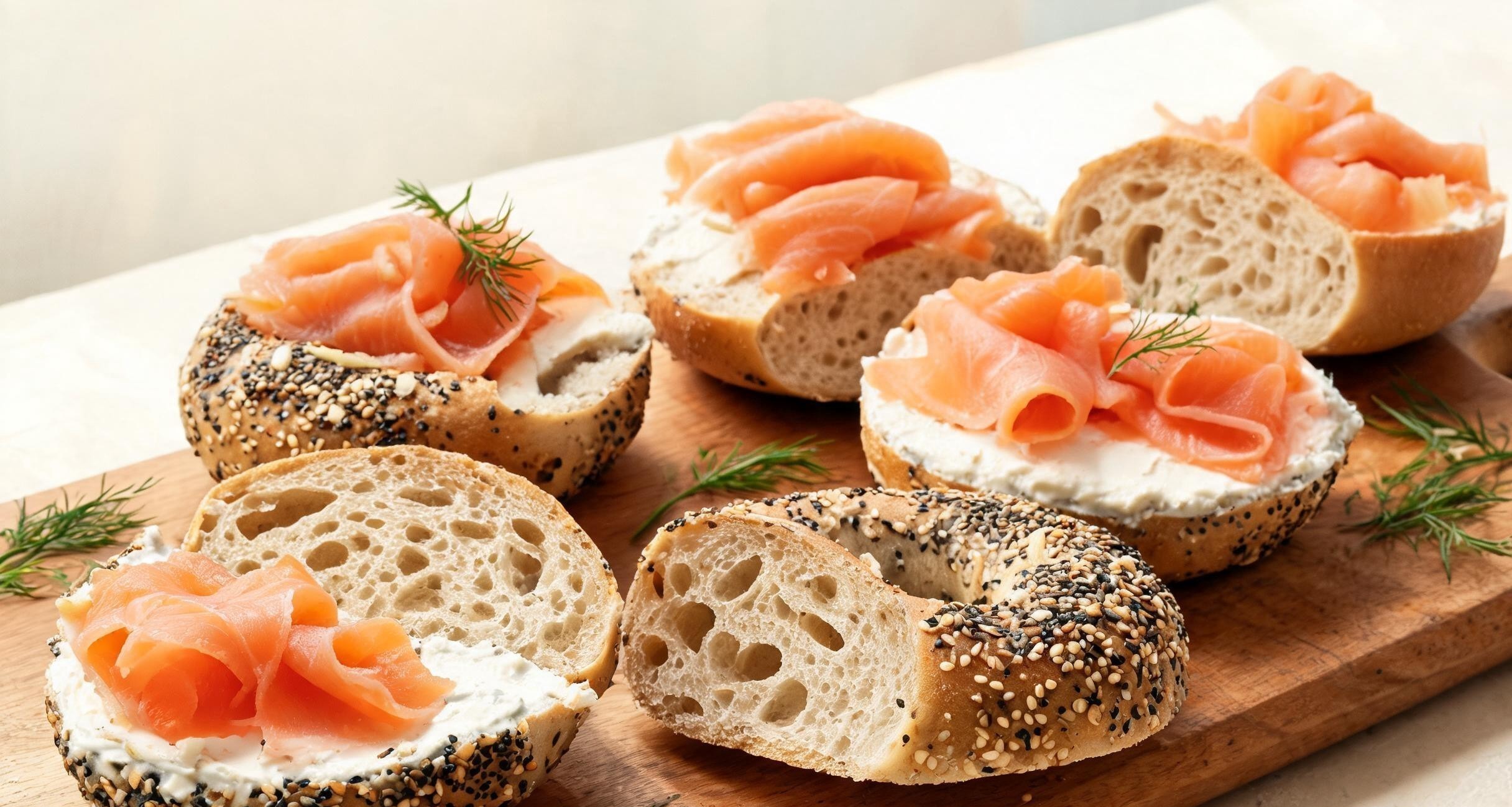
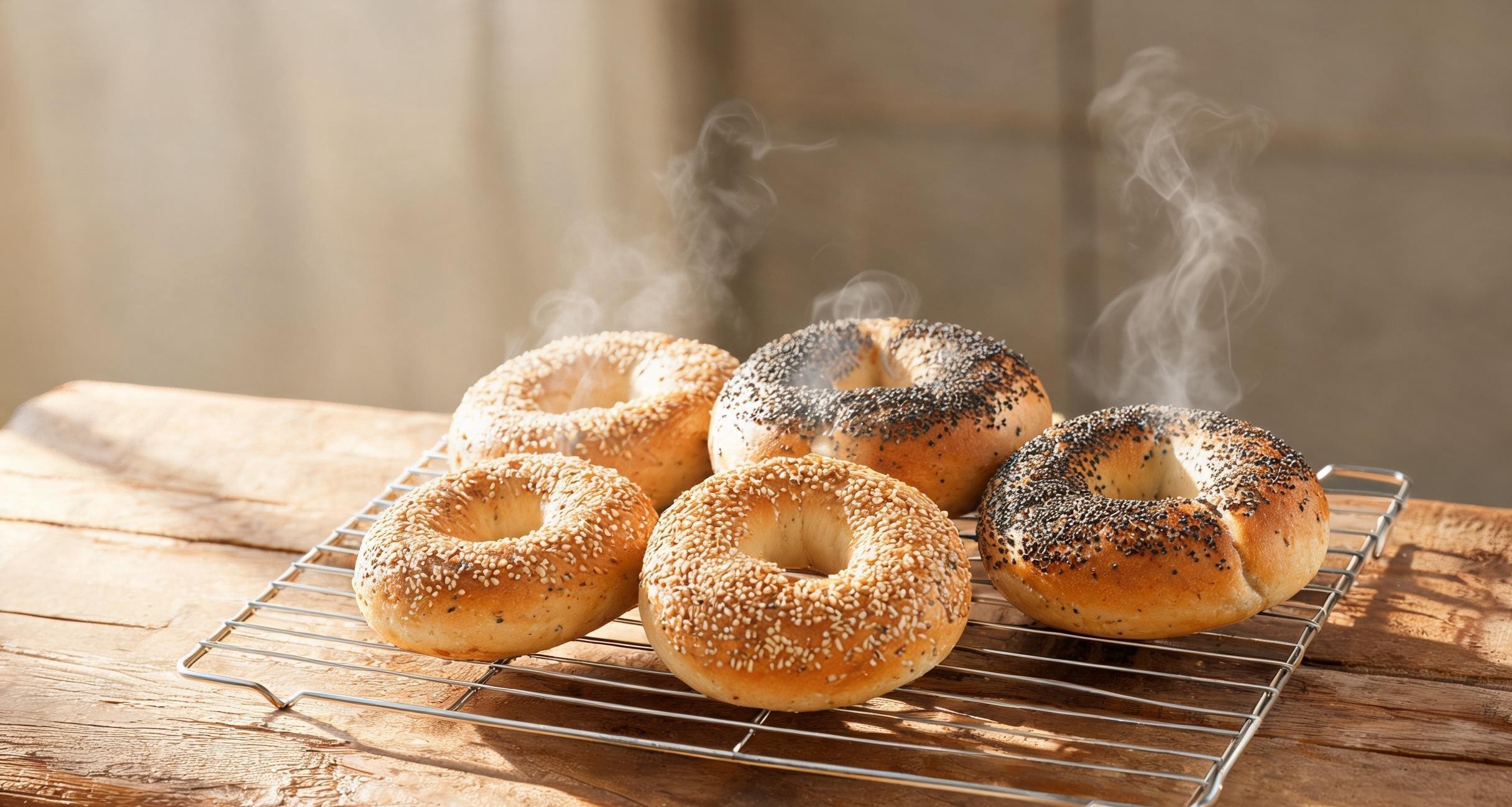
Bake at 425 degrees on a preheated stone or inverted sheet pan for about 20 to 22 minutes, flipping them halfway through. The bagels should be deeply golden, almost brown in spots. Let them cool on a wire rack for at least 15 minutes before slicing. I know the urge to cut into a hot bagel is overwhelming, but if you slice it while the interior is still steaming, the crumb will compress and you will lose the chew. Patience. You waited all night for these. You can wait another fifteen minutes. Storage is worth mentioning because it trips people up. Bagels go stale fast, within a few hours at room temperature. If you are not eating them the same day, freeze them immediately, individually wrapped, and toast straight from the freezer. Do not refrigerate them, because the cold temperature accelerates staling and makes the crust rubbery. A frozen bagel, split and toasted, will taste almost as good as fresh. A refrigerated bagel will not. The result, after all this, will be a bagel with a crackly crust, a dense and chewy interior, and a flavor that has nothing to do with the supermarket version. It will cost you about fifty cents in ingredients and twelve hours of mostly hands-off time. Every Saturday morning, I pull my sheet pan out of the fridge and drop the bagels into boiling water, and the smell of malt syrup and bread fills the kitchen. My husband comes downstairs without being called. The cream cheese is already on the counter. It is a routine now, and it started because I was tired of paying six dollars for something I could make better at home.
The water in New York City is often credited with the superiority of its bagels, and while the mineral content of the water does affect gluten development, the real secret is simpler. It is the boil. New York bagel shops boil their bagels before baking, sometimes in water with a touch of lye or barley malt syrup, and this step gelatinizes the starches on the surface, creating the shiny, chewy crust that defines a proper bagel. Skip the boil and you have a roll with a hole. The baking soda or malt syrup in the water is not optional either. It raises the pH and promotes browning, giving the crust its deep color.