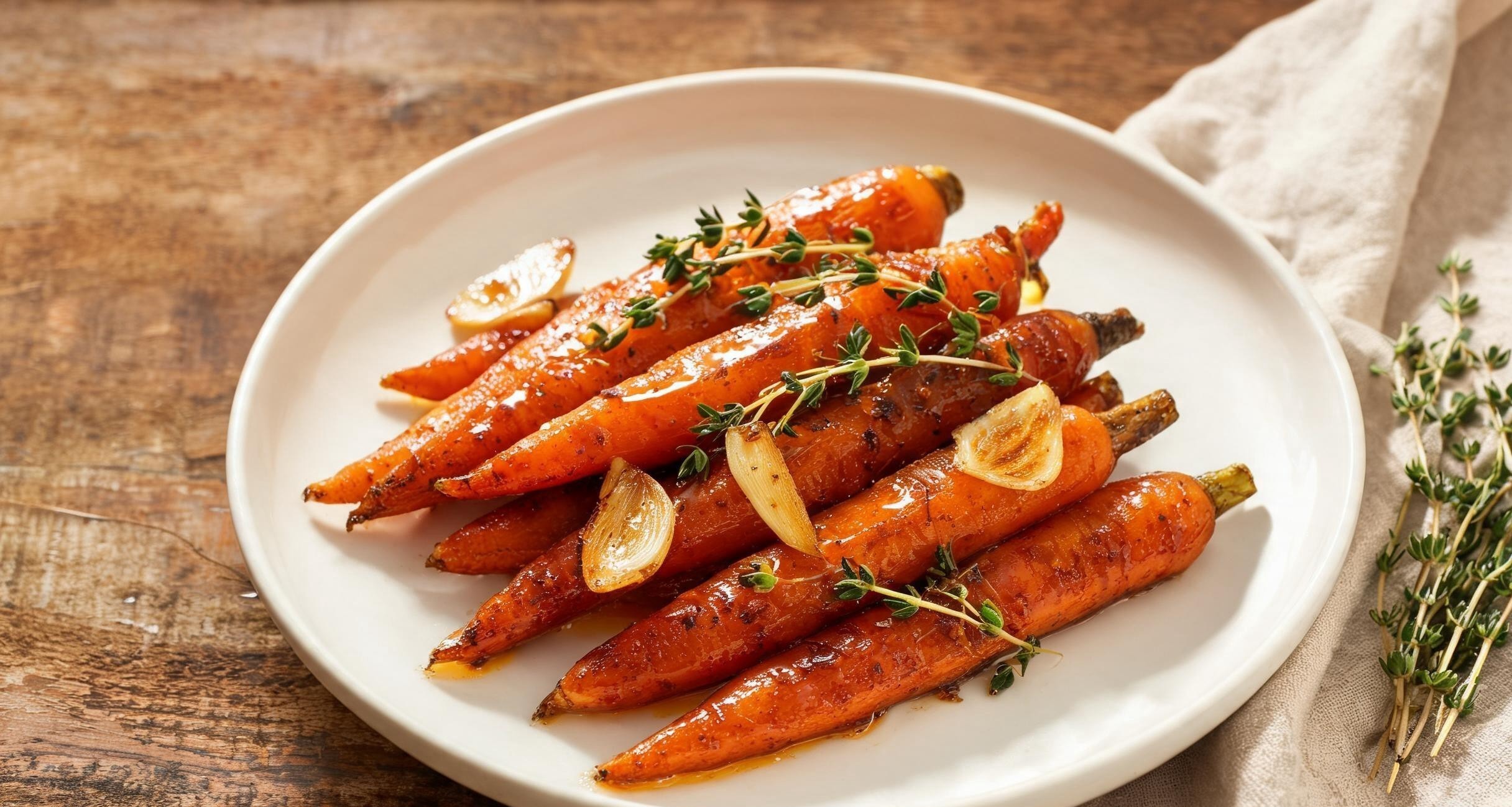
I started making glazed carrots because I had nothing else to make. It was a Tuesday night, I had not been to the grocery store in a week, and the crisper drawer contained a bag of carrots that were starting to bend at the tips, a head of garlic, half a stick of butter, and a jar of honey that was crystallizing around the lid. I peeled the carrots, cut them on a diagonal into two-inch pieces, melted the butter in a skillet, added the carrots, and let them cook over medium heat until they started to brown at the edges. Then I added a generous squeeze of honey, a pinch of salt, and three cloves of crushed garlic. Twenty minutes later, I had a plate of carrots that were sweet, slightly caramelized, and utterly unlike any side dish I had ever bothered to make on a weeknight. I have made them at least twice a week since. The recipe is simple enough that I can do it without thinking, and good enough that it has become one of the dishes I make when I want to feel like I cooked something even when I barely cooked anything.
The carrots matter. You want medium-sized carrots, not the baby ones that come in a bag and taste like wet cardboard, and not the massive ones that have been sitting in cold storage for six months. Farmers market carrots, if you can find them, are worth the extra effort. They are sweeter, more flavorful, and they cook more evenly because they have not been bred for uniformity and shelf life at the expense of taste. I cut them on a diagonal, about two inches long and half an inch thick, which gives them more surface area for caramelization than straight cuts. The diagonal cut is not decorative. It is practical. More surface area means more contact with the pan, which means more browning, which means more flavor. Each piece has a flat side and an angled side, and both sides get color in the pan.
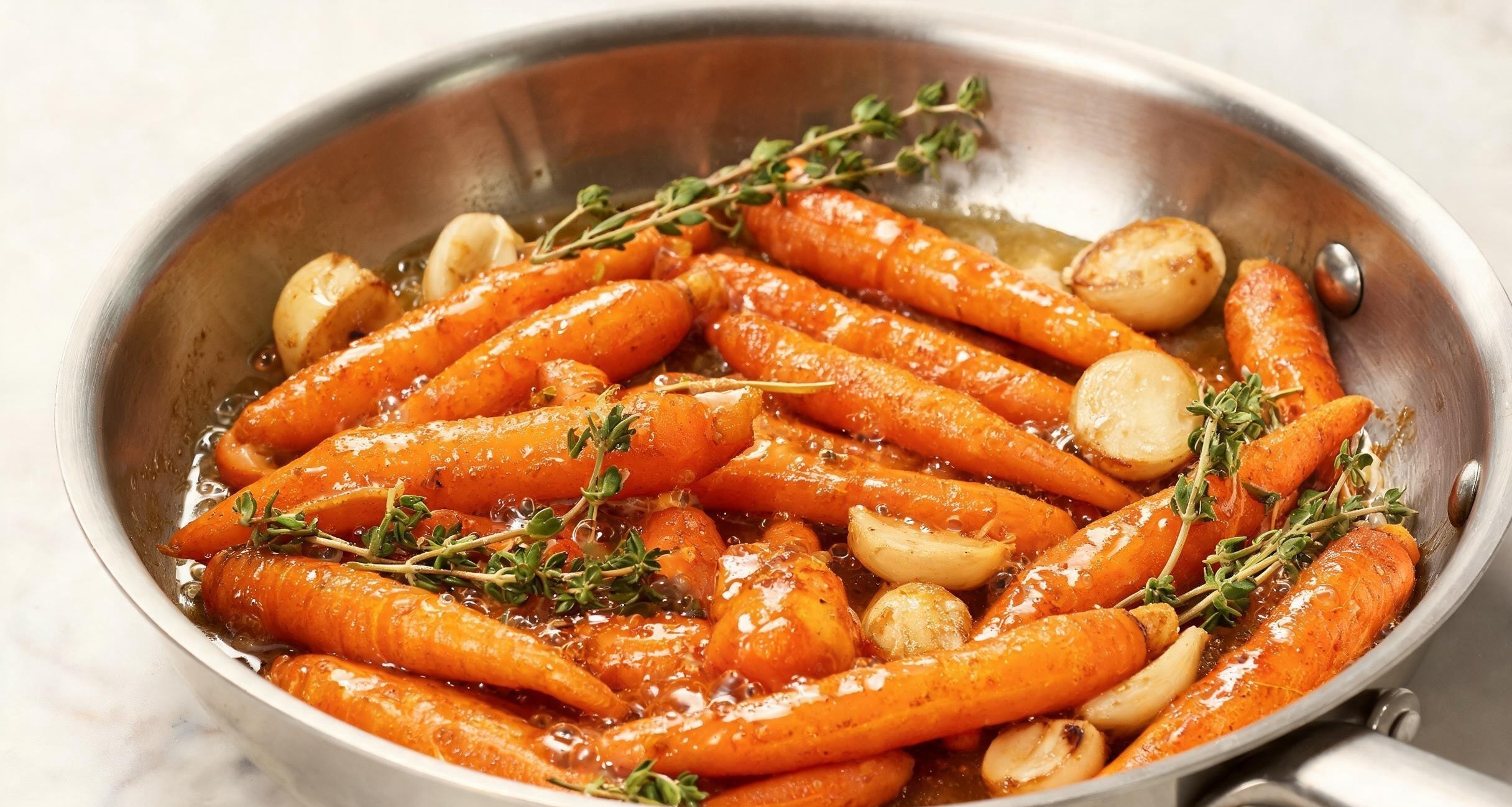
The cooking is straightforward but requires attention. Melt two tablespoons of butter in a large skillet over medium heat. Add the carrots in a single layer, do not crowd the pan, and leave them alone for four to five minutes. Let them develop some color before you move them. After the first side has browned, flip them and let the second side cook for another three to four minutes. At this point, the carrots should be tender when pierced with a knife. If they are not, add a splash of water to the pan, cover it, and let them steam for two more minutes. Then remove the cover, let the water cook off, and proceed with the glaze. The key to good glazed carrots is getting the browning right before you add the sweet elements. If you add the honey too early, the sugar will burn before the carrots are fully cooked.
For the glaze, add two tablespoons of honey, three cloves of garlic that you have smashed with the flat side of a knife, and a tablespoon of fresh thyme leaves. Stir everything together and cook for another two to three minutes, until the honey coats the carrots in a thin, sticky layer and the garlic is fragrant. Season with salt and pepper. That is the entire recipe. The honey caramelizes in the butter, the garlic softens and mingles with the sweetness, and the thyme adds an earthy note that keeps the carrots from being one-dimensionally sweet. I have tried variations with maple syrup instead of honey, with rosemary instead of thyme, and with a squeeze of lemon juice at the end for brightness. They all work. But the honey, garlic, and thyme version is the one I keep coming back to because it is the one I can make without thinking.
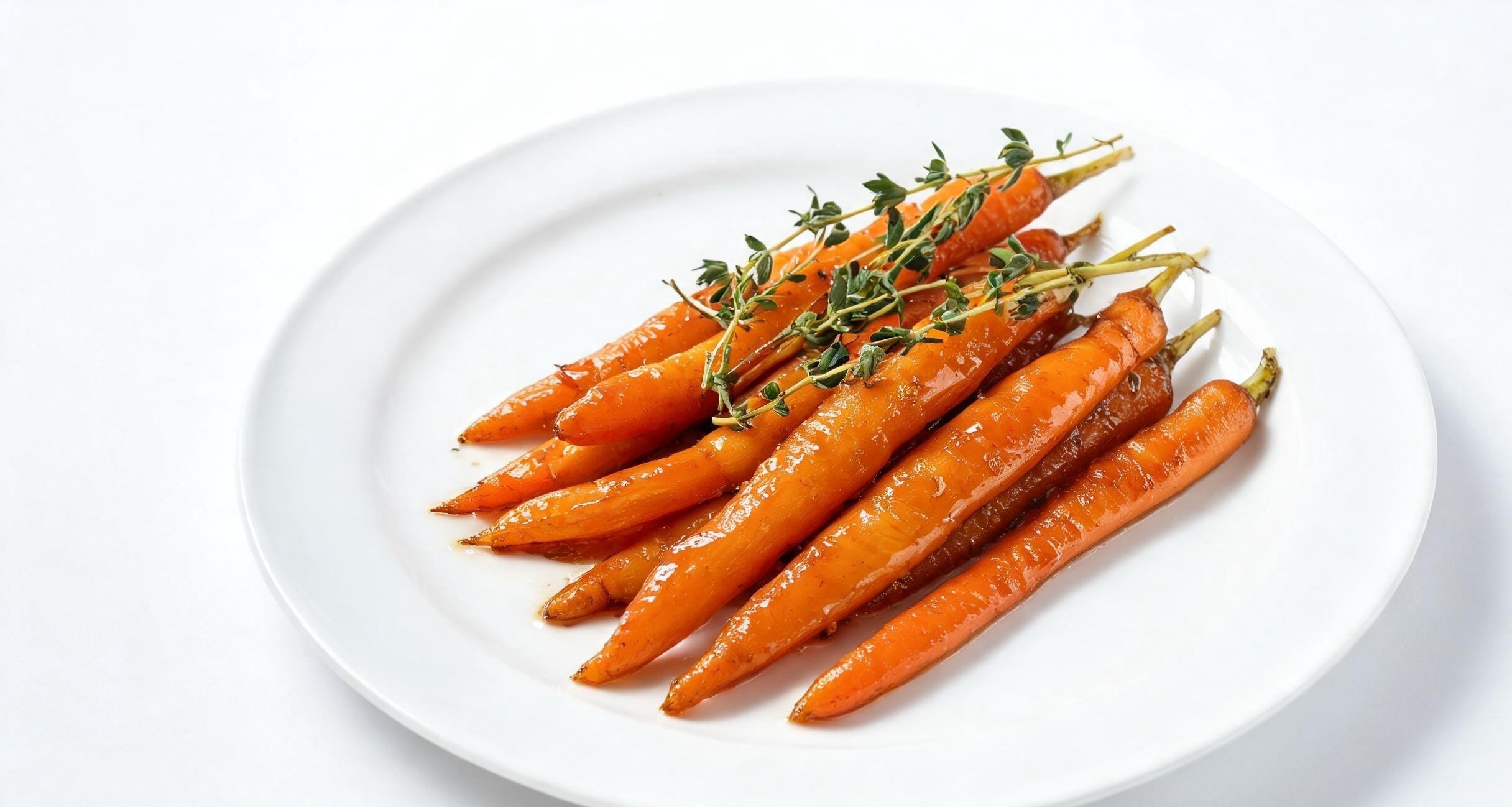
The reason these carrots have become a regular part of my cooking is not because they are impressive or complicated. It is because they are the kind of dish that makes everything else on the plate better. Alongside roast chicken, they add sweetness. Next to grilled steak, they add a soft, sweet contrast to the char. With a simple piece of fish and some rice, they turn a bare-bones dinner into something that feels like a meal. They take twenty-five minutes, they use ingredients I almost always have, and they are good enough that I have served them to company without feeling like I was cutting corners. Sometimes the best recipes are not the ones you plan for. They are the ones you make when the crisper drawer is almost empty and you have to figure something out with what is left.
I have served these carrots to people who do not like carrots, and they ate them without complaint. That is about the highest endorsement a carrot dish can get. The caramelization and the honey and the garlic transform a vegetable that most people consider boring into something that people actually want to eat. The garlic softens enough in the butter that it is sweet and mild, not sharp. The thyme adds a subtle herbal quality that keeps the dish from being too sweet. The salt at the end balances everything. It is a three-ingredient glaze applied to a vegetable that costs about two dollars a pound, and the result tastes like something you would pay twelve dollars for at a farm-to-table restaurant. That kind of value, in terms of effort versus result, is rare in cooking, and it is why I keep making these carrots every week. They are proof that you do not need expensive ingredients or complicated techniques to make something worth eating.