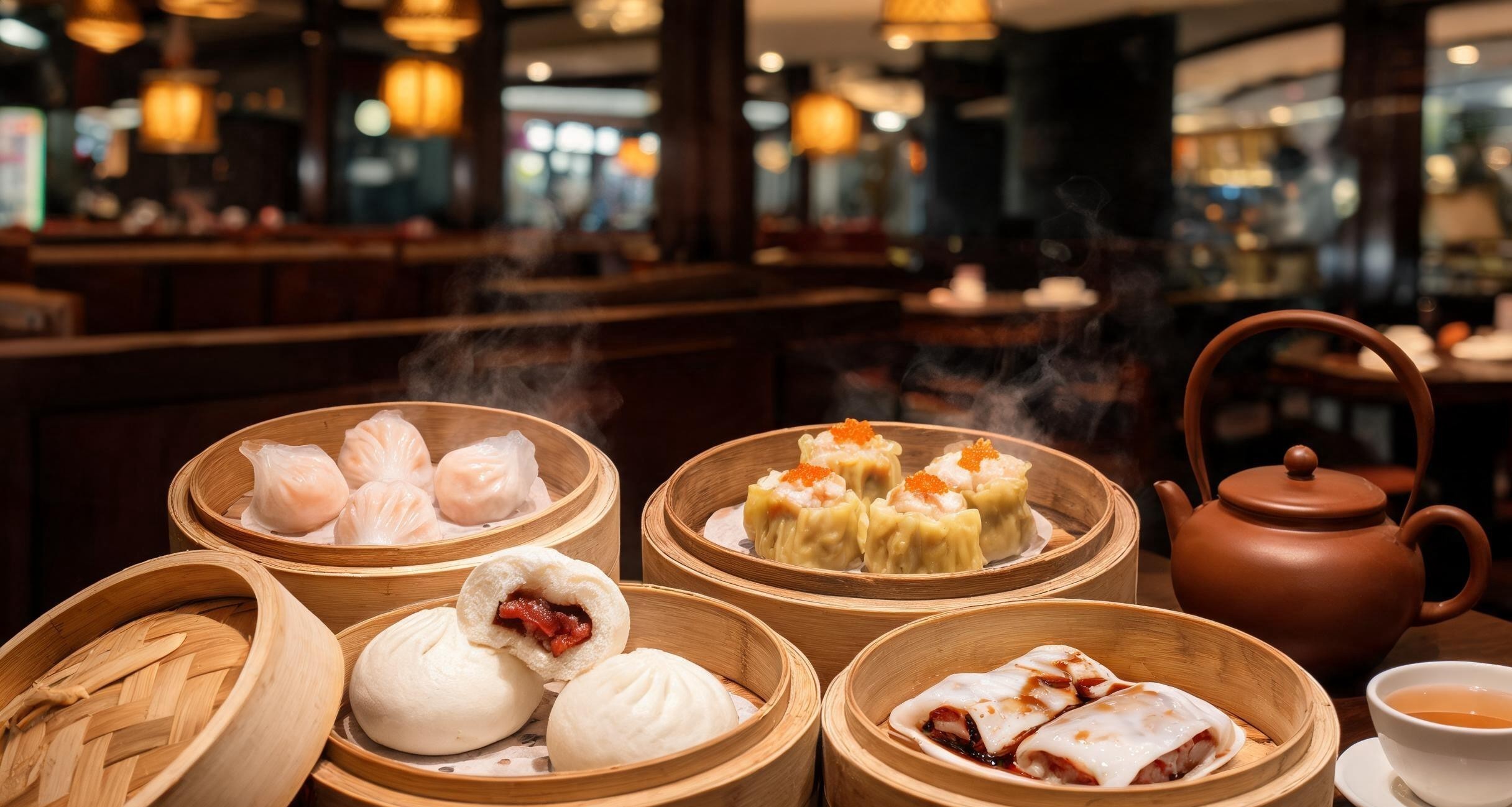
My grandmother in Tokyo used to make gyoza on Sunday afternoons, and I thought I understood dumpling culture until I walked into a dim sum restaurant in Hong Kong at ten in the morning and saw the scale of the operation. At Lin Heung Tea House on Wellington Street, there are no menus. Women push stainless steel carts through a dining room that seats two hundred people, and you flag them down and point at the bamboo steamers stacked on the cart and hope that what is inside is what you want. There is a system of stamps that the waiters use to mark your card for each dish, and by the end of the meal your card is covered in red and blue ink marks and you have no idea what you have been charged for until the bill arrives. The chaos is part of the experience. My friend, who grew up in Hong Kong, says the best dim sum restaurants are the ones where the carts move fastest, because that means the food is fresh and the turnover is high. Slow carts mean food that has been sitting.
Lin Heung has been open since 1948, and very little about the place has changed since then. The dining room is large and loud, with round tables topped with glass turntables that allow everyone at the table to reach the dishes. The tea service is serious. You choose your tea when you sit down, and the options go beyond what most Westerners expect. I ordered pu-erh, the fermented dark tea that pairs well with rich foods because its earthy, slightly musty flavor cuts through fat. My friend ordered chrysanthemum, a light floral tea that she said was better with the lighter vegetable dumplings. The tea is poured from a pot with a long spout, and there is an unspoken etiquette: when someone pours tea for you, you tap two fingers on the table to say thank you. Fail to do this and your friend will tap your fingers for you. The tea is free or nearly free, refilled constantly, and it is as important to the meal as the food itself.
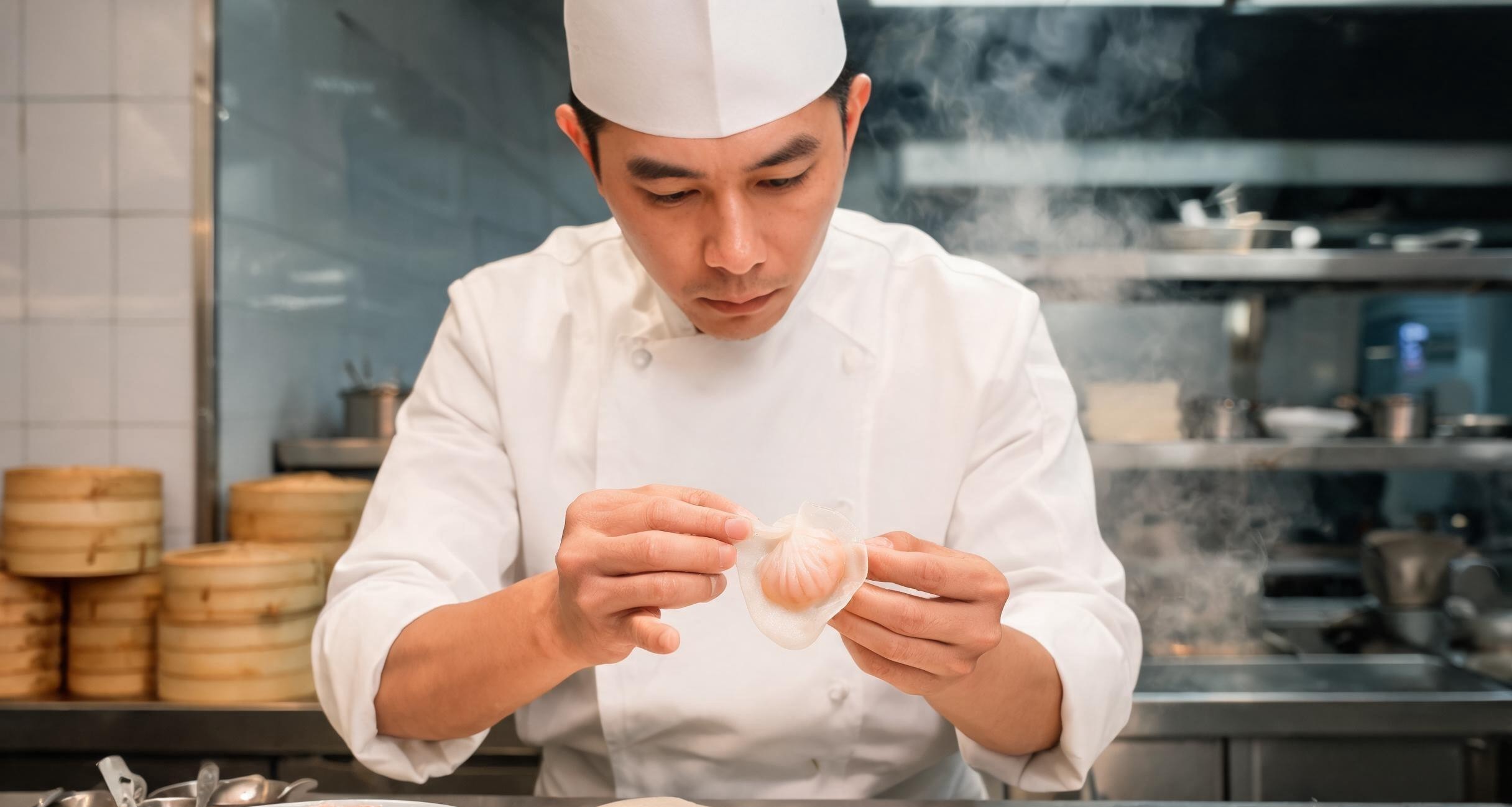
The har gow, the shrimp dumplings that are the benchmark of any dim sum restaurant, were excellent. The wrappers were thin and translucent, slightly sticky, with a visible pink tint from the shrimp inside. Each dumpling contained two or three whole shrimp, not chopped shrimp paste, and the filling had a slight snap when I bit into it, a sign that the shrimp were fresh and had not been overcooked. The char siu bao, the barbecue pork buns, were also strong, with a fluffy white dough that split open to reveal a sweet, saucy filling of diced pork in a glossy glaze. I ate four of them, which my friend said was excessive but not embarrassing. Other standouts included the siu mai, open-topped dumplings filled with pork and shrimp, and the cheong fun, wide rice noodle rolls filled with shrimp and drizzled with soy sauce. The cheong fun arrived from a cart in a stack of five, the noodles soft and slippery, the shrimp inside cooked just through.
The second restaurant, Tim Ho Wan in the IFC mall, is a more modern take on dim sum. It has a Michelin star, which is unusual for a restaurant where most dishes cost under five US dollars. The dining room is clean and bright, and instead of carts, you order from a menu and the dishes arrive from the kitchen. The food is made to order rather than steamed in advance and pushed around the room, which means everything is hotter and fresher. The har gow here were technically perfect, the wrappers even thinner than at Lin Heung, almost diaphanous. The char siu bao were equally good, with a slightly less sweet filling that I preferred. But the dish that everyone talks about at Tim Ho Wan is the baked char siu bao, a variation where the bun is baked instead of steamed, giving it a crisp, golden top with a crackly sugar glaze. The interior is soft and the pork filling is the same sweet-savory mixture, but the contrast between the crisp top and the soft interior makes it feel like a different dish entirely.
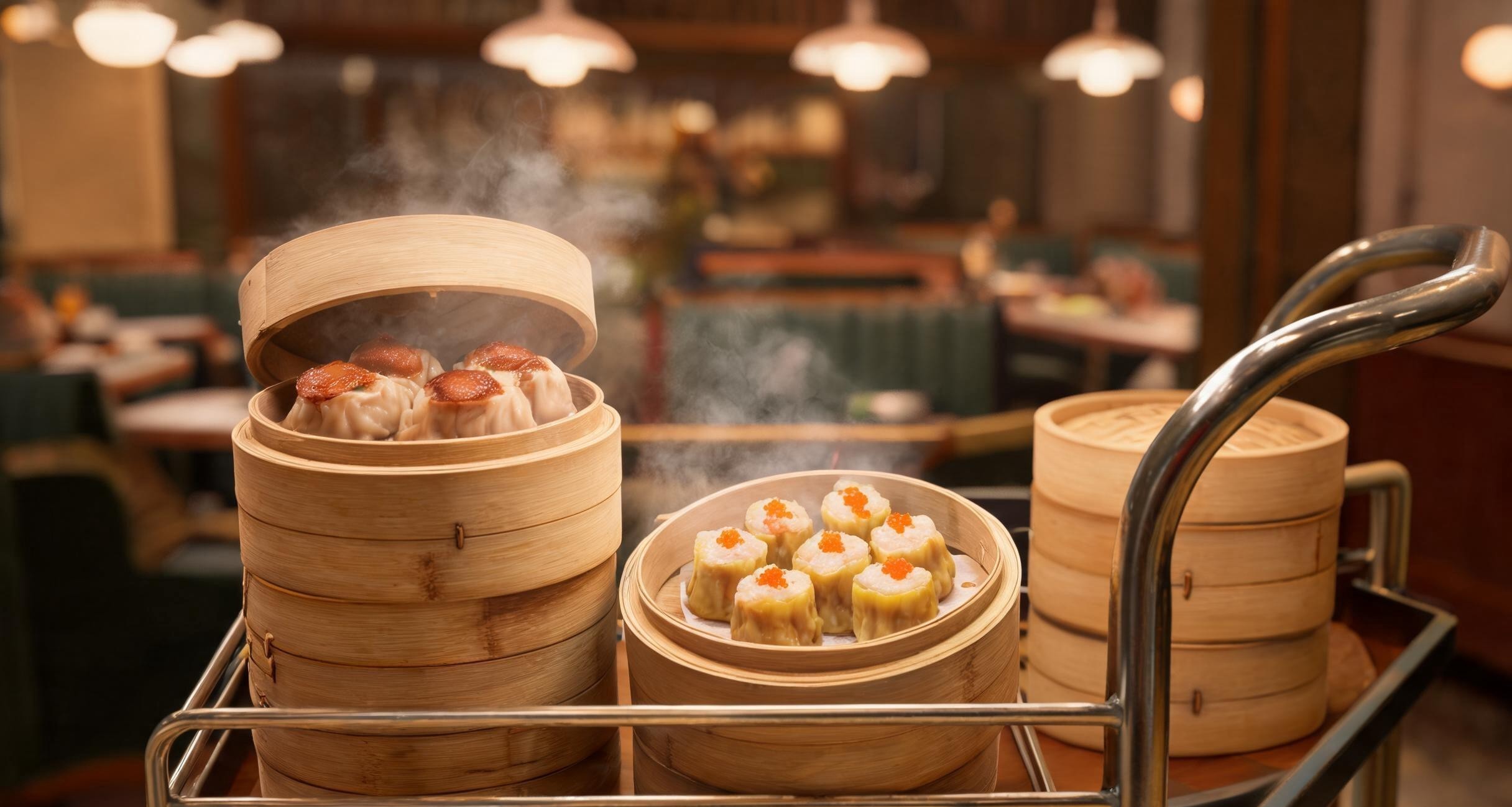
Comparing the two experiences is not really fair because they are trying to do different things. Lin Heung is a piece of old Hong Kong, a place where the noise level and the cart system and the shared tables make you feel like you are participating in a daily ritual that has been going on for decades. Tim Ho Wan is a refined, efficient version of the same tradition, with better consistency and slightly more precise execution. If I had to choose one for the food alone, I would pick Tim Ho Wan. If I had to choose one for the experience, Lin Heung wins easily. The best approach is to do both, on consecutive mornings, the way I did. Start with Lin Heung for the atmosphere and the tea ritual, then go to Tim Ho Wan for the baked char siu bao and the made-to-order freshness. Your hotel concierge can help you get a table at Tim Ho Wan. At Lin Heung, you just walk in and find a seat, which may mean sharing a table with strangers. That is part of it. Order more than you think you need, and do not skip the egg tarts.