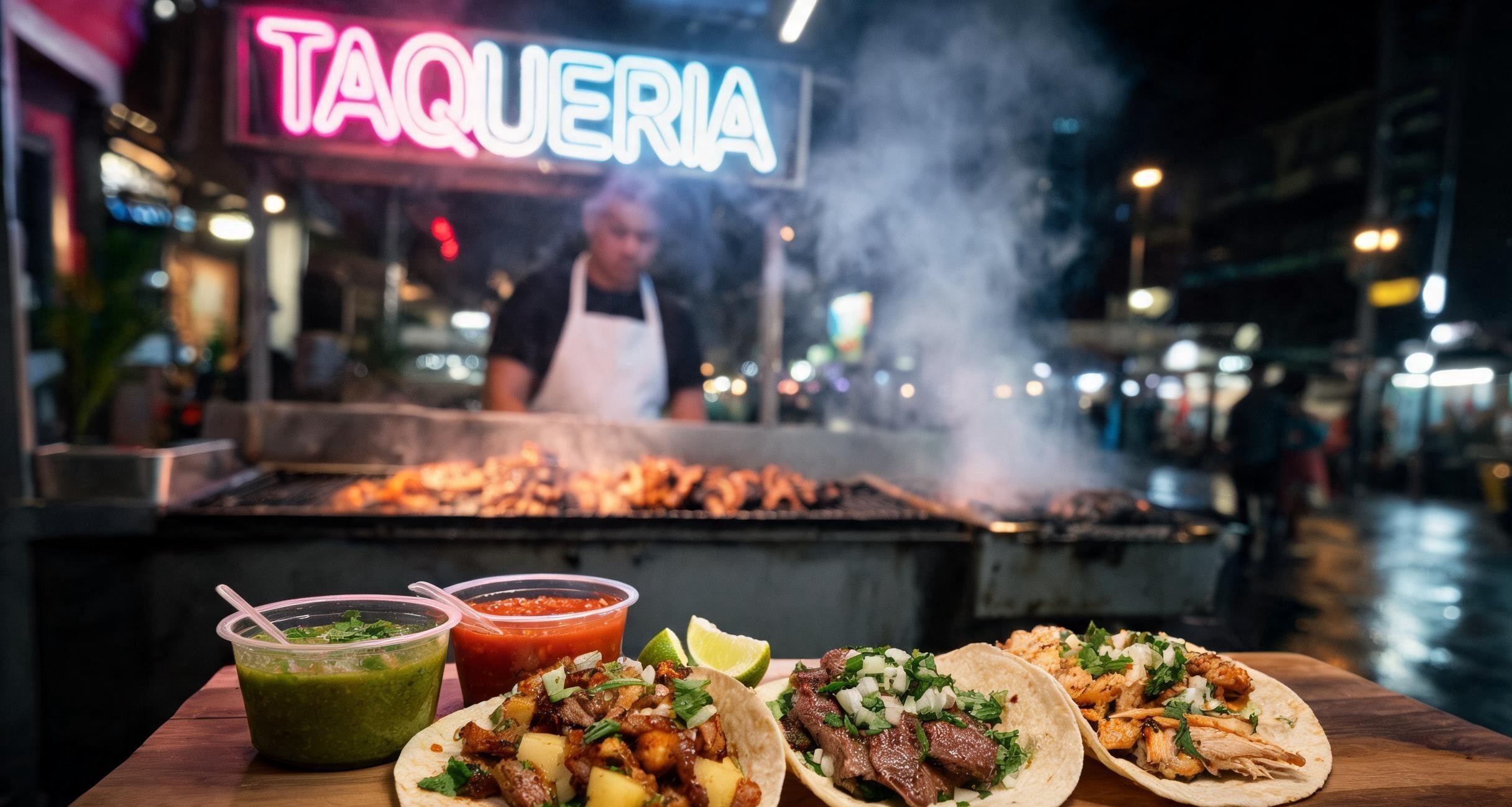
I ate my first taco de suadero at El Huequito at 1:30 in the morning on a Wednesday in December, and I have not been the same since. The stand is on Calle Caracas in the Centro Historico, a metal cart under a yellow tarp with a single fluorescent tube buzzing overhead. The grill was packed with thin slices of beef suadero, the cut between the belly and the leg that most butchers in other countries would grind into hamburger. Here, it gets slow-cooked on a flat plancha until the edges crisp up and the fat renders out, then it gets chopped and piled into small corn tortillas that have been softened on the same grill. The cook topped each taco with a handful of chopped onion and cilantro and handed me two on a plastic plate. I added salsa verde from the jar on the counter and ate them standing up, leaning against a pillar because there were no seats. The meat was tender and rich, with a depth that cheap cuts develop when they are given time and heat. I went back the next night and ordered four.
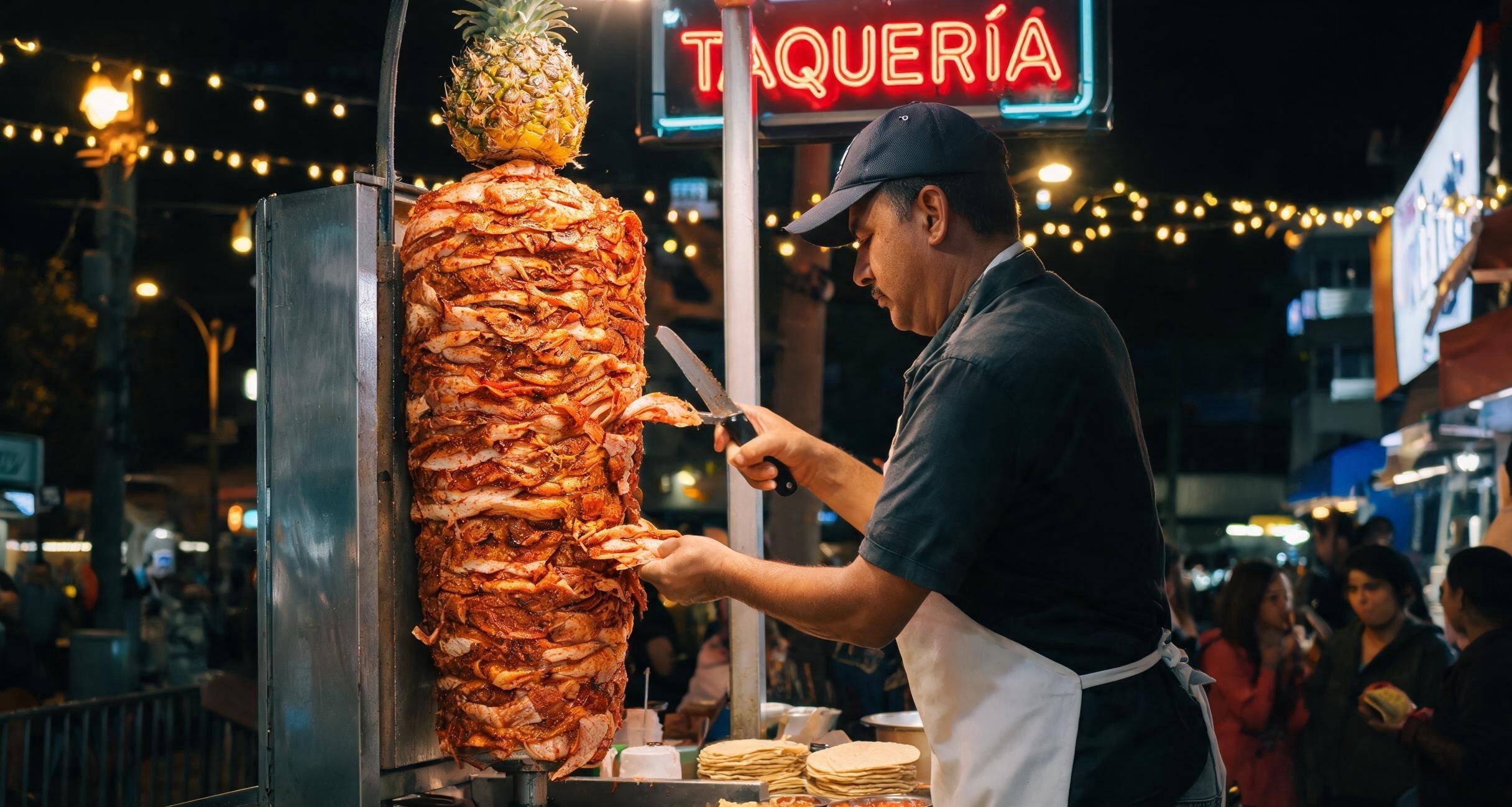
El Vilsito, a taco stand that operates out of a mechanic's garage in Narvarte during the day, becomes a late-night destination after midnight. The al pastor here is shaved from a trompo, the vertical spit stacked with marinated pork that spins in front of a gas flame. The cook catches the shaved meat in a tortilla with one hand, flips it onto the griddle, and adds a sliver of pineapple that has been cooking on the edge of the spit. The whole operation takes about fifteen seconds per taco. What makes El Vilsito stand out is the quality of the marinade. The achiote paste is house-made, with dried guajillo and ancho chiles blended with vinegar and spices, and the pork has been sitting in it for at least twenty-four hours. The result is a taco with a smoky, slightly sweet flavor and a char on the edges that you only get from the direct flame of the trompo. I ate six and considered eating more. The line at two in the morning was fifteen people deep, and nobody complained.
Los Parados in Santa Maria la Ribera specializes in tacos de campechanos, a style that mixes different meats on a single tortilla: usually suadero, longaniza, and cuerito, which is pickled pork skin. The combination sounds chaotic and it is, in the best possible way. You get the richness of the beef, the snap of the sausage, and the tangy crunch of the cuerito in every bite, and the textures play off each other in a way that a single-meat taco never could. The salsas here are serious. The red salsa is made with dried arbol and morita chiles, and the green salsa uses tomatillos and serrano with a handful of raw cilantro thrown in at the end. Both are thin enough to soak into the tortilla without turning it to mush. I watched a man in a business suit eat five campechanos in ten minutes while checking his phone, and I understood that this was not a novelty for him. This was dinner.
Tacos El Borrego in the Doctores neighborhood is the place for birria de chivo, goat birria slow-cooked until the meat falls off the bone and the broth turns a deep brick red. The birria tacos here come two ways: dry, with just the meat and a sprinkle of onion on the tortilla, or wet, where the cook dips the filled tortilla into the birria consomme before serving it. The wet version is a mess to eat and it is the one you want. The tortilla absorbs the broth and becomes soft and saturated, and the consomme that pools on the plate is meant to be drunk from a small cup between tacos. I sat at the stand until 3:00 AM, eating wet birria tacos and drinking consomme while the cook told me about his uncle who had been running the same recipe for forty years. The secret, he said, was dried guajillo chiles toasted on a comal until they were almost black, then blended with the cooking liquid. Simple ingredients. Hours of heat. The same thing Mexican grandmothers have been doing for generations.
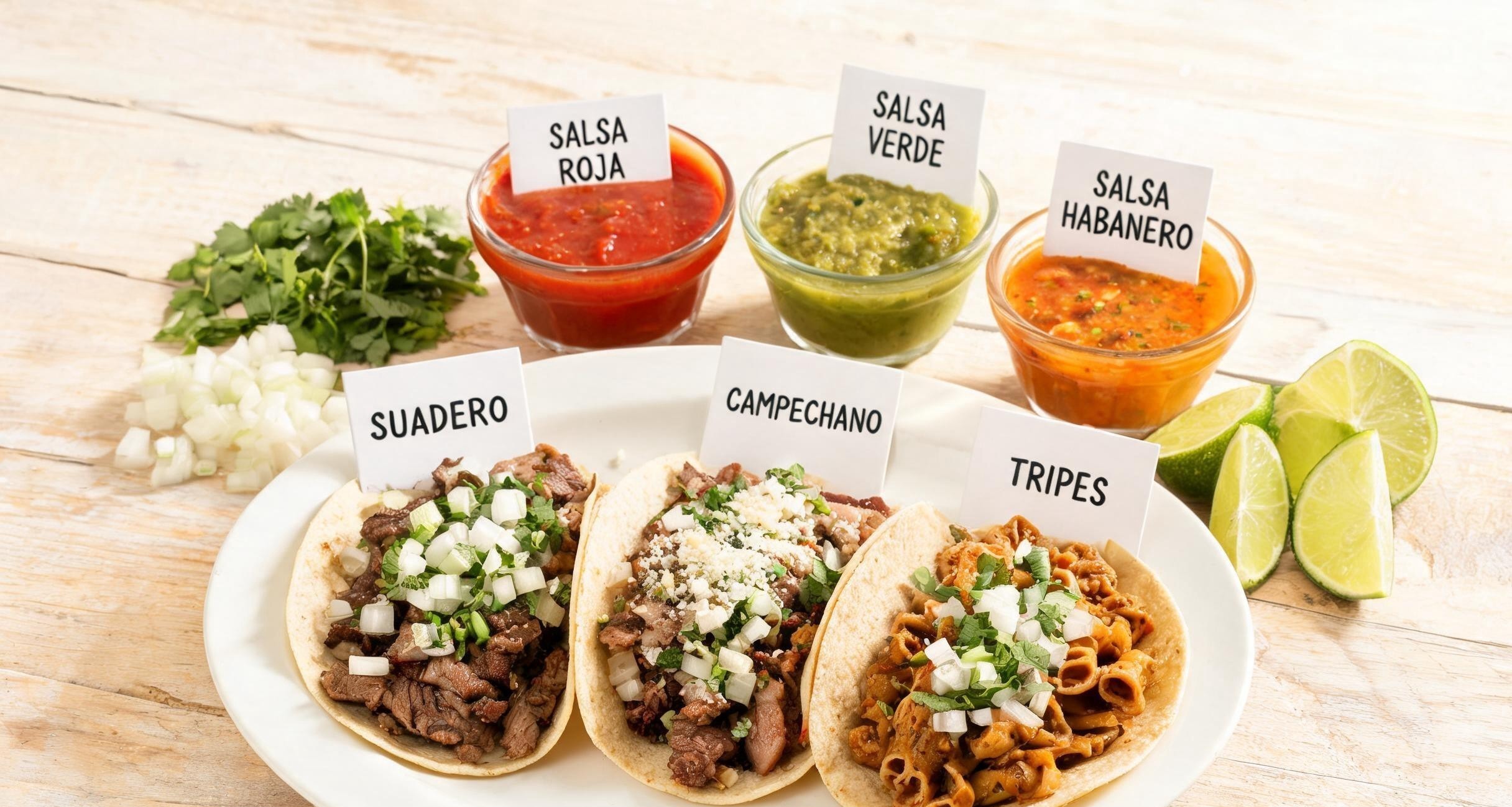
What ties these four stands together is not a style or a technique or a particular cut of meat. It is the timing. Every one of these places does its best business after midnight, when the bars close and the night-shift workers come looking for something hot and filling. The tacos are fast because they have to be. Nobody is lingering over a tasting menu at 2:00 AM. You order, you eat, you leave, and the cook is already making the next round before you have finished the first. There is no pretense, no presentation beyond a plastic plate and a squeeze bottle of salsa, and the prices are low enough that you can eat four or five tacos for less than a drink at a nice bar. That accessibility is what makes Mexico City's late-night taco culture different from street food scenes anywhere else in the world. It belongs to everyone, from the cab driver ending his shift to the college students who started drinking at noon.
I have eaten tacos in seven countries now, and the ones I keep thinking about are the ones from that week in Mexico City. They were not the prettiest or the most complex. They were served on Styrofoam plates under streetlights, by cooks who had been standing at the same griddle since before I was born. But the meat was right, the tortillas were warm, the salsas had bite, and the whole scene felt honest in a way that restaurant food rarely does. If you find yourself in Mexico City and it is past midnight and you are hungry, do not go to a restaurant. Find a stand with a line of locals and a hot griddle. Order whatever they are known for. Eat standing up. That is the taco.