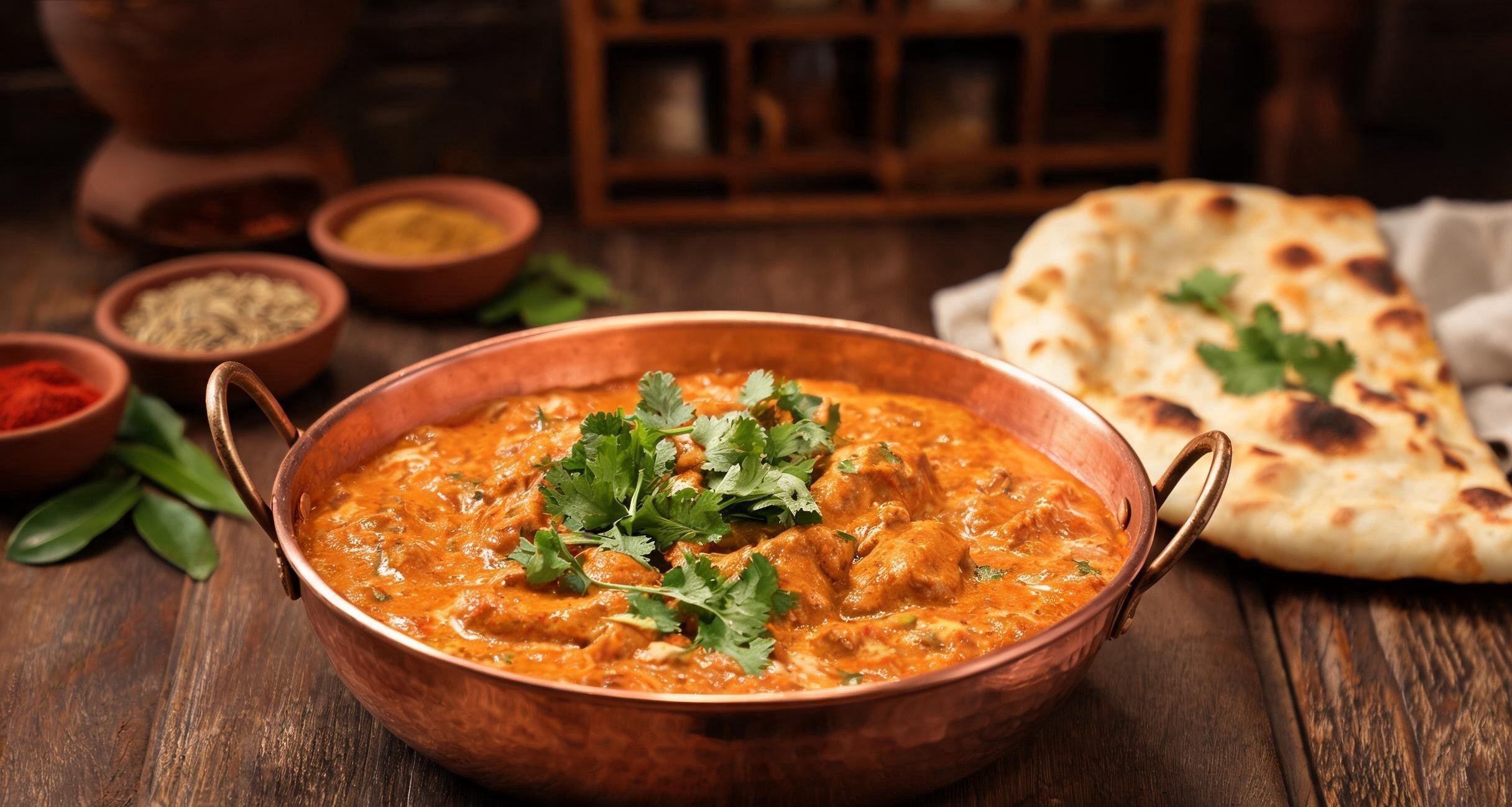
I did not care about butter chicken for most of my life. It seemed like the dish people ordered when they were afraid of Indian food, the safe choice on a menu full of things I actually wanted to eat. That changed in Delhi, at a small restaurant in a neighborhood tourists never visit, where the owner's mother was making butter chicken in a kitchen the size of a closet. She marinated the chicken in yogurt and tomato paste with spices I could smell from the dining room. She cooked it in a tandoor until the edges were slightly charred. Then she folded the chicken into a sauce made from tomatoes, butter, and cream that had been simmering for hours. The result was nothing like the sweet, orange, one-note versions I had eaten at restaurants outside India. This butter chicken was complex, smoky, tangy, and deeply rich, with a heat that built slowly. I ate it with plain naan and nothing else, and I have been trying to understand it ever since.
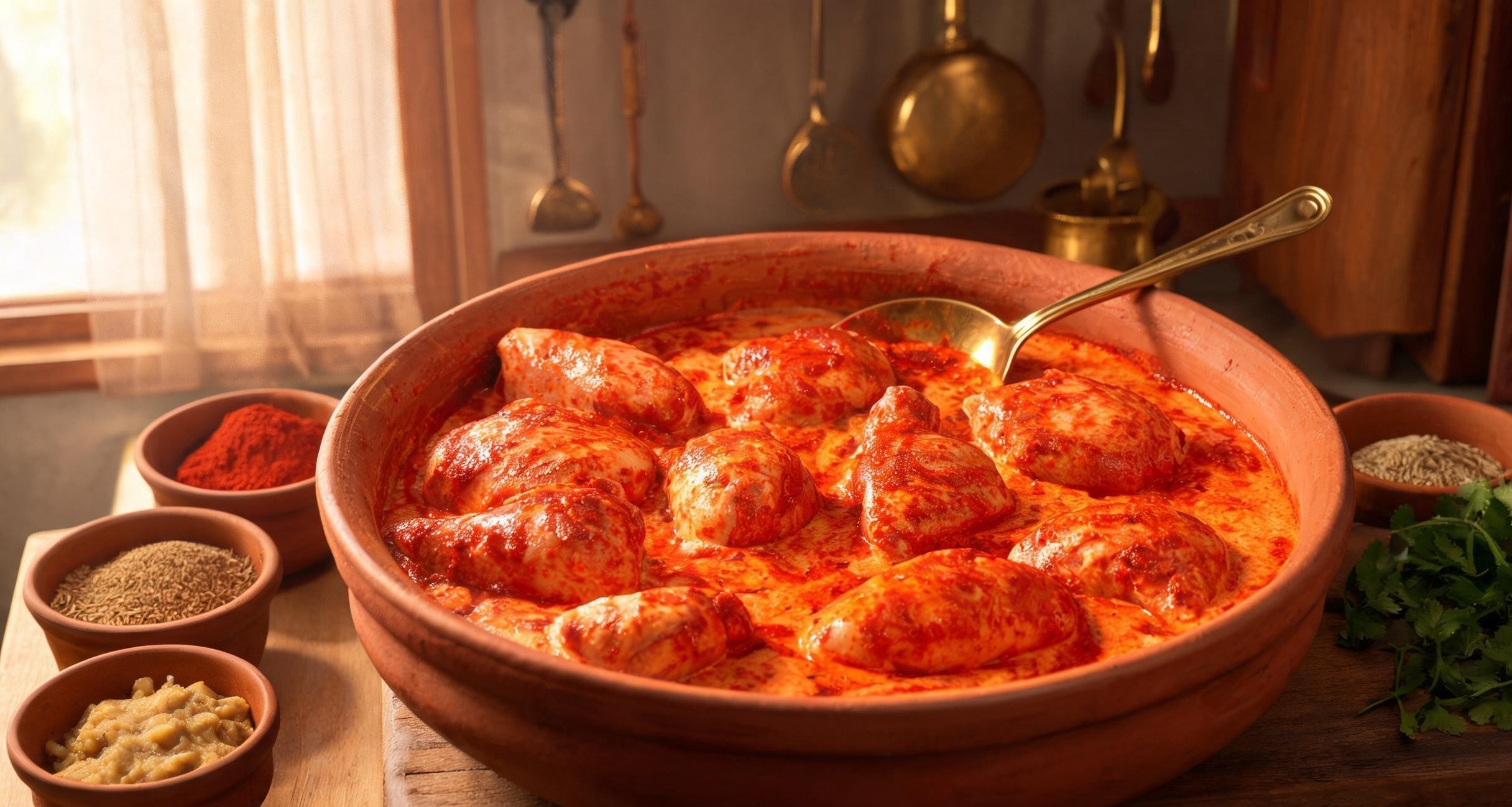
The chicken is marinated before cooking, and this is where a lot of the flavor is built. Use boneless chicken thighs, not breasts, because the higher fat content keeps the meat juicy during the high-heat cooking. For the marinade, combine a cup of full-fat yogurt, two tablespoons of tomato paste, a tablespoon of ginger-garlic paste, a teaspoon each of garam masala, cumin, Kashmiri chili powder, and a pinch of salt. Kashmiri chili powder is worth tracking down for this recipe because it gives the dish its characteristic deep red color without excessive heat. If you cannot find it, use a mix of regular chili powder and a pinch of paprika. Marinate the chicken for at least two hours, or overnight in the fridge.
After marinating, the chicken needs to cook at high heat to get some char on the edges. In a tandoor, this happens quickly because of the intense radiant heat. At home, the best approximation is to thread the chicken onto skewers and cook them under a hot broiler, or grill them on a preheated grill pan over high heat. You want the edges to be slightly blackened and the chicken to be just cooked through. It will finish cooking in the sauce. Do not overcook it at this stage. The charred edges are important because they add a smoky dimension to the finished dish that you cannot get from the sauce alone.
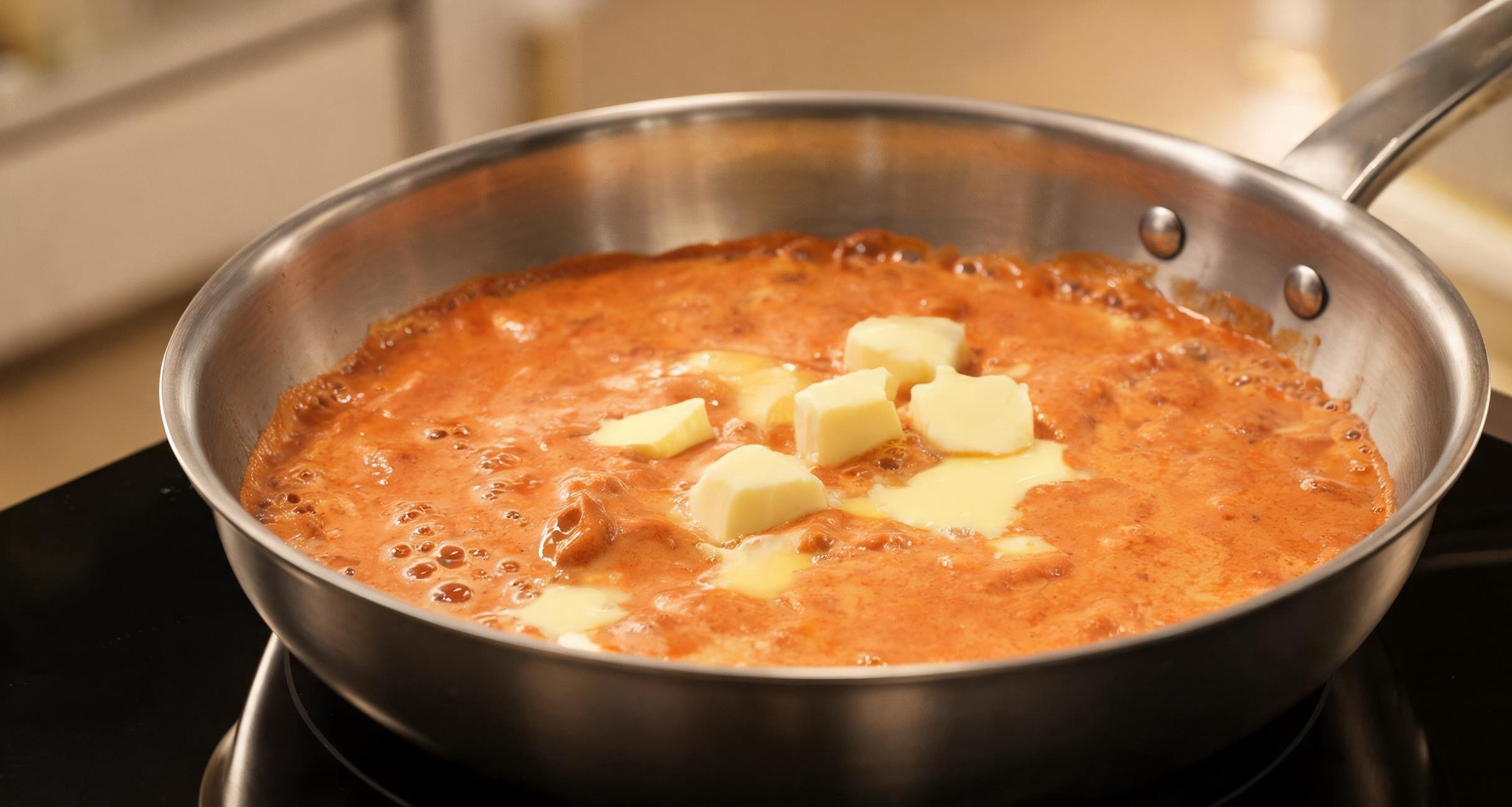
The makhani sauce is built from a base of tomatoes, aromatics, and butter. Start by heating two tablespoons of butter in a deep pan and adding a teaspoon each of cumin seeds, green cardamom pods, a cinnamon stick, and a couple of dried red chilies. Let these bloom for about thirty seconds, then add one finely diced onion and cook until soft and translucent. Add two tablespoons of ginger-garlic paste and cook until fragrant. Then add a can of crushed tomatoes, about 400 grams, and a tablespoon of tomato paste. Simmer this mixture for about 20 minutes, stirring occasionally, until it thickens and the oil begins to separate from the tomatoes.
Remove the cinnamon stick and cardamom pods, then blend the sauce until completely smooth. Return it to the pan over low heat. Add a cup of heavy cream and a generous knob of butter, stirring until both are incorporated. The sauce should be glossy and orange-red. Season with salt, a teaspoon of sugar to balance the acidity of the tomatoes, and another pinch of garam masala. Slide the grilled chicken into the sauce, stir gently, and let everything simmer together for about 10 minutes until the chicken is fully cooked and the flavors have melded. Finish with a handful of fresh cilantro and a drizzle of cream on top.
Butter chicken is always served with naan or rice, and ideally both. The sauce is rich, and you want something starchy to carry it. A squeeze of fresh lemon juice over the top right before serving brightens the whole dish. I have made this recipe dozens of times now, adjusting the spice levels, the amount of cream, the char on the chicken. The version that comes closest to the kitchen in Delhi uses more tomato than most recipes call for, and less cream. The sauce should be rich but not heavy, tangy but not sour, with the smoky notes from the grilled chicken woven throughout. Leftover butter chicken, by the way, is even better the next day, when the flavors have had more time to meld in the fridge. Reheat it gently on the stove and make fresh naan to go with it. It is not a quick weeknight meal, but it is not difficult either. It just requires attention at each step and the willingness to let a sauce simmer for as long as it needs.