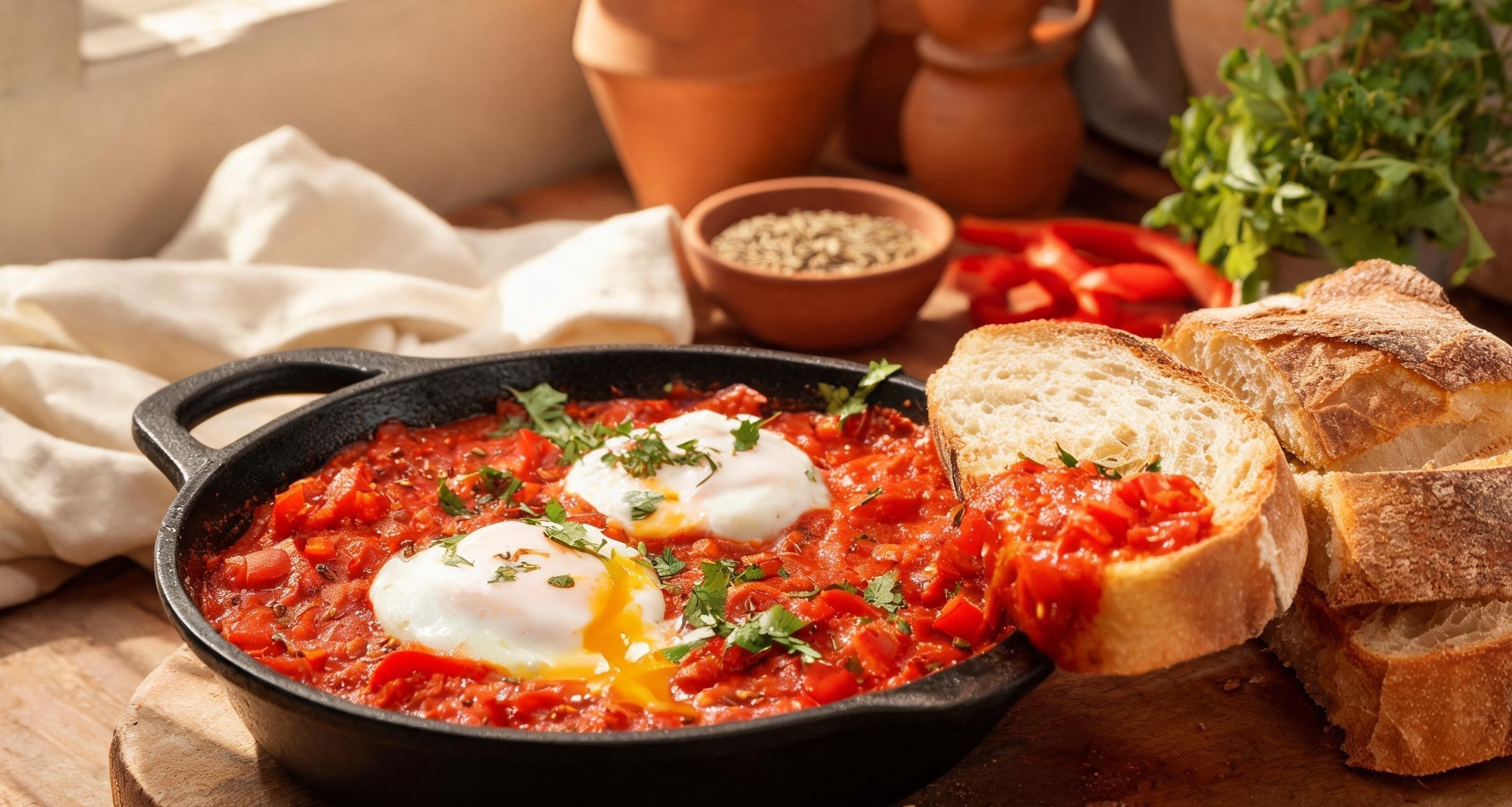
I first ate shakshuka in a tiny restaurant in the medina of Tunis, where the owner cracked six eggs into a wide, shallow skillet of simmering tomato sauce and served the whole thing at the table with a basket of warm bread. There was nothing fancy about it. The sauce was made from canned tomatoes, onion, garlic, cumin, and a single dried chili. The eggs were cooked until the whites were set but the yolks were still runny. I broke a yolk with a piece of bread and the yellow mixed with the red sauce and I ate the combination standing at a counter because there were no tables left. It was ten in the morning and the place was full. That was my reference point, and every shakshuka I have had since has been measured against it, even though I now know that the dish varies significantly from one kitchen to the next, from one country to the next, and that the version I had in Tunis is just one of dozens.
The base of shakshuka is a tomato and pepper sauce, and the specifics of that sauce change depending on who is making it and where. In Tunisia, where the dish likely originated, the sauce tends to be spicier, with harissa or dried chilies providing heat. In Israel, where shakshuka has become a staple of weekend breakfasts, the sauce is often sweeter and milder, with bell peppers and sometimes a pinch of sugar or a squeeze of tomato paste to round out the acidity. In Libya, a similar dish called shakshouka includes potatoes and sometimes lamb. The version I make at home is closer to the Tunisian style because that is what I had first, but I have adjusted it over the years to suit my own preferences. I use a mix of cumin, paprika, and a small amount of cayenne, which gives the sauce warmth without overwhelming heat. The key is to cook the sauce long enough that the tomatoes break down completely and the oil separates slightly at the edges, a sign that the sauce has reduced and concentrated.
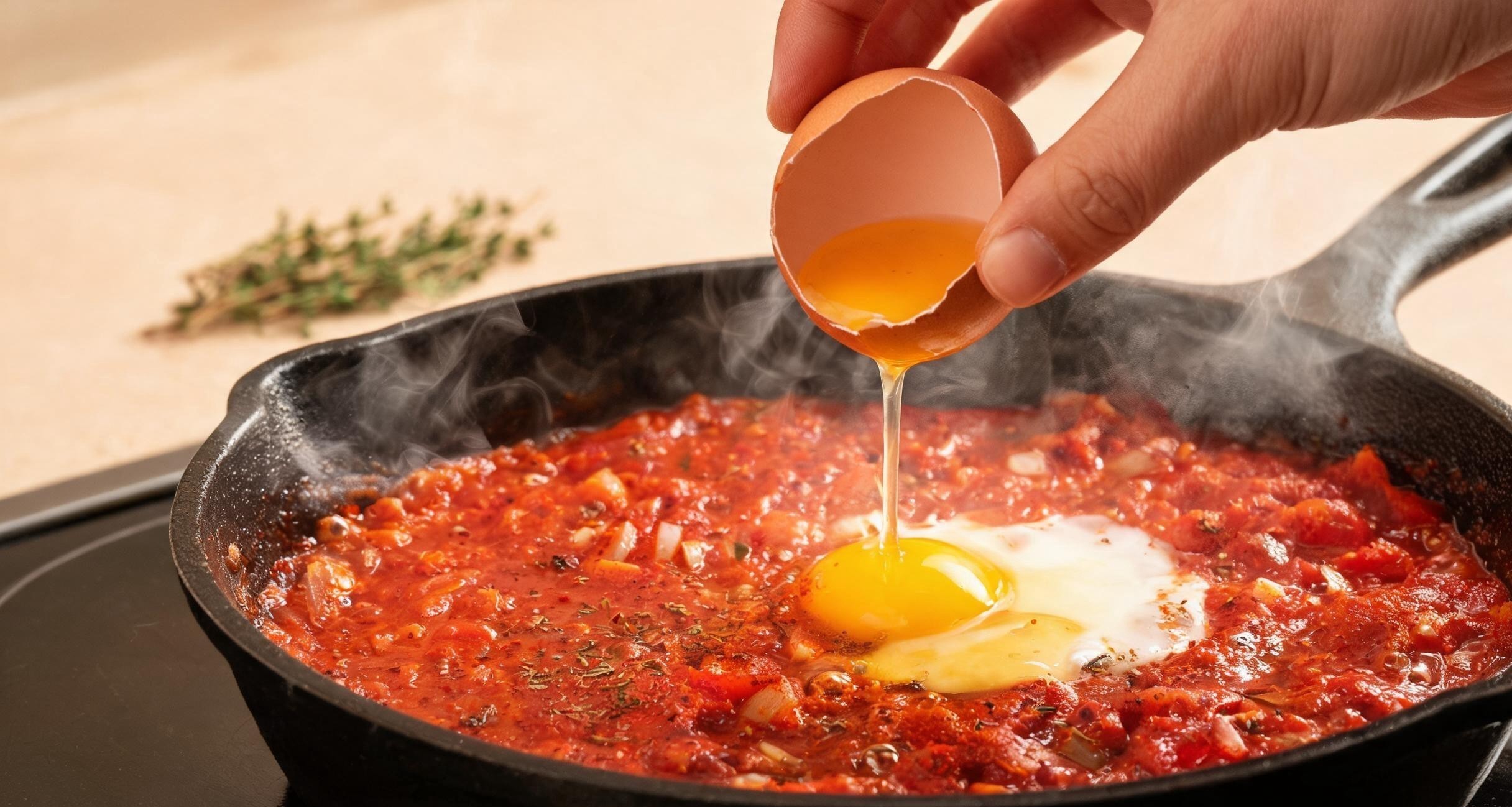
To make it, start by heating a quarter cup of olive oil in a large skillet, preferably cast iron because it holds heat evenly and goes from stove to table. Add a diced onion and cook it over medium heat until softened, about five minutes. Add a diced red bell pepper and a diced green bell pepper, and cook for another five minutes until the peppers are soft. Add four cloves of minced garlic, two teaspoons of ground cumin, one teaspoon of smoked paprika, and a quarter teaspoon of cayenne. Stir for about thirty seconds until the spices are fragrant. Then add a twenty-eight ounce can of crushed tomatoes, a teaspoon of salt, and a pinch of sugar to balance the acidity. Simmer the sauce, partially covered, for fifteen to twenty minutes, stirring occasionally, until it has thickened and the oil has started to separate at the edges.
Make six small wells in the sauce using the back of a spoon. Crack one egg into each well. Cover the skillet and cook on low heat for six to eight minutes, checking after six. The whites should be set and opaque, and the yolks should still be jiggly when you shake the pan gently. If the yolks look too runny, cover and cook for another minute. Do not overcook. The dish depends on the contrast between the set whites and the liquid yolks, and overcooked yolks turn rubbery and grainy. Once the eggs are done, remove the skillet from the heat. Scatter a handful of crumbled feta cheese and some roughly chopped cilantro over the top. Serve directly from the skillet, with warm crusty bread for scooping.
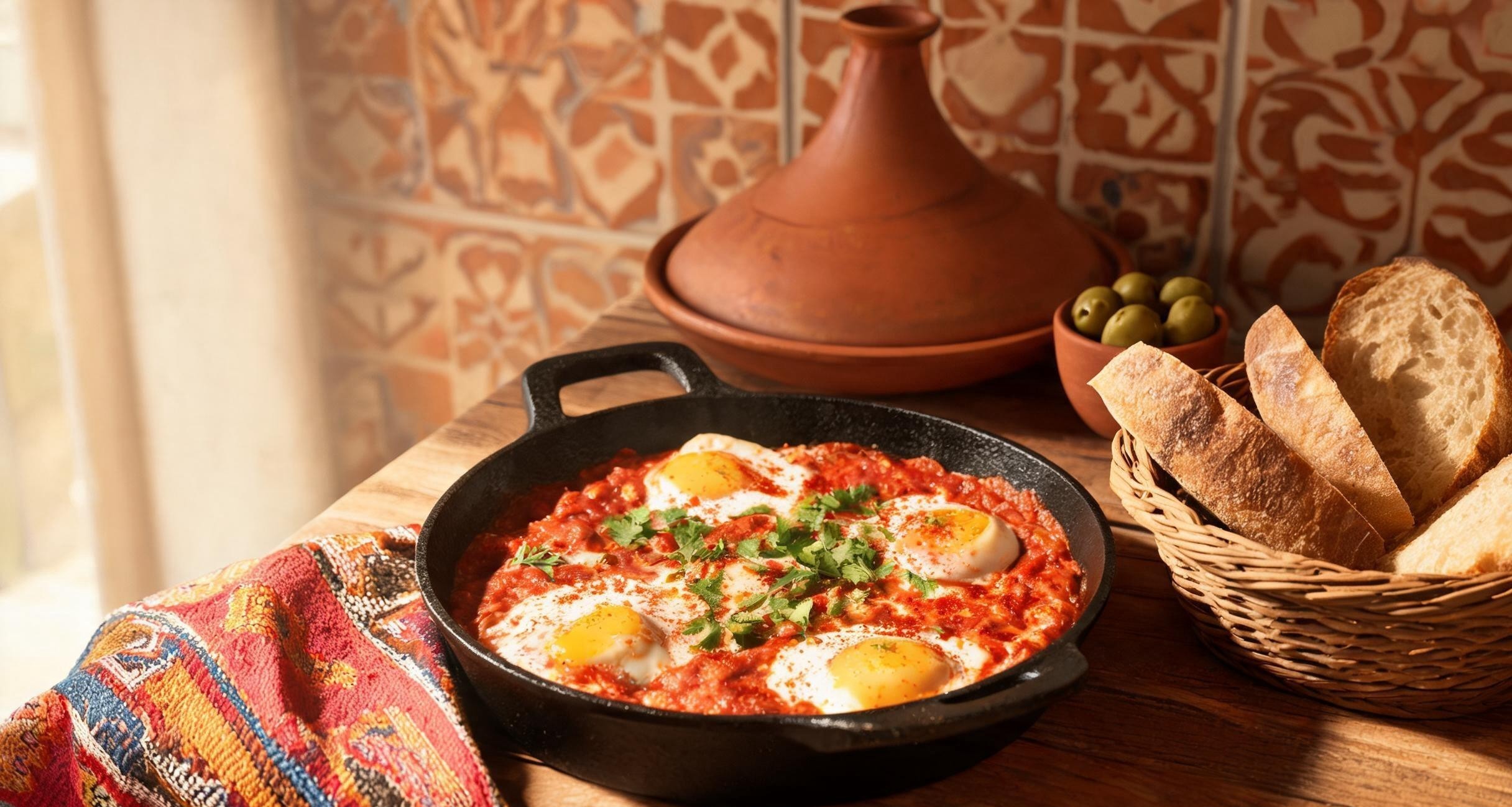
Shakshuka is one of those rare dishes that works for breakfast, lunch, or dinner, and it is best suited to a late morning, the kind of meal you eat at ten or eleven when you have slept in and are not quite ready for lunch but want something more substantial than toast. I make it on weekends, usually for two or three people, and it takes about forty minutes from start to finish, with only about ten minutes of active work. The rest is the sauce simmering and the eggs cooking. It is cheap, filling, and forgiving. The sauce can be made ahead and refrigerated for a day, then reheated before adding the eggs. The spices can be adjusted to your tolerance for heat. Add more cayenne if you want it spicy, or leave it out entirely for a mild version. The feta and cilantro are optional but recommended, because the salty cheese and the fresh herbs cut the richness of the tomato sauce and the egg yolks. If you have never made it, start with this version and adjust from there. It will quickly become one of those recipes you know by heart, which is exactly what it is supposed to be.